1
184
The HALCON Parameter Classes
Basically, there are two different types of image objects:
• Images
• Regions
A region consists of a set of coordinate values in the image plane. Regions do not need to be connected
and may include “holes.” They may even be larger than the image format. Internally, regions are stored
in the so-called runlength encoding.
Images consist of at least one image array and a region, the so-called domain. The domain denotes
the pixels that are “defined” (i.e., HALCON operators working on gray values will only access pixels
in this region). But HALCON supports multi-channel images, too: Images may consist of an (almost)
arbitrary number of channels. An image coordinate therefore isn’t necessarily represented by a single
gray value, but by a vector of up to n gray values (if the coordinate lies within the image region). This
may be visualized as a “stack” of image arrays instead of a single array. RGB- or voxel-images may be
represented this way.
HALCON provides operators for region transformations (among them a large number of morphological
operators) as well as operators for gray value transformations. Segmentation operators are the transition
from images (gray values) to regions.
HALCON/C provides the data type Hobject for image objects (both images and regions). In fact,
Hobject is a surrogate of the HALCON database containing all image objects. Input image objects are
passed to the HALCON operators by value as usual, output image objects are passed by reference, using
the &-operator. Variables of type Hobject may be a single image object as well as tuples of image
objects. Single objects are treated as tuples with length one.
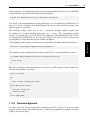
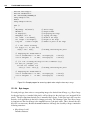
Of course, users can access specific objects in an object tuple, too. To do so, it is necessary to extract
the specific object key (converted to integer) first, using the operators obj_to_integer or copy_obj.
The number of objects in a tuple can be queried with count_obj. To convert the keys (returned from
obj_to_integer) back to image objects again, the operator integer_to_obj has to be used. It may be
noted that integer_to_obj duplicates the image objects (Don’t worry, this doesn’t mean necessarily
that the corresponding gray value arrays are duplicated too. As long as there is only read-access, a
duplication of the references is sufficient). Therefore, all extracted objects have to be deleted explicitly
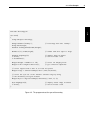
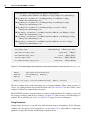
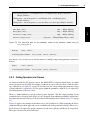
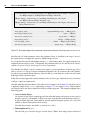
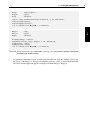
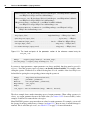
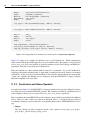
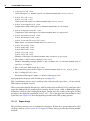
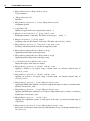
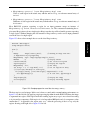
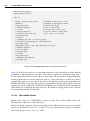
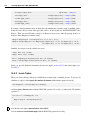
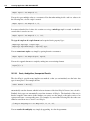
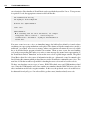
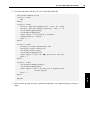
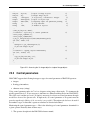
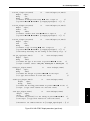
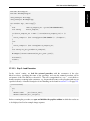
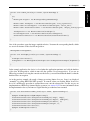
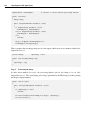
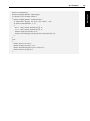
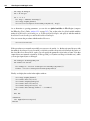
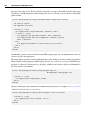
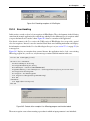
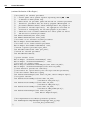
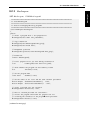
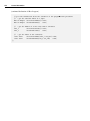
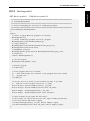
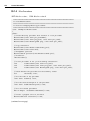
from the HALCON database, using clear_obj. Figure 22.1 contains an excerpt from a C program to
clarify that approach.
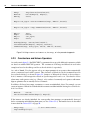
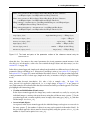
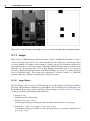
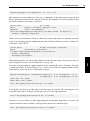
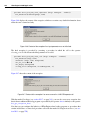
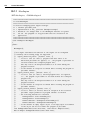
Some HALCON operators like difference allow the use of the following specific image objects as
input parameters:
NO_OBJECTS: An empty tuple of image objects.
EMPTY_REGION: An image object with empty region (area = 0).
FULL_REGION: An image object with maximal region.
These objects may be returned by HALCON operators, too.