1
Apr. 3, 2003
US 2003/0065967 A1
collection and dissemination process does take a certain
assembling the repair guide. Information gathered during
amount of time. As a result, situations arise frequently where
execution of the repair process is provided to the database so
that the historical data may be supplemented.
an unknown defect is reported at a service center, and has to
be handled without bene?t of the collective experience that
the service bulletins represent. This will remain the case
BRIEF DESCRIPTION OF THE DRAWINGS
until a quantity of experience has been amassed, reported,
and incorporated into a service bulletin. This time delay,
however, is unacceptable in industries such as the present
wireless telephone industry, where new product releases
occur very frequently. In such industries, the state of the
underlying technology often advances so fast that even
products released in the past one or two years are nearing
obsolescence. By the time that recurring problems have been
[0015]
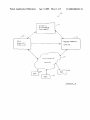
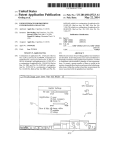
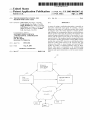
FIG. 1 is a block diagram of an intelligent distrib
uted service system incorporating the troubleshooting
engine according to an embodiment of the present invention;
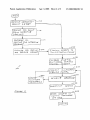
[0016] FIG. 2 is a How chart illustrating an embodiment
of a distributed service system repair process according to an
embodiment of the present invention; and
sufficiently documented and solutions proven, it is very
nearly time for release of the next generation of products.
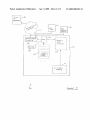
[0017] FIG. 3 is a block diagram illustrating the major
components of an exemplary troubleshooting engine con
?gured in accordance with an embodiment of the present
[0010] Needed, then, is an inexpensive and ef?cient
method of rapidly developing a centraliZed database, along
with an intelligent problem-solving routine to enable widely
invention.
distributed service centers to more quickly and ef?ciently be
able to handle problem reports, especially those associated
with a new product release.
SUMMARY OF THE INVENTION
[0011]
It is an object of the present invention to provide an
ef?cient problem-resolution system and methodology usable
by service technicians for assistance in the repair of defec
tive products.
[0012]
In one aspect, the present invention is a trouble
shooting engine including a multimedia session assembly
module for assembling an interactive multimedia repair
guide. The troubleshooting engine further includes a com
munication module for communicating with the service
technician to receive information related to the defective
product, a memory device for storing at least some of the
received information so that it can be referred to when
assembling the repair guide, and a multimedia library from
which to draw prepared multimedia materials that may be
used in multimedia repair guide assembly.
[0013]
In another aspect, the present invention is a dis
DETAILED DESCRIPTION OF THE
INVENTION
[0018] FIGS. 1 through 3, discussed below, and the
various embodiments used to describe the principles of the
present invention in this patent document are by way of
illustration only and should not be construed in any way to
limit the scope of the invention.
[0019] FIG. 1 is a block diagram of an intelligent distrib
uted service system 100 incorporating a troubleshooting
engine 301 according to an embodiment of the present
invention. Note the present invention is directed both to a
troubleshooting engine speci?cally, and as well to its appli
cation in a system such a distributed service system 100.
Distributed service system 100 includes dynamic knowledge
database 101, which is a constantly updated knowledgebase
of information relating to previously encountered defects
(again, real and imagined) along with both proposed, and
proven solutions for addressing them. Knowledge database
101 is updated both automatically by system 100 and
manually by engineers and service personal as new prob
lems are encountered and their solutions developed.
Dynamic knowledge database 101 is preferably an orga
tributed service system having a troubleshooting engine in
niZed database of an organiZation’s entire collective reme
communication with a database for storing historical repair
dial-action experience. In part this experience is documented
and product design information that the troubleshooting
and collected as in the past, by service technicians generat
ing defect reports that are submitted to a central department
engine may refer to in preparing a repair guide for use by a
service technician attempting to perform repairs on a defec
tive product. The repair guide is preferably an interactive
multimedia repair guide, and information gathered during
the interactive repair session is used to supplement the
historical repair information in the database. In a particularly
preferred embodiment, the system also includes a PPC
analysis module for analyZing any PPC counts provided by
the defective product and fed to the PPC analysis module.
[0014] In yet another aspect, the present invention is a
method of assisting a service technician attempting to repair
a defective product that includes the steps of providing a
troubleshooting engine, collecting information related to the
product defect, transmitting the information to the trouble
shooting engine, and using the information to assemble an
interactive multimedia repair guide for transmission to the
service technician. The method may further include provid
ing an historical knowledge database in communication with
for analysis. In addition, however, certain information is
collected automatically as the repair process is interactively
guided by the by troubleshooting engine 310.
[0020] Complimenting dynamic knowledge database 101
is PPC analysis module 401. PPC analysis module 401
receives input obtained from the defective product itself,
including (though not limited to) the contents of a product’s
product-performance counters (PPCs). Armed with this data,
PPC analysis module 401 prepares a product pro?le based
on the PPC contents, and any other inputs it receives, and
compares this pro?le to others represented in the design and
collective-experience data in dynamic knowledge database
101. Based on this comparison alone, it may be possible to
determine precisely the cause of the reported problem,
although more likely a number of possible causes will be
identi?ed, each consistent with the received PPC data. Each
possible defect cause may be ranked, again with reference to
the troubleshooting engine for storing historical repair data
the knowledge accumulated on dynamic knowledge data
that also may be used by the troubleshooting engine in
base 101 to indicate if determinable which cause is most