1
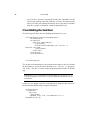
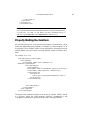
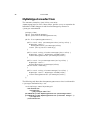
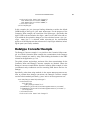
The Java™ Web
Services Tutorial
For Java Web Services Developer’s Pack, v2.0
February 17, 2006
Copyright © 2006 Sun Microsystems, Inc., 4150 Network Circle, Santa Clara, California 95054, U.S.A.
All rights reserved.U.S. Government Rights - Commercial software. Government users are subject to the
Sun Microsystems, Inc. standard license agreement and applicable provisions of the FAR and its supplements.
This distribution may include materials developed by third parties.
Sun, Sun Microsystems, the Sun logo, Java, J2EE, JavaServer Pages, Enterprise JavaBeans, Java Naming
and Directory Interface, EJB, JSP, J2EE, J2SE and the Java Coffee Cup logo are trademarks or registered
trademarks of Sun Microsystems, Inc. in the U.S. and other countries.
Unless otherwise licensed, software code in all technical materials herein (including articles, FAQs, samples) is provided under this License.
Products covered by and information contained in this service manual are controlled by U.S. Export Control laws and may be subject to the export or import laws in other countries. Nuclear, missile, chemical
biological weapons or nuclear maritime end uses or end users, whether direct or indirect, are strictly prohibited. Export or reexport to countries subject to U.S. embargo or to entities identified on U.S. export
exclusion lists, including, but not limited to, the denied persons and specially designated nationals lists is
strictly prohibited.
DOCUMENTATION IS PROVIDED "AS IS" AND ALL EXPRESS OR IMPLIED CONDITIONS,
REPRESENTATIONS AND WARRANTIES, INCLUDING ANY IMPLIED WARRANTY OF MERCHANTABILITY, FITNESS FOR A PARTICULAR PURPOSE OR NON-INFRINGEMENT, ARE
DISCLAIMED, EXCEPT TO THE EXTENT THAT SUCH DISCLAIMERS ARE HELD TO BE
LEGALLY INVALID.
Copyright © 2006 Sun Microsystems, Inc., 4150 Network Circle, Santa Clara, California 95054, ÉtatsUnis. Tous droits réservés.
Droits du gouvernement américain, utlisateurs gouvernmentaux - logiciel commercial. Les utilisateurs
gouvernmentaux sont soumis au contrat de licence standard de Sun Microsystems, Inc., ainsi qu aux dispositions en vigueur de la FAR [ (Federal Acquisition Regulations) et des suppléments à celles-ci.
Cette distribution peut comprendre des composants développés pardes tierces parties.
Sun, Sun Microsystems, le logo Sun, Java, JavaServer Pages, Enterprise JavaBeans, Java Naming and
Directory Interface, EJB, JSP, J2EE, J2SE et le logo Java Coffee Cup sont des marques de fabrique ou des
marques déposées de Sun Microsystems, Inc. aux États-Unis et dans d’autres pays.
A moins qu’autrement autorisé, le code de logiciel en tous les matériaux techniques dans le présent (articles y compris, FAQs, échantillons) est fourni sous ce permis.
Les produits qui font l’objet de ce manuel d’entretien et les informations qu’il contient sont régis par la
législation américaine en matière de contrôle des exportations et peuvent être soumis au droit d’autres
pays dans le domaine des exportations et importations. Les utilisations finales, ou utilisateurs finaux, pour
des armes nucléaires, des missiles, des armes biologiques et chimiques ou du nucléaire maritime, directement ou indirectement, sont strictement interdites. Les exportations ou réexportations vers des pays sous
embargo des États-Unis, ou vers des entités figurant sur les listes d’exclusion d’exportation américaines,
y compris, mais de manière non exclusive, la liste de personnes qui font objet d’un ordre de ne pas participer, d’une façon directe ou indirecte, aux exportations des produits ou des services qui sont régi par la
législation américaine en matière de contrôle des exportations ("U .S. Commerce Department’s Table of
Denial Orders "et la liste de ressortissants spécifiquement désignés ("U.S. Treasury Department of Specially Designated Nationals and Blocked Persons "),, sont rigoureusement interdites.
LA DOCUMENTATION EST FOURNIE "EN L’ÉTAT" ET TOUTES AUTRES CONDITIONS, DECLARATIONS ET GARANTIES EXPRESSES OU TACITES SONT FORMELLEMENT EXCLUES,
DANS LA MESURE AUTORISEE PAR LA LOI APPLICABLE, Y COMPRIS NOTAMMENT TOUTE
GARANTIE IMPLICITE RELATIVE A LA QUALITE MARCHANDE, A L’APTITUDE A UNE
UTILISATION PARTICULIERE OU A L’ABSENCE DE CONTREFAÇON.
Contents
About This Tutorial. . . . . . . . . . . . . . . . . . . . . . . . . . . .ix
Who Should Use This Tutorial
Prerequisites
How to Use This Tutorial
About the Examples
Required Software xi
Building the Examples xi
How to Print This Tutorial
Typographical Conventions
Feedback
Chapter 1:
xiii
xiii
xiv
Building Web Services with JAX-WS . . . . . . . . . . . . xv
Setting the Port
Creating a Simple Web Service and Client with JAX-WS
Requirements of a JAX-WS Endpoint
Coding the Service Endpoint Implementation Class
Building the Service
Packaging and Deploying the Service
A Simple JAX-WS Client
Types Supported by JAX-WS
Web Services Interoperability and JAX-WS
Further Information
Chapter 2:
ix
ix
x
x
xvi
xvi
xviii
xix
xix
xx
xxi
xxiii
xxiii
xxiv
Binding between XML Schema and Java Classes . 1
JAXB Architecture
Architectural Overview
The JAXB Binding Process
More About Unmarshalling
More About Marshalling
1
2
3
4
4
iii
iv
CONTENTS
More About Validation
Representing XML Content
Java Representation of XML Schema
Binding XML Schemas
Simple Type Definitions
Default Data Type Bindings
Customizing JAXB Bindings
Schema-to-Java
Java-to-Schema
Chapter 3:
4
5
5
5
5
6
8
8
9
Using JAXB . . . . . . . . . . . . . . . . . . . . . . . . . . . . . . . . .11
General Usage Instructions
Description
Using the Examples
Configuring and Running the Samples
JAXB Compiler Options
JAXB Schema Generator Options
About the Schema-to-Java Bindings
Schema-Derived JAXB Classes
Basic Examples
Unmarshal Read Example
Modify Marshal Example
Unmarshal Validate Example
Customizing JAXB Bindings
Why Customize?
Customization Overview
Customize Inline Example
Datatype Converter Example
External Customize Example
Fix Collides Example
Bind Choice Example
Java-toSchema Examples
j2s-create-marshal Example
j2s-xmlAccessorOrder Example
j2s-xmlAdapter-field Example
j2s-xmlAttribute-field Example
j2s-xmlRootElement Example
j2s-xmlSchemaType-class Example
j2s-xmlType Example
12
12
15
15
16
18
19
22
29
29
31
33
35
35
36
49
55
56
59
64
66
66
66
69
72
73
73
74
v
CONTENTS
Chapter 4:
Streaming API for XML . . . . . . . . . . . . . . . . . . . . . . . 77
Why StAX?
Streaming Versus DOM
Pull Parsing Versus Push Parsing
StAX Use Cases
Comparing StAX to Other JAXP APIs
StAX API
Cursor API
Iterator API
Choosing Between Cursor and Iterator APIs
Using StAX
StAX Factory Classes
Resources, Namespaces, and Errors
Reading XML Streams
Writing XML Streams
Sun’s Streaming Parser Implementation
Reporting CDATA Events
SJSXP Factories Implementation
Sample Code
Sample Code Organization
Configuring Your Environment for Running the Samples
Running the Samples
Sample XML Document
cursor Sample – CursorParse.java
cursor2event Sample – CursorApproachEventObject.java
event Sample – EventParse.java
filter Sample – MyStreamFilter.java
readnwrite Sample – EventProducerConsumer.java
writer Sample – CursorWriter.java
Further Information
Chapter 5:
77
78
79
79
80
81
81
82
87
89
89
91
92
95
97
97
98
99
99
100
101
102
103
105
106
109
111
114
116
SOAP with Attachments API for Java . . . . . . . . . . 117
Overview of SAAJ
Messages
Connections
Tutorial
Creating and Sending a Simple Message
Adding Content to the Header
Adding Content to the SOAPPart Object
Adding a Document to the SOAP Body
118
118
122
123
124
133
134
136
vi
CONTENTS
Manipulating Message Content Using SAAJ or DOM APIs
Adding Attachments
Adding Attributes
Using SOAP Faults
Code Examples
Request.java
MyUddiPing.java
HeaderExample.java
DOMExample.java and DOMSrcExample.java
Attachments.java
SOAPFaultTest.java
Further Information
Chapter 6:
136
137
139
145
151
152
153
160
162
166
168
170
Java API for XML Registries . . . . . . . . . . . . . . . . . .171
Overview of JAXR
What Is a Registry?
What Is JAXR?
JAXR Architecture
Implementing a JAXR Client
Establishing a Connection
Querying a Registry
Managing Registry Data
Using Taxonomies in JAXR Clients
Running the Client Examples
Before You Compile the Examples
Compiling the Examples
Running the Examples
Using JAXR Clients in Java EE Applications
Coding the Application Client: MyAppClient.java
Coding the PubQuery Session Bean
Editing the Properties File
Compiling the Source Files
Starting the Application Server
Creating JAXR Resources
Packaging the Application
Deploying the Application
Running the Application Client
Further Information
171
171
172
173
174
175
181
186
194
199
200
201
201
206
207
207
207
208
208
208
209
210
210
210
vii
CONTENTS
Chapter 7:
Java XML Digital Signature API . . . . . . . . . . . . . . . 213
How XWS-Security and XML Digital Signature API Are Related
XML Security Stack
Package Hierarchy
Service Providers
Introduction to XML Signatures
Example of an XML Signature
XML Digital Signature API Examples
validate Example
genenveloped Example
Chapter 8:
214
215
216
217
218
218
221
221
226
Securing Web Services . . . . . . . . . . . . . . . . . . . . . 231
Securing Web Service Endpoints
Overview of Message Security
Advantages of Message Security
Message Security Mechanisms
Web Services Security Initiatives and Organizations
W3C Specifications
OASIS Specifications
JCP Specifications
WS-I Specifications
Using Message Security with Java EE
Using the Application Server Message Security Implementation
Using the Java WSDP XWSS Security Implementation
Further Information
232
232
233
235
236
236
237
238
239
241
242
247
251
Index . . . . . . . . . . . . . . . . . . . . . . . . . . . . . . . . . . . . 253
viii
CONTENTS
About This Tutorial
THE Java™ Web Services Tutorial is a guide to developing Web applications
with the Java Web Services Developer Pack (Java WSDP). The Java WSDP is an
all-in-one download containing key technologies to simplify building of Web
services using the Java 2 Platform. This tutorial requires a full installation (Typical) of the Java WSDP, v2.0 with the Sun Java System Application Server Platform Edition 9 (hereafter called the Application Server). Here we cover all the
things you need to know to make the best use of this tutorial.
Who Should Use This Tutorial
This tutorial is intended for programmers who are interested in developing and
deploying Web services and Web applications on the Sun Java System Application Server Platform Edition 9.
Prerequisites
Before proceeding with this tutorial you should have a good knowledge of the
Java programming language. A good way to get to that point is to work through
all the basic and some of the specialized trails in The Java™ Tutorial, Mary
Campione et al., (Addison-Wesley, 2000). In particular, you should be familiar
ix
x
ABOUT THIS TUTORIAL
with relational database and security features described in the trails listed in
Table 1.
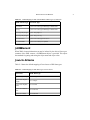
Table 1 Prerequisite Trails in The Java™ Tutorial
Trail
URL
JDBC
http://java.sun.com/docs/books/tutorial/jdbc
Security
http://java.sun.com/docs/books/tutorial/security1.2
How to Use This Tutorial
The Java Web Services Tutorial addresses the following technology areas:
•
•
•
•
•
•
•
The Java Architecture for XML Web Services (JAX-WS)
The Java Architecture for XML Binding (JAXB)
The StAX APIs and the Sun Java Streaming XML Parser implementation
SOAP with Attachments API for Java (SAAJ)
The Java Architecture for XML Registries
XML Digital Signature
Security in the Web Tier
All of the examples for this tutorial (except for the XML Digital Signature examples) are installed with the Java Web Services Tutorial for Java WSDP 2.0 bundle
and
can
be
found
in
the
subdirectories
of
the
<jwstutorial20>/samples/<technology>
directory,
where
<jwstutorial20>.
About the Examples
This section tells you everything you need to know to install, build, and run the
examples.
xi
ABOUT THIS TUTORIAL
Required Software
Java Web Services Tutorial Bundle
The example source for the technologies in this tutorial is contained in the Java
Web Services Tutorial bundle. If you are viewing this online, you need to download the tutorial bundle from:
http://java.sun.com/webservices/download/webservicespack.html
Application Server
Sun Java System Application Server Platform Edition 9 is the build and runtime
environment for the tutorial examples. To build, deploy, and run the examples,
you need a copy of the Application Server and the J2SE 5.0.
Building the Examples
Most of the examples are distributed with a build file for Ant, a portable build
tool contained in the Java WSDP. For information about Ant, visit
http://ant.apache.org/. Directions for building the examples are provided in
each chapter. Most of the tutorial examples are distributed with a configuration
file for asant, a portable build tool contained in the Application Server. This tool
is an extension of the Ant tool developed by the Apache Software Foundation
(http://ant.apache.org). The asant utility contains additional tasks that
invoke the Application Server administration utility asadmin. Directions for
building the examples are provided in each chapter.
Build properties and targets common to all the examples are specified in the files
<INSTALL>/jwstutorial13javaeetutorial5/examples/common/build.properties
<INSTALL>/jwstutorial13javaeetutorial5/examples/common/targets.xml. Build properties and targets common to a particular
ogy
are
specified
in
<INSTALL>/jwstutorial13javaeetutorial5/examples/tech/common/build.properties
<INSTALL>/jwstutorial13javaeetutorial5/examples/tech/common/targets.xml.
the
and
technolfiles
and
xii
ABOUT THIS TUTORIAL
To run the asant scripts, you must set common build properties in the file
<INSTALL>/javaeetutorial5/examples/common/build.properties as follows:
• Set the javaee.home property to the location of your Application Server
installation. The build process uses the javaee.home property to include
the libraries in <JAVAEE_HOME>/lib/ in the classpath. All examples that
run on the Application Server include the Java EE library archive—
<JAVAEE_HOME>/lib/javaee.jar—in the build classpath. Some examples use additional libraries in <JAVAEE_HOME>/lib/; the required libraries are enumerated in the individual technology chapters. <JAVAEE_HOME>
refers to the directory where you have installed the Application Server.
Note: On Windows, you must escape any backslashes in the javaee.home property
with another backslash or use forward slashes as a path separator. So, if your Application Server installation is C:\Sun\AppServer, you must set javaee.home as follows:
javaee.home = C:\\Sun\\AppServer
or
javaee.home=C:/Sun/AppServer
• Set the javaee.tutorial.home property to the location of your tutorial.
This property is used for asant deployment and undeployment.
For example, on UNIX:
javaee.tutorial.home=/home/username/javaeetutorial5
On Windows:
javaee.tutorial.home=C:/javaeetutorial5
ABOUT THIS TUTORIAL
Do not install the tutorial to a location with spaces in the path.
• If you did not use the default value (admin) for the admin user, set the
admin.user property to the value you specified when you installed the
Application Server.
• If you did not use port 8080, set the domain.resources.port property to
the value specified when you installed the Application Server.
• Set
the
admin
user’s
password
in
<INSTALL>/javaeetutorial5/examples/common/admin-password.txt to the value you specified when you installed the Application
Server. The format of this file is AS_ADMIN_PASSWORD=password. For
example:
AS_ADMIN_PASSWORD=mypassword
How to Print This Tutorial
To print this tutorial, follow these steps:
1. Ensure that Adobe Acrobat Reader is installed on your system.
2. Open the PDF version of this book.
3. Click the printer icon in Adobe Acrobat Reader.
Typographical Conventions
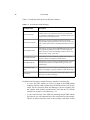
Table 2 lists the typographical conventions used in this tutorial.
Table 2 Typographical Conventions
Font Style
Uses
italic
Emphasis, titles, first occurrence of terms
monospace
URLs, code examples, file names, path names, tool names,
application names, programming language keywords, tag,
interface, class, method, and field names, properties
italic monospace
Variables in code, file paths, and URLs
xiii
xiv
ABOUT THIS TUTORIAL
Table 2 Typographical Conventions
Font Style
Uses
<italic monospace>
User-selected file path components
Feedback
Please send comments, broken link reports, errors, suggestions, and questions
about this tutorial to the tutorial team at [email protected].
1
Building Web Services
with JAX-WS
JAX-WS stands for Java API for XML Web Services. JAX-WS is a technology
for building web services and clients that communicate using XML. JAX-WS
allows developers to write message-oriented as well as RPC-oriented web services.
In JAX-WS, a remote procedure call is represented by an XML-based protocol
such as SOAP. The SOAP specification defines the envelope structure, encoding
rules, and conventions for representing remote procedure calls and responses.
These calls and responses are transmitted as SOAP messages (XML files) over
HTTP.
Although SOAP messages are complex, the JAX-WS API hides this complexity
from the application developer. On the server side, the developer specifies the
remote procedures by defining methods in an interface written in the Java programming language. The developer also codes one or more classes that implement those methods. Client programs are also easy to code. A client creates a
proxy (a local object representing the service) and then simply invokes methods
on the proxy. With JAX-WS, the developer does not generate or parse SOAP
messages. It is the JAX-WS runtime system that converts the API calls and
responses to and from SOAP messages.
With JAX-WS, clients and web services have a big advantage: the platform independence of the Java programming language. In addition, JAX-WS is not restrictive: a JAX-WS client can access a web service that is not running on the Java
xv
xvi
BUILDING WEB SERVICES WITH JAX-WS
platform, and vice versa. This flexibility is possible because JAX-WS uses technologies defined by the World Wide Web Consortium (W3C): HTTP, SOAP, and
the Web Service Description Language (WSDL). WSDL specifies an XML format for describing a service as a set of endpoints operating on messages.
Setting the Port
Several files in the JAX-WS examples depend on the port that you specified
when you installed the Application Server. The tutorial examples assume that the
server runs on the default port, 8080. If you have changed the port, you must
update the port number in the following files before building and running the
JAX-WS examples:
• <INSTALL>/javaeetutorial5/examples/jaxws/simpleclient/
HelloClient.java
Creating a Simple Web Service and
Client with JAX-WS
This section shows how to build and deploy a simple web service and client. The
source code for the service is in <INSTALL>/javaeetutorial5/examand
the
client
is
in
ples/jaxws/helloservice/
<INSTALL>/javaeetutorial5/examples/jaxws/simpleclient/.
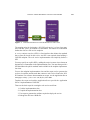
Figure 1–1 illustrates how JAX-WS technology manages communication
between a web service and client.
CREATING A SIMPLE WEB SERVICE AND CLIENT WITH JAX-WS
Figure 1–1 Communication Between a JAX-WS Web Service and a Client
The starting point for developing a JAX-WS web service is a Java class annotated with the javax.jws.WebService annotation. The WebService annotation
defines the class as a web service endpoint.
A service endpoint interface (SEI) is a Java interface that declares the methods
that a client can invoke on the service. An SEI is not required when building a
JAX-WS endpoint. The web service implementation class implicitly defines a
SEI.
You may specify an explicit SEI by adding the endpointInterface element to
the WebService annotation in the implementation class. You must then provide a
SEI that defines the public methods made available in the endpoint implementation class.
You use the endpoint implementation class and the wsgen tool to generate the
web service artifacts and the stubs that connect a web service client to the JAXWS runtime. For reference documentation on wsgen, see the Application Server
man pages at http://docs.sun.com/db/doc/817-6092.
Together, the wsgen tool and the Application Server provide the Application
Server’s implementation of JAX-WS.
These are the basic steps for creating the web service and client:
1.
2.
3.
4.
Code the implementation class.
Compile the implementation class.
Use wsgen to generate the artifacts required to deploy the service.
Package the files into a WAR file.
xvii
xviii
BUILDING WEB SERVICES WITH JAX-WS
5. Deploy the WAR file. The tie classes (which are used to communicate with
clients) are generated by the Application Server during deployment.
6. Code the client class.
7. Use wsimport to generate and compile the stub files.
8. Compile the client class.
9. Run the client.
The sections that follow cover these steps in greater detail.
Requirements of a JAX-WS Endpoint
JAX-WS endpoints must follow these requirements:
• The
implementing
class must be annotated with either the
or javax.jws.WebServiceProvider annota-
javax.jws.WebService
•
•
•
•
•
•
•
•
tion.
The implementing class may explicitly reference an SEI through the endpointInterface element of the @WebService annotation, but is not
required to do so. If no endpointInterface is not specified in @WebService,
an SEI is implicityly defined for the implementing class.
The business methods of the implementing class must be public, and must
not be declared static or final.
Business methods that are exposed to web service clients must be annotated with javax.jws.WebMethod.
Business methods that are exposed to web service clients must have JAXB-compatible parameters and return types. See Default Data Type
Bindings (page 6).
The implementing class must not be declared final and must not be
abstract.
The implementing class must have a default public constructor.
The implementing class must not define the finalize method.
The implementing class may use the javax.annotation.PostConstruct
or javax.annotation.PreDestroy annotations on its methods for lifecycle event callbacks.
The @PostConstruct method is called by the container before the implementing class begins responding to web service clients.
xix
CODING THE SERVICE ENDPOINT IMPLEMENTATION CLASS
The @PreDestroy method is called by the container before the endpoint is
removed from operation.
Coding the Service Endpoint
Implementation Class
In this example, the implementation class, Hello, is annotated as a web service
endpoint using the @WebService annotation. Hello declares a single method
named sayHello, annotated with the @WebMethod annotation. @WebMethod
exposes the annotated method to web service clients. sayHello returns a greeting to the client, using the name passed to sayHello to compose the greeting.
The implementation class also must define a default, public, no-argument constructor.
package helloservice.endpoint;
import javax.jws.WebService;
@WebService()
public class Hello {
private String message = new String("Hello, ");
public void Hello() {}
@WebMethod()
public String sayHello(String name) {
return message + name + ".";
}
}
Building the Service
To
build
HelloService,
in a terminal window go to
<INSTALL>/javaeetutorial5/examples/jaxws/helloservice/ directory
type the following:
asant build
The build task command executes these asant subtasks:
• compile-service
the
and
xx
BUILDING WEB SERVICES WITH JAX-WS
The compile-service Task
This asant task compiles Hello.java, writing the class files to the build subdirectory. It then calls the wsgen tool to generate JAX-WS portable artifacts used
by the web service. The equivalent command-line command is as follows:
wsgen -d build -s build -classpath build
helloservice.endpoint.Hello
The -d flag specifies the output location of generated class files. The -s flag
specifies the output location of generated source files. The -classpath flag
specifies the location of the input files, in this case the endpoint implmentation
class, helloservice.endpoint.Hello.
Packaging and Deploying the Service
You package and deploy the service using asant.
Upon deployment, the Application Server and the JAX-WS runtime generate any
additional artifacts required for web service invocation, including the WSDL
file.
Packaging and Deploying the Service with
asant
To package and deploy the helloservice example, follow these steps:
1. In
a
terminal
window,
go
to
<INSTALL>/javaeetutorial5/examples/jaxws/helloservice/.
2. Run asant create-war.
3. Make sure the Application Server is started.
4. Set
your
admin
username
and
password
in
<INSTALL>/javaeetutorial5/examples/common/build.properties.
5. Run asant deploy.
You can view the WSDL file of the deployed service by requesting the URL
http://localhost:8080/helloservice/hello?wsdl in a web browser. Now
you are ready to create a client that accesses this service.
A SIMPLE JAX-WS CLIENT
Undeploying the Service
At this point in the tutorial, do not undeploy the service. When you are finished
with this example, you can undeploy the service by typing this command:
asant undeploy
Testing the Service Without a Client
The Application Server Admin Console allows you to test the methods of a web
service endpoint. To test the sayHello method of HelloService, do the following:
1. Open the Admin Console by opening the following URL in a web browser:
http://localhost:4848/
2.
3.
4.
5.
6.
7.
Enter the admin username and password to log in to the Admin Console.
Click Web Services in the left pane of the Admin Console.
Click Hello.
Click Test.
Under Methods, enter a name as the parameter to the sayHello method.
Click the sayHello button.
This will take you to the sayHello Method invocation page.
8. Under Method returned, you’ll see the response from the endpoint.
A Simple JAX-WS Client
HelloClient is a stand-alone Java program that accesses the sayHello method
of HelloService. It makes this call through a stub, a local object that acts as a
proxy for the remote service. The stub is created at development time by the
wsimport tool, which generates JAX-WS portable artifacts based on a WSDL
file.
Coding the Client
When invoking the remote methods on the stub, the client performs these steps:
1. Uses the javax.xml.ws.WebServiceRef annotation to declare a reference
to a web service. WebServiceRef uses the wsdlLocation element to specify the URI of the deployed service’s WSDL file.
xxi
xxii
BUILDING WEB SERVICES WITH JAX-WS
@WebServiceRef(wsdlLocation="http://localhost:8080/
helloservice/hello?wsdl")
static HelloService service;
2. Retrieves a proxy to the service, also known as a port, by invoking getHelloPort on the service.
Hello port = service.getHelloPort();
The port implements the SEI defined by the service.
3. Invokes the port’s sayHello method, passing to the service a name.
String response = port.sayHello(name);
Here’s
the
full
source
of
HelloClient,
located
in
<INSTALL>/javaeetutorial5/examples/jaxws/simpleclient/src/
the
direc-
tory.
package simpleclient;
import javax.xml.ws.WebServiceRef;
import helloservice.endpoint.HelloService;
import helloservice.endpoint.Hello;
public class HelloClient {
@WebServiceRef(wsdlLocation="http://localhost:8080/
helloservice/hello?wsdl")
static HelloService service;
public static void main(String[] args) {
try {
HelloClient client = new HelloClient();
client.doTest(args);
} catch(Exception e) {
e.printStackTrace();
}
}
public void doTest(String[] args) {
try {
System.out.println("Retrieving the port from
the following service: " + service);
Hello port = service.getHelloPort();
System.out.println("Invoking the sayHello operation
on the port.");
String name;
if (args.length > 0) {
name = args[0];
} else {
TYPES SUPPORTED BY JAX-WS
name = "No Name";
}
String response = port.sayHello(name);
System.out.println(response);
} catch(Exception e) {
e.printStackTrace();
}
}
}
Building and Running the Client
To build the client, you must first have deployed HelloServiceApp, as described
in “Packaging and Deploying the Service with asant (page xx).” Then navigate
to <JAVA_EE_HOME>/examples/jaxws/simpleclient/ and do the following:
asant build
The run the client, do the following:
asant run
Types Supported by JAX-WS
JAX-WS delegates the mapping of Java programming language types to and
from XML definitions to JAXB. Application developers don’t need to know the
details of these mappings, but they should be aware that not every class in the
Java language can be used as a method parameter or return type in JAX-WS. For
information on which types are supported by JAXB, see Default Data Type
Bindings (page 6).
Web Services Interoperability and JAXWS
JAX-WS 2.0 supports the Web Services Interoperability (WS-I) Basic Profile
Version 1.1. The WS-I Basic Profile is a document that clarifies the SOAP 1.1
and WSDL 1.1 specifications in order to promote SOAP interoperability. For
links related to WS-I, see Further Information (page xxiv).
xxiii
xxiv
BUILDING WEB SERVICES WITH JAX-WS
To support WS-I Basic Profile Version 1.1, JAX-WS has the following features:
• The JAX-WS runtime supports doc/literal and rpc/literal encodings for services, static stubs, dynamic proxies, and DII.
Further Information
For more information about JAX-WS and related technologies, refer to the following:
• Java API for XML Web Services 2.0 specification
https://jax-ws.dev.java.net/spec-download.html
• JAX-WS home
https://jax-ws.dev.java.net/
• Simple Object Access Protocol (SOAP) 1.2 W3C Note
http://www.w3.org/TR/SOAP/
• Web Services Description Language (WSDL) 1.1 W3C Note
http://www.w3.org/TR/wsdl
• WS-I Basic Profile 1.1
http://www.ws-i.org
2
Binding between XML
Schema and Java
Classes
THE Java™ Architecture for XML Binding (JAXB) provides a fast and convenient way to bind between XML schemas and Java representations, making it
easy for Java developers to incorporate XML data and processing functions in
Java applications. As part of this process, JAXB provides methods for unmarshalling XML instance documents into Java content trees, and then marshalling
Java content trees back into XML instance documents. JAXB also provides a
way generate XML schema from Java objects.
This chapter describes the JAXB architecture, functions, and core concepts. You
should read this chapter before proceeding to Chapter 3, which provides sample
code and step-by-step procedures for using JAXB.
JAXB Architecture
This section describes the components and interactions in the JAXB processing
model.
1
2
BINDING BETWEEN XML SCHEMA AND JAVA CLASSES
Architectural Overview
Figure 2–1 shows the components that make up a JAXB implementation.
Figure 2–1 JAXB Architectural Overview
A JAXB implementation consists of the following architectural components:
• schema compiler: binds a source schema to a set of schema derived program elements. The binding is described by an XML-based binding language.
• schema generator: maps a set of existing program elements to a derived
schema. The mapping is described by program annotations.
• binding runtime framework: provides unmarshalling (reading) and marshalling (writing) operations for accessing, manipulating and validating
XML content using either schema-derived or existing program elements.
THE JAXB BINDING PROCESS
The JAXB Binding Process
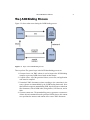
Figure 2–2 shows what occurs during the JAXB binding process.
Figure 2–2 Steps in the JAXB Binding Process
Take steps from The general steps in the JAXB data binding process are:
1. Generate classes. An XML schema is used as input to the JAXB binding
compiler to generate JAXB classes based on that schema.
2. Compile classes. All of the generated classes, source files, and application
code must be compiled.
3. Unmarshal. XML documents written according to the constraints in the
source schema are unmarshalled by the JAXB binding framework. Note
that JAXB also supports unmarshalling XML data from sources other than
files/documents, such as DOM nodes, string buffers, SAX Sources, and so
forth.
4. Generate content tree. The unmarshalling process generates a content tree
of data objects instantiated from the generated JAXB classes; this content
tree represents the structure and content of the source XML documents.
3
4
BINDING BETWEEN XML SCHEMA AND JAVA CLASSES
5. Validate (optional). The unmarshalling process optionally involves validation of the source XML documents before generating the content tree.
Note that if you modify the content tree in Step 6, below, you can also use
the JAXB Validate operation to validate the changes before marshalling the
content back to an XML document.
6. Process content. The client application can modify the XML data represented by the Java content tree by means of interfaces generated by the
binding compiler.
7. Marshal. The processed content tree is marshalled out to one or more XML
output documents. The content may be validated before marshalling.
More About Unmarshalling
Unmarshlling provides a client application the ability to convert XML data into
JAXB-derived Java objects.
More About Marshalling
Marshalling provides a client application the ability to convert a JAXB-derived
Java object tree back into XML data.
By default, the Marshaller uses UTF-8 encoding when generating XML data.
Client applications are not required to validate the Java content tree before marshalling. There is also no requirement that the Java content tree be valid with
respect to its original schema in order to marshal it back into XML data.
More About Validation
Validation is the process of verifying that an XML document meets all the constraints expressed in the schema. JAXB 1.0 provided validation at unmarshal
time and also enabled on-demand validation on a JAXB content tree. JAXB 2.0
only allows validation at unmarshal and marshal time. A web service processing
model is to be lax in reading in data and strict on writing it out. To meet that
model, validation was added to marshal time so one could confirm that they did
not invalidate the XML document when modifying the document in JAXB form.
REPRESENTING XML CONTENT
Representing XML Content
This section describes how JAXB represents XML content as Java objects.
Java Representation of XML Schema
JAXB supports the grouping of generated classes in Java packages. A package
comprises:
• A Java class name is derived from the XML element name, or specified by
a binding customization.
• An ObjectFactory class is a factory that is used to return instances of a
bound Java class.
Binding XML Schemas
This section describes the default XML-to-Java bindings used by JAXB. All of
these bindings can be overridden on global or case-by-case levels by means of a
custom binding declaration. See the JAXB Specification for complete information about the default JAXB bindings.
Simple Type Definitions
A schema component using a simple type definition typically binds to a Java
property. Since there are different kinds of such schema components, the following Java property attributes (common to the schema components) include:
• Base type
• Collection type, if any
• Predicate
The rest of the Java property attributes are specified in the schema component
using the simple type definition.
5
6
BINDING BETWEEN XML SCHEMA AND JAVA CLASSES
Default Data Type Bindings
Schema-to-Java
The Java language provides a richer set of data type than XML schema. Table 2–
1 lists the mapping of XML data types to Java data types in JAXB.
Table 2–1 JAXB Mapping of XML Schema Built-in Data Types
XML Schema Type
Java Data Type
xsd:string
java.lang.String
xsd:integer
java.math.BigInteger
xsd:int
int
xsd.long
long
xsd:short
short
xsd:decimal
java.math.BigDecimal
xsd:float
float
xsd:double
double
xsd:boolean
boolean
xsd:byte
byte
xsd:QName
javax.xml.namespace.QName
xsd:dateTime
javax.xml.datatype.XMLGregorianCalendar
xsd:base64Binary
byte[]
xsd:hexBinary
byte[]
xsd:unsignedInt
long
xsd:unsignedShort
int
xsd:unsignedByte
short
xsd:time
javax.xml.datatype.XMLGregorianCalendar
DEFAULT DATA TYPE BINDINGS
Table 2–1 JAXB Mapping of XML Schema Built-in Data Types (Continued)
XML Schema Type
Java Data Type
xsd:date
javax.xml.datatype.XMLGregorianCalendar
xsd:g
javax.xml.datatype.XMLGregorianCalendar
xsd:anySimpleType
java.lang.Object
xsd:anySimpleType
java.lang.String
xsd:duration
javax.xml.datatype.Duration
xsd:NOTATION
javax.xml.namespace.QName
JAXBElement
When XML element information can not be inferred by the derived Java representation of the XML content, a JAXBElement object is provided. This object
has methods for getting and setting the object name and object value.
Java-to-Schema
Table 2–2 shows the default mapping of Java classes to XML data types.
Table 2–2 JAXB Mapping of XML Data Types to Java classes.
Java Class
XML Data Type
java.lang.String
xs:string
java.math.BigInteger
xs:integer
java.math.BigDecimal
xs:decimal
java.util.Calendar
xs:dateTime
java.util.Date
xs:dateTime
7
8
BINDING BETWEEN XML SCHEMA AND JAVA CLASSES
Table 2–2 JAXB Mapping of XML Data Types to Java classes. (Continued)
Java Class
XML Data Type
javax.xml.namespa
ce.QName
xs:QName
java.net.URI
xs:string
javax.xml.datatyp
e.XMLGregorianCalendar
xs:anySimpleType
javax.xml.datatyp
e.Duration
xs:duration
java.lang.Object
xs:anyType
java.awt.Image
xs:base64Binary
javax.activation.DataHandler
xs:base64Binary
javax.xml.transform.Source
xs:base64Binary
java.util.UUID
xs:string
Customizing JAXB Bindings
Schema-to-Java
Custom JAXB binding declarations also allow you to customize your generated
JAXB classes beyond the XML-specific constraints in an XML schema to
include Java-specific refinements such as class and package name mappings.
JAXB provides two ways to customize an XML schema:
• As inline annotations in a source XML schema
• As declarations in an external binding customizations file that is passed to
the JAXB binding compiler
Code examples showing how to customize JAXB bindings are provided in Chapter 3.
JAVA-TO-SCHEMA
Java-to-Schema
XML schema that is generated from Java objects can be customized with JAXB
annotations.
9
10
BINDING BETWEEN XML SCHEMA AND JAVA CLASSES
3
Using JAXB
T
HIS chapter provides instructions for using the sample Java applications that
are included in the <javaee.tutorial.home>/examples/jaxb directory. These
examples demonstrate and build upon key JAXB features and concepts. It is recommended that you follow these procedures in the order presented.
After reading this chapter, you should feel comfortable enough with JAXB that
you can:
• Generate JAXB Java classes from an XML schema
• Use schema-derived JAXB classes to unmarshal and marshal XML content in a Java application
• Create a Java content tree from scratch using schema-derived JAXB
classes
• Validate XML content during unmarshalling and at runtime
• Customize JAXB schema-to-Java bindings
The primary goals of the Basic examples are to highlight the core set of JAXB
functions using default settings and bindings. After familiarizing yourself with
these core features and functions, you may wish to continue with Customizing
JAXB Bindings (page 35) for instructions on using Customize examples that
demonstrate how to modify the default JAXB bindings. Finally, the Java-toSchema examples show how to use annotations to map Java classes to XML
schema.
11
12
USING JAXB
Note: The Purchase Order schema, po.xsd, and the Purchase Order XML file,
po.xml, used in the Basic and Customize samples are derived from the W3C XML
Schema Part 0: Primer (http://www.w3.org/TR/xmlschema-0/), edited by
David C. Fallside.
General Usage Instructions
This section provides general usage instructions for the examples used in this
chapter, including how to build and run the applications using the Ant build tool,
and provides details about the default schema-to-JAXB bindings used in these
examples.
Description
This chapter describes three sets of examples:
• The Basic examples (Unmarshal Read, Modify Marshal, Unmarshal Validate, Pull Parser) demonstrate basic JAXB concepts like ummarshalling,
marshalling, validating XML content, and parsing XML data.
• The Customize examples (Customize Inline, Datatype Converter, External
Customize, Fix Collides) demonstrate various ways of customizing the
binding of XML schemas to Java objects.
• The Java-to-Schema examples show how to use annotations to map Java
classes to XML schema.
The Basic and Customize examples are based on a Purchase Order scenario.
With the exception of the Fix Collides example, each uses an XML document,
po.xml, written against an XML schema, po.xsd.
DESCRIPTION
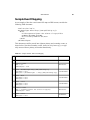
Table 3–1 briefly describes the Basic examples.
Table 3–1 Basic JAXB Examples
Example Name
Description
Unmarshal Read Example
Demonstrates how to unmarshal an XML document into a Java
content tree and access the data contained within it.
Modify Marshal Example
Demonstrates how to modify a Java content tree.
Unmarshal Validate
Example
Demonstrates how to enable validation during unmarshalling.
Pull Parser Example
Demonstrates how to use the StAX pull parser to parse a portion
of an XML document.
Table 3–2 briefly describes the Customize examples.
Table 3–2 Customize JAXB Examples
Example Name
Description
Customize Inline Example
Demonstrates how to customize the default JAXB bindings by
using inline annotations in an XML schema.
Datatype Converter
Example
Similar to the Customize Inline example, this example illustrates
alternate, more terse bindings of XML simpleType definitions to
Java datatypes.
External Customize
Example
Illustrates how to use an external binding declarations file to pass
binding customizations for a read-only schema to the JAXB binding compiler.
Fix Collides Example
Illustrates how to use customizations to resolve name conflicts
reported by the JAXB binding compiler. You should first move
binding.xjb, the binding file, out of the application directory to
see the errors reported by the JAXB binding compiler, and then
look at binding.xjb to see how the errors were resolved. Running asant alone uses the binding customizations to resolve the
name conflicts while compiling the schema.
13
14
USING JAXB
Table 3–3 briefly describes the Java-to-Schema examples.
Table 3–3 Java-toSchema JAXB Examples
Example Name
Description
j2s-create-marshal
Illustrates how to marshal and unmarshal JAXB-annotated classes
to XML schema. The example also shows how to enable JAXP
1.3 validation at unmarshal time using a schema file that was generated from the JAXB mapped classes.
j2s-xmlAccessorOrder
Illustrates how to use the @XmlAccessorOrder and @XmlType.propOrder mapping annotations in Java classes to control the
order in which XML content is marshalled/unmarshaled by a Java
type.
j2s-xmlAdapter-field
Illustrates how to use the interface XmlAdapter and the annotation @XmlJavaTypeAdapter to provide a a custom mapping of
XML content into and out of a HashMap (field) that uses an “int”
as the key and a “string” as the value.
j2s-xmlAttribute-field
Illustrates how to use the annotation @XmlAttribute to define a
property or field to be handled as an XML attribute.
j2s-xmlRootElement
Illustrates how to use the annotation @XmlRootElement to define
an XML element name for the XML schema type of the corresponding class.
j2s-xmlSchemaTypeclass
Illustrates how to use the annotation @XmlSchemaType to customize the mapping of a property or field to an XML built-in type.
j2s-xmlType
Illustrates how to use the annotation @XmlType to map a class or
enum type to an XML schema type.
Each Basic and Customize example directory contains several base files:
• po.xsd is the XML schema you will use as input to the JAXB binding
compiler, and from which schema-derived JAXB Java classes will be generated. For the Customize Inline and Datatype Converter examples, this
file contains inline binding customizations. Note that the Fix Collides
example uses example.xsd rather than po.xsd.
• po.xml is the Purchase Order XML file containing sample XML content,
and is the file you will unmarshal into a Java content tree in each example.
This file is almost exactly the same in each example, with minor content
USING THE EXAMPLES
•
•
•
•
•
differences to highlight different JAXB concepts. Note that the Fix Collides example uses example.xml rather than po.xml.
Main.java is the main Java class for each example.
build.xml is an Ant project file provided for your convenience. Use Ant
to generate, compile, and run the schema-derived JAXB classes automatically. The build.xml file varies across the examples.
MyDatatypeConverter.java in the inline-customize example is a Java
class used to provide custom datatype conversions.
binding.xjb in the External Customize and Fix Collides examples is an
external binding declarations file that is passed to the JAXB binding compiler to customize the default JAXB bindings.
example.xsd in the Fix Collides example is a short schema file that contains deliberate naming conflicts, to show how to resolve such conflicts
with custom JAXB bindings.
Using the Examples
As with all applications that implement schema-derived JAXB classes, as
described above, there are two distinct phases in using JAXB:
1. Generating and compiling JAXB Java classes from an XML source
schema
2. Unmarshalling, validating, processing, and marshalling XML content
In the case of these examples, you perform these steps by using asant with the
build.xml project file included in each example directory.
Configuring and Running the Samples
The build.xml file included in each example directory is an asant project file
that, when run, automatically performs the following steps:
1. Updates your CLASSPATH to include the necessary schema-derived JAXB
classes.
2. For the Basic and Customize examples, runs the JAXB binding compiler
to generate JAXB Java classes from the XML source schema, po.xsd, and
puts the classes in a package named primer.po. For the Java-to-Schema
examples runs schemagen, the schema generator, to generate XML schema
from the annotated Java classes.
15
16
USING JAXB
3. Compiles the schema-derived JAXB classes or the annotated Java code.
4. Runs the Main class for the example.
The schema-derived JAXB classes and how they are bound to the source schema
is described in About the Schema-to-Java Bindings (page 19). The methods used
for building and processing the Java content tree are described in Basic
Examples (page 29).
JAXB Compiler Options
The JAXB XJC schema binding compiler transforms, or binds, a source XML
schema to a set of JAXB content classes in the Java programming language. The
compiler, xjc, is provided in two flavors in the Application Server: xjc.sh
(Solaris/Linux) and xjc.bat (Windows). Both xjc.sh and xjc.bat take the
same command-line options. You can display quick usage instructions by invoking the scripts without any options, or with the -help switch. The syntax is as
follows:
xjc [-options ...] <schema>
The xjc command-line options are listed in Table 3–4.
Table 3–4 xjc Command-Line Options
Option or
Argument
Description
-nv
Do not perform strict validation of the input schema(s). By default,
xjc performs strict validation of the source schema before processing. Note that this does not mean the binding compiler will not perform any validation; it simply means that it will perform less-strict
validation.
-extension
By default, the XJC binding compiler strictly enforces the rules outlined in the Compatibility chapter of the JAXB Specification. In the
default (strict) mode, you are also limited to using only the binding
customizations defined in the specification. By using the-extension switch, you will be allowed to use the JAXB Vendor Extensions.
JAXB COMPILER OPTIONS
Table 3–4 xjc Command-Line Options (Continued)
Option or
Argument
Description
-b file
Specify one or more external binding files to process. (Each binding
file must have its own -b switch.) The syntax of the external binding
files is extremely flexible. You may have a single binding file that
contains customizations for multiple schemas or you can break the
customizations into multiple bindings files. In addition, the ordering
of the schema files and binding files on the command line does not
matter.
-d dir
By default, xjc will generate Java content classes in the current
directory. Use this option to specify an alternate output directory.
The directory must already exist; xjc will not create it for you.
-p package
Specify an alternate output directory. By default, the XJC binding
compiler will generate the Java content classes in the current directory. The output directory must already exist; the XJC binding compiler will not create it for you.
-proxy proxy
Specify the HTTP/HTTPS proxy. The format is [user[:password]@]proxyHost[:proxyPort]. The old -host and -port
options are still supported by the Reference Implementation for
backwards compatibility, but they have been deprecated.
-classpath arg
Specify where to find client application class files used by the
<jxb:javaType> and <xjc:superClass> customizations.
-catalog file
Specify catalog files to resolve external entity references. Supports
TR9401, XCatalog, and OASIS XML Catalog format. For more
information, please read the XML Entity and URI Resolvers document or examine the catalog-resolver sample application.
-readOnly
Force the XJC binding compiler to mark the generated Java sources
read-only. By default, the XJC binding compiler does not write-protect the Java source files it generates.
-npa
Supress the generation of package level annotations into **/package-info.java. Using this switch causes the generated code to
internalize those annotations into the other generated classes.
-xmlschema
Treat input schemas as W3C XML Schema (default). If you do not
specify this switch, your input schemas will be treated as W3C
XML Schema.
17
18
USING JAXB
Table 3–4 xjc Command-Line Options (Continued)
Option or
Argument
Description
-quiet
Suppress compiler output, such as progress information and warnings.
-help
Display a brief summary of the compiler switches.
-version
Display the compiler version information.
-Xlocator
Enable source location support for generated code.
-Xsync-methods
Generate accessor methods with the synchronized keyword.
-mark-generated
Mark the generated code with the [email protected] annotation.
JAXB Schema Generator Options
The JAXB Schema Generator, schemagen, creates a schema file for each
namespace referenced in your Java classes. The schema generator can be
launched using the appropriate schemagen shell script in the bin directory for
your platform. The schema generator processes Java source files only. If your
Java sources reference other classes, those sources must be accessible from your
system CLASSPATH environment variable or errors will occur when the schema
is generated. There is no way to control the name of the generated schema files.
You can display quick usage instructions by invoking the scripts without any
options, or with the -help switch. The syntax is as follows:
schemagen [-options ...] [java_source_files]
The schemagen command-line options are listed in Table 3–5.
Table 3–5 schemagen Command-Line Options
Option or
Argument
-d path
Description
Specifies the location of the processor- and javac generated class
files.
ABOUT THE SCHEMA-TO-JAVA BINDINGS
About the Schema-to-Java Bindings
When you run the JAXB binding compiler against the po.xsd XML schema
used in the basic examples (Unmarshal Read, Modify Marshal, Unmarshal Validate), the JAXB binding compiler generates a Java package named primer.po
containing eleven classes, making a total of twelve classes in each of the basic
examples:
Table 3–6 Schema-Derived JAXB Classes in the Basic Examples
Class
Description
primer/po/
Comment.java
Public interface extending javax.xml.bind.Element;
binds to the global schema element named comment. Note
that JAXB generates element interfaces for all global element
declarations.
primer/po/
Items.java
Public interface that binds to the schema complexType
named Items.
primer/po/
ObjectFactory.java
Public class extending com.sun.xml.bind.DefaultJAXBContextImpl; used to create instances of specified interfaces. For example, the ObjectFactory createComment()
method instantiates a Comment object.
primer/po/
PurchaseOrder.java
Public interface extending javax.xml.bind.Element, and
PurchaseOrderType; binds to the global schema element
named PurchaseOrder.
primer/po/
PurchaseOrderType.java
Public interface that binds to the schema complexType
named PurchaseOrderType.
primer/po/
USAddress.java
Public interface that binds to the schema complexType
named USAddress.
primer/po/impl/
CommentImpl.java
Implementation of Comment.java.
primer/po/impl/
ItemsImpl.java
Implementation of Items.java
primer/po/impl/
PurchaseOrderImpl.java
Implementation of PurchaseOrder.java
19
20
USING JAXB
Table 3–6 Schema-Derived JAXB Classes in the Basic Examples (Continued)
Class
Description
primer/po/impl/
PurchaseOrderTypeImpl.java
Implementation of PurchaseOrderType.java
primer/po/impl/
USAddressImpl.java
Implementation of USAddress.java
Note: You should never directly use the generated implementation classes—that is,
*Impl.java in the <packagename>/impl directory. These classes are not directly
referenceable because the class names in this directory are not standardized by the
JAXB specification. The ObjectFactory method is the only portable means to create an instance of a schema-derived interface. There is also an ObjectFactory.newInstance(Class JAXBinterface) method that enables you to create
instances of interfaces.
These classes and their specific bindings to the source XML schema for the basic
examples are described below.
Table 3–7 Schema-to-Java Bindings for the Basic Examples
XML Schema
JAXB Binding
<xsd:schema xmlns:xsd="http://www.w3.org/2001/XMLSchema">
<xsd:element name="purchaseOrder" type="PurchaseOrderType"/>
PurchaseOrder.java
<xsd:element name="comment" type="xsd:string"/>
Comment.java
<xsd:complexType name="PurchaseOrderType">
<xsd:sequence>
<xsd:element name="shipTo" type="USAddress"/>
<xsd:element name="billTo" type="USAddress"/>
<xsd:element ref="comment" minOccurs="0"/>
<xsd:element name="items" type="Items"/>
</xsd:sequence>
<xsd:attribute name="orderDate" type="xsd:date"/>
</xsd:complexType>
PurchaseOrderType.java
21
ABOUT THE SCHEMA-TO-JAVA BINDINGS
Table 3–7 Schema-to-Java Bindings for the Basic Examples (Continued)
XML Schema
JAXB Binding
<xsd:complexType name="USAddress">
<xsd:sequence>
<xsd:element name="name" type="xsd:string"/>
<xsd:element name="street" type="xsd:string"/>
<xsd:element name="city" type="xsd:string"/>
<xsd:element name="state" type="xsd:string"/>
<xsd:element name="zip" type="xsd:decimal"/>
</xsd:sequence>
<xsd:attribute name="country" type="xsd:NMTOKEN" fixed="US"/>
</xsd:complexType>
USAddress.java
<xsd:complexType name="Items">
<xsd:sequence>
<xsd:element name="item" minOccurs="1" maxOccurs="unbounded">
Items.java
<xsd:complexType>
<xsd:sequence>
<xsd:element name="productName" type="xsd:string"/>
<xsd:element name="quantity">
<xsd:simpleType>
<xsd:restriction base="xsd:positiveInteger">
<xsd:maxExclusive value="100"/>
</xsd:restriction>
</xsd:simpleType>
</xsd:element>
<xsd:element name="USPrice" type="xsd:decimal"/>
<xsd:element ref="comment" minOccurs="0"/>
<xsd:element name="shipDate" type="xsd:date" minOccurs="0"/>
</xsd:sequence>
<xsd:attribute name="partNum" type="SKU" use="required"/>
</xsd:complexType>
Items.ItemType
</xsd:element>
</xsd:sequence>
</xsd:complexType>
<!-- Stock Keeping Unit, a code for identifying products -->
<xsd:simpleType name="SKU">
<xsd:restriction base="xsd:string">
<xsd:pattern value="\d{3}-[A-Z]{2}"/>
</xsd:restriction>
</xsd:simpleType>
</xsd:schema>
22
USING JAXB
Schema-Derived JAXB Classes
The code for the individual classes generated by the JAXB binding compiler for the
Basic examples is listed below, followed by brief explanations of its functions. The
classes listed here are:
•
•
•
•
•
•
Comment.java
Items.java
ObjectFactory.java
PurchaseOrder.java
PurchaseOrderType.java
USAddress.java
Comment.java
In Comment.java:
• The Comment.java class is part of the primer.po package.
• Comment is a public interface that extends javax.xml.bind.Element.
• Content in instantiations of this class bind to the XML schema element named
comment.
• The getValue() and setValue() methods are used to get and set strings representing XML comment elements in the Java content tree.
The Comment.java code looks like this:
package primer.po;
public interface Comment
extends javax.xml.bind.Element
{
String getValue();
void setValue(String value);
}
SCHEMA-DERIVED JAXB CLASSES
Items.java
In Items.java, below:
• The Items.java class is part of the primer.po package.
• The class provides public interfaces for Items and ItemType.
• Content in instantiations of this class bind to the XML ComplexTypes
Items and its child element ItemType.
• Item provides the getItem() method.
• ItemType provides methods for:
•
•
•
•
•
•
•
•
•
•
•
•
getPartNum();
setPartNum(String value);
getComment();
setComment(java.lang.String value);
getUSPrice();
setUSPrice(java.math.BigDecimal value);
getProductName();
setProductName(String value);
getShipDate();
setShipDate(java.util.Calendar value);
getQuantity();
setQuantity(java.math.BigInteger value);
The Items.java code looks like this:
package primer.po;
public interface Items {
java.util.List getItem();
public interface ItemType {
String getPartNum();
void setPartNum(String value);
java.lang.String getComment();
void setComment(java.lang.String value);
java.math.BigDecimal getUSPrice();
void setUSPrice(java.math.BigDecimal value);
String getProductName();
void setProductName(String value);
java.util.Calendar getShipDate();
void setShipDate(java.util.Calendar value);
23
24
USING JAXB
java.math.BigInteger getQuantity();
void setQuantity(java.math.BigInteger value);
}
}
ObjectFactory.java
In ObjectFactory.java, below:
• The ObjectFactory class is part of the primer.po package.
• ObjectFactory provides factory methods for instantiating Java interfaces
representing XML content in the Java content tree.
• Method names are generated by concatenating:
• The string constant create
• If the Java content interface is nested within another interface, then the
concatenation of all outer Java class names
• The name of the Java content interface
• JAXB implementation-specific code was removed in this example to
make it easier to read.
For example, in this case, for the Java interface primer.po.Items.ItemType,
ObjectFactory creates the method createItemsItemType().
The ObjectFactory.java code looks like this:
package primer.po;
public class ObjectFactory
extends com.sun.xml.bind.DefaultJAXBContextImpl {
/**
* Create a new ObjectFactory that can be used to create
* new instances of schema derived classes for package:
* primer.po
*/
public ObjectFactory() {
super(new primer.po.ObjectFactory.GrammarInfoImpl());
}
/**
* Create an instance of the specified Java content
* interface.
*/
public Object newInstance(Class javaContentInterface)
SCHEMA-DERIVED JAXB CLASSES
throws javax.xml.bind.JAXBException
{
return super.newInstance(javaContentInterface);
}
/**
* Get the specified property. This method can only be
* used to get provider specific properties.
* Attempting to get an undefined property will result
* in a PropertyException being thrown.
*/
public Object getProperty(String name)
throws javax.xml.bind.PropertyException
{
return super.getProperty(name);
}
/**
* Set the specified property. This method can only be
* used to set provider specific properties.
* Attempting to set an undefined property will result
* in a PropertyException being thrown.
*/
public void setProperty(String name, Object value)
throws javax.xml.bind.PropertyException
{
super.setProperty(name, value);
}
/**
* Create an instance of PurchaseOrder
*/
public primer.po.PurchaseOrder createPurchaseOrder()
throws javax.xml.bind.JAXBException
{
return ((primer.po.PurchaseOrder)
newInstance((primer.po.PurchaseOrder.class)));
}
/**
* Create an instance of ItemsItemType
*/
public primer.po.Items.ItemType createItemsItemType()
throws javax.xml.bind.JAXBException
{
return ((primer.po.Items.ItemType)
newInstance((primer.po.Items.ItemType.class)));
}
25
26
USING JAXB
/**
* Create an instance of USAddress
*/
public primer.po.USAddress createUSAddress()
throws javax.xml.bind.JAXBException
{
return ((primer.po.USAddress)
newInstance((primer.po.USAddress.class)));
}
/**
* Create an instance of Comment
*/
public primer.po.Comment createComment()
throws javax.xml.bind.JAXBException
{
return ((primer.po.Comment)
newInstance((primer.po.Comment.class)));
}
/**
* Create an instance of Comment
*/
public primer.po.Comment createComment(String value)
throws javax.xml.bind.JAXBException
{
return new primer.po.impl.CommentImpl(value);
}
/**
* Create an instance of Items
*/
public primer.po.Items createItems()
throws javax.xml.bind.JAXBException
{
return ((primer.po.Items)
newInstance((primer.po.Items.class)));
}
/**
* Create an instance of PurchaseOrderType
*/
public primer.po.PurchaseOrderType
createPurchaseOrderType()
throws javax.xml.bind.JAXBException
{
SCHEMA-DERIVED JAXB CLASSES
return ((primer.po.PurchaseOrderType)
newInstance((primer.po.PurchaseOrderType.class)));
}
}
PurchaseOrder.java
In PurchaseOrder.java, below:
• The PurchaseOrder class is part of the primer.po package.
• PurchaseOrder is a public interface that extends javax.xml.bind.Element and primer.po.PurchaseOrderType.
• Content in instantiations of this class bind to the XML schema element
named purchaseOrder.
The PurchaseOrder.java code looks like this:
package primer.po;
public interface PurchaseOrder
extends javax.xml.bind.Element, primer.po.PurchaseOrderType{
}
PurchaseOrderType.java
In PurchaseOrderType.java, below:
• The PurchaseOrderType class is part of the primer.po package.
• Content in instantiations of this class bind to the XML schema child element named PurchaseOrderType.
• PurchaseOrderType is a public interface that provides the following
methods:
•
•
•
•
•
•
•
•
•
•
getItems();
setItems(primer.po.Items value);
getOrderDate();
setOrderDate(java.util.Calendar value);
getComment();
setComment(java.lang.String value);
getBillTo();
setBillTo(primer.po.USAddress value);
getShipTo();
setShipTo(primer.po.USAddress value);
27
28
USING JAXB
The PurchaseOrderType.java code looks like this:
package primer.po;
public interface PurchaseOrderType {
primer.po.Items getItems();
void setItems(primer.po.Items value);
java.util.Calendar getOrderDate();
void setOrderDate(java.util.Calendar value);
java.lang.String getComment();
void setComment(java.lang.String value);
primer.po.USAddress getBillTo();
void setBillTo(primer.po.USAddress value);
primer.po.USAddress getShipTo();
void setShipTo(primer.po.USAddress value);
}
USAddress.java
In USAddress.java, below:
• The USAddress class is part of the primer.po package.
• Content in instantiations of this class bind to the XML schema element
named USAddress.
• USAddress is a public interface that provides the following methods:
•
•
•
•
•
•
•
•
•
•
•
•
getState();
setState(String value);
getZip();
setZip(java.math.BigDecimal value);
getCountry();
setCountry(String value);
getCity();
setCity(String value);
getStreet();
setStreet(String value);
getName();
setName(String value);
The USAddress.java code looks like this:
package primer.po;
public interface USAddress {
String getState();
BASIC EXAMPLES
void setState(String value);
java.math.BigDecimal getZip();
void setZip(java.math.BigDecimal value);
String getCountry();
void setCountry(String value);
String getCity();
void setCity(String value);
String getStreet();
void setStreet(String value);
String getName();
void setName(String value);
}
Basic Examples
This section describes the Basic examples (Unmarshal Read, Modify Marshal,
Unmarshal Validate) that demonstrate how to:
• Unmarshal an XML document into a Java content tree and access the data
contained within it
• Modify a Java content tree
• Use the ObjectFactory class to create a Java content tree from scratch and
then marshal it to XML data
• Perform validation during unmarshalling
• Validate a Java content tree at runtime
Unmarshal Read Example
The purpose of the Unmarshal Read example is to demonstrate how to unmarshal an XML document into a Java content tree and access the data contained
within it.
1. The <INSTALL>/examples/jaxb/unmarshal-read/
Main.java class declares imports for four standard Java classes plus three
JAXB binding framework classes and the primer.po package:
import
import
import
import
import
import
java.io.FileInputStream
java.io.IOException
java.util.Iterator
java.util.List
javax.xml.bind.JAXBContext
javax.xml.bind.JAXBException
29
30
USING JAXB
import javax.xml.bind.Unmarshaller
import primer.po.*;
2. A JAXBContext instance is created for handling classes generated in
primer.po.
JAXBContext jc = JAXBContext.newInstance( "primer.po" );
3. An Unmarshaller instance is created.
Unmarshaller u = jc.createUnmarshaller();
4. po.xml is unmarshalled into a Java content tree comprising objects generated by the JAXB binding compiler into the primer.po package.
PurchaseOrder po =
(PurchaseOrder)u.unmarshal(
new FileInputStream( "po.xml" ) );
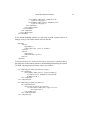
5. A simple string is printed to system.out to provide a heading for the purchase order invoice.
System.out.println( "Ship the following items to: " );
6. get and display methods are used to parse XML content in preparation
for output.
USAddress address = po.getShipTo();
displayAddress(address);
Items items = po.getItems();
displayItems(items);
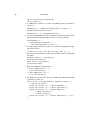
7. Basic error handling is implemented.
} catch( JAXBException je ) {
je.printStackTrace();
} catch( IOException ioe ) {
ioe.printStackTrace();
8. The USAddress branch of the Java tree is walked, and address information
is printed to system.out.
public static void displayAddress( USAddress address ) {
// display the address
System.out.println( "\t" + address.getName() );
System.out.println( "\t" + address.getStreet() );
System.out.println( "\t" + address.getCity() +
", " + address.getState() +
" " + address.getZip() );
System.out.println( "\t" + address.getCountry() + "\n");
}
MODIFY MARSHAL EXAMPLE
9. The Items list branch is walked, and item information is printed to system.out.
public static void displayItems( Items items ) {
// the items object contains a List of
//primer.po.ItemType objects
List itemTypeList = items.getItem();
10.Walking of the Items branch is iterated until all items have been printed.
for(Iterator iter = itemTypeList.iterator();
iter.hasNext();) {
Items.ItemType item = (Items.ItemType)iter.next();
System.out.println( "\t" + item.getQuantity() +
" copies of \"" + item.getProductName() +
"\"" );
}
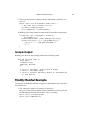
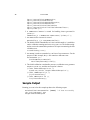
Sample Output
Running java Main for this example produces the following output:
Ship the following items to:
Alice Smith
123 Maple Street
Cambridge, MA 12345
US
5 copies of "Nosferatu - Special Edition (1929)"
3 copies of "The Mummy (1959)"
3 copies of "Godzilla and Mothra: Battle for Earth/Godzilla
vs. King Ghidora"
Modify Marshal Example
The purpose of the Modify Marshal example is to demonstrate how to modify a
Java content tree.
1. The <INSTALL>/examples/jaxb/modify-marshal/
Main.java class declares imports for three standard Java classes plus four
JAXB binding framework classes and primer.po package:
import java.io.FileInputStream;
import java.io.IOException;
31
32
USING JAXB
import
import
import
import
import
import
java.math.BigDecimal;
javax.xml.bind.JAXBContext;
javax.xml.bind.JAXBException;
javax.xml.bind.Marshaller;
javax.xml.bind.Unmarshaller;
primer.po.*;
2. A JAXBContext instance is created for handling classes generated in
primer.po.
JAXBContext jc = JAXBContext.newInstance( "primer.po" );
3. An Unmarshaller instance is created, and po.xml is unmarshalled.
Unmarshaller u = jc.createUnmarshaller();
PurchaseOrder po =
(PurchaseOrder)u.unmarshal(
new FileInputStream( "po.xml" ) );
4. set methods are used to modify information in the address branch of the
content tree.
USAddress address = po.getBillTo();
address.setName( "John Bob" );
address.setStreet( "242 Main Street" );
address.setCity( "Beverly Hills" );
address.setState( "CA" );
address.setZip( new BigDecimal( "90210" ) );
5. A Marshaller instance is created, and the updated XML content is marshalled to system.out. The setProperty API is used to specify output
encoding; in this case formatted (human readable) XML format.
Marshaller m = jc.createMarshaller();
m.setProperty(Marshaller.JAXB_FORMATTED_OUTPUT,
Boolean.TRUE);
m.marshal( po, System.out );
Sample Output
Running java Main for this example produces the following output:
<?xml version="1.0" encoding="UTF-8" standalone="yes"?>
<purchaseOrder orderDate="1999-10-20-05:00">
<shipTo country="US">
<name>Alice Smith</name>
<street>123 Maple Street</street>
UNMARSHAL VALIDATE EXAMPLE
<city>Cambridge</city>
<state>MA</state>
<zip>12345</zip>
</shipTo>
<billTo country="US">
<name>John Bob</name>
<street>242 Main Street</street>
<city>Beverly Hills</city>
<state>CA</state>
<zip>90210</zip>
</billTo>
<items>
<item partNum="242-NO">
<productName>Nosferatu - Special Edition (1929)</productName>
<quantity>5</quantity>
<USPrice>19.99</USPrice>
</item>
<item partNum="242-MU">
<productName>The Mummy (1959)</productName>
<quantity>3</quantity>
<USPrice>19.98</USPrice>
</item>
<item partNum="242-GZ">
<productName>
Godzilla and Mothra: Battle for Earth/Godzilla vs. King Ghidora
</productName>
<quantity>3</quantity>
<USPrice>27.95</USPrice>
</item>
</items>
</purchaseOrder>
Unmarshal Validate Example
The Unmarshal Validate example demonstrates how to enable validation during
unmarshalling (Unmarshal-Time Validation). Note that JAXB provides functions
for validation during unmarshalling but not during marshalling. Validation is
explained in more detail in More About Validation (page 4).
1. The <INSTALL>/examples/jaxb/unmarshal-validate/Main.java
class declares imports for three standard Java classes plus seven JAXB
binding framework classes and the primer.po package:
import
import
import
import
java.io.FileInputStream;
java.io.IOException;
java.math.BigDecimal;
javax.xml.bind.JAXBContext;
33
34
USING JAXB
import
import
import
import
import
import
import
javax.xml.bind.JAXBException;
javax.xml.bind.Marshaller;
javax.xml.bind.UnmarshalException;
javax.xml.bind.Unmarshaller;
javax.xml.bind.ValidationEvent;
javax.xml.bind.util.ValidationEventCollector;
primer.po.*;
2. A JAXBContext instance is created for handling classes generated in
primer.po.
JAXBContext jc = JAXBContext.newInstance( "primer.po" );
3. An Unmarshaller instance is created.
Unmarshaller u = jc.createUnmarshaller();
4. The default JAXB Unmarshaller ValidationEventHandler is enabled to
send to validation warnings and errors to system.out. The default configuration causes the unmarshal operation to fail upon encountering the first
validation error.
u.setValidating( true );
5. An attempt is made to unmarshal po.xml into a Java content tree. For the
purposes of this example, the po.xml contains a deliberate error.
PurchaseOrder po =
(PurchaseOrder)u.unmarshal(
new FileInputStream("po.xml"));
6. The default validation event handler processes a validation error, generates
output to system.out, and then an exception is thrown.
} catch( UnmarshalException ue ) {
System.out.println( "Caught UnmarshalException" );
} catch( JAXBException je ) {
je.printStackTrace();
} catch( IOException ioe ) {
ioe.printStackTrace();
Sample Output
Running java Main for this example produces the following output:
DefaultValidationEventHandler: [ERROR]: "-1" does not satisfy
the "positiveInteger" type
Caught UnmarshalException
CUSTOMIZING JAXB BINDINGS
Customizing JAXB Bindings
The remainder of this chapter describes several examples that build on the concepts demonstrated in the basic examples.
The goal of this section is to illustrate how to customize JAXB bindings by
means of custom binding declarations made in either of two ways:
• As annotations made inline in an XML schema
• As statements in an external file passed to the JAXB binding compiler
Unlike the examples in Basic Examples (page 29), which focus on the Java code
in the respective Main.java class files, the examples here focus on customizations made to the XML schema before generating the schema-derived Java binding classes.
Note: Although JAXB binding customizations must currently be made by hand, it
is envisioned that a tool/wizard may eventually be written by Sun or a third party to
make this process more automatic and easier in general. One of the goals of the
JAXB technology is to standardize the format of binding declarations, thereby making it possible to create customization tools and to provide a standard interchange
format between JAXB implementations.
This section just begins to scratch the surface of customizations you can make to
JAXB bindings and validation methods. For more information, please refer to
the JAXB Specification (http://java.sun.com/xml/downloads/jaxb.html).
Why Customize?
In most cases, the default bindings generated by the JAXB binding compiler will
be sufficient to meet your needs. There are cases, however, in which you may
want to modify the default bindings. Some of these include:
• Creating API documentation for the schema-derived JAXB packages,
classes, methods and constants; by adding custom Javadoc tool annotations to your schemas, you can explain concepts, guidelines, and rules specific to your implementation.
• Providing semantically meaningful customized names for cases that the
default XML name-to-Java identifier mapping cannot handle automatically; for example:
35
36
USING JAXB
• To resolve name collisions (as described in Appendix C.2.1 of the JAXB
Specification). Note that the JAXB binding compiler detects and reports
all name conflicts.
• To provide names for typesafe enumeration constants that are not legal
Java identifiers; for example, enumeration over integer values.
• To provide better names for the Java representation of unnamed model
groups when they are bound to a Java property or class.
• To provide more meaningful package names than can be derived by
default from the target namespace URI.
• Overriding default bindings; for example:
• Specify that a model group should be bound to a class rather than a list.
• Specify that a fixed attribute can be bound to a Java constant.
• Override the specified default binding of XML Schema built-in
datatypes to Java datatypes. In some cases, you might want to introduce
an alternative Java class that can represent additional characteristics of
the built-in XML Schema datatype.
Customization Overview
This section explains some core JAXB customization concepts:
•
•
•
•
Inline and External Customizations
Scope, Inheritance, and Precedence
Customization Syntax
Customization Namespace Prefix
Inline and External Customizations
Customizations to the default JAXB bindings are made in the form of binding
declarations passed to the JAXB binding compiler. These binding declarations
can be made in either of two ways:
• As inline annotations in a source XML schema
• As declarations in an external binding customizations file
For some people, using inline customizations is easier because you can see your
customizations in the context of the schema to which they apply. Conversely,
using an external binding customization file enables you to customize JAXB
CUSTOMIZATION OVERVIEW
bindings without having to modify the source schema, and enables you to easily
apply customizations to several schema files at once.
Note: You can combine the two types of customizations—for example, you could
include a reference to an external binding customizations file in an inline annotation—but you cannot declare both an inline and external customization on the same
schema element.
Each of these types of customization is described in more detail below.
Inline Customizations
Customizations to JAXB bindings made by means of inline binding declarations
in an XML schema file take the form of <xsd:appinfo> elements embedded in
schema <xsd:annotation> elements (xsd: is the XML schema namespace prefix, as defined in W3C XML Schema Part 1: Structures). The general form for
inline customizations is shown below.
<xs:annotation>
<xs:appinfo>
.
.
binding declarations
.
.
</xs:appinfo>
</xs:annotation>
Customizations are applied at the location at which they are declared in the
schema. For example, a declaration at the level of a particular element would
apply to that element only. Note that the XMLSchema namespace prefix must be
used with the <annotation> and <appinfo> declaration tags. In the example
above, xs: is used as the namespace prefix, so the declarations are tagged
<xs:annotation> and <xs:appinfo>.
37
38
USING JAXB
External Binding Customization Files
Customizations to JAXB bindings made by means of an external file containing
binding declarations take the general form shown below.
<jxb:bindings schemaLocation = "xs:anyURI">
<jxb:bindings node = "xs:string">*
<binding declaration>
<jxb:bindings>
</jxb:bindings>
• schemaLocation is a URI reference to the remote schema
• node is an XPath 1.0 expression that identifies the schema node within
schemaLocation to which the given binding declaration is associated.
For example, the first schemaLocation/node declaration in a JAXB binding declarations file specifies the schema name and the root schema node:
<jxb:bindings schemaLocation="po.xsd" node="/xs:schema">
A subsequent schemaLocation/node declaration, say for a simpleType element
named ZipCodeType in the above schema, would take the form:
<jxb:bindings node=”//xs:simpleType[@name=’ZipCodeType’]”>
Binding Customization File Format
Binding customization files should be straight ASCII text. The name or extension does not matter, although a typical extension, used in this chapter, is.xjb.
Passing Customization Files to the JAXB Binding
Compiler
Customization files containing binding declarations are passed to the JAXB
Binding compiler, xjc, using the following syntax:
xjc -b <file> <schema>
where <file> is the name of binding customization file, and <schema> is the
name of the schema(s) you want to pass to the binding compiler.
CUSTOMIZATION OVERVIEW
You can have a single binding file that contains customizations for multiple schemas, or you can break the customizations into multiple bindings files; for example:
xjc schema1.xsd schema2.xsd schema3.xsd -b bindings123.xjb
xjc schema1.xsd schema2.xsd schema3.xsd -b bindings1.xjb -b
bindings2.xjb -b bindings3.xjb
Note that the ordering of schema files and binding files on the command line
does not matter, although each binding customization file must be preceded by
its own -b switch on the command line.
For more information about xjc compiler options in general, see JAXB Compiler Options (page 16).
Restrictions for External Binding Customizations
There are several rules that apply to binding declarations made in an external
binding customization file that do not apply to similar declarations made inline
in a source schema:
• The binding customization file must begin with the jxb:bindings
version attribute, plus attributes for the JAXB and XMLSchema
namespaces:
<jxb:bindings version="1.0"
xmlns:jxb="http://java.sun.com/xml/ns/jaxb"
xmlns:xs="http://www.w3.org/2001/XMLSchema">
• The remote schema to which the binding declaration applies must be identified explicitly in XPath notation by means of a jxb:bindings declaration
specifying schemaLocation and node attributes:
• schemaLocation – URI reference to the remote schema
• node – XPath 1.0 expression that identifies the schema node within
schemaLocation to which the given binding declaration is associated;
in the case of the initial jxb:bindings declaration in the binding customization file, this node is typically "/xs:schema"
For information about XPath syntax, see XML Path Language, James
Clark and Steve DeRose, eds., W3C, 16 November 1999. Available at
http://www.w3.org/TR/1999/REC-xpath-19991116.
• Similarly, individual nodes within the schema to which customizations are
to be applied must be specified using XPath notation; for example:
39
40
USING JAXB
<jxb:bindings node="//xs:complexType[@name='USAddress']">
In such cases, the customization is applied to the node by the binding
compiler as if the declaration was embedded inline in the node’s
<xs:appinfo> element.
To summarize these rules, the external binding element <jxb:bindings> is only
recognized for processing by a JAXB binding compiler in three cases:
• When its parent is an <xs:appinfo> element
• When it is an ancestor of another <jxb:bindings> element
• When it is root element of a document—an XML document that has a
<jxb:bindings> element as its root is referred to as an external binding
declaration file
Scope, Inheritance, and Precedence
Default JAXB bindings can be customized or overridden at four different levels,
or scopes, as described in Table 3–7.
Figure 3–1 illustrates the inheritance and precedence of customization declarations. Specifically, declarations towards the top of the pyramid inherit and supersede declarations below them. For example, Component declarations inherit
from and supersede Definition declarations; Definition declarations inherit and
supersede Schema declarations; and Schema declarations inherit and supersede
Global declarations.
CUSTOMIZATION OVERVIEW
Figure 3–1 Customization Scope Inheritance and Precedence
Customization Syntax
The syntax for the four types of JAXB binding declarations, as well as the syntax
for the XML-to-Java datatype binding declarations and the customization
namespace prefix are described below.
•
•
•
•
•
•
•
•
Global Binding Declarations
Schema Binding Declarations
Class Binding Declarations
Property Binding Declarations
<javaType> Binding Declarations
Typesafe Enumeration Binding Declarations
<javadoc> Binding Declarations
Customization Namespace Prefix
41
42
USING JAXB
Global Binding Declarations
Global scope customizations are declared with <globalBindings>. The syntax
for global scope customizations is as follows:
<globalBindings>
[ collectionType = "collectionType" ]
[ fixedAttributeAsConstantProperty= "true" | "false" | "1" | "0" ]
[ generateIsSetMethod= "true" | "false" | "1" | "0" ]
[ enableFailFastCheck = "true" | "false" | "1" | "0" ]
[ choiceContentProperty = "true" | "false" | "1" | "0" ]
[ underscoreBinding = "asWordSeparator" | "asCharInWord" ]
[ typesafeEnumBase = "typesafeEnumBase" ]
[ typesafeEnumMemberName = "generateName" | "generateError" ]
[ enableJavaNamingConventions = "true" | "false" | "1" | "0" ]
[ bindingStyle = "elementBinding" | "modelGroupBinding" ]
[ <javaType> ... </javaType> ]*
</globalBindings>
• collectionType can be either indexed or any fully qualified class name
that implements java.util.List.
• fixedAttributeAsConstantProperty can be either true, false, 1, or 0.
The default value is false.
• generateIsSetMethod can be either true, false, 1, or 0. The default
value is false.
• enableFailFastCheck can be either true, false, 1, or 0. If enableFailFastCheck is true or 1 and the JAXB implementation supports this
optional checking, type constraint checking is performed when setting a
property. The default value is false. Please note that the JAXB implementation does not support failfast validation.
• choiceContentProperty can be either true, false, 1, or 0. The default
value is false. choiceContentProperty is not relevant when the bindingStyle is elementBinding. Therefore, if bindingStyle is specified as
elementBinding, then the choiceContentProperty must result in an
invalid customization.
• underscoreBinding can be either asWordSeparator or asCharInWord.
The default value is asWordSeparator.
• enableJavaNamingConventions can be either true, false, 1, or 0. The
default value is true.
• typesafeEnumBase can be a list of QNames, each of which must resolve
to a simple type definition. The default value is xs:NCName. See Typesafe
CUSTOMIZATION OVERVIEW
Enumeration Binding Declarations (page 47) for information about localized mapping of simpleType definitions to Java typesafe enum classes.
• typesafeEnumMemberName can be either generateError or generateName. The default value is generateError.
• bindingStyle can be either elementBinding, or modelGroupBinding.
The default value is elementBinding.
• <javaType> can be zero or more javaType binding declarations. See
<javaType> Binding Declarations (page 45) for more information.
<globalBindings> declarations are only valid in the annotation element of the
top-level schema element. There can only be a single instance of a <globalBindings> declaration in any given schema or binding declarations file. If one
source schema includes or imports a second source schema, the <globalBindings> declaration must be declared in the first source schema.
Schema Binding Declarations
Schema scope customizations are declared with <schemaBindings>. The syntax
for schema scope customizations is:
<schemaBindings>
[ <package> package </package> ]
[ <nameXmlTransform> ... </nameXmlTransform> ]*
</schemaBindings>
<package [ name = "packageName" ]
[ <javadoc> ... </javadoc> ]
</package>
<nameXmlTransform>
[ <typeName [ suffix="suffix" ]
[ prefix="prefix" ] /> ]
[ <elementName [ suffix="suffix" ]
[ prefix="prefix" ] /> ]
[ <modelGroupName [ suffix="suffix" ]
[ prefix="prefix" ] /> ]
[ <anonymousTypeName [ suffix="suffix" ]
[ prefix="prefix" ] /> ]
</nameXmlTransform>
As shown above, <schemaBinding> declarations include two subcomponents:
• <package>...</package> specifies the name of the package and, if
desired, the location of the API documentation for the schema-derived
classes.
43
44
USING JAXB
• <nameXmlTransform>...</nameXmlTransform> specifies customizations to be applied.
Class Binding Declarations
The <class> binding declaration enables you to customize the binding of a
schema element to a Java content interface or a Java Element interface. <class>
declarations can be used to customize:
• A name for a schema-derived Java interface
• An implementation class for a schema-derived Java content interface.
The syntax for <class> customizations is:
<class [ name = "className"]
[ implClass= "implClass" ] >
[ <javadoc> ... </javadoc> ]
</class>
• name is the name of the derived Java interface. It must be a legal Java interface name and must not contain a package prefix. The package prefix is
inherited from the current value of package.
• implClass is the name of the implementation class for className and
must include the complete package name.
• The <javadoc> element specifies the Javadoc tool annotations for the
schema-derived Java interface. The string entered here must use CDATA or
< to escape embedded HTML tags.
Property Binding Declarations
The <property> binding declaration enables you to customize the binding of an
XML schema element to its Java representation as a property. The scope of customization can either be at the definition level or component level depending
upon where the <property> binding declaration is specified.
The syntax for <property> customizations is:
<property[ name = "propertyName"]
[ collectionType = "propertyCollectionType" ]
[ fixedAttributeAsConstantProperty = "true" | "false" | "1" | "0" ]
[ generateIsSetMethod = "true" | "false" | "1" | "0" ]
[ enableFailFastCheck ="true" | "false" | "1" | "0" ]
[ <baseType> ... </baseType> ]
[ <javadoc> ... </javadoc> ]
</property>
CUSTOMIZATION OVERVIEW
<baseType>
<javaType> ... </javaType>
</baseType>
• name defines the customization value propertyName; it must be a legal
Java identifier.
• collectionType defines the customization value propertyCollectionType, which is the collection type for the property. propertyCollectionType if specified, can be either indexed or any fully-qualified class name
that implements java.util.List.
• fixedAttributeAsConstantProperty defines the customization value
fixedAttributeAsConstantProperty. The value can be either true,
false, 1, or 0.
• generateIsSetMethod defines the customization value of generateIsSetMethod. The value can be either true, false, 1, or 0.
• enableFailFastCheck defines the customization value enableFailFastCheck. The value can be either true, false, 1, or 0. Please note that
the JAXB implementation does not support failfast validation.
• <javadoc> customizes the Javadoc tool annotations for the property’s getter method.
<javaType> Binding Declarations
The <javaType> declaration provides a way to customize the translation of
XML datatypes to and from Java datatypes. XML provides more datatypes than
Java, and so the <javaType> declaration lets you specify custom datatype bindings when the default JAXB binding cannot sufficiently represent your schema.
The target Java datatype can be a Java built-in datatype or an application-specific
Java datatype. If an application-specific datatype is used as the target, your
implementation must also provide parse and print methods for unmarshalling
and marshalling data. To this end, the JAXB specification supports a
parseMethod and printMethod:
• The parseMethod is called during unmarshalling to convert a string from
the input document into a value of the target Java datatype.
• The printMethod is called during marshalling to convert a value of the target type into a lexical representation.
45
46
USING JAXB
If you prefer to define your own datatype conversions, JAXB defines a static
class, DatatypeConverter, to assist in the parsing and printing of valid lexical
representations of the XML Schema built-in datatypes.
The syntax for the <javaType> customization is:
<javaType name= "javaType"
[ xmlType= "xmlType" ]
[ hasNsContext = “true” | “false” ]
[ parseMethod= "parseMethod" ]
[ printMethod= "printMethod" ]>
• name is the Java datatype to which xmlType is to be bound.
• xmlType is the name of the XML Schema datatype to which javaType is
to bound; this attribute is required when the parent of the <javaType> declaration is <globalBindings>.
• parseMethod is the name of the parse method to be called during unmarshalling.
• printMethod is the name of the print method to be called during marshalling.
• hasNsContext allows a namespace context to be specified as a second
parameter to a print or a parse method; can be either true, false, 1, or 0.
By default, this attribute is false, and in most cases you will not need to
change it.
The <javaType> declaration can be used in:
• A <globalBindings> declaration
• An annotation element for simple type definitions, GlobalBindings, and
<basetype> declarations.
• A <property> declaration.
See MyDatatypeConverter Class (page 54) for an example of how <javaType>
declarations and the DatatypeConverterInterface interface are implemented
in a custom datatype converter class.
CUSTOMIZATION OVERVIEW
Typesafe Enumeration Binding Declarations
The typesafe enumeration declarations provide a localized way to map XML
simpleType elements to Java typesafe enum classes. There are two types of
typesafe enumeration declarations you can make:
• <typesafeEnumClass> lets you map an entire simpleType class to typesafe enum classes.
• <typesafeEnumMember> lets you map just selected members of a simpleType class to typesafe enum classes.
In both cases, there are two primary limitations on this type of customization:
• Only simpleType definitions with enumeration facets can be customized
using this binding declaration.
• This customization only applies to a single simpleType definition at a
time. To map sets of similar simpleType definitions on a global level, use
the typesafeEnumBase attribute in a <globalBindings> declaration, as
described Global Binding Declarations (page 42).
The syntax for the <typesafeEnumClass> customization is:
<typesafeEnumClass[ name = "enumClassName" ]
[ <typesafeEnumMember> ... </typesafeEnumMember> ]*
[ <javadoc> enumClassJavadoc </javadoc> ]
</typesafeEnumClass>
• name must be a legal Java Identifier, and must not have a package prefix.
• <javadoc> customizes the Javadoc tool annotations for the enumeration
class.
• You can have zero or more <typesafeEnumMember> declarations embedded in a <typesafeEnumClass> declaration.
The syntax for the <typesafeEnumMember> customization is:
<typesafeEnumMember name = "enumMemberName">
[ value = "enumMemberValue" ]
[ <javadoc> enumMemberJavadoc </javadoc> ]
</typesafeEnumMember>
• name must always be specified and must be a legal Java identifier.
• value must be the enumeration value specified in the source schema.
• <javadoc> customizes the Javadoc tool annotations for the enumeration
constant.
47
48
USING JAXB
For inline annotations, the <typesafeEnumClass> declaration must be specified
in the annotation element of the <simpleType> element. The <typesafeEnumMember> must be specified in the annotation element of the enumeration member. This allows the enumeration member to be customized independently from
the enumeration class.
For information about typesafe enum design patterns, see the sample chapter of
Joshua Bloch’s Effective Java Programming on the Java Developer Connection.
<javadoc> Binding Declarations
The <javadoc> declaration lets you add custom Javadoc tool annotations to
schema-derived JAXB packages, classes, interfaces, methods, and fields. Note
that <javadoc> declarations cannot be applied globally—that is, they are only
valid as a sub-elements of other binding customizations.
The syntax for the <javadoc> customization is:
<javadoc>
Contents in <b>Javadoc<\b> format.
</javadoc>
or
<javadoc>
<<![CDATA[
Contents in <b>Javadoc<\b> format
]]>
</javadoc>
Note that documentation strings in <javadoc> declarations applied at the package level must contain <body> open and close tags; for example:
<jxb:package name="primer.myPo">
<jxb:javadoc><![CDATA[<body>Package level documentation
for generated package primer.myPo.</body>]]>
</jxb:javadoc>
</jxb:package>
Customization Namespace Prefix
All standard JAXB binding declarations must be preceded by a namespace prefix
that maps to the JAXB namespace URI (http://java.sun.com/xml/ns/jaxb).
For example, in this sample, jxb: is used. To this end, any schema you want to
CUSTOMIZE INLINE EXAMPLE
customize with standard JAXB binding declarations must include the JAXB
namespace declaration and JAXB version number at the top of the schema file.
For example, in po.xsd for the Customize Inline example, the namespace declaration is as follows:
<xsd:schema xmlns:xsd="http://www.w3.org/2001/XMLSchema"
xmlns:jxb="http://java.sun.com/xml/ns/jaxb"
jxb:version="1.0">
A binding declaration with the jxb namespace prefix would then take the form:
<xsd:annotation>
<xsd:appinfo>
<jxb:globalBindings binding declarations />
<jxb:schemaBindings>
.
.
binding declarations
.
.
</jxb:schemaBindings>
</xsd:appinfo>
</xsd:annotation>
Note that in this example, the globalBindings and schemaBindings declarations are used to specify, respectively, global scope and schema scope customizations. These customization scopes are described in more detail in Scope,
Inheritance, and Precedence (page 40).
Customize Inline Example
The Customize Inline example illustrates some basic customizations made by
means of inline annotations to an XML schema named po.xsd. In addition, this
example implements a custom datatype converter class, MyDatatypeConverter.java, which illustrates print and parse methods in the <javaType> customization for handling custom datatype conversions.
To summarize this example:
1. po.xsd is an XML schema containing inline binding customizations.
2. MyDatatypeConverter.java is a Java class file that implements print and
parse methods specified by <javaType> customizations in po.xsd.
49
50
USING JAXB
3. Main.java is the primary class file in the Customize Inline example, which
uses the schema-derived classes generated by the JAXB compiler.
Key customizations in this sample, and the custom MyDatatypeConverter.java
class, are described in more detail below.
Customized Schema
The customized schema used in the Customize Inline example is in the file
<JAVA_HOME>/jaxb/samples/inline-customize/po.xsd. The customizations
are in the <xsd:annotation> tags.
Global Binding Declarations
The code below shows the globalBindings declarations in po.xsd:
<jxb:globalBindings
fixedAttributeAsConstantProperty="true"
collectionType="java.util.Vector"
typesafeEnumBase="xsd:NCName"
choiceContentProperty="false"
typesafeEnumMemberName="generateError"
bindingStyle="elementBinding"
enableFailFastCheck="false"
generateIsSetMethod="false"
underscoreBinding="asCharInWord"/>
In this example, all values are set to the defaults except for collectionType.
• Setting collectionType to java.util.Vector specifies that all lists in
the generated implementation classes should be represented internally as
vectors. Note that the class name you specify for collectionType must
implement java.util.List and be callable by newInstance.
• Setting fixedAttributeAsConstantProperty to true indicates that all
fixed attributes should be bound to Java constants. By default, fixed
attributes are just mapped to either simple or collection property, which
ever is more appropriate.
• Please note that the JAXB implementation does not support the enableFailFastCheck attribute.
• If typesafeEnumBase to xsd:string it would be a global way to specify
that all simple type definitions deriving directly or indirectly from
CUSTOMIZE INLINE EXAMPLE
xsd:string and having enumeration facets should be bound by default to
a typesafe enum. If typesafeEnumBase is set to an empty string, "", no
simple type definitions would ever be bound to a typesafe enum class by
default. The value of typesafeEnumBase can be any atomic simple type
definition except xsd:boolean and both binary types.
Note: Using typesafe enums enables you to map schema enumeration values to Java
constants, which in turn makes it possible to do compares on Java constants rather
than string values.
Schema Binding Declarations
The following code shows the schema binding declarations in po.xsd:
<jxb:schemaBindings>
<jxb:package name="primer.myPo">
<jxb:javadoc>
<![CDATA[<body> Package level documentation for
generated package primer.myPo.</body>]]>
</jxb:javadoc>
</jxb:package>
<jxb:nameXmlTransform>
<jxb:elementName suffix="Element"/>
</jxb:nameXmlTransform>
</jxb:schemaBindings>
• <jxb:package name="primer.myPo"/> specifies the primer.myPo as the
package in which the schema-derived classes should be generated.
• <jxb:nameXmlTransform> specifies that all generated Java element interfaces should have Element appended to the generated names by default.
For example, when the JAXB compiler is run against this schema, the element interfaces CommentElement and PurchaseOrderElement will be
generated. By contrast, without this customization, the default binding
would instead generate Comment and PurchaseOrder.
This customization is useful if a schema uses the same name in different
symbol spaces; for example, in global element and type definitions. In
such cases, this customization enables you to resolve the collision with
one declaration rather than having to individually resolve each collision
with a separate binding declaration.
51
52
USING JAXB
• <jxb:javadoc> specifies customized Javadoc tool annotations for the
primer.myPo package. Note that, unlike the <javadoc> declarations at the
class level, below, the opening and closing <body> tags must be included
when the <javadoc> declaration is made at the package level.
Class Binding Declarations
The following code shows the class binding declarations in po.xsd:
<xsd:complexType name="PurchaseOrderType">
<xsd:annotation>
<xsd:appinfo>
<jxb:class name="POType">
<jxb:javadoc>
A <b>Purchase Order</b> consists of
addresses and items.
</jxb:javadoc>
</jxb:class>
</xsd:appinfo>
</xsd:annotation>
.
.
.
</xsd:complexType>
The Javadoc tool annotations for the schema-derived POType class will contain
the description "A <b>Purchase Order</b> consists of addresses
and items." The < is used to escape the opening bracket on the <b> HTML
tags.
Note: When a <class> customization is specified in the appinfo element of a complexType definition, as it is here, the complexType definition is bound to a Java content interface.
Later in po.xsd, another <javadoc> customization is declared at this class level,
but this time the HTML string is escaped with CDATA:
<xsd:annotation>
<xsd:appinfo>
<jxb:class>
<jxb:javadoc>
<![CDATA[ First line of documentation for a
<b>USAddress</b>.]]>
CUSTOMIZE INLINE EXAMPLE
</jxb:javadoc>
</jxb:class>
</xsd:appinfo>
</xsd:annotation>
Note: If you want to include HTML markup tags in a <jaxb:javadoc> customization, you must enclose the data within a CDATA section or escape all left angle brackets using <. See XML 1.0 2nd Edition for more information (http://
www.w3.org/TR/2000/REC-xml-20001006#sec-cdata-sect).
Property Binding Declarations
Of particular interest here is the generateIsSetMethod customization, which
causes two additional property methods, isSetQuantity and unsetQuantity, to
be generated. These methods enable a client application to distinguish between
schema default values and values occurring explicitly within an instance document.
For example, in po.xsd:
<xsd:complexType name="Items">
<xsd:sequence>
<xsd:element name="item" minOccurs="1"
maxOccurs="unbounded">
<xsd:complexType>
<xsd:sequence>
<xsd:element name="productName" type="xsd:string"/>
<xsd:element name="quantity" default="10">
<xsd:annotation>
<xsd:appinfo>
<jxb:property generateIsSetMethod="true"/>
</xsd:appinfo>
</xsd:annotation>
.
.
.
</xsd:complexType>
</xsd:element>
</xsd:sequence>
</xsd:complexType>
The @generateIsSetMethod applies to the quantity element, which is bound
to a property within the Items.ItemType interface. unsetQuantity and
isSetQuantity methods are generated in the Items.ItemType interface.
53
54
USING JAXB
MyDatatypeConverter Class
The <INSTALL>/examples/jaxb/inline-customize
/MyDatatypeConverter class, shown below, provides
a way to customize the
translation of XML datatypes to and from Java datatypes by means of a
<javaType> customization.
package primer;
import java.math.BigInteger;
import javax.xml.bind.DatatypeConverter;
public class MyDatatypeConverter {
public static short parseIntegerToShort(String value) {
BigInteger result =
DatatypeConverter.parseInteger(value);
return (short)(result.intValue());
}
public static String printShortToInteger(short value) {
BigInteger result = BigInteger.valueOf(value);
return DatatypeConverter.printInteger(result);
}
public static int parseIntegerToInt(String value) {
BigInteger result =
DatatypeConverter.parseInteger(value);
return result.intValue();
}
public static String printIntToInteger(int value) {
BigInteger result = BigInteger.valueOf(value);
return DatatypeConverter.printInteger(result);
}
};
The following code shows how the MyDatatypeConverter class is referenced in
a <javaType> declaration in po.xsd:
<xsd:simpleType name="ZipCodeType">
<xsd:annotation>
<xsd:appinfo>
<jxb:javaType name="int"
parseMethod="primer.MyDatatypeConverter.parseIntegerToInt"
printMethod="primer.MyDatatypeConverter.printIntTo Integer" />
</xsd:appinfo>
</xsd:annotation>
DATATYPE CONVERTER EXAMPLE
<xsd:restriction base="xsd:integer">
<xsd:minInclusive value="10000"/>
<xsd:maxInclusive value="99999"/>
</xsd:restriction>
</xsd:simpleType>
In this example, the jxb:javaType binding declaration overrides the default
JAXB binding of this type to java.math.BigInteger. For the purposes of the
Customize Inline example, the restrictions on ZipCodeType—specifically that
legal US ZIP codes are limited to five digits—make it so all valid values can easily fit within the Java primitive datatype int. Note also that, because <jxb:javaType name="int"/> is declared within ZipCodeType, the customization
applies to all JAXB properties that reference this simpleType definition, including the getZip and setZip methods.
Datatype Converter Example
The Datatype Converter example is very similar to the Customize Inline example. As with the Customize Inline example, the customizations in the Datatype
Converter example are made by using inline binding declarations in the XML
schema for the application, po.xsd.
The global, schema, and package, and most of the class customizations for the
Customize Inline and Datatype Converter examples are identical. Where the
Datatype Converter example differs from the Customize Inline example is in the
parseMethod and printMethod used for converting XML data to the Java int
datatype.
Specifically, rather than using methods in the custom MyDataTypeConverter
class to perform these datatype conversions, the Datatype Converter example
uses the built-in methods provided by javax.xml.bind.DatatypeConverter:
<xsd:simpleType name="ZipCodeType">
<xsd:annotation>
<xsd:appinfo>
<jxb:javaType name="int"
parseMethod="javax.xml.bind.DatatypeConverter.parseInt"
printMethod="javax.xml.bind.DatatypeConverter.printInt"/>
</xsd:appinfo>
</xsd:annotation>
<xsd:restriction base="xsd:integer">
55
56
USING JAXB
<xsd:minInclusive value="10000"/>
<xsd:maxInclusive value="99999"/>
</xsd:restriction>
</xsd:simpleType>
External Customize Example
The External Customize example is identical to the Datatype Converter example,
except that the binding declarations in the External Customize example are made
by means of an external binding declarations file rather than inline in the source
XML schema.
The binding customization file used in the External Customize example is
<INSTALL>/examples/jaxb/external-customize/binding.xjb.
This section compares the customization declarations in bindings.xjb with the
analogous declarations used in the XML schema, po.xsd, in the Datatype Converter example. The two sets of declarations achieve precisely the same results.
• JAXB Version, Namespace, and Schema Attributes
• Global and Schema Binding Declarations
• Class Declarations
JAXB Version, Namespace, and Schema
Attributes
All JAXB binding declarations files must begin with:
• JAXB version number
• Namespace declarations
• Schema name and node
The version, namespace, and schema declarations in bindings.xjb are as follows:
<jxb:bindings version="1.0"
xmlns:jxb="http://java.sun.com/xml/ns/jaxb"
xmlns:xs="http://www.w3.org/2001/XMLSchema">
<jxb:bindings schemaLocation="po.xsd" node="/xs:schema">
.
<binding_declarations>
EXTERNAL CUSTOMIZE EXAMPLE
.
</jxb:bindings>
<!-- schemaLocation="po.xsd" node="/xs:schema" -->
</jxb:bindings>
JAXB Version Number
An XML file with a root element of <jaxb:bindings> is considered an external
binding file. The root element must specify the JAXB version attribute with
which its binding declarations must comply; specifically the root <jxb:bindings> element must contain either a <jxb:version> declaration or a version
attribute. By contrast, when making binding declarations inline, the JAXB version number is made as attribute of the <xsd:schema> declaration:
<xsd:schema xmlns:xsd="http://www.w3.org/2001/XMLSchema"
xmlns:jxb="http://java.sun.com/xml/ns/jaxb"
jxb:version="1.0">
Namespace Declarations
As shown in JAXB Version, Namespace, and Schema Attributes (page 56), the
namespace declarations in the external binding declarations file include both the
JAXB namespace and the XMLSchema namespace. Note that the prefixes used
in this example could in fact be anything you want; the important thing is to consistently use whatever prefixes you define here in subsequent declarations in the
file.
Schema Name and Schema Node
The fourth line of the code in JAXB Version, Namespace, and Schema
Attributes (page 56) specifies the name of the schema to which this binding declarations file will apply, and the schema node at which the customizations will
first take effect. Subsequent binding declarations in this file will reference specific nodes within the schema, but this first declaration should encompass the
schema as a whole; for example, in bindings.xjb:
<jxb:bindings schemaLocation="po.xsd" node="/xs:schema">
Global and Schema Binding Declarations
The global schema binding declarations in bindings.xjb are the same as those
in po.xsd for the Datatype Converter example. The only difference is that
because the declarations in po.xsd are made inline, you need to embed them in
57
58
USING JAXB
elements, which are in turn embedded in <xs:annotation> elements. Embedding declarations in this way is unnecessary in the external bindings file.
<xs:appinfo>
<jxb:globalBindings
fixedAttributeAsConstantProperty="true"
collectionType="java.util.Vector"
typesafeEnumBase="xs:NCName"
choiceContentProperty="false"
typesafeEnumMemberName="generateError"
bindingStyle="elementBinding"
enableFailFastCheck="false"
generateIsSetMethod="false"
underscoreBinding="asCharInWord"/>
<jxb:schemaBindings>
<jxb:package name="primer.myPo">
<jxb:javadoc><![CDATA[<body>Package level
documentation for generated package primer.myPo.</body>]]>
</jxb:javadoc>
</jxb:package>
<jxb:nameXmlTransform>
<jxb:elementName suffix="Element"/>
</jxb:nameXmlTransform>
</jxb:schemaBindings>
By comparison, the syntax used in po.xsd for the Datatype Converter example
is:
<xsd:annotation>
<xsd:appinfo>
<jxb:globalBindings
.
<binding_declarations>
.
<jxb:schemaBindings>
.
<binding_declarations>
.
</jxb:schemaBindings>
</xsd:appinfo>
</xsd:annotation>
FIX COLLIDES EXAMPLE
Class Declarations
The class-level binding declarations in bindings.xjb differ from the analogous
declarations in po.xsd for the Datatype Converter example in two ways:
• As with all other binding declarations in bindings.xjb, you do not need to
embed your customizations in schema <xsd:appinfo> elements.
• You must specify the schema node to which the customization will be
applied. The general syntax for this type of declaration is:
<jxb:bindings node="//<node_type>[@name='<node_name>']">
For example, the following code shows binding declarations for the complexnamed USAddress.
Type
<jxb:bindings node="//xs:complexType[@name='USAddress']">
<jxb:class>
<jxb:javadoc>
<![CDATA[First line of documentation for a <b>USAddress</b>.]]>
</jxb:javadoc>
</jxb:class>
<jxb:bindings node=".//xs:element[@name='name']">
<jxb:property name="toName"/>
</jxb:bindings>
<jxb:bindings node=".//xs:element[@name='zip']">
<jxb:property name="zipCode"/>
</jxb:bindings>
</jxb:bindings>
<!-- node="//xs:complexType[@name='USAddress']" -->
Note in this example that USAddress is the parent of the child elements name and
zip, and therefore a </jxb:bindings> tag encloses the bindings declarations
for the child elements as well as the class-level javadoc declaration.
Fix Collides Example
The Fix Collides example illustrates how to resolve name conflicts—that is,
places in which a declaration in a source schema uses the same name as another
declaration in that schema (namespace collisions), or places in which a declaration uses a name that does translate by default to a legal Java name.
59
60
USING JAXB
Note: Many name collisions can occur because XSD Part 1 introduces six unique
symbol spaces based on type, while Java only has only one. There is a symbols
space for type definitions, elements, attributes, and group definitions. As a result, a
valid XML schema can use the exact same name for both a type definition and a global element declaration.
For the purposes of this example, it is recommended that you remove the binding parameter to the xjc task in the build.xml file in the <INSTALL>/examples/jaxb/fix-collides directory to display the error output generated by the
xjc compiler. The XML schema for the Fix Collides, example.xsd, contains
deliberate name conflicts.
Like the External Customize example, the Fix Collides example uses an external
binding declarations file, binding.xjb, to define the JAXB binding customizations.
• The example.xsd Schema
• Looking at the Conflicts
• Output From Running the ant Task Without Using a Binding Declarations
File
• The binding.xjb Declarations File
• Resolving the Conflicts in example.xsd
The example.xsd Schema
The XML schema, <INSTALL>/examples/jaxb/fix-collides
used in the Fix Collides example illustrates common name conflicts encountered when attempting to bind XML names to unique Java identifiers in a Java package. The schema declarations that result in name conflicts are
highlighted in bold below.
/example.xsd,
<xs:schema xmlns:xs=”http://www.w3.org/2001/XMLSchema”
xmlns:jxb=”http://java.sun.com/xml/ns/jaxb”
jxb:version=”1.0”>
<xs:element name=”Class” type=”xs:int”/>
<xs:element name=”FooBar” type=”FooBar”/>
<xs:complexType name=”FooBar”>
<xs:sequence>
<xs:element name=”foo” type=”xs:int”/>
<xs:element ref=”Class”/>
FIX COLLIDES EXAMPLE
<xs:element name=”zip” type=”xs:integer”/>
</xs:sequence>
<xs:attribute name=”zip” type=”xs:string”/>
</xs:complexType>
</xs:schema>
Looking at the Conflicts
The first conflict in example.xsd is the declaration of the element name Class:
<xs:element name=”Class” type=”xs:int”/>
Class is a reserved word in Java, and while it is legal in the XML schema language, it cannot be used as a name for a schema-derived class generated by
JAXB.
When this schema is run against the JAXB binding compiler with the ant fail
command, the following error message is returned:
[xjc] [ERROR] Attempt to create a property having the same
name as the reserved word "Class".
[xjc] line 6 of example.xsd
The second conflict is that there are an element and a complexType that both use
the name Foobar:
<xs:element name=”FooBar” type=”FooBar”/>
<xs:complexType name=”FooBar”>
In this case, the error messages returned are:
[xjc] [ERROR] A property with the same name "Zip" is
generated from more than one schema component.
[xjc] line 22 of example.xsd
[xjc] [ERROR] (Relevant to above error) another one is
generated from this schema component.
[xjc] line 20 of example.xsd
The third conflict is that there are an element and an attribute both named
zip:
<xs:element name=”zip” type=”xs:integer”/>
<xs:attribute name=”zip” type=”xs:string”/>
61
62
USING JAXB
The error messages returned here are:
[xjc] [ERROR] A property with the same name "Zip" is
generated from more than one schema component.
[xjc] line 22 of example.xsd
[xjc] [ERROR] (Relevant to above error) another one is
generated from this schema component.
[xjc] line 20 of example.xsd
Output From Running the ant Task Without
Using a Binding Declarations File
Here is the output that is returned if you run the ant task in the <INSTALL>/
examples/jaxb/fix-collides directory without specifying the binding
parameter to the xjc task in the build.xml file:
[echo] Compiling the schema w/o external binding file
(name collision errors expected)...
[xjc] Compiling file:/C:/javaeetutorial5/examples/jaxb/
fix-collides/example.xsd
[xjc] [ERROR] Attempt to create a property having the same
name as the reserved word "Class".
[xjc]
line 14 of example.xsd
[xjc] [ERROR] A property with the same name "Zip" is
generated from more than one schema component.
[xjc]
line 17 of example.xsd
[xjc] [ERROR] (Relevant to above error) another one is
generated from this schema component.
[xjc]
line 15 of example.xsd
[xjc] [ERROR] A class/interface with the same name
"generated.FooBar" is already in use.
[xjc]
line 9 of example.xsd
[xjc] [ERROR] (Relevant to above error) another one is
generated from here.
[xjc]
line 18 of example.xsd
The binding.xjb Declarations File
The <INSTALL>/examples/jaxb/fix-collides/binding.xjb binding declarations file resolves the conflicts in examples.xsd by means of several customizations.
FIX COLLIDES EXAMPLE
Resolving the Conflicts in example.xsd
The first conflict in example.xsd, using the Java reserved name Class for an
element name, is resolved in binding.xjb with the <class> and <property>
declarations on the schema element node Class:
<jxb:bindings node="//xs:element[@name='Class']">
<jxb:class name="Clazz"/>
<jxb:property name="Clazz"/>
</jxb:bindings>
The second conflict in example.xsd, the namespace collision between the element FooBar and the complexType FooBar, is resolved in binding.xjb by
using a <nameXmlTransform> declaration at the <schemaBindings> level to
append the suffix Element to all element definitions.
This customization handles the case where there are many name conflicts due to
systemic collisions between two symbol spaces, usually named type definitions
and global element declarations. By appending a suffix or prefix to every Java
identifier representing a specific XML symbol space, this single customization
resolves all name collisions:
<jxb:schemaBindings>
<jxb:package name="example"/>
<jxb:nameXmlTransform>
<jxb:elementName suffix="Element"/>
</jxb:nameXmlTransform>
</jxb:schemaBindings>
The third conflict in example.xsd, the namespace collision between the element zip and the attribute zip, is resolved in binding.xjb by mapping the
attribute zip to property named zipAttribute:
<jxb:bindings node=".//xs:attribute[@name='zip']">
<jxb:property name="zipAttribute"/>
</jxb:bindings>
If you add the binding parameter you removed back to the xjc task in the
build.xml file and then run ant in the <INSTALL>/examples/jaxb/fix-collides directory, the customizations in binding.xjb will be passed to the xjc
binding compiler, which will then resolve the conflicts in example.xsd in the
schema-derived Java classes.
63
64
USING JAXB
Bind Choice Example
The Bind Choice example shows how to bind a choice model group to a Java
interface. Like the External Customize and Fix Collides examples, the Bind
Choice example uses an external binding declarations file, binding.xjb, to
define the JAXB binding customization.
The schema declarations in <INSTALL>/examples/jaxb/bind-choice
that will be globally changed are highlighted in bold below.
/example.xsd
<xs:schema xmlns:xs=”http://www.w3.org/2001/XMLSchema”
xmlns:jxb=”http://java.sun.com/xml/ns/jaxb”
jxb:version=”1.0”>
<xs:element name=”FooBar”>
<xs:complexType>
<xs:sequence>
<xs:element name=”foo” type=”xs:int”/>
<xs:element ref=”Class”/>
<xs:choice>
<xs:element name=”phoneNumber” type=”xs:string”/>
<xs:element name=”speedDial” type=”xs:int”/>
</xs:choice>
<xs:group ref=”ModelGroupChoice”/>
</xs:sequence>
<xs:attribute name=”zip” type=”xs:string”/>
</xs:complexType>
</xs:element>
<xs:group name=”ModelGroupChoice”>
<xs:choice>
<xs:element name=”bool” type=”xs:boolean”/>
<xs:element name=”comment” type=”xs:string”/>
<xs:element name=”value” type=”xs:int”/>
</xs:choice>
</xs:group>
</xs:schema>
Customizing a choice Model Group
The <INSTALL>/examples/jaxb/bind-choice/binding.xjb binding declarations file demonstrates one way to override the default derived names for choice
BIND CHOICE EXAMPLE
model groups in example.xsd by means of a <jxb:globalBindings> declaration:
<jxb:bindings schemaLocation="example.xsd” node=”/xs:schema">
<jxb:globalBindings bindingStyle="modelGroupBinding"/>
<jxb:schemaBindings/>
<jxb:package name=”example”/>
</jxb:schemaBindings>
</jxb:bindings
</jxb:bindings>
This customization results in the choice model group being bound to its own
content interface. For example, given the following choice model group:
<xs:group name=”ModelGroupChoice”>
<xs:choice>
<xs:element name=”bool” type=”xs:boolean”/>
<xs:element name=”comment” type=”xs:string”/>
<xs:element name=”value” type=”xs:int”/>
</xs:choice>
</xs:group>
the globalBindings customization shown above causes JAXB to generate the
following Java class:
/**
* Java content class for model group.
*/
public interface ModelGroupChoice {
int getValue();
void setValue(int value);
boolean isSetValue();
java.lang.String getComment();
void setComment(java.lang.String value);
boolean isSetComment();
boolean isBool();
void setBool(boolean value);
boolean isSetBool();
Object getContent();
boolean isSetContent();
void unSetContent();
}
65
66
USING JAXB
Calling getContent returns the current value of the Choice content. The setters
of this choice are just like radio buttons; setting one unsets the previously set
one. This class represents the data representing the choice.
Additionally, the generated Java interface FooBarType, representing the anonymous type definition for element FooBar, contains a nested interface for the
choice model group containing phoneNumber and speedDial.
Java-toSchema Examples
The Java-to-Schema examples show how to use annotations to map Java classes
to XML schema.
j2s-create-marshal Example
The j2s-create-marhal example illustrates Java to schema databinding. It demonstrates marshalling and unmarshalling of JAXB annotated classes. The example
also shows how to enable JAXP 1.3 validation at unmarshal time using a schema
file that was generated from the JAXB mapped classes.
The schema file, bc.xsd, was generated with the following commands:
% schemagen src/cardfile/*.java
% cp schema1.xsd bc.xsd
Note that schema1.xsd, was copied to bc.xsd; schemagen does not allow you to
specify a schema name of your choice.
j2s-xmlAccessorOrder Example
The j2s-xmlAccessorOrder example shows how to use the @XmlAccessorOrder
and @XmlType.propOrder annotations to dictate the order in which XML content is marshalled/unmarshalled by a Java type.
Java-to-Schema maps a JavaBean's properties and fields to an XML Schema
type. The class elements are mapped to either an XML Schema complex type or
an XML Schema simple type. The default element order for a generated schema
type is currently unspecified because Java reflection does not impose a return
order. The lack of reliable element ordering negatively impacts application portability. You can use two annotations, @XmlAccessorOrder and @XmlType.pro-
J2S-XMLACCESSORORDER
EXAMPLE
pOrder, to define schema element ordering for applications that need to be
portable across JAXB Providers.
The @XmlAccessorOrder annotation imposes one of two element ordering algorithms, AccessorOrder.UNDEFINED or AccessorOrder.ALPHABETICAL.
AccessorOrder.UNDEFINED is the default setting. The order is dependent on
the system's reflection implementation. AccessorOrder.ALPHABETICAL
orders the elements in lexicographic order as determined by
java.lang.String.CompareTo(String anotherString).
You can define the @XmlAccessorOrder annotation for annotation type ElementType.PACKAGE on a class object. When the @XmlAccessorOrder annotation is defined on a package, the scope of the formatting rule is active for every
class in the package.
When defined on a class, the rule is active on the contents of that class.
There can be multiple @XmlAccessorOrder annotations within a package. The
order of precedence is the innermost (class) annotation takes precedence over the
outer annotation.
For example, if
@XmlAccessorOrder(AccessorOrder.ALPHABETICAL) is defined on a package and @XmlAccessorOrder(AccessorOrder.UNDEFINED) is defined on a class in that package, the
contents of the generated schema type for the class would be in an unspecified
order and the contents of the generated schema type for evey other class in the
package would be alphabetical order.
The @XmlType annotation can be defined for a class. The annotation element
propOrder() in the @XmlType annotation allows you to specify the content
order in the generated schema type. When you use the @XmlType.propOrder
annotation on a class to specify content order, all public properties and public
fields in the class must be specified in the parameter list. Any public property or
field that you want to keep out of the parameter list must be annotated with
@XmlAttribute or @XmlTransient.
The default content order for @XmlType.propOrder is {} or {""}, not active. In
such cases, the active @XmlAccessorOrder annotation takes precedence. When
class content order is specified by the @XmlType.propOrder annotation, it takes
precedence over any active @XmlAccessorOrder annotation on the class or
package. If the @XmlAccessorOrder and @XmlType.propOrder(A, B, ...)
annotations are specified on a class, the propOrder always takes precedence
regardless of the order of the annontation statements. For example, in the code
67
68
USING JAXB
below, the @XmlAccessorOrder annotation precedes the @XmlType.propOrder
annotation.
@XmlAccessorOrder(AccessorOrder.ALPHABETICAL)
@XmlType(propOrder={"name", "city"})
public class USAddress {
:
public String getCity() {return city;}
public void setCity(String city) {this.city = city;}
public String getName() {return name;}
public void setName(String name) {this.name = name;}
:
}
In the code below, the @XmlType.propOrder annotation precedes the @XmlAccessorOrder annotation.
@XmlType(propOrder={"name", "city"})
@XmlAccessorOrder(AccessorOrder.ALPHABETICAL)
public class USAddress {
:
public String getCity() {return city;}
public void setCity(String city) {this.city = city;}
public String getName() {return name;}
public void setName(String name) {this.name = name;}
:
}
In both scenarios, propOrder takes precedence and the identical schema content
shown below will be generated.
<xs:complexType name="usAddress">
<xs:sequence>
<xs:element name="name" type="xs:string" minOccurs="0"/>
<xs:element name="city" type="xs:string" minOccurs="0"/>
</xs:sequence>
</xs:complexType>
The purchase order code example demonstrates the affects of schema content
ordering using the @XmlAccessorOrder annotation at the package and class
level, and the @XmlType.propOrder annotation on a class.
Class package-info.java defines @XmlAccessorOrder to be ALPHABETICAL for the package. The public fields shipTo and billTo in class Purchase-
J2S-XMLADAPTER-FIELD
EXAMPLE
OrderType will be affected in the generated schema content order by this rule.
Class USAddress defines the @XmlType.propOrder annotation on the class.
This demonstates user-defined property order superseding ALPHABETICAL
order in the generated schema.
The generated schema file can be found in directory schemas.
j2s-xmlAdapter-field Example
The j2s-xmlAdapter-field example demonstrates how to use the XmlAdapter
interface and the @XmlJavaTypeAdapter annotation to provide a custom mapping of XML content into and out of a HashMap (field) that uses an “int” as the
key and a “string” as the value.
Interface XmlAdapter and annotation @XmlJavaTypeAdapter are used for special processing of datatypes during unmarshalling/marshalling. There are a variety of XML datatypes for which the representation does not map easily into Java
(for example, xs:DateTime and xs:Duration), and Java types which do not
map conveniently into XML representations, for example implementations of
java.util.Collection (such as List) and java.util.Map (such as HashMap)
or for non-JavaBean classes. It is for these cases that
The XmlAdapter interface and the @XmlJavaTypeAdapter annotation are provided for cases such as these. This combination provides a portable mechanism
for reading/writing XML content into and out of Java applications.
69
70
USING JAXB
The XmlAdapter interface defines the methods for data reading/writing.
/*
* ValueType - Java class that provides an XML representation
*
of the data. It is the object that is used for
*
marshalling and unmarshalling.
*
* BoundType - Java class that is used to process XML content.
*/
public abstract class XmlAdapter<ValueType,BoundType> {
// Do-nothing constructor for the derived classes.
protected XmlAdapter() {}
// Convert a value type to a bound type.
public abstract BoundType unmarshal(ValueType v);
// Convert a bound type to a value type.
public abstract ValueType marshal(BoundType v);
}
You can use the @XmlJavaTypeAdapter annotation to associate a particular
XmlAdapter implementation with a Target type, PACKAGE, FIELD,
METHOD, TYPE, or PARAMETER.
The j2s-xmlAdapter-field example demonstrates an XmlAdapter for mapping
XML content into and out of a (custom) HashMap. The HashMap object, basket,
in class KitchenWorldBasket, uses a key of type “int” and a value of type
“String”. We want these datatypes to be reflected in the XML content that is
read and written. The XML content should look like this.
<basket>
<entry key="9027">glasstop stove in black</entry>
<entry key="288">wooden spoon</entry>
</basket>
The default schema generated for Java type HashMap does not reflect the desired
format.
<xs:element name="basket">
<xs:complexType>
<xs:sequence>
<xs:element name="entry" minOccurs="0"
maxOccurs="unbounded">
<xs:complexType>
<xs:sequence>
J2S-XMLADAPTER-FIELD
EXAMPLE
<xs:element name="key" minOccurs="0"
type="xs:anyType"/>
<xs:element name="value" minOccurs="0"
type="xs:anyType"/>
</xs:sequence>
</xs:complexType>
</xs:element>
</xs:sequence>
</xs:complexType>
</xs:element>
In the default HashMap schema, key and value are both elements and are of
datatype anyType. The XML content will look like this:
<basket>
<entry>
<key>9027</>
<value>glasstop stove in black</>
</entry>
<entry>
<key>288</>
<value>wooden spoon</>
</entry>
</basket>
To resolve this issue, we wrote two Java classes, PurchaseList and PartEntry,
that reflect the needed schema format for unmarshalling/marshalling the content.
The XML schema generated for these classes is as follows:
<xs:complexType name="PurchaseListType">
<xs:sequence>
<xs:element name="entry" type="partEntry"
nillable="true" maxOccurs="unbounded"
minOccurs="0"/>
</xs:sequence>
</xs:complexType>
<xs:complexType name="partEntry">
<xs:simpleContent>
<xs:extension base="xs:string">
<xs:attribute name="key" type="xs:int"
use="required"/>
</xs:extension>
</xs:simpleContent>
</xs:complexType>
71
72
USING JAXB
Class AdapterPurchaseListToHashMap implements the XmlAdapter interface.
In class KitchenWorldBasket, the @XmlJavaTypeAdapter annotation is used to
pair AdapterPurchaseListToHashMap with field HashMap basket. This pairing
will cause the marshal/unmarshal method of AdapterPurchaseListToHashMap
to be called for any corresponding marshal/unmarshal action on KitchenWorldBasket.
j2s-xmlAttribute-field Example
The j2s-xmlAttribute-field example shows how to use the @XmlAttribute annotation to define a property or field to be treated as an XML attribute.
The @XmlAttribute annotation maps a field or JavaBean property to an XML
attribute. The following rules are imposed:
• A static final field is mapped to a XML fixed attribute.
• When the field or property is a collection type, the items of the collection
type must map to a schema simple type.
• When the field or property is other than a collection type, the type must
map to a schema simple type.
When following the JavaBean programming paradigm, a property is defined by a
“get” and “set” prefix on a field name.
int zip;
public int getZip(){return zip;}
public void setZip(int z){zip=z;}
Within a bean class, you have the choice of setting the @XmlAttribute annotation on one of three components: the field, the setter method, or the getter
method. If you set the @XmlAttribute annotation on the field, the setter method
will need to be renamed or there will be a naming conflict at compile time. If you
set the @XmlAttribute annotationt on one of the methods, it must be set on
either the setter or getter method, but not on both.
The j2s-xmlAttribute-field example shows how to use the @XmlAttribute annotationd on a static final field, on a field rather than on one of the corresponding
bean methods, on a bean property (method), and on a field that is other than a
collection type. In class USAddress, fields, country, and zip are tagged as
attributes. The setZip method was disabled to avoid the compile error. Property state was tagged as an attribute on the setter method. You could have used
the getter method instead. In class PurchaseOrderType, field cCardVendor is a
J2S-XMLROOTELEMENT
EXAMPLE
non-collection type. It meets the requirment of being a simple type; it is an
enum type.
j2s-xmlRootElement Example
The j2s-xmlRootElement example demonstrates the use of the @XmlRootElement annotation to define an XML element name for the XML schema type of
the corresponding class.
The @XmlRootElement annotation maps a class or an enum type to an XML
element. At least one element definition is needed for each top-level Java type
used for unmarshalling/marshalling. If there is no element definition, there is no
starting location for XML content processing.
The @XmlRootElement annotation uses the class name as the default element
name. You can change the default name by using the annotation attribute name.
If you do, the specified name will then be used as the element name and the type
name. It is common schema practice for the element and type names to be different. You can use the @XmlType annotation to set the element type name.
The namespace attribute of the @XmlRootElement annotation is used to define a
namespace for the element.
j2s-xmlSchemaType-class Example
The j2s-XmlSchemaType-class example demonstrates the use of the annotation
@XmlSchemaType to customize the mapping of a property or field to an XML
built-in type.
The @XmlSchemaType annotation can be used to map a Java type to one of the
XML built-in types. This annotation is most useful in mapping a Java type to
one of the nine date/time primitive datatypes.
When the @XmlSchemaType annotation is defined at the package level, the
identification requires both the XML built-in type name and the corresponding
Java type class. A @XmlSchemaType definition on a field or property takes precedence over a package definition.
The j2s-XmlSchemaType-clasexample shows how to use the @XmlSchemaType
annotation at the package level, on a field and on a property. File TrackingOrder
has two fields, orderDate and deliveryDate, which are defined to be of type
XMLGregorianCalendar. The generated schema will define these elements to be
73
74
USING JAXB
of XML built-in type gMonthDay. This relationship was defined on the package
in the file package-info.java. Field shipDate in file TrackingOrder is also
defined to be of type XMLGregorianCalendar, but the @XmlSchemaType annotation statements override the package definition and specify the field to be of
type date. Property method getTrackingDuration defines the schema element
to be defined as primitive type duration and not Java type String.
j2s-xmlType Example
The j2s-xmlType example demonstrates the use of annotation @XmlType.
Annotation @XmlType maps a class or an enum type to a XML Schema type.
A class must have either a public zero arg constructor or a static zero arg factory
method in order to be mapped by this annotation. One of these methods is used
during unmarshalling to create an instance of the class. The factory method may
reside within in a factory class or the existing class. There is an order of presedence as to which method is used for unmarshalling.
• If a factory class is identified in the annotation, a corresponding factory
method in that class must also be identified and that method will be used.
• If a factory method is identified in the annotation but no factory class is
identified, the factory method must reside in the current class. The factory
method is used even if there is a public zero arg constructor method
present.
• If no factory method is identified in the annotation, the class must contain
a public zero arg constructor method.
J2S-XMLTYPE
EXAMPLE
In this example a factory class provides zero arg factory methods for several
classes. The @XmlType annotation on class OrderContext references the factory class. The unmarshaller will use the identified factory method in this class.
public class OrderFormsFactory {
public OrderContext newOrderInstance() {
return new OrderContext()
}
public PurchaseOrderType newPurchaseOrderType() {
return new newPurchaseOrderType();
}
}
@XmlType(name="oContext", factoryClass="OrderFormsFactory",
factoryMethod="newOrderInstance")
public class OrderContext {
public OrderContext(){ ..... }
}
In this example, a factory method is defined in a class, which also contains a
standard class constructure. Because the factoryMethod value is defined and no
factoryClass is defined, the factory method newOrderInstance is used during
unmarshalling.
@XmlType(name="oContext", factoryMethod="newOrderInstance")
public class OrderContext {
public OrderContext(){ ..... }
public OrderContext newOrderInstance() {
return new OrderContext();
}
}
75
76
USING JAXB
4
Streaming API for XML
T
his chapter focuses on the Streaming API for XML (StAX), a streaming
Java-based, event-driven, pull-parsing API for reading and writing XML documents. StAX enables you to create bidrectional XML parsers that are fast, relatively easy to program, and have a light memory footprint.
StAX provides is the latest API in the JAXP family, and provides an alternative
to SAX, DOM, TrAX, and DOM for developers looking to do high-performance
stream filtering, processing, and modification, particularly with low memory and
limited extensibility requirements.
Note: To synopsize, StAX provides a standard, bidirectional pull parser interface
for streaming XML processing, offering a simpler programming model than SAX
and more efficient memory management than DOM. StAX enables developers to
parse and modify XML streams as events, and to extend XML information models
to allow application-specific additions. More detailed comparisons of StAX with
several alternative APIs are provided below, in “Comparing StAX to Other JAXP
APIs.”
Why StAX?
The StAX project was spearheaded by BEA with support from Sun Microsystems, and the JSR 173 specification passed the Java Community Process final
approval ballot in March, 2004 (http://jcp.org/en/jsr/detail?id=173).
The primary goal of the StAX API is to give “parsing control to the programmer
77
78
STREAMING API FOR XML
by exposing a simple iterator based API. This allows the programmer to ask for
the next event (pull the event) and allows state to be stored in procedural fashion.” StAX was created to address limitations in the two most prevalent parsing
APIs, SAX and DOM.
Streaming Versus DOM
Generally speaking, there are two programming models for working with XML
infosets: document streaming and the document object model (DOM).
The DOM model involves creating in-memory objects representing an entire
document tree and the complete infoset state for an XML document. Once in
memory, DOM trees can be navigated freely and parsed arbitrarily, and as such
provide maximum flexibility for developers. However the cost of this flexibility
is a potentially large memory footprint and significant processor requirements,
as the entire representation of the document must be held in memory as objects
for the duration of the document processing. This may not be an issue when
working with small documents, but memory and processor requirements can
escalate quickly with document size.
Streaming refers to a programming model in which XML infosets are transmitted and parsed serially at application runtime, often in real time, and often from
dynamic sources whose contents are not precisely known beforehand. Moreover,
stream-based parsers can start generating output immediately, and infoset elements can be discarded and garbage collected immediately after they are used.
While providing a smaller memory footprint, reduced processor requirements,
and higher performance in certain situations, the primary trade-off with stream
processing is that you can only see the infoset state at one location at a time in
the document. You are essentially limited to the “cardboard tube” view of a document, the implication being that you need to know what processing you want to
do before reading the XML document.
Streaming models for XML processing are particularly useful when your application has strict memory limitations, as with a cellphone running J2ME, or when
your application needs to simultaneously process several requests, as with an
application server. In fact, it can be argued that the majority of XML business
logic can benefit from stream processing, and does not require the in-memory
maintenance of entire DOM trees.
PULL PARSING VERSUS PUSH PARSING
Pull Parsing Versus Push Parsing
Streaming pull parsing refers to a programming model in which a client application calls methods on an XML parsing library when it needs to interact with an
XML infoset—that is, the client only gets (pulls) XML data when it explicitly
asks for it.
Streaming push parsing refers to a programming model in which an XML parser
sends (pushes) XML data to the client as the parser encounters elements in an
XML infoset—that is, the parser sends the data whether or not the client is ready
to use it at that time.
Pull parsing provides several advantages over push parsing when working with
XML streams:
• With pull parsing, the client controls the application thread, and can call
methods on the parser when needed. By contrast, with push processing, the
parser controls the application thread, and the client can only accept invocations from the parser.
• Pull parsing libraries can be much smaller and the client code to interact
with those libraries much simpler than with push libraries, even for more
complex documents.
• Pull clients can read multiple documents at one time with a single thread.
• A StAX pull parser can filter XML documents such that elements unnecessary to the client can be ignored, and it can support XML views of nonXML data.
StAX Use Cases
The StAX specification defines a number of uses cases for the API:
• Data binding
•
•
•
•
Unmarshalling an XML document
Marshalling an XML document
Parallel document processing
Wireless communication
• SOAP message processing
• Parsing simple predictable structures
• Parsing graph representations with forward references
79
80
STREAMING API FOR XML
• Parsing WSDL
• Virtual data sources
• Viewing as XML data stored in databases
• Viewing data in Java objects created by XML data binding
• Navigating a DOM tree as a stream of events
• Parsing specific XML vocabularies
• Pipelined XML processing
A complete discussion of all these use cases is beyond the scope of this chapter.
Please refer to the StAX specification for further information.
Comparing StAX to Other JAXP APIs
As an API in the JAXP family, StAX can be compared, among other APIs, to
SAX, TrAX, and JDOM. Of the latter two, StAX is not as powerful or flexible as
TrAX or JDOM, but neither does it require as much memory or processor load to
be useful, and StAX can, in many cases, outperform the DOM-based APIs. The
same arguments outlined above, weighing the cost/benefits of the DOM model
versus the streaming model, apply here.
With this in mind, the closest comparisons between can be made between StAX
and SAX, and it is here that StAX offers features that are beneficial in many
cases; some of these include:
• StAX-enabled clients are generally easier to code than SAX clients. While
it can be argued that SAX parsers are marginally easier to write, StAX
parser code can be smaller and the code necessary for the client to interact
with the parser simpler.
• StAX is a bidirectional API, meaning that it can both read and write XML
documents. SAX is read only, so another API is needed if you want to write
XML documents.
• SAX is a push API, whereas StAX is pull. The trade-offs between push and
pull APIs outlined above apply here.
81
STAX API
Table 4–1 synopsizes the comparative features of StAX, SAX, DOM, and TrAX
(table adapted from “Does StAX Belong in Your XML Toolbox?”
(http://www.developer.com/xml/article.php/3397691) by Jeff Ryan).
Table 4–1 XML Parser API Feature Summary
Feature
StAX
SAX
DOM
TrAX
API Type
Pull, streaming
Push, streaming
In memory tree
XSLT Rule
Ease of Use
High
Medium
High
Medium
XPath Capability
No
No
Yes
Yes
CPU and Memory Efficiency
Good
Good
Varies
Varies
Forward Only
Yes
Yes
No
No
Read XML
Yes
Yes
Yes
Yes
Write XML
Yes
No
Yes
Yes
Create, Read, Update, Delete
No
No
Yes
No
StAX API
The StAX API exposes methods for iterative, event-based processing of XML
documents. XML documents are treated as a filtered series of events, and infoset
states can be stored in a procedural fashion. Moreover, unlike SAX, the StAX
API is bidirectional, enabling both reading and writing of XML documents.
The StAX API is really two distinct API sets: a cursor API and an iterator API.
These two API sets explained in greater detail later in this chapter, but their main
features are briefly described below.
Cursor API
As the name implies, the StAX cursor API represents a cursor with which you
can walk an XML document from beginning to end. This cursor can point to one
thing at a time, and always moves forward, never backward, usually one infoset
element at a time.
82
STREAMING API FOR XML
The two main cursor interfaces are XMLStreamReader and XMLStreamWriter.
XMLStreamReader includes accessor methods for all possible information
retrievable from the XML Information model, including document encoding,
element names, attributes, namespaces, text nodes, start tags, comments, processing instructions, document boundaries, and so forth; for example:
public interface XMLStreamReader {
public int next() throws XMLStreamException;
public boolean hasNext() throws XMLStreamException;
public String getText();
public String getLocalName();
public String getNamespaceURI();
// ... other methods not shown
}
You can call methods on XMLStreamReader, such as getText and getName, to
get data at the current cursor location. XMLStreamWriter provides methods that
correspond to StartElement and EndElement event types; for example:
public interface XMLStreamWriter {
public void writeStartElement(String localName) \
throws XMLStreamException;
public void writeEndElement() \
throws XMLStreamException;
public void writeCharacters(String text) \
throws XMLStreamException;
// ... other methods not shown
}
The cursor API mirrors SAX in many ways. For example, methods are available
for directly accessing string and character information, and integer indexes can
be used to access attribute and namespace information. As with SAX, the cursor
API methods return XML information as strings, which minimizes object allocation requirements.
Iterator API
The StAX iterator API represents an XML document stream as a set of discrete
event objects. These events are pulled by the application and provided by the
parser in the order in which they are read in the source XML document.
The base iterator interface is called XMLEvent, and there are subinterfaces for
each event type listed in Table 4–2, below. The primary parser interface for read-
ITERATOR API
ing iterator events is XMLEventReader, and the primary interface for writing iterator events is XMLEventWriter. The XMLEventReader interface contains five
methods, the most important of which is nextEvent(), which returns the next
event in an XML stream. XMLEventReader implements java.util.Iterator,
which means that returns from XMLEventReader can be cached or passed into
routines that can work with the standard Java Iterator; for example:
public interface XMLEventReader extends Iterator {
public XMLEvent nextEvent() throws XMLStreamException;
public boolean hasNext();
public XMLEvent peek() throws XMLStreamException;
...
}
Similarly, on the output side of the iterator API, you have:
public interface XMLEventWriter {
public void flush() throws XMLStreamException;
public void close() throws XMLStreamException;
public void add(XMLEvent e) throws XMLStreamException;
public void add(Attribute attribute) \
throws XMLStreamException;
...
}
Iterator Event Types
Table 4–2 lists the thirteen XMLEvent types defined in the event iterator API.
Table 4–2 XMLEvent Types
Event Type
Description
StartDocument
Reports the beginning of a set of XML events, including encoding,
XML version, and standalone properties.
StartElement
Reports the start of an element, including any attributes and namespace
declarations; also provides access to the prefix, namespace URI, and
local name of the start tag.
EndElement
Reports the end tag of an element. Namespaces that have gone out of
scope can be recalled here if they have been explicitly set on their corresponding StartElement.
83
84
STREAMING API FOR XML
Table 4–2 XMLEvent Types (Continued)
Event Type
Description
Characters
Corresponds to XML CData sections and CharacterData entities.
Note that ignorable whitespace and significant whitespace are also
reported as Character events.
EntityReference
Character entities can be reported as discrete events, which an application developer can then choose to resolve or pass through unresolved.
By default, entities are resolved. Alternatively, if you do not want to
report the entity as an event, replacement text can be substituted and
reported as Characters.
ProcessingInstruction
Reports the target and data for an underlying processing instruction.
Comment
Returns the text of a comment
EndDocument
Reports the end of a set of XML events.
DTD
Reports as java.lang.String information about the DTD, if any,
associated with the stream, and provides a method for returning custom
objects found in the DTD.
Attribute
Attributes are generally reported as part of a StartElement event.
However, there are times when it is desirable to return an attribute as a
standalone Attribute event; for example, when a namespace is
returned as the result of an XQuery or XPath expression.
Namespace
As with attributes, namespaces are usually reported as part of a
StartElement, but there are times when it is desirable to report a
namespace as a discrete Namespace event.
Note that the DTD, EntityDeclaration, EntityReference, NotationDeclaration, and ProcessingInstruction events are only created if the document
being processed contains a DTD.
85
ITERATOR API
Sample Event Mapping
As an example of how the event iterator API maps an XML stream, consider the
following XML document:
<?xml version="1.0"?>
<BookCatalogue xmlns="http://www.publishing.org">
<Book>
<Title>Yogasana Vijnana: the Science of Yoga</Title>
<ISBN>81-40-34319-4</ISBN>
<Cost currency="INR">11.50</Cost>
</Book>
</BookCatalogue>
This document would be parsed into eighteen primary and secondary events, as
shown below. Note that secondary events, shown in curly braces ({}), are typically accessed from a primary event rather than directly.
Table 4–3 Sample Iterator API Event Mapping
#
Element/Attribute
Event
1
version="1.0"
StartDocument
2
isCData = false
data = “\n”
IsWhiteSpace = true
Characters
3
qname = BookCatalogue:http://www.publishing.org
attributes = null
namespaces = {BookCatalogue” -> http://www.publishing.org”}
StartElement
4
qname = Book
attributes = null
namespaces = null
StartElement
5
qname = Title
attributes = null
namespaces = null
StartElement
6
isCData = false
data = “Yogasana Vijnana: the Science of Yoga\n\t”
IsWhiteSpace = false
Characters
7
qname = Title
namespaces = null
EndElement
86
STREAMING API FOR XML
Table 4–3 Sample Iterator API Event Mapping (Continued)
#
Element/Attribute
Event
8
qname = ISBN
attributes = null
namespaces = null
StartElement
9
isCData = false
data = “81-40-34319-4\n\t”
IsWhiteSpace = false
Characters
10
qname = ISBN
namespaces = null
EndElement
11
qname = Cost
attributes = {“currency” -> INR}
namespaces = null
StartElement
12
isCData = false
data = “11.50\n\t”
IsWhiteSpace = false
Characters
13
qname = Cost
namespaces = null
EndElement
14
isCData = false
data = “\n”
IsWhiteSpace = true
Characters
15
qname = Book
namespaces = null
EndElement
16
isCData = false
data = “\n”
IsWhiteSpace = true
Characters
17
qname = BookCatalogue:http://www.publishing.org
namespaces = {BookCatalogue” -> http://www.publishing.org”}
EndElement
EndDocument
18
There are several important things to note in the above example:
• The events are created in the order in which the corresponding XML elements are encountered in the document, including nesting of elements,
CHOOSING BETWEEN CURSOR AND ITERATOR APIS
•
•
•
•
•
opening and closing of elements, attribute order, document start and document end, and so forth.
As with proper XML syntax, all container elements have corresponding
start and end events; for example, every StartElement has a corresponding EndElement, even for empty elements.
Attribute events are treated as secondary events, and are accessed from
their corresponding StartElement event.
Similar to Attribute events, Namespace events are treated as secondary,
but appear twice and are accessible twice in the event stream, first from
their corresponding StartElement and then from their corresponding
EndElement.
Character events are specified for all elements, even if those elements
have no character data. Similarly, Character events can be split across
events.
The StAX parser maintains a namespace stack, which holds information
about all XML namespaces defined for the current element and its ancestors.
The
namespace
stack
is
exposed
through
the
javax.xml.namespace.NamespaceContext interface, and can be
accessed by namespace prefix or URI.
Choosing Between Cursor and Iterator
APIs
It is reasonable to ask at this point, “What API should I choose? Should I create
instances of XMLStreamReader or XMLEventReader? Why are there two kinds of
APIs anyway?”
Development Goals
The authors of the StAX specification targeted three types of developers:
• Library and infrastructure developers – Create application servers, JAXM,
JAXB, JAX-RPC and similar implementations; need highly efficient, lowlevel APIs with minimal extensibility requirements.
• J2ME developers – Need small, simple, pull-parsing libraries, and have
minimal extensibility needs.
87
88
STREAMING API FOR XML
• J2EE and J2SE developers – Need clean, efficient pull-parsing libraries,
plus need the flexibility to both read and write XML streams, create new
event types, and extend XML document elements and attributes.
Given these wide-ranging development categories, the StAX authors felt it was
more useful to define two small, efficient APIs rather than overloading one larger
and necessarily more complex API.
Comparing Cursor and Iterator APIs
Before choosing between the cursor and iterator APIs, you should note a few
things that you can do with the iterator API that you cannot do with cursor API:
• Objects created from the XMLEvent subclasses are immutable, and can be
used in arrays, lists, and maps, and can be passed through your applications
even after the parser has moved on to subsequent events.
• You can create subtypes of XMLEvent that are either completely new information items or extensions of existing items but with additional methods.
• You can add and remove events from an XML event stream in much simpler ways than with the cursor API.
Similarly, keep some general recommendations in mind when making your
choice:
• If you are programming for a particularly memory-constrained environment, like J2ME, you can make smaller, more efficient code with the cursor API.
• If performance is your highest priority—for example, when creating lowlevel libraries or infrastructure—the cursor API is more efficient.
• If you want to create XML processing pipelines, use the iterator API.
• If you want to modify the event stream, use the iterator API.
• If you want to your application to be able to handle pluggable processing
of the event stream, use the iterator API.
• In general, if you do not have a strong preference one way or the other,
using the iterator API is recommended because it is more flexible and
extensible, thereby “future-proofing” your applications.
USING STAX
Using StAX
In general, StAX programmers create XML stream readers, writers, and events
by using the XMLInputFactory, XMLOutputFactory and XMLEventFactory
classes. Configuration is done by setting properties on the factories, whereby
implementation-specific settings can be passed to the underlying implementation
using the setProperty() method on the factories. Similarly, implementationspecific settings can be queried using the getProperty() factory method.
The XMLInputFactory, XMLOutputFactory and XMLEventFactory classes are
described below, followed by discussions of resource allocation, namespace and
attribute management, error handling, and then finally reading and writing
streams using the cursor and iterator APIs.
StAX Factory Classes
XMLInputFactory
The XMLInputFactory class lets you configure implementation instances of
XML stream reader processors created by the factory. New instances of the
abstract class XMLInputFactory are created by calling the newInstance()
method on the class. The static method XMLInputFactory.newInstance() is
then used to create a new factory instance.
Deriving from JAXP, the XMLInputFactory.newInstance() method determines the specific XMLInputFactory implementation class to load by using the
following lookup procedure:
1. Use the javax.xml.stream.XMLInputFactory system property.
2. Use the lib/xml.stream.properties file in the JRE directory.
3. Use the Services API, if available, to determine the classname by looking
in the META-INF/services/javax.xml.stream.XMLInputFactory files
in jars available to the JRE.
4. Use the platform default XMLInputFactory instance.
After getting a reference to an appropriate XMLInputFactory, an application can
use the factory to configure and create stream instances. Table 4–4 lists the prop-
89
90
STREAMING API FOR XML
erties supported by XMLInputFactory. See the StAX specification for a more
detailed listing.
Table 4–4 XMLInputFactory Properties
Property
Description
javax.xml.stream.isValidating
Turns on implementation specific validation.
javax.xml.stream.isCoalescing
(Required) Requires the processor to coalesce
adjacent character data.
javax.xml.stream.isNamespaceAware
Turns off namespace support. All implementations
must support namespaces supporting nonnamespace aware documents is optional.
javax.xml.stream.isReplacingEntityReferences
(Required) Requires the processor to replace internal entity references with their replacement value
and report them as characters or the set of events
that describe the entity.
javax.xml.stream.isSupportingExternalEntities
(Required) Requires the processor to resolve external parsed entities.
javax.xml.stream.reporter
(Required) Sets and gets the implementation of the
XMLReporter
javax.xml.stream.resolver
(Required) Sets and gets the implementation of the
XMLResolver interface
javax.xml.stream.allocator
(Required) Sets/gets the implementation of the
XMLEventAllocator interface
XMLOutputFactory
New instances of the abstract class XMLOutputFactory are created by calling the
newInstance() method on the class. The static method XMLOutputFactory.newInstance() is then used to create a new factory instance. The algorithm used to obtain the instance is the same as for XMLInputFactory but
references the javax.xml.stream.XMLOutputFactory system property.
XMLOutputFactory supports only
ingNamespaces. This property is
one property, javax.xml.stream.isRepairrequired, and its purpose is to create default
RESOURCES, NAMESPACES, AND ERRORS
prefixes and associate them with Namespace URIs. See the StAX specification
for a more information.
XMLEventFactory
New instances of the abstract class XMLEventFactory are created by calling the
newInstance() method on the class. The static method XMLEventFactory.newInstance() is then used to create a new factory instance. This factory
references the javax.xml.stream.XMLEventFactory property to instantiate the
factory. The algorithm used to obtain the instance is the same as for XMLInputFactory and XMLOutputFactory but references the javax.xml.stream.XMLEventFactory system property.
There are no default properties for XMLEventFactory.
Resources, Namespaces, and Errors
The StAX specification handles resource allocation, attributes and namespace,
and errors and exceptions as described below.
Resource Resolution
The XMLResolver interface provides a means to set the method that resolves
resources during XML processing. An application sets the interface on XMLInputFactory, which then sets the interface on all processors created by that factory instance.
Attributes and Namespaces
Attributes are reported by a StAX processor using lookup methods and strings in
the cursor interface and Attribute and Namespace events in the iterator interface. Note here that namespaces are treated as attributes, although namespaces
are reported separately from attributes in both the cursor and iterator APIs. Note
also that namespace processing is optional for StAX processors. See the StAX
specification for complete information about namespace binding and optional
namespace processing.
91
92
STREAMING API FOR XML
Error Reporting and Exception Handling
All fatal errors are reported by way of javax.xml.stream.XMLStreamException. All nonfatal errors and warnings are reported using the
javax.xml.stream.XMLReporter interface.
Reading XML Streams
As described earlier in this chapter, the way you read XML streams with a StAX
processor—and more importantly, what you get back—varies significantly
depending on whether you are using the StAX cursor API or the event iterator
API. The following two sections describe how to read XML streams with each of
these APIs.
Using XMLStreamReader
The XMLStreamReader interface in the StAX cursor API lets you read XML
streams or documents in a forward direction only, one item in the infoset at a
time. The following methods are available for pulling data from the stream or
skipping unwanted events:
•
•
•
•
•
•
•
Get the value of an attribute
Read XML content
Determine whether an element has content or is empty
Get indexed access to a collection of attributes
Get indexed access to a collection of namespaces
Get the name of the current event (if applicable)
Get the content of the current event (if applicable)
Instances of XMLStreamReader have at any one time a single current event on
which its methods operate. When you create an instance of XMLStreamReader on
a stream, the initial current event is the START_DOCUMENT state.The XMLStreamReader.next() method can then be used to step to the next event in the stream.
Reading Properties, Attributes, and Namespaces
The XMLStreamReader.next() method loads the properties of the next event in
the stream. You can then access those properties by calling the XMLStreamReader.getLocalName() and XMLStreamReader.getText() methods.
READING XML STREAMS
When the XMLStreamReader cursor is over a StartElement event, it reads the
name and any attributes for the event, including the namespace. All attributes for
an event can be accessed using an index value, and can also be looked up by
namespace URI and local name. Note, however, that only the namespaces
declared on the current StartEvent are available; previously declared
namespaces are not maintained, and redeclared namespaces are not removed.
XMLStreamReader Methods
XMLStreamReader provides the following methods for retrieving information
about namespaces and attributes:
int getAttributeCount();
String getAttributeNamespace(int index);
String getAttributeLocalName(int index);
String getAttributePrefix(int index);
String getAttributeType(int index);
String getAttributeValue(int index);
String getAttributeValue(String namespaceUri,String
localName);
boolean isAttributeSpecified(int index);
Namespaces can also be accessed using three additional methods:
int getNamespaceCount();
String getNamespacePrefix(int index);
String getNamespaceURI(int index);
Instantiating an XMLStreamReader
This example, taken from the StAX specification, shows how to instantiate an
input factory, create a reader, and iterate over the elements of an XML stream:
XMLInputFactory f = XMLInputFactory.newInstance();
XMLStreamReader r = f.createXMLStreamReader( ... );
while(r.hasNext()) {
r.next();
}
Using XMLEventReader
The XMLEventReader API in the StAX event iterator API provides the means to
map events in an XML stream to allocated event objects that can be freely
reused, and the API itself can be extended to handle custom events.
93
94
STREAMING API FOR XML
XMLEventReader provides four methods for iteratively parsing XML streams:
•
•
•
•
– Returns the next event in the stream
nextEvent() – Returns the next typed XMLEvent
hasNext() – Returns true if there are more events to process in the stream
peek() – Returns the event but does not iterate to the next event
next()
For example, the following code snippet illustrates the XMLEventReader method
declarations:
package javax.xml.stream;
import java.util.Iterator;
public interface XMLEventReader extends Iterator {
public Object next();
public XMLEvent nextEvent() throws XMLStreamException;
public boolean hasNext();
public XMLEvent peek() throws XMLStreamException;
...
}
To read all events on a stream and then print them, you could use the following:
while(stream.hasNext()) {
XMLEvent event = stream.nextEvent();
System.out.print(event);
}
Reading Attributes
You can access attributes from their associated javax.xml.stream.StartElement, as follows:
public interface StartElement extends XMLEvent {
public Attribute getAttributeByName(QName name);
public Iterator getAttributes();
}
You can use the getAttributes() method on the StartElement interface to use
an Iterator over all the attributes declared on that StartElement.
Reading Namespaces
Similar to reading attributes, namespaces are read using an Iterator created by
calling the getNamespaces() method on the StartElement interface. Only the
namespace for the current StartElement is returned, and an application can get
WRITING XML STREAMS
the current namespace context by using StartElement.getNamespaceContext().
Writing XML Streams
StAX is a bidirectional API, and both the cursor and event iterator APIs have
their own set of interfaces for writing XML streams. As with the interfaces for
reading streams, there are significant differences between the writer APIs for
cursor and event iterator. The following sections describe how to write XML
streams using each of these APIs.
Using XMLStreamWriter
The XMLStreamWriter interface in the StAX cursor API lets applications write
back to an XML stream or create entirely new streams. XMLStreamWriter has
methods that let you:
• Write well-formed XML
• Flush or close the output
• Write qualified names
Note that XMLStreamWriter implementations are not required to perform wellformedness or validity checks on input. While some implementations my perform strict error checking, others may not. The rules you choose to implement
are set on properties provided by the XMLOutputFactory class.
The writeCharacters(...) method is used to escape characters such as &, <, >,
and “. Binding prefixes can be handled by either passing the actual value for the
prefix, by using the setPrefix() method, or by setting the property for defaulting namespace declarations.
The following example, taken from the StAX specification, shows how to instantiate an output factory, create a writer and write XML output:
XMLOutputFactory output = XMLOutputFactory.newInstance();
XMLStreamWriter writer = output.createXMLStreamWriter( ... );
writer.writeStartDocument();
writer.setPrefix("c","http://c");
writer.setDefaultNamespace("http://c");
writer.writeStartElement("http://c","a");
writer.writeAttribute("b","blah");
writer.writeNamespace("c","http://c");
writer.writeDefaultNamespace("http://c");
95
96
STREAMING API FOR XML
writer.setPrefix("d","http://c");
writer.writeEmptyElement("http://c","d");
writer.writeAttribute("http://c","chris","fry");
writer.writeNamespace("d","http://c");
writer.writeCharacters("foo bar foo");
writer.writeEndElement();
writer.flush();
This code generates the following XML (new lines are non-normative)
<?xml version='1.0' encoding='utf-8'?>
<a b="blah" xmlns:c="http://c" xmlns="http://c">
<d:d d:chris="fry" xmlns:d="http://c"/>foo bar foo</a>
Using XMLEventWriter
The XMLEventWriter interface in the StAX event iterator API lets applications
write back to an XML stream or create entirely new streams. This API can be
extended, but the main API is as follows:
public interface XMLEventWriter {
public void flush() throws XMLStreamException;
public void close() throws XMLStreamException;
public void add(XMLEvent e) throws XMLStreamException;
// ... other methods not shown.
}
Instances of XMLEventWriter are created by an instance of XMLOutputFactory.
Stream events are added iteratively, and an event cannot be modified after it has
been added to an event writer instance.
Attributes, Escaping Characters, Binding Prefixes
StAX implementations are required to buffer the last StartElement until an
event other than Attribute or Namespace is added or encountered in the stream.
This means that when you add an Attribute or a Namespace to a stream, it is
appended the current StartElement event.
You can use the Characters method to escape characters like &, <, >, and “.
The setPrefix(...) method can be used to explicitly bind a prefix for use during output, and the getPrefix(...) method can be used to get the current prefix. Note that by default, XMLEventWriter adds namespace bindings to its
internal namespace map. Prefixes go out of scope after the corresponding
EndElement for the event in which they are bound.
SUN’S STREAMING PARSER IMPLEMENTATION
Sun’s Streaming Parser Implementation
The Sun Java System Application Server (SJSAS) PE 9.0 package includes Sun
Microsystem’s JSR 173 (StAX) implementation, called the Sun Java Streaming
XML Parser (SJSXP). The SJSXP is a high-speed, non-validating, W3C XML
1.0 and Namespace 1.0-compliant streaming XML pull parser built upon the
Xerces2 codebase.
In Sun’s SJSXP implementation, the Xerces2 lower layers, particularly the Scanner and related classes, have been redesigned to behave in a pull fashion. In addition to the changes the lower layers, the SJSXP includes additional StAX-related
functionality and many performance-enhancing improvements. The SJSXP is
implemented in appserv-ws.jar and javaee.jar, both of which are located in
the <javaee.home>/lib directory.
Included with this J2EE tutorial are StAX code samples, located in the <javaee.tutorial.home>/examples/stax directory, that illustrate how Sun’s
SJSXP implementation works. These samples are described in the Sample Code
section, later in this chapter.
Before proceeding with the sample code, there are two important aspects of the
SJSXP about which you should be aware:
• Reporting CDATA Events
• SJSXP Factories Implementation
These two topics are discussed below.
Reporting CDATA Events
The javax.xml.stream.XMLStreamReader implemented in the SJSXP does not
report CDATA events. If you have an application that needs to receive such
events, configure the XMLInputFactory to set the following implementationspecific “report-cdata-event” property:
XMLInputFactory factory = XMLInptuFactory.newInstance();
factory.setProperty("report-cdata-event", Boolean.TRUE);
97
98
STREAMING API FOR XML
SJSXP Factories Implementation
Most applications do not need to know the factory implementation class name.
Just adding the javaee.jar and appserv-ws.jar files to the classpath is sufficient for most applications because these two jars supply the factory implementation classname for various SJSXP properties under the META-INF/services
directory—for
example,
javax.xml.stream.XMLInputFactory,
javax.xml.stream.XMLOutputFactory, and javax.xml.stream.XMLEventFactory—which is the third step of a lookup operation when an application asks
for the factory instance. See the javadoc for the XMLInputFactory.newInstance() method for more information about the lookup mechanism.
However, there may be scenarios when an application would like to know about
the factory implementation class name and set the property explicitly. These scenarios could include cases where there are multiple JSR 173 implementations in
the classpath and the application wants to choose one, perhaps one that has superior performance, contains a crucial bug fix, or suchlike.
If an application sets the SystemProperty, it is the first step in a lookup operation, and so obtaining the factory instance would be fast compared to other
options; for example:
javax.xml.stream.XMLInputFactory -->
com.sun.xml.stream.ZephyrParserFactory
javax.xml.stream.XMLOutputFactory -->
com.sun.xml.stream.ZephyrWriterFactor
javax.xml.stream.XMLEventFactory -->
com.sun.xml.stream.events.ZephyrEventFactory
SAMPLE CODE
Sample Code
This section steps through the sample StAX code included in the J2EE 1.4 Tutorial bundle. All sample directories used in this section are located off the <javaee.tutorial.home>/examples/stax directory.
The topics covered in this section are as follows:
•
•
•
•
•
•
•
•
•
•
Sample Code Organization (page 99)
Configuring Your Environment for Running the Samples (page 100)
Running the Samples (page 101)
Sample XML Document (page 102)
cursor Sample – CursorParse.java (page 103)
cursor2event Sample – CursorApproachEventObject.java (page 105)
event Sample – EventParse.java (page 106)
filter Sample – MyStreamFilter.java (page 109)
readnwrite Sample – EventProducerConsumer.java (page 111)
writer Sample – CursorWriter.java (page 114)
Sample Code Organization
There are seven StAX sample directories in <javaee.tutorial.home>/examples/stax:
• common contains a build.properties file and a target.xml file that are
used commonly by all the StAX tutorial examples. There is also a data
directory containing a sample XML document, BookCatalog.xml, that is
used by all the StAX examples. The values in common/build.properties
as well as all the StAX examples are inherited from a parent build.properties file in the <javaee.tutorial.home>/examples/common directory. Note that you should not need to modify the build.properties file
in stax/common/build.properties.
• cursor contains CursorParse.java, which illustrates how to use the XMLStreamReader (cursor) API to read an XML file.
• cursor2event contains CursorApproachEventObject.java, which illustrates how an application can get information as an XMLEvent object when
using cursor API.
99
100
STREAMING API FOR XML
• event contains EventParse.java, which illustrates how to use the XMLEventReader (event iterator) API to read an XML file.
• filter contains MyStreamFilter.java, which illustrates how to use the
StAX Stream Filter APIs. In this example, the filter accepts only StartElement and EndElement events and filters out the remainder of the
events.
• readnwrite contains EventProducerConsumer.java, which illustrates
how the StAX producer/consumer mechanism can be used to simultaneously read and write XML streams.
• writer contains CursorWriter.java, which illustrates how to use XMLStreamWriter to write an XML file programatically.
Configuring Your Environment for
Running the Samples
The instructions for configuring your environment are the same as those for running the other J2EE Tutorial samples. Specifically, to configure your environment for running the StAX examples, follow the steps below.
Note: If you are configuring the samples to run in a Microsoft Windows environment, use UNIX-style forward slashes (/) rather than Windows-style backslashes
(\) to separate directory names when specifying paths in the steps below. For example, if your Application Server PE installation is in c:\Sun\AppServer, specify
c:/Sun/AppServer instead.
1. Set the following two properties in <javaee.tutorial.home>/examples/common/build.properties:
• javaee.home to the directory in which SJSAS PE 9.0 is installed
• javaee.tutorial.home to the directory in which the J2EE 1.4 Tutorial is
installed.
2. Specify the admin password used for your Application Server installation
in <javaee.tutorial.home>/examples/common/admin-password.txt.
RUNNING THE SAMPLES
3. You may also need to specify the path to the asant command in your PATH
environment variable; for example, on UNIX/Linux:
export PATH=$PATH:/opt/SUNWappserver/bin/
or, on Windows:
set PATH=%PATH%;c:\Sun\AppServer\bin
asant is a script wrapper around the implementation of Ant bundled with
the J2EE 1.4 Tutorial. Be sure to use this Ant implementation when running the tutorial samples rather than any other Ant implementation you
may have installed on your system. Also be sure to use the asant wrapper
rather than running Ant directly.
4. Finally, note that the build.xml files in the various stax sample directories include classpath references to <javaee.home>/lib/javaee.jar and
<javaee.home>/lib/appserv-ws.jar. You should not change these values, and if you create your own build.xml files, be sure to include these
classpath references.
Running the Samples
The samples are run by means of the asant Ant wrapper and three build targets,
defined in the <javaee.tutorial.home>/stax/samples/build.xml file. When
you run any of the samples, the compiled class files are placed in a directory
named ./build. This directory is created if it does not exist already.
Note: As mentioned above, be sure to use the implementation of Ant bundled with
the J2EE Tutorial rather than any version of Ant you may already have installed on
your system. Also be sure to use the asant wrapper script rather than running Ant
directly.
There is a separate build.xml file in each of the stax sample directories except
common, and each build.xml file provides the same three targets. Switch to the
directory containing the sample you want to run, and then run the desired
build.xml target from there.
101
102
STREAMING API FOR XML
The three Ant targets defined in each of the StAX build.xml files are:
• build – Compile and run all classes
• run – Run the example
• clean – Clean all compiled files and sample directories when you are done
For example, to run the cursor example:
cd <javaee.tutorial.home>/examples/stax/cursor
asant build
asant run
Sample XML Document
The sample XML document, BookCatalogue.xml, used by most of the StAX
sample classes is located in the <javaee.tutorial.home>/examples/stax/common/data directory, and is a simple book catalog based on the
common BookCatalogue namespace. The contents of BookCatalogue.xml are
listed below:
<?xml version="1.0" encoding="UTF-8"?>
<BookCatalogue xmlns="http://www.publishing.org">
<Book>
<Title>Yogasana Vijnana: the Science of Yoga</Title>
<author>Dhirendra Brahmachari</Author>
<Date>1966</Date>
<ISBN>81-40-34319-4</ISBN>
<Publisher>Dhirendra Yoga Publications</Publisher>
<Cost currency="INR">11.50</Cost>
</Book>
<Book>
<Title>The First and Last Freedom</Title>
<Author>J. Krishnamurti</Author>
<Date>1954</Date>
<ISBN>0-06-064831-7</ISBN>
<Publisher>Harper & Row</Publisher>
<Cost currency="USD">2.95</Cost>
</Book>
</BookCatalogue>
CURSOR
SAMPLE – CURSORPARSE.JAVA
cursor Sample – CursorParse.java
Located in the <javaee.tutorial.home>/examples/stax/cursor directory,
CursorParse.java demonstrates using the StAX cursor API to read an XML
document. In this sample, the application instructs the parser to read the next
event in the XML input stream by calling <code>next()</code>.
Note that <code>next()</code> just returns an integer constant corresponding
to underlying event where the parser is positioned. The application needs to call
the relevant function to get more information related to the underlying event.
You can imagine this approach as a virtual cursor moving across the XML input
stream. There are various accessor methods which can be called when that virtual cursor is at particular event.
Stepping Through Events
In this example, the client application pulls the next event in the XML stream by
calling the next() method on the parser; for example:
try
{
for(int i =0 ; i< count ; i++)
{
//pass the file name.. allrelativeentity
//references will be resolved againstthis as
//base URI.
XMLStreamReader xmlr=
xmlif.createXMLStreamReader(filename, new
FileInputStream(filename));
//when XMLStreamReader is created, it is positioned
at START_DOCUMENT event.
int eventType = xmlr.getEventType();
//printEventType(eventType);
printStartDocument(xmlr);
//check if there aremore eventsinthe input stream
while(xmlr.hasNext())
{
eventType =xmlr.next();
//printEventType(eventType);
//these functionsprints the information about
theparticular event by calling relevant function
printStartElement(xmlr);
printEndElement(xmlr);
printText(xmlr);
103
104
STREAMING API FOR XML
printPIData(xmlr);
printComment(xmlr);
}
}
Note that next() just returns an integer constant corresponding to the event
underlying the current cursor location. The application calls the relevant function
to get more information related to the underlying event. There are various accessor methods which can be called when the cursor is at particular event.
Returning String Representations
Because the next() method only returns integers corresponding to underlying
event types, you typically need to map these integers to string representations of
the events; for example:
public final staticString getEventTypeString(inteventType)
{
switch(eventType)
{
case XMLEvent.START_ELEMENT:
return "START_ELEMENT";
case XMLEvent.END_ELEMENT:
return "END_ELEMENT";
case XMLEvent.PROCESSING_INSTRUCTION:
return "PROCESSING_INSTRUCTION";
case XMLEvent.CHARACTERS:
return "CHARACTERS";
case XMLEvent.COMMENT:
return "COMMENT";
case XMLEvent.START_DOCUMENT:
return "START_DOCUMENT";
case XMLEvent.END_DOCUMENT:
return "END_DOCUMENT";
case XMLEvent.ENTITY_REFERENCE:
return "ENTITY_REFERENCE";
case XMLEvent.ATTRIBUTE:
return "ATTRIBUTE";
case XMLEvent.DTD:
return "DTD";
case XMLEvent.CDATA:
return "CDATA";
case XMLEvent.SPACE:
CURSOR2EVENT
SAMPLE – CURSORAPPROACHEVENTOBJECT.JAVA
return "SPACE";
}
return"UNKNOWN_EVENT_TYPE , "+ eventType;
}
Running the Sample
When you run the CursorParse sample, the class is compiled, and the XML
stream is parsed and returned to STDOUT.
cursor2event Sample –
CursorApproachEventObject.java
Located in the <javaee.tutorial.home>/examples/stax/cursor2event
directory, CursorApproachEventObject.java demonstrates how to get information returned by an XMLEvent object even when using the cursor API.
The idea here is that the cursor API’s XMLStreamReader returns integer constants corresponding to particular events, where as the event iterator API’s
XMLEventReader returns immutable and persistent event objects. XMLStreamReader is more efficient, but XMLEventReader is easier to use, as all the information related to a particular event is encapsulated in a returned XMLEvent object.
However, the disadvantage of event approach is the extra overhead of creating
objects for every event, which consumes both time and memory.
With this mind, XMLEventAllocator can be used to get event information as an
XMLEvent object, even when using the cursor API.
Instantiating an XMLEventAllocator
The first step is to create a new XMLInputFactory and instantiate an XMLEventAllocator:
XMLInputFactory xmlif = XMLInputFactory.newInstance();
System.out.println("FACTORY: " + xmlif);
xmlif.setEventAllocator(new XMLEventAllocatorImpl());
allocator = xmlif.getEventAllocator();
XMLStreamReader xmlr = xmlif.createXMLStreamReader(filename,
new FileInputStream(filename));
105
106
STREAMING API FOR XML
Creating an Event Iterator
The next step is to create an event iterator:
int eventType = xmlr.getEventType();
while(xmlr.hasNext()){
eventType = xmlr.next();
//Get all "Book" elements as XMLEvent object
if(eventType == XMLStreamConstants.START_ELEMENT &&
xmlr.getLocalName().equals("Book")){
//get immutable XMLEvent
StartElement event = getXMLEvent(xmlr).asStartElement();
System.out.println("EVENT: " + event.toString());
}
}
Creating the Allocator Method
The final step is to create the XMLEventAllocator method:
private static XMLEvent getXMLEvent(XMLStreamReader reader)
throws XMLStreamException{
return allocator.allocate(reader);
}
Running the Sample
When you run the CursorApproachEventObject sample, the class is compiled,
and the XML stream is parsed and returned to STDOUT. Note how the Book events
are returned as strings.
event Sample – EventParse.java
Located in the <javaee.tutorial.home>/examples/stax/event directory,
EventParse.java demonstrates how to use the StAX event API to read an XML
document.
EVENT
SAMPLE – EVENTPARSE.JAVA
Creating an Input Factory
The first step is to create a new instance of XMLInputFactory:
XMLInputFactory factory = XMLInputFactory.newInstance();
System.out.println("FACTORY: " + factory);
Creating an Event Reader
The next step is to create an instance of XMLEventReader:
XMLEventReader r = factory.createXMLEventReader(filename, new
FileInputStream(filename));
Creating an Event Iterator
The third step is to create an event iterator:
XMLEventReader r = factory.createXMLEventReader(filename, new
FileInputStream(filename));
while(r.hasNext()) {
XMLEvent e = r.nextEvent();
System.out.println(e.toString());
}
Getting the Event Stream
The final step is to get the underlying event stream:
public final static String getEventTypeString(int eventType)
{
switch (eventType)
{
case XMLEvent.START_ELEMENT:
return "START_ELEMENT";
case XMLEvent.END_ELEMENT:
return "END_ELEMENT";
case XMLEvent.PROCESSING_INSTRUCTION:
return "PROCESSING_INSTRUCTION";
case XMLEvent.CHARACTERS:
return "CHARACTERS";
case XMLEvent.COMMENT:
return "COMMENT";
case XMLEvent.START_DOCUMENT:
107
108
STREAMING API FOR XML
return "START_DOCUMENT";
case XMLEvent.END_DOCUMENT:
return "END_DOCUMENT";
case XMLEvent.ENTITY_REFERENCE:
return "ENTITY_REFERENCE";
case XMLEvent.ATTRIBUTE:
return "ATTRIBUTE";
case XMLEvent.DTD:
return "DTD";
case XMLEvent.CDATA:
return "CDATA";
case XMLEvent.SPACE:
return "SPACE";
}
return "UNKNOWN_EVENT_TYPE " + "," + eventType;
}
Running the Sample
When you run the EventParse sample, the class is compiled, and the XML
stream is parsed as events and returned to STDOUT. For example, an instance of
the Author element is returned as:
<['http://www.publishing.org']::Author>
Dhirendra Brahmachari
</['http://www.publishing.org']::Author>
Note in this example that the event comprises an opening and closing tag, both of
which include the namespace. The content of the element is returned as a string
within the tags.
Similarly, an instance of the Cost element is returned as:
<['http://www.publishing.org']::Cost currency='INR'>
11.50
</['http://www.publishing.org']::Cost>
In this case, the currency attribute and value are returned in the opening tag for
the event.
See earlier in this chapter, in the “Iterator API” and “Reading XML Streams”
sections, for a more detailed discussion of StAX event parsing.
FILTER
SAMPLE – MYSTREAMFILTER.JAVA
filter Sample – MyStreamFilter.java
Located in the <javaee.tutorial.home>/examples/stax/filter directory,
MyStreamFilter.java demonstrates how to use the StAX stream filter API to
filter out events not needed by your application. In this example, the parser filters
out all events except StartElement and EndElement.
Implementing the StreamFilter Class
The MyStreamFilter implements javax.xml.stream.StreamFilter:
public class MyStreamFilter implements
javax.xml.stream.StreamFilter{
Creating an Input Factory
The next step is to create an instance of XMLInputFactory. In this case, various
properties are also set on the factory:
XMLInputFactory xmlif = null ;
try{
xmlif = XMLInputFactory.newInstance();
xmlif.setProperty(XMLInputFactory.IS_REPLACING_ENTITY_REFERENC
ES,Boolean.TRUE);
xmlif.setProperty(XMLInputFactory.IS_SUPPORTING_EXTERNAL_ENTIT
IES,Boolean.FALSE);
xmlif.setProperty(XMLInputFactory.IS_NAMESPACE_AWARE ,
Boolean.TRUE);
xmlif.setProperty(XMLInputFactory.IS_COALESCING ,
Boolean.TRUE);
}catch(Exception ex){
ex.printStackTrace();
}
System.out.println("FACTORY: " + xmlif);
System.out.println("filename = "+ filename);
109
110
STREAMING API FOR XML
Creating the Filter
The next step is to instantiate a file input stream and create the stream filter:
FileInputStream fis = new FileInputStream(filename);
XMLStreamReader xmlr =
xmlif.createFilteredReader(xmlif.createXMLStreamReader(fis),
new MyStreamFilter());
int eventType = xmlr.getEventType();
printEventType(eventType);
while(xmlr.hasNext()){
eventType = xmlr.next();
printEventType(eventType);
printName(xmlr,eventType);
printText(xmlr);
if(xmlr.isStartElement()){
printAttributes(xmlr);
}
printPIData(xmlr);
System.out.println("-----------------------------");
}
Capturing the Event Stream
The next step is to capture the event stream. This is done in basically the same
way as in the event Sample – EventParse.java sample.
Filtering the Stream
The final step is the filter the stream:
public boolean accept(XMLStreamReader reader) {
if(!reader.isStartElement() && !reader.isEndElement())
return false;
else
return true;
}
READNWRITE
SAMPLE – EVENTPRODUCERCONSUMER.JAVA
Running the Sample
When you run the MyStreamFilter sample, the class is compiled, and the XML
stream is parsed as events and returned to STDOUT. For example an Author event
is returned as follows:
EVENT TYPE(1):START_ELEMENT
HAS NAME: Author
HAS NO TEXT
HAS NO ATTRIBUTES
----------------------------EVENT TYPE(2):END_ELEMENT
HAS NAME: Author
HAS NO TEXT
-----------------------------
Similarly, a Cost event is returned as follows:
EVENT TYPE(1):START_ELEMENT
HAS NAME: Cost
HAS NO TEXT
HAS ATTRIBUTES:
ATTRIBUTE-PREFIX:
ATTRIBUTE-NAMESP: null
ATTRIBUTE-NAME:
currency
ATTRIBUTE-VALUE: USD
ATTRIBUTE-TYPE: CDATA
----------------------------EVENT TYPE(2):END_ELEMENT
HAS NAME: Cost
HAS NO TEXT
-----------------------------
See earlier in this chapter, in the “Iterator API” and “Reading XML Streams”
sections, for a more detailed discussion of StAX event parsing.
readnwrite Sample –
EventProducerConsumer.java
Located in the <javaee.tutorial.home>/examples/stax/readnwrite directory, EventProducerConsumer.java demonstrates how to use a StAX parser
simultaneously as both a producer and a consumer.
111
112
STREAMING API FOR XML
The StAX XMLEventWriter API extends from the XMLEventConsumer interface,
and is referred to as an event consumer. By contrast, XMLEventReader is an event
producer. StAX supports simultaneous reading and writing, such that it is possible to read from one XML stream sequentially and simultaneously write to
another stream.
This sample shows how the StAX producer/consumer mechanism can be used to
read and write simultaneously. This sample also shows how a stream can be
modified, and new events can be added dynamically and then written to different
stream.
Creating an Event Producer/Consumer
The first step is to instantiate an event factory and then create an instance of an
event producer/consumer:
XMLEventFactory m_eventFactory=XMLEventFactory.newInstance();
public EventProducerConsumer() {
}
.
.
.
try{
EventProducerConsumer ms = new EventProducerConsumer();
XMLEventReader reader =
XMLInputFactory.newInstance().createXMLEventReader(new
java.io.FileInputStream(args[0]));
XMLEventWriter writer =
XMLOutputFactory.newInstance().createXMLEventWriter(System.out
);
Creating an Iterator
The next step is to create an iterator to parse the stream:
while(reader.hasNext())
{
XMLEvent event = (XMLEvent)reader.next();
if(event.getEventType() == event.CHARACTERS)
{
writer.add(ms.getNewCharactersEvent(event.asCharacters()));
}
READNWRITE
SAMPLE – EVENTPRODUCERCONSUMER.JAVA
else
{
writer.add(event);
}
}
writer.flush();
Creating a Writer
The final step is to create a stream writer in the form of a new Character event:
Characters getNewCharactersEvent(Characters event){
if(event.getData().equalsIgnoreCase("Name1")){
return
m_eventFactory.createCharacters(Calendar.getInstance().getTime
().toString());
}
//else return the same event
else return event;
}
Running the Sample
When you run the EventProducerConsumer sample, the class is compiled, and
the XML stream is parsed as events and written back to STDOUT:
<?xml version="1.0" encoding="UTF-8"?>
<BookCatalogue xmlns="http://www.publishing.org">
<Book>
<Title>Yogasana Vijnana: the Science of Yoga</Title>
<Author>Dhirendra Brahmachari</Author>
<Date>1966</Date>
<ISBN>81-40-34319-4</ISBN>
<Publisher>Dhirendra Yoga Publications</Publisher>
<Cost currency="INR">11.50</Cost>
</Book>
<Book>
<Title>The First and Last Freedom</Title>
<Author>J. Krishnamurti</Author>
<Date>1954</Date>
<ISBN>0-06-064831-7</ISBN>
113
114
STREAMING API FOR XML
<Publisher>Harper & Row</Publisher>
<Cost currency="USD">2.95</Cost>
</Book>
</BookCatalogue>
writer Sample – CursorWriter.java
Located in the <javaee.tutorial.home>/examples/stax/writer directory,
CursorWriter.java demonstrates how to use the StAX cursor API to write an
XML stream.
Creating the Output Factory
The first step is to create an instance of XMLOutputFactory:
XMLOutputFactory xof =
XMLOutputFactory.newInstance();
Creating a Stream Writer
The next step is to create an instance of XMLStreamWriter:
XMLStreamWriter xtw = null;
Writing the Stream
The final step is to write the XML stream. Note that the stream is flushed and
closed after the final EndDocument is written:
xtw = xof.createXMLStreamWriter(new FileWriter(fileName));
xtw.writeComment("all elements here are explicitly in the HTML
namespace");
xtw.writeStartDocument("utf-8","1.0");
xtw.setPrefix("html", "http://www.w3.org/TR/REC-html40");
xtw.writeStartElement("http://www.w3.org/TR/REChtml40","html");
xtw.writeNamespace("html", "http://www.w3.org/TR/REC-html40");
xtw.writeStartElement("http://www.w3.org/TR/REChtml40","head");
xtw.writeStartElement("http://www.w3.org/TR/REChtml40","title");
xtw.writeCharacters("Frobnostication");
xtw.writeEndElement();
WRITER
SAMPLE – CURSORWRITER.JAVA
xtw.writeEndElement();
xtw.writeStartElement("http://www.w3.org/TR/REChtml40","body");
xtw.writeStartElement("http://www.w3.org/TR/REC-html40","p");
xtw.writeCharacters("Moved to");
xtw.writeStartElement("http://www.w3.org/TR/REC-html40","a");
xtw.writeAttribute("href","http://frob.com");
xtw.writeCharacters("here");
xtw.writeEndElement();
xtw.writeEndElement();
xtw.writeEndElement();
xtw.writeEndElement();
xtw.writeEndDocument();
xtw.flush();
xtw.close();
Running the Sample
When you run the CursorWriter sample, the class is compiled, and the XML
stream is parsed as events and written to a file named CursorWriter-Output:
<!--all elements here are explicitly in the HTML namespace-->
<?xml version="1.0" encoding="utf-8"?>
<html:html xmlns:html="http://www.w3.org/TR/REC-html40">
<html:head>
<html:title>Frobnostication</html:title></html:head>
<html:body>
<html:p>Moved to <html:a href="http://frob.com">here</html:a>
</html:p>
</html:body>
</html:html>
Note that in the actual CursorWriter-Output file, this stream is written without
any linebreaks; the breaks have been added here to make the listing easier to
read. In this example, as with the object stream in the event Sample – EventParse.java sample, the namespace prefix is added to both the opening and closing HTML tags. This is not required by the StAX specification, but it is good
practice when the final scope of the output stream is not definitively known.
115
116
STREAMING API FOR XML
Further Information
For more information about StAX, see:
• Java Community Process page:
http://jcp.org/en/jsr/detail?id=173.
• W3C Recommendation “Extensible Markup Language (XML) 1.0”:
http://www.w3.org/TR/REC-xml
• XML Information Set:
http://www.w3.org/TR/xml-infoset/
• JAXB specification:
http://java.sun.com/xml/jaxb
• JAX-RPC specification:
http//java.sun.com/xml/jaxrpc
• W3C Recommendation “Document Object Model”:
http://www.w3.org/DOM/
• SAX “Simple API for XML”:
http://www.saxproject.org/
• DOM “Document Object Model”:
http://www.w3.org/TR/2002/WD-DOM-Level-3-Core20020409/core.html#ID-B63ED1A3
• W3C Recommendation “Namespaces in XML”:
http://www.w3.org/TR/REC-xml-names/
For some useful articles about working with StAX, see:
• Jeff Ryan, “Does StAX Belong in Your XML Toolbox?”:
http://www.developer.com/xml/article.php/3397691
• Elliotte Rusty Harold, “An Introduction to StAX”:
http://www.xml.com/pub/a/2003/09/17/stax.html
• “More efficient XML parsing with the Streaming API for XML”:
http://www-106.ibm.com/developerworks/xml/library/x-tipstx/
5
SOAP with
Attachments API for
Java
SOAP with Attachments API for Java (SAAJ) is used mainly for the SOAP
messaging that goes on behind the scenes in JAX-WS handlers and JAXR implementations. Secondarily, it is an API that developers can use when they choose
to write SOAP messaging applications directly rather than use JAX-WS. The
SAAJ API allows you to do XML messaging from the Java platform: By simply
making method calls using the SAAJ API, you can read and write SOAP-based
XML messages, and you can optionally send and receive such messages over the
Internet (some implementations may not support sending and receiving). This
chapter will help you learn how to use the SAAJ API.
The SAAJ API conforms to the Simple Object Access Protocol (SOAP) 1.1 and
1.2 specifications and the SOAP with Attachments specification. The SAAJ 1.3
specification defines the javax.xml.soap package, which contains the API for
creating and populating a SOAP message. This package has all the API necessary for sending request-response messages. (Request-response messages are
explained in SOAPConnection Objects, page 122.)
117
118
SOAP WITH ATTACHMENTS API FOR JAVA
Note: The javax.xml.messaging package, defined in the Java API for XML Messaging (JAXM) 1.1 specification, is not part of the Java EE platform and is not discussed in this chapter. The JAXM API is available as a separate download from
http://java.sun.com/xml/jaxm/.
This chapter starts with an overview of messages and connections, giving some
of the conceptual background behind the SAAJ API to help you understand why
certain things are done the way they are. Next, the tutorial shows you how to use
the basic SAAJ API, giving examples and explanations of the commonly used
features. The code examples in the last part of the tutorial show you how to build
an application.
Overview of SAAJ
This section presents a high-level view of how SAAJ messaging works and
explains concepts in general terms. Its goal is to give you some terminology and
a framework for the explanations and code examples that are presented in the
tutorial section.
The overview looks at SAAJ from two perspectives: messages and connections.
Messages
SAAJ messages follow SOAP standards, which prescribe the format for messages and also specify some things that are required, optional, or not allowed.
With the SAAJ API, you can create XML messages that conform to the SOAP
1.1 or 1.2 specification and to the WS-I Basic Profile 1.1 specification simply by
making Java API calls.
The Structure of an XML Document
An XML document has a hierarchical structure made up of elements, subelements, subsubelements, and so on. You will notice that many of the SAAJ
classes and interfaces represent XML elements in a SOAP message and have the
word element or SOAP (or both) in their names.
An element is also referred to as a node. Accordingly, the SAAJ API has the
interface Node, which is the base class for all the classes and interfaces that rep-
MESSAGES
resent XML elements in a SOAP message. There are also methods such as
SOAPElement.addTextNode, Node.detachNode, and Node.getValue, which
you will see how to use in the tutorial section.
What Is in a Message?
The two main types of SOAP messages are those that have attachments and
those that do not.
Messages with No Attachments
The following outline shows the very high-level structure of a SOAP message
with no attachments. Except for the SOAP header, all the parts listed are required
to be in every SOAP message.
I. SOAP message
A. SOAP part
1. SOAP envelope
a. SOAP header (optional)
b. SOAP body
The SAAJ API provides the SOAPMessage class to represent a SOAP message,
the SOAPPart class to represent the SOAP part, the SOAPEnvelope interface to
represent the SOAP envelope, and so on. Figure 5–1 illustrates the structure of a
SOAP message with no attachments.
Note: Many SAAJ API interfaces extend DOM interfaces. In a SAAJ message, the
SOAPPart class is also a DOM document. See SAAJ and DOM (page 122) for
details.
When you create a new SOAPMessage object, it will automatically have the parts
that are required to be in a SOAP message. In other words, a new SOAPMessage
object has a SOAPPart object that contains a SOAPEnvelope object. The SOAPEnvelope object in turn automatically contains an empty SOAPHeader object followed by an empty SOAPBody object. If you do not need the SOAPHeader object,
which is optional, you can delete it. The rationale for having it automatically
included is that more often than not you will need it, so it is more convenient to
have it provided.
119
120
SOAP WITH ATTACHMENTS API FOR JAVA
The SOAPHeader object can include one or more headers that contain metadata
about the message (for example, information about the sending and receiving
parties). The SOAPBody object, which always follows the SOAPHeader object if
there is one, contains the message content. If there is a SOAPFault object (see
Using SOAP Faults, page 145), it must be in the SOAPBody object.
Figure 5–1 SOAPMessage Object with No Attachments
Messages with Attachments
A SOAP message may include one or more attachment parts in addition to the
SOAP part. The SOAP part must contain only XML content; as a result, if any of
the content of a message is not in XML format, it must occur in an attachment
part. So if, for example, you want your message to contain a binary file, your
message must have an attachment part for it. Note that an attachment part can
contain any kind of content, so it can contain data in XML format as well. Figure
5–2 shows the high-level structure of a SOAP message that has two attachments.
MESSAGES
Figure 5–2 SOAPMessage Object with Two AttachmentPart Objects
The SAAJ API provides the AttachmentPart class to represent an attachment
part of a SOAP message. A SOAPMessage object automatically has a SOAPPart
object and its required subelements, but because AttachmentPart objects are
optional, you must create and add them yourself. The tutorial section walks you
through creating and populating messages with and without attachment parts.
121
122
SOAP WITH ATTACHMENTS API FOR JAVA
If a SOAPMessage object has one or more attachments, each AttachmentPart
object must have a MIME header to indicate the type of data it contains. It may
also have additional MIME headers to identify it or to give its location. These
headers are optional but can be useful when there are multiple attachments.
When a SOAPMessage object has one or more AttachmentPart objects, its SOAPPart object may or may not contain message content.
SAAJ and DOM
The SAAJ APIs extend their counterparts in the org.w3c.dom package:
• The Node interface extends the org.w3c.dom.Node interface.
• The SOAPElement interface extends both the Node interface and the
org.w3c.dom.Element interface.
• The SOAPPart class implements the org.w3c.dom.Document interface.
• The Text interface extends the org.w3c.dom.Text interface.
Moreover, the SOAPPart of a SOAPMessage is also a DOM Level 2 Document and
can be manipulated as such by applications, tools, and libraries that use DOM.
For details on how to use DOM documents with the SAAJ API, see Adding Content to the SOAPPart Object (page 134) and Adding a Document to the SOAP
Body (page 136).
Connections
All SOAP messages are sent and received over a connection. With the SAAJ
API, the connection is represented by a SOAPConnection object, which goes
from the sender directly to its destination. This kind of connection is called a
point-to-point connection because it goes from one endpoint to another endpoint.
Messages sent using the SAAJ API are called request-response messages. They
are sent over a SOAPConnection object with the call method, which sends a
message (a request) and then blocks until it receives the reply (a response).
SOAPConnection Objects
The following code fragment creates the SOAPConnection object connection
and then, after creating and populating the message, uses connection to send
the message. As stated previously, all messages sent over a SOAPConnection
object are sent with the call method, which both sends the message and blocks
TUTORIAL
until it receives the response. Thus, the return value for the call method is the
SOAPMessage object that is the response to the message that was sent. The
request parameter is the message being sent; endpoint represents where it is
being sent.
SOAPConnectionFactory factory =
SOAPConnectionFactory.newInstance();
SOAPConnection connection = factory.createConnection();
. . .// create a request message and give it content
java.net.URL endpoint =
new URL("http://fabulous.com/gizmo/order");
SOAPMessage response = connection.call(request, endpoint);
Note that the second argument to the call method, which identifies where the
message is being sent, can be a String object or a URL object. Thus, the last two
lines of code from the preceding example could also have been the following:
String endpoint = "http://fabulous.com/gizmo/order";
SOAPMessage response = connection.call(request, endpoint);
A web service implemented for request-response messaging must return a
response to any message it receives. The response is a SOAPMessage object, just
as the request is a SOAPMessage object. When the request message is an update,
the response is an acknowledgment that the update was received. Such an
acknowledgment implies that the update was successful. Some messages may
not require any response at all. The service that gets such a message is still
required to send back a response because one is needed to unblock the call
method. In this case, the response is not related to the content of the message; it
is simply a message to unblock the call method.
Now that you have some background on SOAP messages and SOAP connections, in the next section you will see how to use the SAAJ API.
Tutorial
This tutorial walks you through how to use the SAAJ API. First, it covers the
basics of creating and sending a simple SOAP message. Then you will learn
more details about adding content to messages, including how to create SOAP
faults and attributes. Finally, you will learn how to send a message and retrieve
123
124
SOAP WITH ATTACHMENTS API FOR JAVA
the content of the response. After going through this tutorial, you will know how
to perform the following tasks:
•
•
•
•
•
•
•
•
Creating and sending a simple message
Adding content to the header
Adding content to the SOAPPart object
Adding a document to the SOAP body
Manipulating message content using SAAJ or DOM APIs
Adding attachments
Adding attributes
Using SOAP faults
In the section Code Examples (page 151), you will see the code fragments from
earlier parts of the tutorial in runnable applications, which you can test yourself.
A SAAJ client can send request-response messages to web services that are
implemented to do request-response messaging. This section demonstrates how
you can do this.
Creating and Sending a Simple
Message
This section covers the basics of creating and sending a simple message and
retrieving the content of the response. It includes the following topics:
•
•
•
•
•
•
•
Creating a message
Parts of a message
Accessing elements of a message
Adding content to the body
Getting a SOAPConnection object
Sending a message
Getting the content of a message
Creating a Message
The first step is to create a message using a MessageFactory object. The SAAJ
API provides a default implementation of the MessageFactory class, thus mak-
CREATING AND SENDING A SIMPLE MESSAGE
ing it easy to get an instance. The following code fragment illustrates getting an
instance of the default message factory and then using it to create a message.
MessageFactory factory = MessageFactory.newInstance();
SOAPMessage message = factory.createMessage();
As is true of the newInstance method for SOAPConnectionFactory, the
newInstance method for MessageFactory is static, so you invoke it by calling
MessageFactory.newInstance.
If you specify no arguments to the newInstance method, it creates a message
factory for SOAP 1.1 messages. To create a message factory that allows you to
create and process SOAP 1.2 messages, use the following method call:
MessageFactory factory =
MessageFactory.newInstance(SOAPConstants.SOAP_1_2_PROTOCOL);
To create a message factory that can create either SOAP 1.1 or SOAP 1.2 messages, use the following method call:
MessageFactory factory =
MessageFactory.newInstance(SOAPConstants.DYNAMIC_SOAP_PROTOCOL
);
This kind of factory enables you to process an incoming message that might be
of either type.
Parts of a Message
A SOAPMessage object is required to have certain elements, and, as stated previously, the SAAJ API simplifies things for you by returning a new SOAPMessage
object that already contains these elements. When you call createMessage with
no arguments, the message that is created automatically has the following:
I. A SOAPPart object that contains
A. A SOAPEnvelope object that contains
1. An empty SOAPHeader object
2. An empty SOAPBody object
The SOAPHeader object is optional and can be deleted if it is not needed. However, if there is one, it must precede the SOAPBody object. The SOAPBody object
can hold either the content of the message or a fault message that contains status
125
126
SOAP WITH ATTACHMENTS API FOR JAVA
information or details about a problem with the message. The section Using
SOAP Faults (page 145) walks you through how to use SOAPFault objects.
Accessing Elements of a Message
The next step in creating a message is to access its parts so that content can be
added. There are two ways to do this. The SOAPMessage object message, created
in the preceding code fragment, is the place to start.
The first way to access the parts of the message is to work your way through the
structure of the message. The message contains a SOAPPart object, so you use
the getSOAPPart method of message to retrieve it:
SOAPPart soapPart = message.getSOAPPart();
Next you can use the getEnvelope method of soapPart to retrieve the SOAPEnobject that it contains.
velope
SOAPEnvelope envelope = soapPart.getEnvelope();
You can now use the getHeader and getBody methods of envelope to retrieve
its empty SOAPHeader and SOAPBody objects.
SOAPHeader header = envelope.getHeader();
SOAPBody body = envelope.getBody();
The second way to access the parts of the message is to retrieve the message
header and body directly, without retrieving the SOAPPart or SOAPEnvelope. To
do so, use the getSOAPHeader and getSOAPBody methods of SOAPMessage:
SOAPHeader header = message.getSOAPHeader();
SOAPBody body = message.getSOAPBody();
This example of a SAAJ client does not use a SOAP header, so you can delete it.
(You will see more about headers later.) Because all SOAPElement objects,
including SOAPHeader objects, are derived from the Node interface, you use the
method Node.detachNode to delete header.
header.detachNode();
CREATING AND SENDING A SIMPLE MESSAGE
Adding Content to the Body
The SOAPBody object contains either content or a fault. To add content to the
body, you normally create one or more SOAPBodyElement objects to hold the
content. You can also add subelements to the SOAPBodyElement objects by using
the addChildElement method. For each element or child element, you add content by using the addTextNode method.
When you create any new element, you also need to create an associated
javax.xml.namespace.QName object so that it is uniquely identified.
Note: You can use Name objects instead of QName objects. Name objects are specific
to the SAAJ API, and you create them using either SOAPEnvelope methods or
SOAPFactory methods. However, the Name interface may be deprecated at a future
release.
The SOAPFactory class also lets you create XML elements when you are not creating an entire message or do not have access to a complete SOAPMessage object. For
example, JAX-RPC implementations often work with XML fragments rather than
complete SOAPMessage objects. Consequently, they do not have access to a SOAPEnvelope object, and this makes using a SOAPFactory object to create Name objects
very useful. In addition to a method for creating Name objects, the SOAPFactory
class provides methods for creating Detail objects and SOAP fragments. You will
find an explanation of Detail objects in Overview of SOAP Faults (page 146) and
Creating and Populating a SOAPFault Object (page 147).
objects associated with SOAPBodyElement or SOAPHeaderElement
objects must be fully qualified; that is, they must be created with a namespace
URI, a local part, and a namespace prefix. Specifying a namespace for an element makes clear which one is meant if more than one element has the same
local name.
QName
The following code fragment retrieves the SOAPBody object body from message,
constructs a QName object for the element to be added, and adds a new SOAPBodyElement object to body.
SOAPBody body = message.getSOAPBody();
QName bodyName = new QName("http://wombat.ztrade.com",
"GetLastTradePrice", "m");
SOAPBodyElement bodyElement = body.addBodyElement(bodyName);
At this point, body contains a SOAPBodyElement object identified by the QName
object bodyName, but there is still no content in bodyElement. Assuming that
127
128
SOAP WITH ATTACHMENTS API FOR JAVA
you want to get a quote for the stock of Sun Microsystems, Inc., you need to create a child element for the symbol using the addChildElement method. Then
you need to give it the stock symbol using the addTextNode method. The QName
object for the new SOAPElement object symbol is initialized with only a local
name because child elements inherit the prefix and URI from the parent element.
QName name = new QName("symbol");
SOAPElement symbol = bodyElement.addChildElement(name);
symbol.addTextNode("SUNW");
You might recall that the headers and content in a SOAPPart object must be in
XML format. The SAAJ API takes care of this for you, building the appropriate
XML constructs automatically when you call methods such as addBodyElement,
addChildElement, and addTextNode. Note that you can call the method
addTextNode only on an element such as bodyElement or any child elements
that are added to it. You cannot call addTextNode on a SOAPHeader or SOAPBody
object because they contain elements and not text.
The content that you have just added to your SOAPBody object will look like the
following when it is sent over the wire:
<SOAP-ENV:Envelope
xmlns:SOAP-ENV="http://schemas.xmlsoap.org/soap/envelope/">
<SOAP-ENV:Body>
<m:GetLastTradePrice xmlns:m="http://wombat.ztrade.com">
<symbol>SUNW</symbol>
</m:GetLastTradePrice>
</SOAP-ENV:Body>
</SOAP-ENV:Envelope>
Let’s examine this XML excerpt line by line to see how it relates to your SAAJ
code. Note that an XML parser does not care about indentations, but they are
generally used to indicate element levels and thereby make it easier for a human
reader to understand.
Here is the SAAJ code:
SOAPMessage message = messageFactory.createMessage();
SOAPHeader header = message.getSOAPHeader();
SOAPBody body = message.getSOAPBody();
CREATING AND SENDING A SIMPLE MESSAGE
Here is the XML it produces:
<SOAP-ENV:Envelope
xmlns:SOAP-ENV="http://schemas.xmlsoap.org/soap/envelope/">
<SOAP-ENV:Header/>
<SOAP-ENV:Body>
. . .
</SOAP-ENV:Body>
</SOAP-ENV:Envelope>
The outermost element in this XML example is the SOAP envelope element,
indicated by SOAP-ENV:Envelope. Note that Envelope is the name of the element, and SOAP-ENV is the namespace prefix. The interface SOAPEnvelope represents a SOAP envelope.
The first line signals the beginning of the SOAP envelope element, and the last
line signals the end of it; everything in between is part of the SOAP envelope.
The second line is an example of an attribute for the SOAP envelope element.
Because a SOAP envelope element always contains this attribute with this value,
a SOAPMessage object comes with it automatically included. xmlns stands for
“XML namespace,” and its value is the URI of the namespace associated with
Envelope.
The next line is an empty SOAP header. We could remove it by calling
header.detachNode after the getSOAPHeader call.
The next two lines mark the beginning and end of the SOAP body, represented in
SAAJ by a SOAPBody object. The next step is to add content to the body.
Here is the SAAJ code:
QName bodyName = new QName("http://wombat.ztrade.com",
"GetLastTradePrice", "m");
SOAPBodyElement bodyElement = body.addBodyElement(bodyName);
Here is the XML it produces:
<m:GetLastTradePrice
xmlns:m="http://wombat.ztrade.com">
. . . .
</m:GetLastTradePrice>
These lines are what the SOAPBodyElement bodyElement in your code represents. GetLastTradePrice is its local name, m is its namespace prefix, and
http://wombat.ztrade.com is its namespace URI.
129
130
SOAP WITH ATTACHMENTS API FOR JAVA
Here is the SAAJ code:
QName name = new QName("symbol");
SOAPElement symbol = bodyElement.addChildElement(name);
symbol.addTextNode("SUNW");
Here is the XML it produces:
<symbol>SUNW</symbol>
The String "SUNW" is the text node for the element <symbol>. This String
object is the message content that your recipient, the stock quote service,
receives.
The following example shows how to add multiple SOAPElement objects and add
text to each of them. The code first creates the SOAPBodyElement object
purchaseLineItems, which has a fully qualified name associated with it. That
is, the QName object for it has a namespace URI, a local name, and a namespace
prefix. As you saw earlier, a SOAPBodyElement object is required to have a fully
qualified name, but child elements added to it, such as SOAPElement objects, can
have Name objects with only the local name.
SOAPBody body = message.getSOAPBody();
QName bodyName = new QName("http://sonata.fruitsgalore.com",
"PurchaseLineItems", "PO");
SOAPBodyElement purchaseLineItems =
body.addBodyElement(bodyName);
QName childName = new QName("Order");
SOAPElement order =
purchaseLineItems.addChildElement(childName);
childName = new QName("Product");
SOAPElement product = order.addChildElement(childName);
product.addTextNode("Apple");
childName = new QName("Price");
SOAPElement price = order.addChildElement(childName);
price.addTextNode("1.56");
childName = new QName("Order");
SOAPElement order2 =
purchaseLineItems.addChildElement(childName);
childName = new QName("Product");
SOAPElement product2 = order2.addChildElement(childName);
CREATING AND SENDING A SIMPLE MESSAGE
product2.addTextNode("Peach");
childName = soapFactory.new QName("Price");
SOAPElement price2 = order2.addChildElement(childName);
price2.addTextNode("1.48");
The SAAJ code in the preceding example produces the following XML in the
SOAP body:
<PO:PurchaseLineItems
xmlns:PO="http://sonata.fruitsgalore.com">
<Order>
<Product>Apple</Product>
<Price>1.56</Price>
</Order>
<Order>
<Product>Peach</Product>
<Price>1.48</Price>
</Order>
</PO:PurchaseLineItems>
Getting a SOAPConnection Object
The SAAJ API is focused primarily on reading and writing messages. After you
have written a message, you can send it using various mechanisms (such as JMS
or JAXM). The SAAJ API does, however, provide a simple mechanism for
request-response messaging.
To send a message, a SAAJ client can use a SOAPConnection object. A SOAPConnection object is a point-to-point connection, meaning that it goes directly
from the sender to the destination (usually a URL) that the sender specifies.
The first step is to obtain a SOAPConnectionFactory object that you can use to
create your connection. The SAAJ API makes this easy by providing the SOAPConnectionFactory class with a default implementation. You can get an
instance of this implementation using the following line of code.
SOAPConnectionFactory soapConnectionFactory =
SOAPConnectionFactory.newInstance();
Now you can use soapConnectionFactory to create a SOAPConnection object.
SOAPConnection connection =
soapConnectionFactory.createConnection();
131
132
SOAP WITH ATTACHMENTS API FOR JAVA
You will use connection to send the message that you created.
Sending a Message
A SAAJ client calls the SOAPConnection method call on a SOAPConnection
object to send a message. The call method takes two arguments: the message
being sent and the destination to which the message should go. This message is
going to the stock quote service indicated by the URL object endpoint.
java.net.URL endpoint = new URL(
"http://wombat.ztrade.com/quotes");
SOAPMessage response = connection.call(message, endpoint);
The content of the message you sent is the stock symbol SUNW; the SOAPMesobject response should contain the last stock price for Sun Microsystems,
which you will retrieve in the next section.
sage
A connection uses a fair amount of resources, so it is a good idea to close a connection as soon as you are finished using it.
connection.close();
Getting the Content of a Message
The initial steps for retrieving a message’s content are the same as those for giving content to a message: Either you use the Message object to get the SOAPBody
object, or you access the SOAPBody object through the SOAPPart and SOAPEnvelope objects.
Then you access the SOAPBody object’s SOAPBodyElement object, because that is
the element to which content was added in the example. (In a later section you
will see how to add content directly to the SOAPPart object, in which case you
would not need to access the SOAPBodyElement object to add content or to
retrieve it.)
To get the content, which was added with the method SOAPElement.addTextNode, you call the method Node.getValue. Note that getValue returns the value
of the immediate child of the element that calls the method. Therefore, in the following code fragment, the getValue method is called on bodyElement, the element on which the addTextNode method was called.
ADDING CONTENT TO THE HEADER
To access bodyElement, you call the getChildElements method on soapBody.
Passing bodyName to getChildElements returns a java.util.Iterator object
that contains all the child elements identified by the Name object bodyName. You
already know that there is only one, so calling the next method on it will return
the SOAPBodyElement you want. Note that the Iterator.next method returns a
Java Object, so you need to cast the Object it returns to a SOAPBodyElement
object before assigning it to the variable bodyElement.
SOAPBody soapBody = response.getSOAPBody();
java.util.Iterator iterator =
soapBody.getChildElements(bodyName);
SOAPBodyElement bodyElement =
(SOAPBodyElement)iterator.next();
String lastPrice = bodyElement.getValue();
System.out.print("The last price for SUNW is ");
System.out.println(lastPrice);
If more than one element had the name bodyName, you would have to use a
while loop using the Iterator.hasNext method to make sure that you got all of
them.
while (iterator.hasNext()) {
SOAPBodyElement bodyElement =
(SOAPBodyElement)iterator.next();
String lastPrice = bodyElement.getValue();
System.out.print("The last price for SUNW is ");
System.out.println(lastPrice);
}
At this point, you have seen how to send a very basic request-response message
and get the content from the response. The next sections provide more detail on
adding content to messages.
Adding Content to the Header
To add content to the header, you create a SOAPHeaderElement object. As with
all new elements, it must have an associated QName object.
For example, suppose you want to add a conformance claim header to the message to state that your message conforms to the WS-I Basic Profile. The following code fragment retrieves the SOAPHeader object from message and adds a
133
134
SOAP WITH ATTACHMENTS API FOR JAVA
new SOAPHeaderElement object to it. This SOAPHeaderElement object contains
the correct qualified name and attribute for a WS-I conformance claim header.
SOAPHeader header = message.getSOAPHeader();
QName headerName = new QName(
"http://ws-i.org/schemas/conformanceClaim/",
"Claim", "wsi");
SOAPHeaderElement headerElement =
header.addHeaderElement(headerName);
headerElement.addAttribute(new QName("conformsTo"),
"http://ws-i.org/profiles/basic/1.1/");
At this point, header contains the SOAPHeaderElement object headerElement
identified by the QName object headerName. Note that the addHeaderElement
method both creates headerElement and adds it to header.
A conformance claim header has no content. This code produces the following
XML header:
<SOAP-ENV:Header>
<wsi:Claim
xmlns:wsi="http://ws-i.org/schemas/conformanceClaim/"
conformsTo="http://ws-i.org/profiles/basic/1.1/"/>
</SOAP-ENV:Header>
For more information about creating SOAP messages that conform to WS-I, see
the Conformance Claim Attachment Mechanisms document described in the
Conformance section of the WS-I Basic Profile.
For a different kind of header, you might want to add content to headerElement.
The following line of code uses the method addTextNode to do this.
headerElement.addTextNode("order");
Now you have the SOAPHeader object header that contains a SOAPHeaderEleobject whose content is "order".
ment
Adding Content to the SOAPPart Object
If the content you want to send is in a file, SAAJ provides an easy way to add it
directly to the SOAPPart object. This means that you do not access the SOAPBody
object and build the XML content yourself, as you did in the preceding section.
ADDING CONTENT TO THE SOAPPART OBJECT
To add a file directly to the SOAPPart object, you use a javax.xml.transform.Source object from JAXP (the Java API for XML Processing). There are
three types of Source objects: SAXSource, DOMSource, and StreamSource. A
StreamSource object holds an XML document in text form. SAXSource and
DOMSource objects hold content along with the instructions for transforming the
content into an XML document.
The following code fragment uses the JAXP API to build a DOMSource object
that is passed to the SOAPPart.setContent method. The first three lines of code
get a DocumentBuilderFactory object and use it to create the DocumentBuilder object builder. Because SOAP messages use namespaces, you should
set the NamespaceAware property for the factory to true. Then builder parses
the content file to produce a Document object.
DocumentBuilderFactory dbFactory =
DocumentBuilderFactory.newInstance();
dbFactory.setNamespaceAware(true);
DocumentBuilder builder = dbFactory.newDocumentBuilder();
Document document =
builder.parse("file:///music/order/soap.xml");
DOMSource domSource = new DOMSource(document);
The following two lines of code access the SOAPPart object (using the SOAPMessage object message) and set the new Document object as its content. The SOAPPart.setContent method not only sets content for the SOAPBody object but also
sets the appropriate header for the SOAPHeader object.
SOAPPart soapPart = message.getSOAPPart();
soapPart.setContent(domSource);
The XML file you use to set the content of the SOAPPart object must include
Envelope and Body elements:
<SOAP-ENV:Envelope
xmlns="http://schemas.xmlsoap.org/soap/envelope/">
<SOAP-ENV:Body>
...
</SOAP-ENV:Body>
</SOAP-ENV:Envelope>
You will see other ways to add content to a message in the sections Adding a
Document to the SOAP Body (page 136) and Adding Attachments (page 137).
135
136
SOAP WITH ATTACHMENTS API FOR JAVA
Adding a Document to the SOAP Body
In addition to setting the content of the entire SOAP message to that of a DOMobject, you can add a DOM document directly to the body of the message. This capability means that you do not have to create a
javax.xml.transform.Source object. After you parse the document, you can
add it directly to the message body:
Source
SOAPBody body = message.getSOAPBody();
SOAPBodyElement docElement = body.addDocument(document);
Manipulating Message Content Using
SAAJ or DOM APIs
Because SAAJ nodes and elements implement the DOM Node and Element
interfaces, you have many options for adding or changing message content:
•
•
•
•
Use only DOM APIs.
Use only SAAJ APIs.
Use SAAJ APIs and then switch to using DOM APIs.
Use DOM APIs and then switch to using SAAJ APIs.
The first three of these cause no problems. After you have created a message,
whether or not you have imported its content from another document, you can
start adding or changing nodes using either SAAJ or DOM APIs.
But if you use DOM APIs and then switch to using SAAJ APIs to manipulate the
document, any references to objects within the tree that were obtained using
DOM APIs are no longer valid. If you must use SAAJ APIs after using DOM
APIs, you should set all your DOM typed references to null, because they can
become invalid. For more information about the exact cases in which references
become invalid, see the SAAJ API documentation.
The basic rule is that you can continue manipulating the message content using
SAAJ APIs as long as you want to, but after you start manipulating it using
DOM, you should no longer use SAAJ APIs.
ADDING ATTACHMENTS
Adding Attachments
An AttachmentPart object can contain any type of content, including XML.
And because the SOAP part can contain only XML content, you must use an
AttachmentPart object for any content that is not in XML format.
Creating an AttachmentPart Object and
Adding Content
The SOAPMessage object creates an AttachmentPart object, and the message
also must add the attachment to itself after content has been added. The SOAPMessage class has three methods for creating an AttachmentPart object.
The first method creates an attachment with no content. In this case, an AttachmentPart method is used later to add content to the attachment.
AttachmentPart attachment = message.createAttachmentPart();
You add content to attachment by using the AttachmentPart method setContent. This method takes two parameters: a Java Object for the content, and a
String object for the MIME content type that is used to encode the object. Content in the SOAPBody part of a message automatically has a Content-Type header
with the value "text/xml" because the content must be in XML. In contrast, the
type of content in an AttachmentPart object must be specified because it can be
any type.
Each AttachmentPart object has one or more MIME headers associated with it.
When you specify a type to the setContent method, that type is used for the
header Content-Type. Note that Content-Type is the only header that is
required. You may set other optional headers, such as Content-Id and ContentLocation. For convenience, SAAJ provides get and set methods for the headers Content-Type, Content-Id, and Content-Location. These headers can be
helpful in accessing a particular attachment when a message has multiple attachments. For example, to access the attachments that have particular headers, you
can call the SOAPMessage method getAttachments and pass it a MIMEHeaders
object containing the MIME headers you are interested in.
The following code fragment shows one of the ways to use the method setContent. The Java Object in the first parameter can be a String, a stream, a
javax.xml.transform.Source object, or a javax.activation.DataHandler
object. The Java Object being added in the following code fragment is a String,
which is plain text, so the second argument must be "text/plain". The code
137
138
SOAP WITH ATTACHMENTS API FOR JAVA
also sets a content identifier, which can be used to identify this AttachmentPart
object. After you have added content to attachment, you must add it to the
SOAPMessage object, something that is done in the last line.
String stringContent = "Update address for Sunny Skies " +
"Inc., to 10 Upbeat Street, Pleasant Grove, CA 95439";
attachment.setContent(stringContent, "text/plain");
attachment.setContentId("update_address");
message.addAttachmentPart(attachment);
The attachment variable now represents an AttachmentPart object that contains the string stringContent and has a header that contains the string "text/
plain". It also has a Content-Id header with "update_address" as its value.
And attachment is now part of message.
The other two SOAPMessage.createAttachment methods create an AttachmentPart object complete with content. One is very similar to the AttachmentPart.setContent method in that it takes the same parameters and does
essentially the same thing. It takes a Java Object containing the content and a
String giving the content type. As with AttachmentPart.setContent, the
Object can be a String, a stream, a javax.xml.transform.Source object, or a
javax.activation.DataHandler object.
The other method for creating an AttachmentPart object with content takes a
object, which is part of the JavaBeans Activation Framework
(JAF). Using a DataHandler object is fairly straightforward. First, you create a
java.net.URL object for the file you want to add as content. Then you create a
DataHandler object initialized with the URL object:
DataHandler
URL url = new URL("http://greatproducts.com/gizmos/img.jpg");
DataHandler dataHandler = new DataHandler(url);
AttachmentPart attachment =
message.createAttachmentPart(dataHandler);
attachment.setContentId("attached_image");
message.addAttachmentPart(attachment);
You might note two things about this code fragment. First, it sets a header for
Content-ID using the method setContentId. This method takes a String that
can be whatever you like to identify the attachment. Second, unlike the other
methods for setting content, this one does not take a String for Content-Type.
This method takes care of setting the Content-Type header for you, something
ADDING ATTRIBUTES
that is possible because one of the things a DataHandler object does is to determine the data type of the file it contains.
Accessing an AttachmentPart Object
If you receive a message with attachments or want to change an attachment to a
message you are building, you need to access the attachment. The SOAPMessage
class provides two versions of the getAttachments method for retrieving its
AttachmentPart objects. When it is given no argument, the method SOAPMessage.getAttachments returns a java.util.Iterator object over all the
AttachmentPart objects in a message. When getAttachments is given a MimeHeaders object, which is a list of MIME headers, getAttachments returns an
iterator over the AttachmentPart objects that have a header that matches one of
the headers in the list. The following code uses the getAttachments method that
takes no arguments and thus retrieves all the AttachmentPart objects in the
SOAPMessage object message. Then it prints the content ID, the content type, and
the content of each AttachmentPart object.
java.util.Iterator iterator = message.getAttachments();
while (iterator.hasNext()) {
AttachmentPart attachment = (AttachmentPart)iterator.next();
String id = attachment.getContentId();
String type = attachment.getContentType();
System.out.print("Attachment " + id +
" has content type " + type);
if (type.equals("text/plain")) {
Object content = attachment.getContent();
System.out.println("Attachment contains:\n" + content);
}
}
Adding Attributes
An XML element can have one or more attributes that give information about
that element. An attribute consists of a name for the attribute followed immediately by an equal sign (=) and its value.
The SOAPElement interface provides methods for adding an attribute, for getting
the value of an attribute, and for removing an attribute. For example, in the following code fragment, the attribute named id is added to the SOAPElement
object person. Because person is a SOAPElement object rather than a SOAP-
139
140
SOAP WITH ATTACHMENTS API FOR JAVA
object or SOAPHeaderElement object, it is legal for its QName
object to contain only a local name.
BodyElement
QName attributeName = new QName("id");
person.addAttribute(attributeName, "Person7");
These lines of code will generate the first line in the following XML fragment.
<person id="Person7">
...
</person>
The following line of code retrieves the value of the attribute whose name is id.
String attributeValue =
person.getAttributeValue(attributeName);
If you had added two or more attributes to person, the preceding line of code
would have returned only the value for the attribute named id. If you wanted to
retrieve the values for all the attributes for person, you would use the method
getAllAttributes, which returns an iterator over all the values. The following
lines of code retrieve and print each value on a separate line until there are no
more attribute values. Note that the Iterator.next method returns a Java
Object, which is cast to a QName object so that it can be assigned to the QName
object attributeName. (The examples in DOMExample.java and
DOMSrcExample.java (page 162) use code similar to this.)
Iterator iterator = person.getAllAttributesAsQNames();
while (iterator.hasNext()){
QName attributeName = (QName) iterator.next();
System.out.println("Attribute name is " +
attributeName.toString());
System.out.println("Attribute value is " +
element.getAttributeValue(attributeName));
}
The following line of code removes the attribute named id from person. The
variable successful will be true if the attribute was removed successfully.
boolean successful = person.removeAttribute(attributeName);
In this section you have seen how to add, retrieve, and remove attributes. This
information is general in that it applies to any element. The next section discusses attributes that can be added only to header elements.
ADDING ATTRIBUTES
Header Attributes
Attributes that appear in a SOAPHeaderElement object determine how a recipient
processes a message. You can think of header attributes as offering a way to
extend a message, giving information about such things as authentication, transaction management, payment, and so on. A header attribute refines the meaning
of the header, whereas the header refines the meaning of the message contained
in the SOAP body.
The SOAP 1.1 specification defines two attributes that can appear only in SOAPHeaderElement objects: actor and mustUnderstand.
The SOAP 1.2 specification defines three such attributes: role (a new name for
actor), mustUnderstand, and relay.
The next sections discuss these attributes.
See HeaderExample.java (page 160) for an example that uses the code shown in
this section.
The Actor Attribute
The actor attribute is optional, but if it is used, it must appear in a SOAPHeaderElement object. Its purpose is to indicate the recipient of a header element. The
default actor is the message’s ultimate recipient; that is, if no actor attribute is
supplied, the message goes directly to the ultimate recipient.
An actor is an application that can both receive SOAP messages and forward
them to the next actor. The ability to specify one or more actors as intermediate
recipients makes it possible to route a message to multiple recipients and to supply header information that applies specifically to each of the recipients.
For example, suppose that a message is an incoming purchase order. Its SOAPobject might have SOAPHeaderElement objects with actor attributes that
route the message to applications that function as the order desk, the shipping
desk, the confirmation desk, and the billing department. Each of these applications will take the appropriate action, remove the SOAPHeaderElement objects
relevant to it, and send the message on to the next actor.
Header
Note: Although the SAAJ API provides the API for adding these attributes, it does
not supply the API for processing them. For example, the actor attribute requires
that there be an implementation such as a messaging provider service to route the
message from one actor to the next.
141
142
SOAP WITH ATTACHMENTS API FOR JAVA
An actor is identified by its URI. For example, the following line of code, in
which orderHeader is a SOAPHeaderElement object, sets the actor to the given
URI.
orderHeader.setActor("http://gizmos.com/orders");
Additional actors can be set in their own SOAPHeaderElement objects. The following code fragment first uses the SOAPMessage object message to get its SOAPHeader object header. Then header creates four SOAPHeaderElement objects,
each of which sets its actor attribute.
SOAPHeader header = message.getSOAPHeader();
SOAPFactory soapFactory = SOAPFactory.newInstance();
String nameSpace = "ns";
String nameSpaceURI = "http://gizmos.com/NSURI";
QName order =
new QName(nameSpaceURI, "orderDesk", nameSpace);
SOAPHeaderElement orderHeader =
header.addHeaderElement(order);
orderHeader.setActor("http://gizmos.com/orders");
QName shipping =
new QName(nameSpaceURI, "shippingDesk", nameSpace);
SOAPHeaderElement shippingHeader =
header.addHeaderElement(shipping);
shippingHeader.setActor("http://gizmos.com/shipping");
QName confirmation =
new QName(nameSpaceURI, "confirmationDesk", nameSpace);
SOAPHeaderElement confirmationHeader =
header.addHeaderElement(confirmation);
confirmationHeader.setActor(
"http://gizmos.com/confirmations");
QName billing =
new QName(nameSpaceURI, "billingDesk", nameSpace);
SOAPHeaderElement billingHeader =
header.addHeaderElement(billing);
billingHeader.setActor("http://gizmos.com/billing");
The SOAPHeader interface provides two methods that return a java.util.Iterator object over all the SOAPHeaderElement objects that have an actor that
ADDING ATTRIBUTES
matches the specified actor. The first method, examineHeaderElements, returns
an iterator over all the elements that have the specified actor.
java.util.Iterator headerElements =
header.examineHeaderElements("http://gizmos.com/orders");
The second method, extractHeaderElements, not only returns an iterator over
all the SOAPHeaderElement objects that have the specified actor attribute but
also detaches them from the SOAPHeader object. So, for example, after the order
desk application did its work, it would call extractHeaderElements to remove
all the SOAPHeaderElement objects that applied to it.
java.util.Iterator headerElements =
header.extractHeaderElements("http://gizmos.com/orders");
Each SOAPHeaderElement object can have only one actor attribute, but the same
actor can be an attribute for multiple SOAPHeaderElement objects.
Two additional SOAPHeader methods—examineAllHeaderElements and
extractAllHeaderElements—allow you to examine or extract all the header
elements, whether or not they have an actor attribute. For example, you could use
the following code to display the values of all the header elements:
Iterator allHeaders =
header.examineAllHeaderElements();
while (allHeaders.hasNext()) {
SOAPHeaderElement headerElement =
(SOAPHeaderElement)allHeaders.next();
QName headerName =
headerElement.getElementQName();
System.out.println("\nHeader name is " +
headerName.toString());
System.out.println("Actor is " +
headerElement.getActor());
}
The role Attribute
The role attribute is the name used by the SOAP 1.2 specification for the SOAP
1.2 actor attribute. The SOAPHeaderElement methods setRole and getRole
perform the same functions as the setActor and getActor methods.
143
144
SOAP WITH ATTACHMENTS API FOR JAVA
The mustUnderstand Attribute
The other attribute that must be added only to a SOAPHeaderElement object is
mustUnderstand. This attribute says whether or not the recipient (indicated by
the actor attribute) is required to process a header entry. When the value of the
mustUnderstand attribute is true, the actor must understand the semantics of
the header entry and must process it correctly to those semantics. If the value is
false, processing the header entry is optional. A SOAPHeaderElement object
with no mustUnderstand attribute is equivalent to one with a mustUnderstand
attribute whose value is false.
The mustUnderstand attribute is used to call attention to the fact that the semantics in an element are different from the semantics in its parent or peer elements.
This allows for robust evolution, ensuring that a change in semantics will not be
silently ignored by those who may not fully understand it.
If the actor for a header that has a mustUnderstand attribute set to true cannot
process the header, it must send a SOAP fault back to the sender. (See Using
SOAP Faults, page 145.) The actor must not change state or cause any side
effects, so that, to an outside observer, it appears that the fault was sent before
any header processing was done.
For example, you could set the mustUnderstand attribute to true for the confirmationHeader in the code fragment in The Actor Attribute (page 141):
QName confirmation =
new QName(nameSpaceURI, "confirmationDesk", nameSpace);
SOAPHeaderElement confirmationHeader =
header.addHeaderElement(confirmation);
confirmationHeader.setActor(
"http://gizmos.com/confirmations");
confirmationHeader.setMustUnderstand(true);
This fragment produces the following XML:
<ns:confirmationDesk
xmlns:ns="http://gizmos.com/NSURI"
SOAP-ENV:actor="http://gizmos.com/confirmations"
SOAP-ENV:mustUnderstand="1"/>
USING SOAP FAULTS
You can use the getMustUnderstand method to retrieve the value of the mustUnderstand attribute. For example, you could add the following to the code
fragment at the end of the preceding section:
System.out.println("mustUnderstand is " +
headerElement.getMustUnderstand());
The relay Attribute
The SOAP 1.2 specification adds a third attribute to a SOAPHeaderElement,
relay. This attribute, like mustUnderstand, is a boolean value. If it is set to
true, it indicates that the SOAP header block must not be processed by any node
that is targeted by the header block, but must only be passed on to the next targeted node. This attribute is ignored on header blocks whose mustUnderstand
attribute is set to true or that are targeted at the ultimate receiver (which is the
default). The default value of this attribute is false.
For example, you could set the relay element to true for the billingHeader in
the code fragment in The Actor Attribute (page 141) (also changing setActor to
setRole):
QName billing =
new QName(nameSpaceURI, "billingDesk", nameSpace);
SOAPHeaderElement billingHeader =
header.addHeaderElement(billing);
billingHeader.setRole("http://gizmos.com/billing");
billingHeader.setRelay(true);
This fragment produces the following XML:
<ns:billingDesk
xmlns:ns="http://gizmos.com/NSURI"
env:relay="true"
env:role="http://gizmos.com/billing"/>
To display the value of the attribute, call getRelay:
System.out.println("relay is " + headerElement.getRelay());
Using SOAP Faults
In this section, you will see how to use the API for creating and accessing a
SOAP fault element in an XML message.
145
146
SOAP WITH ATTACHMENTS API FOR JAVA
Overview of SOAP Faults
If you send a message that was not successful for some reason, you may get back
a response containing a SOAP fault element, which gives you status information,
error information, or both. There can be only one SOAP fault element in a message, and it must be an entry in the SOAP body. Furthermore, if there is a SOAP
fault element in the SOAP body, there can be no other elements in the SOAP
body. This means that when you add a SOAP fault element, you have effectively
completed the construction of the SOAP body.
A SOAPFault object, the representation of a SOAP fault element in the SAAJ
API, is similar to an Exception object in that it conveys information about a
problem. However, a SOAPFault object is quite different in that it is an element
in a message’s SOAPBody object rather than part of the try/catch mechanism
used for Exception objects. Also, as part of the SOAPBody object, which provides a simple means for sending mandatory information intended for the ultimate recipient, a SOAPFault object only reports status or error information. It
does not halt the execution of an application, as an Exception object can.
If you are a client using the SAAJ API and are sending point-to-point messages,
the recipient of your message may add a SOAPFault object to the response to
alert you to a problem. For example, if you sent an order with an incomplete
address for where to send the order, the service receiving the order might put a
SOAPFault object in the return message telling you that part of the address was
missing.
Another example of who might send a SOAP fault is an intermediate recipient,
or actor. As stated in the section Adding Attributes (page 139), an actor that cannot process a header that has a mustUnderstand attribute with a value of true
must return a SOAP fault to the sender.
A SOAPFault object contains the following elements:
• A fault code: Always required. The fault code must be a fully qualified
name: it must contain a prefix followed by a local name. The SOAP specifications define a set of fault code local name values, which a developer
can extend to cover other problems. (These are defined in section 4.4.1 of
the SOAP 1.1 specification and in section 5.4.6 of the SOAP 1.2 specifica-
USING SOAP FAULTS
tion.) Table 5–1 on page 149 lists and describes the default fault code local
names defined in the specifications.
A SOAP 1.2 fault code can optionally have a hierarchy of one or more
subcodes.
• A fault string: Always required. A human-readable explanation of the
fault.
• A fault actor: Required if the SOAPHeader object contains one or more
actor attributes; optional if no actors are specified, meaning that the only
actor is the ultimate destination. The fault actor, which is specified as a
URI, identifies who caused the fault. For an explanation of what an actor
is, see The Actor Attribute, page 141.
• A Detail object: Required if the fault is an error related to the SOAPBody
object. If, for example, the fault code is Client, indicating that the message could not be processed because of a problem in the SOAPBody object,
the SOAPFault object must contain a Detail object that gives details about
the problem. If a SOAPFault object does not contain a Detail object, it can
be assumed that the SOAPBody object was processed successfully.
Creating and Populating a SOAPFault Object
You have seen how to add content to a SOAPBody object; this section walks you
through adding a SOAPFault object to a SOAPBody object and then adding its
constituent parts.
As with adding content, the first step is to access the SOAPBody object.
SOAPBody body = message.getSOAPBody();
With the SOAPBody object body in hand, you can use it to create a SOAPFault
object. The following line of code creates a SOAPFault object and adds it to
body.
SOAPFault fault = body.addFault();
The SOAPFault interface provides convenience methods that create an element,
add the new element to the SOAPFault object, and add a text node, all in one
operation. For example, in the following lines of SOAP 1.1 code, the method
setFaultCode creates a faultcode element, adds it to fault, and adds a Text
147
148
SOAP WITH ATTACHMENTS API FOR JAVA
node with the value "SOAP-ENV:Server" by specifying a default prefix and the
namespace URI for a SOAP envelope.
QName faultName =
new QName(SOAPConstants.URI_NS_SOAP_ENVELOPE, "Server");
fault.setFaultCode(faultName);
fault.setFaultActor("http://gizmos.com/orders");
fault.setFaultString("Server not responding");
The SOAP 1.2 code would look like this:
QName faultName =
new QName(SOAPConstants.URI_NS_SOAP_1_2_ENVELOPE,
"Receiver");
fault.setFaultCode(faultName);
fault.setFaultRole("http://gizmos.com/order");
fault.addFaultReasonText("Server not responding", Locale.US);
To add one or more subcodes to the fault code, call the method fault.appendwhich takes a QName argument.
FaultSubcode,
The SOAPFault object fault, created in the preceding lines of code, indicates
that the cause of the problem is an unavailable server and that the actor at http:/
/gizmos.com/orders is having the problem. If the message were being routed
only to its ultimate destination, there would have been no need to set a fault
actor. Also note that fault does not have a Detail object because it does not
relate to the SOAPBody object. (If you use SOAP 1.2, you can use the setFaultRole method instead of setFaultActor.)
The following SOAP 1.1 code fragment creates a SOAPFault object that includes
a Detail object. Note that a SOAPFault object can have only one Detail object,
which is simply a container for DetailEntry objects, but the Detail object can
have multiple DetailEntry objects. The Detail object in the following lines of
code has two DetailEntry objects added to it.
SOAPFault fault = body.addFault();
QName faultName =
new QName(SOAPConstants.URI_NS_SOAP_ENVELOPE, "Client");
fault.setFaultCode(faultName);
fault.setFaultString("Message does not have necessary info");
Detail detail = fault.addDetail();
QName entryName =
new QName("http://gizmos.com/orders/", "order", "PO");
USING SOAP FAULTS
DetailEntry entry = detail.addDetailEntry(entryName);
entry.addTextNode("Quantity element does not have a value");
QName entryName2 =
new QName("http://gizmos.com/orders/", "order", "PO");
DetailEntry entry2 = detail.addDetailEntry(entryName2);
entry2.addTextNode("Incomplete address: no zip code");
See SOAPFaultTest.java (page 168) for an example that uses code like that
shown in this section.
The SOAP 1.1 and 1.2 specifications define slightly different values for a fault
code. Table 5–1 lists and describes these values.
Table 5–1 SOAP Fault Code Values
SOAP 1.1
SOAP 1.2
VersionMismatch
VersionMismatch
MustUnderstand
MustUnderstand
Description
The namespace or local name for a SOAPEnvelope object was invalid.
An immediate child element of a SOAPHeader object had its mustUnderstand
attribute set to true, and the processing party
did not understand the element or did not obey
it.
Client
Sender
The SOAPMessage object was not formed
correctly or did not contain the information
needed to succeed.
Server
Receiver
The SOAPMessage object could not be processed because of a processing error, not
because of a problem with the message itself.
DataEncodingUnknown
A SOAP header block or SOAP body child
element information item targeted at the faulting SOAP node is scoped with a data encoding that the faulting node does not support.
N/A
Retrieving Fault Information
Just as the SOAPFault interface provides convenience methods for adding information, it also provides convenience methods for retrieving that information.
149
150
SOAP WITH ATTACHMENTS API FOR JAVA
The following code fragment shows what you might write to retrieve fault information from a message you received. In the code fragment, newMessage is the
SOAPMessage object that has been sent to you. Because a SOAPFault object must
be part of the SOAPBody object, the first step is to access the SOAPBody object.
Then the code tests to see whether the SOAPBody object contains a SOAPFault
object. If it does, the code retrieves the SOAPFault object and uses it to retrieve
its contents. The convenience methods getFaultCode, getFaultString, and
getFaultActor make retrieving the values very easy.
SOAPBody body = newMessage.getSOAPBody();
if ( body.hasFault() ) {
SOAPFault newFault = body.getFault();
QName code = newFault.getFaultCodeAsQName();
String string = newFault.getFaultString();
String actor = newFault.getFaultActor();
To retrieve subcodes from a SOAP 1.2 fault, call the method newFault.getFaultSubcodes.
Next the code prints the values it has just retrieved. Not all messages are required
to have a fault actor, so the code tests to see whether there is one. Testing
whether the variable actor is null works because the method getFaultActor
returns null if a fault actor has not been set.
System.out.println("SOAP fault contains: ");
System.out.println(" Fault code = " +
code.toString());
System.out.println(" Local name = " + code.getLocalPart());
System.out.println(" Namespace prefix = " +
code.getPrefix() + ", bound to " +
code.getNamespaceURI());
System.out.println(" Fault string = " + string);
if ( actor != null ) {
System.out.println("
}
Fault actor = " + actor);
The final task is to retrieve the Detail object and get its DetailEntry objects.
The code uses the SOAPFault object newFault to retrieve the Detail object
newDetail, and then it uses newDetail to call the method getDetailEntries.
This method returns the java.util.Iterator object entries, which contains
all the DetailEntry objects in newDetail. Not all SOAPFault objects are
required to have a Detail object, so the code tests to see whether newDetail is
CODE EXAMPLES
null. If it is not, the code prints the values of the DetailEntry objects as long as
there are any.
Detail newDetail = newFault.getDetail();
if (newDetail != null) {
Iterator entries = newDetail.getDetailEntries();
while ( entries.hasNext() ) {
DetailEntry newEntry = (DetailEntry)entries.next();
String value = newEntry.getValue();
System.out.println(" Detail entry = " + value);
}
}
In summary, you have seen how to add a SOAPFault object and its contents to a
message as well as how to retrieve the contents. A SOAPFault object, which is
optional, is added to the SOAPBody object to convey status or error information. It
must always have a fault code and a String explanation of the fault. A SOAPFault object must indicate the actor that is the source of the fault only when
there are multiple actors; otherwise, it is optional. Similarly, the SOAPFault
object must contain a Detail object with one or more DetailEntry objects only
when the contents of the SOAPBody object could not be processed successfully.
See SOAPFaultTest.java (page 168) for an example that uses code like that
shown in this section.
Code Examples
The first part of this tutorial uses code fragments to walk you through the fundamentals of using the SAAJ API. In this section, you will use some of those code
fragments to create applications. First, you will see the program Request.java.
Then you will see how to run the programs MyUddiPing.java, HeaderExample.java, DOMExample.java, DOMSrcExample.java, Attachments.java, and
SOAPFaultTest.java.
Note: Before you run any of the examples, follow the preliminary setup instructions
in Building the Examples (page xxxiii).
151
152
SOAP WITH ATTACHMENTS API FOR JAVA
Request.java
The class Request.java puts together the code fragments used in the section
Tutorial (page 123) and adds what is needed to make it a complete example of a
client sending a request-response message. In addition to putting all the code
together, it adds import statements, a main method, and a try/catch block with
exception handling.
import
import
import
import
javax.xml.soap.*;
javax.xml.namespace.QName;
java.util.Iterator;
java.net.URL;
public class Request {
public static void main(String[] args){
try {
SOAPConnectionFactory soapConnectionFactory =
SOAPConnectionFactory.newInstance();
SOAPConnection connection =
soapConnectionFactory.createConnection();
MessageFactory factory =
MessageFactory.newInstance();
SOAPMessage message = factory.createMessage();
SOAPHeader header = message.getSOAPHeader();
SOAPBody body = message.getSOAPBody();
header.detachNode();
QName bodyName = new QName("http://wombat.ztrade.com",
"GetLastTradePrice", "m");
SOAPBodyElement bodyElement =
body.addBodyElement(bodyName);
QName name = new QName("symbol");
SOAPElement symbol =
bodyElement.addChildElement(name);
symbol.addTextNode("SUNW");
URL endpoint = new URL
("http://wombat.ztrade.com/quotes");
SOAPMessage response =
connection.call(message, endpoint);
connection.close();
SOAPBody soapBody = response.getSOAPBody();
MYUDDIPING.JAVA
Iterator iterator =
soapBody.getChildElements(bodyName);
bodyElement = (SOAPBodyElement)iterator.next();
String lastPrice = bodyElement.getValue();
System.out.print("The last price for SUNW is ");
System.out.println(lastPrice);
} catch (Exception ex) {
ex.printStackTrace();
}
}
}
For Request.java to be runnable, the second argument supplied to the call
method would have to be a valid existing URI, and this is not true in this case.
However, the application in the next section is one that you can run.
MyUddiPing.java
The program MyUddiPing.java is another example of a SAAJ client application. It sends a request to a Universal Description, Discovery and Integration
(UDDI) service and gets back the response. A UDDI service is a business registry from which you can get information about businesses that have registered
themselves with the registry service. For this example, the MyUddiPing application is accessing a test (demo) version of a UDDI service registry. Because of
this, the number of businesses you can get information about is limited. Nevertheless, MyUddiPing demonstrates a request being sent and a response being
received.
Setting Up
The MyUddiPing example is in the following directory:
<INSTALL>/javaeetutorial5/examples/saaj/myuddiping/
Note: <INSTALL> is the directory where you installed the tutorial bundle.
In the myuddiping directory, you will find three files and the src directory. The
src directory contains one source file, MyUddiPing.java.
153
154
SOAP WITH ATTACHMENTS API FOR JAVA
The file build.xml is the asant build file for this example.
The file build.properties defines one property.
The file uddi.properties contains the URL of the destination (a UDDI test registry). To install this registry, follow the instructions in Preliminaries: Getting
Access to a Registry (page 175). If the Application Server where you install the
registry is running on a remote system, open uddi.properties in a text editor
and replace localhost with the name of the remote system.
The prepare target creates a directory named build. To invoke the prepare target, you type the following at the command line:
asant prepare
The target named build compiles the source file MyUddiPing.java and puts the
resulting .class file in the build directory. So to do these tasks, you type the
following at the command line:
asant build
Examining MyUddiPing
We will go through the file MyUddiPing.java a few lines at a time, concentrating on the last section. This is the part of the application that accesses only the
content you want from the XML message returned by the UDDI registry.
The first lines of code import the interfaces used in the application.
import
import
import
import
import
import
import
import
import
import
import
import
import
import
javax.xml.soap.SOAPConnectionFactory;
javax.xml.soap.SOAPConnection;
javax.xml.soap.MessageFactory;
javax.xml.soap.SOAPMessage;
javax.xml.soap.SOAPHeader;
javax.xml.soap.SOAPBody;
javax.xml.soap.SOAPBodyElement;
javax.xml.soap.SOAPElement;
javax.xml.namespace.QName;
java.net.URL;
java.util.Properties;
java.util.Enumeration;
java.util.Iterator;
java.io.FileInputStream;
MYUDDIPING.JAVA
The next few lines begin the definition of the class MyUddiPing, which starts
with the definition of its main method. The first thing it does is to check to see
whether two arguments were supplied. If they were not, it prints a usage message
and exits. The usage message mentions only one argument; the other is supplied
by the build.xml target.
public class MyUddiPing {
public static void main(String[] args) {
try {
if (args.length != 2) {
System.err.println("Usage: asant run " +
"-Dbusiness-name=<name>");
System.exit(1);
}
The following lines create a java.util.Properties object that contains the
system properties and the properties from the file uddi.properties, which is in
the myuddiping directory.
Properties myprops = new Properties();
myprops.load(new FileInputStream(args[0]));
Properties props = System.getProperties();
Enumeration propNames = myprops.propertyNames();
while (propNames.hasMoreElements()) {
String s = (String) propNames.nextElement();
props.setProperty(s, myprops.getProperty(s));
}
The next four lines create a SOAPMessage object. First, the code gets an instance
of SOAPConnectionFactory and uses it to create a connection. Then it gets an
instance of a SOAP 1.1 MessageFactory, using the MessageFactory instance to
create a message.
SOAPConnectionFactory soapConnectionFactory =
SOAPConnectionFactory.newInstance();
SOAPConnection connection =
soapConnectionFactory.createConnection();
MessageFactory messageFactory =
MessageFactory.newInstance();
SOAPMessage message = messageFactory.createMessage();
155
156
SOAP WITH ATTACHMENTS API FOR JAVA
The next lines of code retrieve the SOAPHeader and SOAPBody objects from the
message and remove the header.
SOAPHeader header = message.getSOAPHeader();
header.detachNode();
SOAPBody body = message.getSOAPBody();
The following lines of code create the UDDI find_business message. The first
line creates a SOAPBodyElement with a fully qualified name, including the
required namespace for a UDDI version 2 message. The next lines add two
attributes to the new element: the required attribute generic, with the UDDI version number 2.0, and the optional attribute maxRows, with the value 100. Then
the code adds a child element that has the QName object name and adds text to the
element by using the method addTextNode. The added text is the business name
you will supply at the command line when you run the application.
SOAPBodyElement findBusiness =
body.addBodyElement(new QName(
"urn:uddi-org:api_v2", "find_business"));
findBusiness.addAttribute(new QName("generic"), "2.0");
findBusiness.addAttribute(new QName("maxRows"), "100");
SOAPElement businessName =
findBusiness.addChildElement(new QName("name"));
businessName.addTextNode(args[1]);
The next line of code saves the changes that have been made to the message.
This method will be called automatically when the message is sent, but it does
not hurt to call it explicitly.
message.saveChanges();
The following lines display the message that will be sent:
System.out.println("\n---- Request Message ----\n");
message.writeTo(System.out);
The next line of code creates the java.net.URL object that represents the destination for this message. It gets the value of the property named URL from the system properties.
URL endpoint = new URL(
System.getProperties().getProperty("URL"));
MYUDDIPING.JAVA
Next, the message message is sent to the destination that endpoint represents,
which is the UDDI test registry. The call method will block until it gets a SOAPMessage object back, at which point it returns the reply.
SOAPMessage reply = connection.call(message, endpoint);
In the next lines of code, the first line prints a line giving the URL of the sender
(the test registry), and the others display the returned message.
System.out.println("\n\nReceived reply from: " +
endpoint);
System.out.println("\n---- Reply Message ----\n");
reply.writeTo(System.out);
The returned message is the complete SOAP message, an XML document, as it
looks when it comes over the wire. It is a businessList that follows the format
specified in http://uddi.org/pubs/DataStructure-V2.03-Published20020719.htm#_Toc25130802.
As interesting as it is to see the XML that is actually transmitted, the XML document format does not make it easy to see the text that is the message’s content.
To remedy this, the last part of MyUddiPing.java contains code that prints only
the text content of the response, making it much easier to see the information you
want.
Because the content is in the SOAPBody object, the first step is to access it, as
shown in the following line of code.
SOAPBody replyBody = reply.getSOAPBody();
Next, the code displays a message describing the content:
System.out.println("\n\nContent extracted from " +
"the reply message:\n");
To display the content of the message, the code uses the known format of the
reply message. First, it gets all the reply body’s child elements named businessList:
Iterator businessListIterator =
replyBody.getChildElements(new QName(
"urn:uddi-org:api_v2",
"businessList"));
157
158
SOAP WITH ATTACHMENTS API FOR JAVA
The method getChildElements returns the elements in the form of a
java.util.Iterator object. You access the child elements by calling the
method next on the Iterator object. An immediate child of a SOAPBody object
is a SOAPBodyElement object.
We know that the reply can contain only one businessList element, so the code
then retrieves this one element by calling the iterator’s next method. Note that
the method Iterator.next returns an Object, which must be cast to the specific kind of object you are retrieving. Thus, the result of calling
businessListIterator.next is cast to a SOAPBodyElement object:
SOAPBodyElement businessList =
(SOAPBodyElement) businessListIterator.next();
The next element in the hierarchy is a single businessInfos element, so the
code retrieves this element in the same way it retrieved the businessList. Children of SOAPBodyElement objects and all child elements from this point forward
are SOAPElement objects.
Iterator businessInfosIterator =
businessList.getChildElements(new QName(
"urn:uddi-org:api_v2", "businessInfos"));
SOAPElement businessInfos =
(SOAPElement) businessInfosIterator.next();
The businessInfos element contains zero or more businessInfo elements. If
the query returned no businesses, the code prints a message saying that none
were found. If the query returned businesses, however, the code extracts the
name and optional description by retrieving the child elements that have those
names. The method Iterator.hasNext can be used in a while loop because it
returns true as long as the next call to the method next will return a child element. Accordingly, the loop ends when there are no more child elements to
retrieve.
Iterator businessInfoIterator =
businessInfos.getChildElements(
soapFactory.createName("businessInfo",
"", "urn:uddi-org:api_v2"));
if (! businessInfoIterator.hasNext()) {
System.out.println("No businesses found " +
"matching the name \"" + args[1] + "\".");
} else {
MYUDDIPING.JAVA
while (businessInfoIterator.hasNext()) {
SOAPElement businessInfo = (SOAPElement)
businessInfoIterator.next();
Iterator nameIterator =
businessInfo.getChildElements(new QName(
"urn:uddi-org:api_v2", "name"));
while (nameIterator.hasNext()) {
businessName =
(SOAPElement)nameIterator.next();
System.out.println("Company name: " +
businessName.getValue());
}
Iterator descriptionIterator =
businessInfo.getChildElements(new QName(
"urn:uddi-org:api_v2", "description"));
while (descriptionIterator.hasNext()) {
SOAPElement businessDescription =
(SOAPElement) descriptionIterator.next();
System.out.println("Description: " +
businessDescription.getValue());
}
System.out.println("");
}
}
}
Finally, the program closes the connection:
connection.close();
Running MyUddiPing
You are now ready to run MyUddiPing. The run target takes two arguments, but
you need to supply only one of them. The first argument is the file uddi.properties, which is supplied by a property that is set in build.properties. The
other argument is the first letters of the name of the business for which you want
to get a description, and you need to supply this argument on the command line.
Note that any property set on the command line overrides any value set for that
property in the build.xml file.
Use a command like the following to run the example:
asant run -Dbusiness-name=the
159
160
SOAP WITH ATTACHMENTS API FOR JAVA
The program output depends on the contents of the registry. For example:
Content extracted from the reply message:
Company name: The Coffee Break
Description: Purveyor of the finest coffees. Established 1950
The program will not return any results until you have run the examples in Chapter 6
If you want to run MyUddiPing again, you may want to start over by deleting the
build directory and the .class file it contains. You can do this by typing the following at the command line:
asant clean
HeaderExample.java
The example HeaderExample.java, based on the code fragments in the section
Adding Attributes (page 139), creates a message that has several headers. It then
retrieves the contents of the headers and prints them. The example generates
either a SOAP 1.1 message or a SOAP 1.2 message, depending on arguments
you specify. You will find the code for HeaderExample in the following directory:
<INSTALL>/javaeetutorial5/examples/saaj/headers/src/
Running HeaderExample
To run HeaderExample, you use the file build.xml that is in the directory
<INSTALL>/javaeetutorial5/examples/saaj/headers/.
To run HeaderExample, use one of the following commands:
asant run -Dsoap=1.1
asant run -Dsoap=1.2
This command executes the prepare, build, and run targets in the build.xml
and targets.xml files.
HEADEREXAMPLE.JAVA
When you run HeaderExample to generate a SOAP 1.1 message, you will see
output similar to the following:
----- Request Message ---<SOAP-ENV:Envelope
xmlns:SOAP-ENV="http://schemas.xmlsoap.org/soap/envelope/">
<SOAP-ENV:Header>
<ns:orderDesk xmlns:ns="http://gizmos.com/NSURI"
SOAP-ENV:actor="http://gizmos.com/orders"/>
<ns:shippingDesk xmlns:ns="http://gizmos.com/NSURI"
SOAP-ENV:actor="http://gizmos.com/shipping"/>
<ns:confirmationDesk xmlns:ns="http://gizmos.com/NSURI"
SOAP-ENV:actor="http://gizmos.com/confirmations"
SOAP-ENV:mustUnderstand="1"/>
<ns:billingDesk xmlns:ns="http://gizmos.com/NSURI"
SOAP-ENV:actor="http://gizmos.com/billing"/>
</SOAP-ENV:Header><SOAP-ENV:Body/></SOAP-ENV:Envelope>
Header name is {http://gizmos.com/NSURI}orderDesk
Actor is http://gizmos.com/orders
mustUnderstand is false
Header name is {http://gizmos.com/NSURI}shippingDesk
Actor is http://gizmos.com/shipping
mustUnderstand is false
Header name is {http://gizmos.com/NSURI}confirmationDesk
Actor is http://gizmos.com/confirmations
mustUnderstand is true
Header name is {http://gizmos.com/NSURI}billingDesk
Actor is http://gizmos.com/billing
mustUnderstand is false
When you run HeaderExample to generate a SOAP 1.2 message, you will see
output similar to the following:
----- Request Message ---<env:Envelope
xmlns:env="http://www.w3.org/2003/05/soap-envelope">
<env:Header>
<ns:orderDesk xmlns:ns="http://gizmos.com/NSURI"
env:role="http://gizmos.com/orders"/>
<ns:shippingDesk xmlns:ns="http://gizmos.com/NSURI"
env:role="http://gizmos.com/shipping"/>
161
162
SOAP WITH ATTACHMENTS API FOR JAVA
<ns:confirmationDesk xmlns:ns="http://gizmos.com/NSURI"
env:mustUnderstand="true"
env:role="http://gizmos.com/confirmations"/>
<ns:billingDesk xmlns:ns="http://gizmos.com/NSURI"
env:relay="true" env:role="http://gizmos.com/billing"/>
</env:Header><env:Body/></env:Envelope>
Header name is {http://gizmos.com/NSURI}orderDesk
Role is http://gizmos.com/orders
mustUnderstand is false
relay is false
Header name is {http://gizmos.com/NSURI}shippingDesk
Role is http://gizmos.com/shipping
mustUnderstand is false
relay is false
Header name is {http://gizmos.com/NSURI}confirmationDesk
Role is http://gizmos.com/confirmations
mustUnderstand is true
relay is false
Header name is {http://gizmos.com/NSURI}billingDesk
Role is http://gizmos.com/billing
mustUnderstand is false
relay is true
DOMExample.java and
DOMSrcExample.java
The examples DOMExample.java and DOMSrcExample.java show how to add a
DOM document to a message and then traverse its contents. They show two
ways to do this:
• DOMExample.java creates a DOM document and adds it to the body of a
message.
• DOMSrcExample.java creates the document, uses it to create a DOMSource
object, and then sets the DOMSource object as the content of the message’s
SOAP part.
You will find the code for DOMExample and DOMSrcExample in the following
directory:
<INSTALL>/javaeetutorial5/examples/saaj/dom/src/
DOMEXAMPLE.JAVA AND DOMSRCEXAMPLE.JAVA
Examining DOMExample
DOMExample first creates a DOM document by parsing an XML document.
The file it parses is one that you specify on the command line.
static Document document;
...
DocumentBuilderFactory factory =
DocumentBuilderFactory.newInstance();
factory.setNamespaceAware(true);
try {
DocumentBuilder builder = factory.newDocumentBuilder();
document = builder.parse( new File(args[0]) );
...
Next, the example creates a SOAP message in the usual way. Then it adds the
document to the message body:
SOAPBodyElement docElement = body.addDocument(document);
This example does not change the content of the message. Instead, it displays the
message content and then uses a recursive method, getContents, to traverse the
element tree using SAAJ APIs and display the message contents in a readable
form.
public void getContents(Iterator iterator, String indent) {
while (iterator.hasNext()) {
Node node = (Node) iterator.next();
SOAPElement element = null;
Text text = null;
if (node instanceof SOAPElement) {
element = (SOAPElement)node;
QName name = element.getElementQName();
System.out.println(indent + "Name is " +
name.toString());
Iterator attrs = element.getAllAttributesAsQNames();
while (attrs.hasNext()){
QName attrName = (QName)attrs.next();
System.out.println(indent + " Attribute name is " +
attrName.toString());
System.out.println(indent + " Attribute value is " +
element.getAttributeValue(attrName));
}
Iterator iter2 = element.getChildElements();
getContents(iter2, indent + " ");
163
164
SOAP WITH ATTACHMENTS API FOR JAVA
} else {
text = (Text) node;
String content = text.getValue();
System.out.println(indent +
"Content is: " + content);
}
}
}
Examining DOMSrcExample
DOMSrcExample differs from DOMExample in only a few ways. First, after it
parses the document, DOMSrcExample uses the document to create a DOMSource object. This code is the same as that of DOMExample except for the last
line:
static DOMSource domSource;
...
try {
DocumentBuilder builder = factory.newDocumentBuilder();
Document document = builder.parse(new File(args[0]));
domSource = new DOMSource(document);
...
Then, after DOMSrcExample creates the message, it does not get the header and
body and add the document to the body, as DOMExample does. Instead, DOMSrcExample gets the SOAP part and sets the DOMSource object as its content:
// Create a message
SOAPMessage message = messageFactory.createMessage();
// Get the SOAP part and set its content to domSource
SOAPPart soapPart = message.getSOAPPart();
soapPart.setContent(domSource);
The example then uses the getContents method to obtain the contents of both
the header (if it exists) and the body of the message.
The most important difference between these two examples is the kind of document you can use to create the message. Because DOMExample adds the document to the body of the SOAP message, you can use any valid XML file to create
the document. But because DOMSrcExample makes the document the entire
content of the message, the document must already be in the form of a valid
SOAP message, and not just any XML document.
DOMEXAMPLE.JAVA AND DOMSRCEXAMPLE.JAVA
Running DOMExample and DOMSrcExample
To run DOMExample and DOMSrcExample, you use the file build.xml that is
in the directory <INSTALL>/javaeetutorial5/examples/saaj/dom/. This
directory also contains several sample XML files you can use:
• domsrc1.xml, an example that has a SOAP header (the contents of the
HeaderExample output) and the body of a UDDI query
• domsrc2.xml, an example of a reply to a UDDI query (specifically, some
sample output from the MyUddiPing example), but with spaces added for
readability
• uddimsg.xml, similar to domsrc2.xml except that it is only the body of the
message and contains no spaces
• slide.xml, another file that consists only of a body but that contains
spaces
You can use any of these four files when you run DOMExample. To run
DOMExample, use a command like the following:
asant run-dom -Dxml-file=uddimsg.xml
When you run DOMExample using the file uddimsg.xml, you will see output
that begins like the following:
Running DOMExample.
Name is {urn:uddi-org:api_v2}businessList
Attribute name is generic
Attribute value is 2.0
Attribute name is operator
Attribute value is www.ibm.com/services/uddi
Attribute name is truncated
Attribute value is false
Attribute name is xmlns
Attribute value is urn:uddi-org:api_v2
...
You can use either domsrc1.xml or domsrc2.xml to run DOMSrcExample. To
run DOMSrcExample, use a command like the following:
asant run-domsrc -Dxml-file=domsrc2.xml
165
166
SOAP WITH ATTACHMENTS API FOR JAVA
When you run DOMSrcExample using the file domsrc2.xml, you will see output
that begins like the following:
run-domsrc:
Running DOMSrcExample.
Body contents:
Content is:
Name is {urn:uddi-org:api_v2}businessList
Attribute name is generic
Attribute value is 2.0
Attribute name is operator
Attribute value is www.ibm.com/services/uddi
Attribute name is truncated
Attribute value is false
Attribute name is xmlns
Attribute value is urn:uddi-org:api_v2
...
If you run DOMSrcExample with the file uddimsg.xml or slide.xml, you will
see runtime errors.
Attachments.java
The example Attachments.java, based on the code fragments in the sections
Creating an AttachmentPart Object and Adding Content (page 137) and Accessing an AttachmentPart Object (page 139), creates a message that has a text
attachment and an image attachment. It then retrieves the contents of the attachments and prints the contents of the text attachment. You will find the code for
Attachments in the following directory:
<INSTALL>/javaeetutorial5/examples/saaj/attachments/src/
Attachments first creates a message in the usual way. It then creates an Attachfor the text attachment:
mentPart
AttachmentPart attachment1 = message.createAttachmentPart();
ATTACHMENTS.JAVA
After it reads input from a file into a string named stringContent, it sets the
content of the attachment to the value of the string and the type to text/plain
and also sets a content ID.
attachment1.setContent(stringContent, "text/plain");
attachment1.setContentId("attached_text");
It then adds the attachment to the message:
message.addAttachmentPart(attachment1);
The example uses a javax.activation.DataHandler object to hold a reference
to the graphic that constitutes the second attachment. It creates this attachment
using the form of the createAttachmentPart method that takes a DataHandler
argument.
// Create attachment part for image
URL url = new URL("file:///../xml-pic.jpg");
DataHandler dataHandler = new DataHandler(url);
AttachmentPart attachment2 =
message.createAttachmentPart(dataHandler);
attachment2.setContentId("attached_image");
message.addAttachmentPart(attachment2);
The example then retrieves the attachments from the message. It displays the
contentId and contentType attributes of each attachment and the contents of
the text attachment.
Running Attachments
To run Attachments, you use the file build.xml that is in the directory
<INSTALL>/javaeetutorial5/examples/saaj/attachments/.
To run Attachments, use the following command:
asant run -Dfile=path_name
Specify any text file as the path_name argument. The attachments directory
contains a file named addr.txt that you can use:
asant run -Dfile=addr.txt
167
168
SOAP WITH ATTACHMENTS API FOR JAVA
When you run Attachments using this command line, you will see output like the
following:
Running Attachments.
Attachment attached_text has content type text/plain
Attachment contains:
Update address for Sunny Skies, Inc., to
10 Upbeat Street
Pleasant Grove, CA 95439
Attachment attached_image has content type image/jpeg
SOAPFaultTest.java
The example SOAPFaultTest.java, based on the code fragments in the sections
Creating and Populating a SOAPFault Object (page 147) and Retrieving Fault
Information (page 149), creates a message that has a SOAPFault object. It then
retrieves the contents of the SOAPFault object and prints them. You will find the
code for SOAPFaultTest in the following directory:
<INSTALL>/javaeetutorial5/examples/saaj/fault/src/
Running SOAPFaultTest
To run SOAPFaultTest, you use the file build.xml that is in the directory
<INSTALL>/javaeetutorial5/examples/saaj/fault/.
Like HeaderExample, this example contains code that allows you to generate
either a SOAP 1.1 or a SOAP 1.2 message.
To run SOAPFaultTest, use one of the following commands:
asant run -Dsoap=1.1
asant run -Dsoap=1.2
When you run SOAPFaultTest to generate a SOAP 1.1 message, you will see
output like the following (line breaks have been inserted in the message for readability):
Here is what the XML message looks like:
<SOAP-ENV:Envelope
xmlns:SOAP-ENV="http://schemas.xmlsoap.org/soap/envelope/">
SOAPFAULTTEST.JAVA
<SOAP-ENV:Header/><SOAP-ENV:Body>
<SOAP-ENV:Fault><faultcode>SOAP-ENV:Client</faultcode>
<faultstring>Message does not have necessary info</faultstring>
<faultactor>http://gizmos.com/order</faultactor>
<detail>
<PO:order xmlns:PO="http://gizmos.com/orders/">
Quantity element does not have a value</PO:order>
<PO:confirmation xmlns:PO="http://gizmos.com/confirm">
Incomplete address: no zip code</PO:confirmation>
</detail></SOAP-ENV:Fault>
</SOAP-ENV:Body></SOAP-ENV:Envelope>
SOAP fault contains:
Fault code = {http://schemas.xmlsoap.org/soap/envelope/}Client
Local name = Client
Namespace prefix = SOAP-ENV, bound to
http://schemas.xmlsoap.org/soap/envelope/
Fault string = Message does not have necessary info
Fault actor = http://gizmos.com/order
Detail entry = Quantity element does not have a value
Detail entry = Incomplete address: no zip code
When you run SOAPFaultTest to generate a SOAP 1.2 message, the output looks
like this:
Here is what the XML message looks like:
<env:Envelope
xmlns:env="http://www.w3.org/2003/05/soap-envelope">
<env:Header/><env:Body>
<env:Fault>
<env:Code><env:Value>env:Sender</env:Value></env:Code>
<env:Reason><env:Text xml:lang="en-US">
Message does not have necessary info
</env:Text></env:Reason>
<env:Role>http://gizmos.com/order</env:Role>
<env:Detail>
<PO:order xmlns:PO="http://gizmos.com/orders/">
Quantity element does not have a value</PO:order>
<PO:confirmation xmlns:PO="http://gizmos.com/confirm">
Incomplete address: no zip code</PO:confirmation>
</env:Detail></env:Fault>
</env:Body></env:Envelope>
SOAP fault contains:
Fault code = {http://www.w3.org/2003/05/soap-envelope}Sender
Local name = Sender
Namespace prefix = env, bound to
169
170
SOAP WITH ATTACHMENTS API FOR JAVA
http://www.w3.org/2003/05/soap-envelope
Fault reason text = Message does not have necessary info
Fault role = http://gizmos.com/order
Detail entry = Quantity element does not have a value
Detail entry = Incomplete address: no zip code
Further Information
For more information about SAAJ, SOAP, and WS-I, see the following:
• SAAJ 1.3 specification, available from
http://java.sun.com/xml/downloads/saaj.html
• SAAJ web site:
http://java.sun.com/xml/saaj/
• Simple Object Access Protocol (SOAP) 1.1:
http://www.w3.org/TR/2000/NOTE-SOAP-20000508/
• SOAP Version 1.2 Part 0: Primer:
http://www.w3.org/TR/soap12-part0/
• SOAP Version 1.2 Part 1: Messaging Framework:
http://www.w3.org/TR/soap12-part1/
• SOAP Version 1.2 Part 2: Adjuncts:
http://www.w3.org/TR/soap12-part2/
• WS-I Basic Profile:
http://www.ws-i.org/Profiles/BasicProfile-1.1.html
• WS-I Attachments Profile:
http://www.ws-i.org/Profiles/AttachmentsProfile.html
• SOAP Message Transmission Optimization Mechanism (MTOM):
http://www.w3.org/TR/soap12-mtom/
• XML-binary Optimized Packaging (XOP):
http://www.w3.org/TR/xop10/
• JAXM web site:
http://java.sun.com/xml/jaxm/
6
Java API for XML
Registries
THE Java API for XML Registries (JAXR) provides a uniform and standard
Java API for accessing various kinds of XML registries.
After providing a brief overview of JAXR, this chapter describes how to implement a JAXR client to publish an organization and its web services to a registry
and to query a registry to find organizations and services. Finally, it explains how
to run the examples provided with this tutorial and offers links to more information on JAXR.
Overview of JAXR
This section provides a brief overview of JAXR. It covers the following topics:
• What is a registry?
• What is JAXR?
• JAXR architecture
What Is a Registry?
An XML registry is an infrastructure that enables the building, deployment, and
discovery of web services. It is a neutral third party that facilitates dynamic and
171
172
JAVA API FOR XML REGISTRIES
loosely coupled business-to-business (B2B) interactions. A registry is available
to organizations as a shared resource, often in the form of a web-based service.
Currently there are a variety of specifications for XML registries. These include
• The ebXML Registry and Repository standard, which is sponsored by the
Organization for the Advancement of Structured Information Standards
(OASIS) and the United Nations Centre for the Facilitation of Procedures
and Practices in Administration, Commerce and Transport (U.N./
CEFACT)
• The Universal Description, Discovery, and Integration (UDDI) project,
which is being developed by a vendor consortium
A registry provider is an implementation of a business registry that conforms to a
specification for XML registries.
What Is JAXR?
JAXR enables Java software programmers to use a single, easy-to-use abstraction API to access a variety of XML registries. A unified JAXR information
model describes content and metadata within XML registries.
JAXR gives developers the ability to write registry client programs that are portable across various target registries. JAXR also enables value-added capabilities
beyond those of the underlying registries.
The current version of the JAXR specification includes detailed bindings
between the JAXR information model and both the ebXML Registry and the
UDDI version 2 specifications. You can find the latest version of the specification at
http://java.sun.com/xml/downloads/jaxr.html
At this release of the Application Server, the JAXR provider implements the
level 0 capability profile defined by the JAXR specification. This level allows
access to both UDDI and ebXML registries at a basic level. At this release, the
JAXR provider supports access only to UDDI version 2 registries.
Currently no public UDDI registries exist. However, you can use the Java WSDP
Registry Server, a private UDDI version 2 registry that comes with release 1.5 of
the Java Web Services Developer Pack (Java WSDP).
JAXR ARCHITECTURE
Service Registry, an ebXML registry and repositry with a JAXR provider, is
available as part of the Sun Java Enterprise System.
JAXR Architecture
The high-level architecture of JAXR consists of the following parts:
• A JAXR client: This is a client program that uses the JAXR API to access
a business registry via a JAXR provider.
• A JAXR provider: This is an implementation of the JAXR API that provides access to a specific registry provider or to a class of registry providers
that are based on a common specification.
A JAXR provider implements two main packages:
• javax.xml.registry, which consists of the API interfaces and classes
that define the registry access interface.
• javax.xml.registry.infomodel, which consists of interfaces that define
the information model for JAXR. These interfaces define the types of
objects that reside in a registry and how they relate to each other. The basic
interface in this package is the RegistryObject interface. Its subinterfaces include Organization, Service, and ServiceBinding.
The most basic interfaces in the javax.xml.registry package are
• Connection. The Connection interface represents a client session with a
registry provider. The client must create a connection with the JAXR provider in order to use a registry.
• RegistryService. The client obtains a RegistryService object from its
connection. The RegistryService object in turn enables the client to
obtain the interfaces it uses to access the registry.
The primary interfaces, also part of the javax.xml.registry package, are
• BusinessQueryManager, which allows the client to search a registry for
information in accordance with the javax.xml.registry.infomodel
interfaces. An optional interface, DeclarativeQueryManager, allows the
client to use SQL syntax for queries. (The implementation of JAXR in the
Application Server does not implement DeclarativeQueryManager.)
• BusinessLifeCycleManager, which allows the client to modify the information in a registry by either saving it (updating it) or deleting it.
173
174
JAVA API FOR XML REGISTRIES
When an error occurs, JAXR API methods throw a JAXRException or one of its
subclasses.
Many methods in the JAXR API use a Collection object as an argument or a
returned value. Using a Collection object allows operations on several registry
objects at a time.
Figure 6–1 illustrates the architecture of JAXR. In the Application Server, a
JAXR client uses the capability level 0 interfaces of the JAXR API to access the
JAXR provider. The JAXR provider in turn accesses a registry. The Application
Server supplies a JAXR provider for UDDI registries.
Figure 6–1 JAXR Architecture
Implementing a JAXR Client
This section describes the basic steps to follow in order to implement a JAXR
client that can perform queries and updates to a UDDI registry. A JAXR client is
a client program that can access registries using the JAXR API. This section covers the following topics:
•
•
•
•
Establishing a connection
Querying a registry
Managing registry data
Using taxonomies in JAXR clients
This tutorial does not describe how to implement a JAXR provider. A JAXR provider provides an implementation of the JAXR specification that allows access to
ESTABLISHING A CONNECTION
an existing registry provider, such as a UDDI or ebXML registry. The implementation of JAXR in the Application Server itself is an example of a JAXR provider.
The Application Server provides JAXR in the form of a resource adapter using
the Java EE Connector architecture. The resource adapter is in the directory
<JAVAEE_HOME>/lib/install/applications/jaxr-ra. (<JAVAEE_HOME> is
the directory where the Application Server is installed.)
This tutorial includes several client examples, which are described in Running
the Client Examples (page 199), and a Java EE application example, described
in Using JAXR Clients in Java EE Applications (page 206). The examples are in
the directory <INSTALL>/javaeetutorial5/examples/jaxr/. (<INSTALL> is
the directory where you installed the tutorial bundle.) Each example directory
has a build.xml file (which refers to a targets.xml file) and a build.properties file in the directory <INSTALL>/javaeetutorial5/examples/jaxr/common/.
Establishing a Connection
The first task a JAXR client must complete is to establish a connection to a registry. Establishing a connection involves the following tasks:
•
•
•
•
•
Preliminaries: Getting access to a registry
Creating or looking up a connection factory
Creating a connection
Setting connection properties
Obtaining and using a RegistryService object
Preliminaries: Getting Access to a Registry
To use the Java WSDP Registry Server, a private UDDI version 2 registry, you
need to download and install Java WSDP 1.5 and then to install the Registry
Server in the Application Server.
To download Java WSDP 1.5, perform these steps:
1. Go to the following URL:
http://java.sun.com/webservices/downloads/1.5/index.html
2. Under Java Web Services Developer Pack v1.5, click Download.
175
176
JAVA API FOR XML REGISTRIES
3.
4.
5.
6.
On the Login page, click the Download link. (You do not have to log in.)
Select the Accept radio button to accept the license agreement.
Click the download arrow for your platform (Solaris or Windows).
Choose the directory where you will download Java WSDP.
Install Java WSDP as follows:
1. Go to the directory where you downloaded Java WSDP 1.5.
2. Run the Java WSDP installer. You can follow the instructions that are
linked to from http://java.sun.com/webservices/downloads/1.5/
index.html, although these instructions refer to a newer version of Java
WSDP.
3. On the Select a Web Container page of the installer, select No Web Container.
4. Choose a directory where you will install Java WSDP.
5. Select either a Typical or a Custom installation. If you select Custom,
remove the check marks from every checkbox you can except Java WSDP
Registry Server. (You cannot remove the check marks from JAXB, JAXP,
JAXR, or SAAJ; these technologies are required.)
After the installation completes, install the Registry Server in the Application
Server as follows:
1. Stop the Application Server if it is running.
2. Copy the two WAR files in the directory <JWSDP_HOME>/registryserver/webapps, RegistryServer.war and Xindice.war, to the following directory:
<JAVAEE_HOME>/domains/domain1/autodeploy
3. Start the Application Server.
Any user of a JAXR client can perform queries on a registry. To add data to the
registry or to update registry data, however, a user must obtain permission from
the registry to access it.
To add or update data in the Java WSDP Registry Server, you can use the default
user name and password, testuser and testuser.
ESTABLISHING A CONNECTION
Obtaining a Connection Factory
A client creates a connection from a connection factory. A JAXR provider can
supply one or more preconfigured connection factories. Clients can obtain these
factories by using resource injection.
At this release of the Application Server, JAXR supplies a connection factory
through the JAXR RA, but you need to use a connector resource whose JNDI
name is eis/JAXR to access this connection factory from a Java EE application.
To inject this resource in a Java EE component, use code like the following:
import javax.annotation.Resource;.*;
import javax.xml.registry.ConnectionFactory;
...
@Resource(mappedName="eis/JAXR")
public ConnectionFactory factory;
Later in this chapter you will learn how to create this connector resource.
To use JAXR in a stand-alone client program, you must create an instance of the
abstract class ConnectionFactory:
import javax.xml.registry.ConnectionFactory;
...
ConnectionFactory connFactory =
ConnectionFactory.newInstance();
Creating a Connection
To create a connection, a client first creates a set of properties that specify the
URL or URLs of the registry or registries being accessed. For example, the following code provides the URLs of the query service and publishing service for a
hypothetical registry. (There should be no line break in the strings.)
Properties props = new Properties();
props.setProperty("javax.xml.registry.queryManagerURL",
"http://localhost:8080/RegistryServer/");
props.setProperty("javax.xml.registry.lifeCycleManagerURL",
"http://localhost:8080/RegistryServer/");
With the Application Server implementation of JAXR, if the client is accessing a
registry that is outside a firewall, it must also specify proxy host and port information for the network on which it is running. For queries it may need to specify
177
178
JAVA API FOR XML REGISTRIES
only the HTTP proxy host and port; for updates it must specify the HTTPS
proxy host and port.
props.setProperty("com.sun.xml.registry.http.proxyHost",
"myhost.mydomain");
props.setProperty("com.sun.xml.registry.http.proxyPort",
"8080");
props.setProperty("com.sun.xml.registry.https.proxyHost",
"myhost.mydomain");
props.setProperty("com.sun.xml.registry.https.proxyPort",
"8080");
The client then sets the properties for the connection factory and creates the connection:
connFactory.setProperties(props);
Connection connection = connFactory.createConnection();
The makeConnection method in the sample programs shows the steps used to
create a JAXR connection.
Setting Connection Properties
The implementation of JAXR in the Application Server allows you to set a number of properties on a JAXR connection. Some of these are standard properties
defined in the JAXR specification. Other properties are specific to the implementation of JAXR in the Application Server. Tables 6–1 and 6–2 list and describe
these properties.
Table 6–1 Standard JAXR Connection Properties
Property Name and Description
Data
Type
Default Value
String
None
String
queryManagerURL
javax.xml.registry.queryManagerURL
Specifies the URL of the query manager service within
the target registry provider.
javax.xml.registry.lifeCycleManagerURL
Specifies the URL of the life-cycle manager service
within the target registry provider (for registry updates).
Same as the specified
value
179
ESTABLISHING A CONNECTION
Table 6–1 Standard JAXR Connection Properties (Continued)
Property Name and Description
Data
Type
Default Value
String
None
javax.xml.registry.semanticEquivalences
Specifies semantic equivalences of concepts as one or
more tuples of the ID values of two equivalent concepts
separated by a comma. The tuples are separated by vertical bars:
id1,id2|id3,id4
javax.xml.registry.security.authenticationMethod
Provides a hint to the JAXR provider on the authentication method to be used for authenticating with the registry provider.
None;
String
UDDI_GET_AUTHTOKEN
is the only supported
value
javax.xml.registry.uddi.maxRows
The maximum number of rows to be returned by find
operations. Specific to UDDI providers.
String
100
String
None
javax.xml.registry.postalAddressScheme
The ID of a ClassificationScheme to be used as the
default postal address scheme. See Specifying Postal
Addresses (page 197) for an example.
Table 6–2 Implementation-Specific JAXR Connection Properties
Property Name and Description
Data
Type
Default Value
String
None
String
None
com.sun.xml.registry.http.proxyHost
Specifies the HTTP proxy host to be used for accessing external registries.
com.sun.xml.registry.http.proxyPort
Specifies the HTTP proxy port to be used for accessing external registries; usually 8080.
180
JAVA API FOR XML REGISTRIES
Table 6–2 Implementation-Specific JAXR Connection Properties (Continued)
Property Name and Description
Data
Type
Default Value
com.sun.xml.registry.https.proxyHost
Specifies the HTTPS proxy host to be used for
accessing external registries.
String
Same as HTTP proxy
host value
String
Same as HTTP proxy
port value
String
None
String
None
Boolean,
passed in
as String
True
String
None
com.sun.xml.registry.https.proxyPort
Specifies the HTTPS proxy port to be used for
accessing external registries; usually 8080.
com.sun.xml.registry.http.proxyUserName
Specifies the user name for the proxy host for HTTP
proxy authentication, if one is required.
com.sun.xml.registry.http.proxyPassword
Specifies the password for the proxy host for HTTP
proxy authentication, if one is required.
com.sun.xml.registry.useCache
Tells the JAXR implementation to look for registry
objects in the cache first and then to look in the registry if not found.
com.sun.xml.registry.userTaxonomyFilenames
For details on setting this property, see Defining a
Taxonomy (page 194).
Obtaining and Using a RegistryService Object
After creating the connection, the client uses the connection to obtain a RegistryService object and then the interface or interfaces it will use:
RegistryService rs = connection.getRegistryService();
BusinessQueryManager bqm = rs.getBusinessQueryManager();
BusinessLifeCycleManager blcm =
rs.getBusinessLifeCycleManager();
QUERYING A REGISTRY
Typically, a client obtains both a BusinessQueryManager object and a BusinessLifeCycleManager object from the RegistryService object. If it is using
the registry for simple queries only, it may need to obtain only a BusinessQueryManager object.
Querying a Registry
The simplest way for a client to use a registry is to query it for information about
the organizations that have submitted data to it. The BusinessQueryManager
interface supports a number of find methods that allow clients to search for data
using the JAXR information model. Many of these methods return a BulkResponse (a collection of objects) that meets a set of criteria specified in the
method arguments. The most useful of these methods are as follows:
• findOrganizations, which returns a list of organizations that meet the
specified criteria—often a name pattern or a classification within a classification scheme
• findServices, which returns a set of services offered by a specified organization
• findServiceBindings, which returns the service bindings (information
about how to access the service) that are supported by a specified service
The JAXRQuery program illustrates how to query a registry by organization name
and display the data returned. The JAXRQueryByNAICSClassification and
JAXRQueryByWSDLClassification programs illustrate how to query a registry
using classifications. All JAXR providers support at least the following taxonomies for classifications:
• The North American Industry Classification System (NAICS). See http:/
/www.census.gov/epcd/www/naics.html for details.
• The Universal Standard Products and Services Classification (UNSPSC).
See http://www.eccma.org/unspsc/ for details.
• The ISO 3166 country codes classification system maintained by the International Organization for Standardization (ISO). See http://
www.iso.org/iso/en/prods-services/iso3166ma/
index.html for details.
The following sections describe how to perform some common queries:
• Finding organizations by name
• Finding organizations by classification
181
182
JAVA API FOR XML REGISTRIES
• Finding services and service bindings
Finding Organizations by Name
To search for organizations by name, you normally use a combination of find
qualifiers (which affect sorting and pattern matching) and name patterns (which
specify the strings to be searched). The findOrganizations method takes a collection of findQualifier objects as its first argument and takes a collection of
namePattern objects as its second argument. The following fragment shows
how to find all the organizations in the registry whose names begin with a specified string, qString, and sort them in alphabetical order.
// Define find qualifiers and name patterns
Collection<String> findQualifiers = new ArrayList<String>();
findQualifiers.add(FindQualifier.SORT_BY_NAME_DESC);
Collection<String> namePatterns = new ArrayList<String>();
namePatterns.add(qString);
// Find orgs whose names begin with qString
BulkResponse response =
bqm.findOrganizations(findQualifiers, namePatterns, null,
null, null, null);
Collection orgs = response.getCollection();
The last four arguments to findOrganizations allow you to search using other
criteria than the name: classifications, specification concepts, external identifiers,
or external links. Finding Organizations by Classification (page 183) describes
searching by classification and by specification concept. The other searches are
less common and are not described in this tutorial.
A client can use percent signs (%) to specify that the query string can occur anywhere within the organization name. For example, the following code fragment
performs a case-sensitive search for organizations whose names contain
qString:
Collection<String> findQualifiers = new ArrayList<String>();
findQualifiers.add(FindQualifier.CASE_SENSITIVE_MATCH);
Collection<String> namePatterns = new ArrayList<String>();
namePatterns.add("%" + qString + "%");
// Find orgs with names that contain qString
QUERYING A REGISTRY
BulkResponse response =
bqm.findOrganizations(findQualifiers, namePatterns, null,
null, null, null);
Collection orgs = response.getCollection();
Finding Organizations by Classification
To find organizations by classification, you establish the classification within a
particular classification scheme and then specify the classification as an argument to the findOrganizations method.
The following code fragment finds all organizations that correspond to a particular classification within the NAICS taxonomy. (You can find the NAICS codes at
http://www.census.gov/epcd/naics/naicscod.txt.)The NAICS taxonomy
has a well-known universally unique identifier (UUID) that is defined by the
UDDI specification. The getRegistryObject method finds an object based
upon its key. (See Creating an Organization, page 186 for more information
about keys)
String uuid_naics =
"uuid:C0B9FE13-179F-413D-8A5B-5004DB8E5BB2";
ClassificationScheme cScheme =
(ClassificationScheme) bqm.getRegistryObject(uuid_naics,
LifeCycleManager.CLASSIFICATION_SCHEME);
InternationalString sn = blcm.createInternationalString(
"All Other Specialty Food Stores"));
String sv = "445299";
Classification classification =
blcm.createClassification(cScheme, sn, sv);
Collection<Classification> classifications =
new ArrayList<Classification>();
classifications.add(classification);
BulkResponse response = bqm.findOrganizations(null, null,
classifications, null, null, null);
Collection orgs = response.getCollection();
You can also use classifications to find organizations that offer services based on
technical specifications that take the form of WSDL (Web Services Description
Language) documents. In JAXR, a concept is used as a proxy to hold the information about a specification. The steps are a little more complicated than in the
preceding example, because the client must first find the specification concepts
and then find the organizations that use those concepts.
The following code fragment finds all the WSDL specification instances used
within a given registry. You can see that the code is similar to the NAICS query
183
184
JAVA API FOR XML REGISTRIES
code except that it ends with a call to findConcepts instead of findOrganizations.
String schemeName = "uddi-org:types";
ClassificationScheme uddiOrgTypes =
bqm.findClassificationSchemeByName(null, schemeName);
/*
* Create a classification, specifying the scheme
* and the taxonomy name and value defined for WSDL
* documents by the UDDI specification.
*/
Classification wsdlSpecClassification =
blcm.createClassification(uddiOrgTypes, "wsdlSpec",
"wsdlSpec");
Collection<Classification> classifications =
new ArrayList<Classification>();
classifications.add(wsdlSpecClassification);
// Find concepts
BulkResponse br = bqm.findConcepts(null, null,
classifications, null, null);
To narrow the search, you could use other arguments of the findConcepts
method (search qualifiers, names, external identifiers, or external links).
The next step is to go through the concepts, find the WSDL documents they correspond to, and display the organizations that use each document:
// Display information about the concepts found
Collection specConcepts = br.getCollection();
Iterator iter = specConcepts.iterator();
if (!iter.hasNext()) {
System.out.println("No WSDL specification concepts found");
} else {
while (iter.hasNext()) {
Concept concept = (Concept) iter.next();
String name = getName(concept);
Collection links = concept.getExternalLinks();
System.out.println("\nSpecification Concept:\n\tName: " +
name + "\n\tKey: " + concept.getKey().getId() +
"\n\tDescription: " + getDescription(concept));
if (links.size() > 0) {
ExternalLink link =
QUERYING A REGISTRY
(ExternalLink) links.iterator().next();
System.out.println("\tURL of WSDL document: '" +
link.getExternalURI() + "'");
}
// Find organizations that use this concept
Collection<Concept> specConcepts1 =
new ArrayList<Concept>();
specConcepts1.add(concept);
br = bqm.findOrganizations(null, null, null,
specConcepts1, null, null);
// Display information about organizations
...
}
}
If you find an organization that offers a service you wish to use, you can invoke
the service using JAX-WS.
Finding Services and Service Bindings
After a client has located an organization, it can find that organization’s services
and the service bindings associated with those services.
Iterator orgIter = orgs.iterator();
while (orgIter.hasNext()) {
Organization org = (Organization) orgIter.next();
Collection services = org.getServices();
Iterator svcIter = services.iterator();
while (svcIter.hasNext()) {
Service svc = (Service) svcIter.next();
Collection serviceBindings =
svc.getServiceBindings();
Iterator sbIter = serviceBindings.iterator();
while (sbIter.hasNext()) {
ServiceBinding sb =
(ServiceBinding) sbIter.next();
}
}
}
185
186
JAVA API FOR XML REGISTRIES
Managing Registry Data
If a client has authorization to do so, it can submit data to a registry, modify it,
and remove it. It uses the BusinessLifeCycleManager interface to perform
these tasks.
Registries usually allow a client to modify or remove data only if the data is
being modified or removed by the same user who first submitted the data.
Managing registry data involves the following tasks:
•
•
•
•
•
•
•
Getting authorization from the registry
Creating an organization
Adding classifications
Adding services and service bindings to an organization
Publishing an organization
Publishing a specification concept
Removing data from the registry
Getting Authorization from the Registry
Before it can submit data, the client must send its user name and password to the
registry in a set of credentials. The following code fragment shows how to do
this.
String username = "testuser";
String password = "testuser";
// Get authorization from the registry
PasswordAuthentication passwdAuth =
new PasswordAuthentication(username,
password.toCharArray());
HashSet<PasswordAuthentication> creds =
new HashSet<PasswordAuthentication>();
creds.add(passwdAuth);
connection.setCredentials(creds);
Creating an Organization
The client creates the organization and populates it with data before publishing
it.
MANAGING REGISTRY DATA
An Organization object is one of the more complex data items in the JAXR
API. It normally includes the following:
• A Name object.
• A Description object.
• A Key object, representing the ID by which the organization is known to
the registry. This key is created by the registry, not by the user, and is
returned after the organization is submitted to the registry.
• A PrimaryContact object, which is a User object that refers to an authorized user of the registry. A User object normally includes a PersonName
object and collections of TelephoneNumber, EmailAddress, and PostalAddress objects.
• A collection of Classification objects.
• Service objects and their associated ServiceBinding objects.
For example, the following code fragment creates an organization and specifies
its name, description, and primary contact. When a client creates an organization
to be published to a UDDI registry, it does not include a key; the registry returns
the new key when it accepts the newly created organization. The blcm object in
the following code fragment is the BusinessLifeCycleManager object returned
in Obtaining and Using a RegistryService Object (page 180). An InternationalString object is used for string values that may need to be localized.
// Create organization name and description
InternationalString s =
blcm.createInternationalString("The Coffee Break");
Organization org = blcm.createOrganization(s);
s = blcm.createInternationalString("Purveyor of the " +
"finest coffees. Established 1950");
org.setDescription(s);
// Create primary contact, set name
User primaryContact = blcm.createUser();
PersonName pName = blcm.createPersonName("Jane Doe");
primaryContact.setPersonName(pName);
// Set primary contact phone number
TelephoneNumber tNum = blcm.createTelephoneNumber();
tNum.setNumber("(800) 555-1212");
Collection<TelephoneNumber> phoneNums =
new ArrayList<TelephoneNumber>();
phoneNums.add(tNum);
primaryContact.setTelephoneNumbers(phoneNums);
187
188
JAVA API FOR XML REGISTRIES
// Set primary contact email address
EmailAddress emailAddress =
blcm.createEmailAddress("[email protected]");
Collection<EmailAddress> emailAddresses =
new ArrayList<EmailAddress>();
emailAddresses.add(emailAddress);
primaryContact.setEmailAddresses(emailAddresses);
// Set primary contact for organization
org.setPrimaryContact(primaryContact);
Adding Classifications
Organizations commonly belong to one or more classifications based on one or
more classification schemes (taxonomies). To establish a classification for an
organization using a taxonomy, the client first locates the taxonomy it wants to
use. It uses the BusinessQueryManager to find the taxonomy. The
findClassificationSchemeByName method takes a set of FindQualifier
objects as its first argument, but this argument can be null.
// Set classification scheme to NAICS
ClassificationScheme cScheme =
bqm.findClassificationSchemeByName(null,
"ntis-gov:naics:1997");
The client then creates a classification using the classification scheme and a concept (a taxonomy element) within the classification scheme. For example, the
following code sets up a classification for the organization within the NAICS
taxonomy. The second and third arguments of the createClassification
method are the name and the value of the concept.
// Create and add classification
InternationalString sn =
blcm.createInternationalString(
“All Other Specialty Food Stores“));
String sv = “445299“;
Classification classification =
blcm.createClassification(cScheme, sn, sv);
Collection<Classification> classifications =
new ArrayList<Classification>();
classifications.add(classification);
org.addClassifications(classifications);
Services also use classifications, so you can use similar code to add a classification to a Service object.
MANAGING REGISTRY DATA
Adding Services and Service Bindings to an
Organization
Most organizations add themselves to a registry in order to offer services, so the
JAXR API has facilities to add services and service bindings to an organization.
Like an Organization object, a Service object has a name, a description, and a
unique key that is generated by the registry when the service is registered. It may
also have classifications associated with it.
A service also commonly has service bindings, which provide information about
how to access the service. A ServiceBinding object normally has a description,
an access URI, and a specification link, which provides the linkage between a
service binding and a technical specification that describes how to use the service by using the service binding.
The following code fragment shows how to create a collection of services, add
service bindings to a service, and then add the services to the organization. It
specifies an access URI but not a specification link. Because the access URI is
not real and because JAXR by default checks for the validity of any published
URI, the binding sets its validateURI property to false.
// Create services and service
Collection<Service> services = new ArrayList<Service>();
InternationalString s =
blcm.createInternationalString("My Service Name"));
Service service = blcm.createService(s);
s = blcm.createInternationalString("My Service Description");
service.setDescription(is);
// Create service bindings
Collection<ServiceBinding> serviceBindings =
new ArrayList<ServiceBinding>();
ServiceBinding binding = blcm.createServiceBinding();
s = blcm.createInternationalString("My Service Binding " +
"Description");
binding.setDescription(is);
// allow us to publish a fictitious URI without an error
binding.setValidateURI(false);
binding.setAccessURI("http://TheCoffeeBreak.com:8080/sb/");
serviceBindings.add(binding);
// Add service bindings to service
service.addServiceBindings(serviceBindings);
189
190
JAVA API FOR XML REGISTRIES
// Add service to services, then add services to organization
services.add(service);
org.addServices(services);
Publishing an Organization
The primary method a client uses to add or modify organization data is the
saveOrganizations method, which creates one or more new organizations in a
registry if they did not exist previously. If one of the organizations exists but
some of the data have changed, the saveOrganizations method updates and
replaces the data.
After a client populates an organization with the information it wants to make
public, it saves the organization. The registry returns the key in its response, and
the client retrieves it.
// Add organization and submit to registry
// Retrieve key if successful
Collection<Organization> orgs = new ArrayList<Organization>();
orgs.add(org);
BulkResponse response = blcm.saveOrganizations(orgs);
Collection exceptions = response.getException();
if (exceptions == null) {
System.out.println("Organization saved");
Collection keys = response.getCollection();
Iterator keyIter = keys.iterator();
if (keyIter.hasNext()) {
Key orgKey = (Key) keyIter.next();
String id = orgKey.getId();
System.out.println("Organization key is " + id);
}
}
Publishing a Specification Concept
A service binding can have a technical specification that describes how to access
the service. An example of such a specification is a WSDL document. To publish
the location of a service’s specification (if the specification is a WSDL document), you create a Concept object and then add the URL of the WSDL document to the Concept object as an ExternalLink object. The following code
fragment shows how to create a concept for the WSDL document associated
with the simple web service example in Creating a Simple Web Service and Cli-
MANAGING REGISTRY DATA
ent with JAX-WS (page xvi). First, you call the createConcept method to create a concept named HelloConcept. After setting the description of the concept,
you create an external link to the URL of the Hello service’s WSDL document,
and then add the external link to the concept.
Concept specConcept =
blcm.createConcept(null, "HelloConcept", "");
InternationalString s =
blcm.createInternationalString(
"Concept for Hello Service");
specConcept.setDescription(s);
ExternalLink wsdlLink =
blcm.createExternalLink(
"http://localhost:8080/hello-jaxws/hello?WSDL",
"Hello WSDL document");
specConcept.addExternalLink(wsdlLink);
Next, you classify the Concept object as a WSDL document. To do this for a
UDDI registry, you search the registry for the well-known classification scheme
uddi-org:types, using its key ID. (The UDDI term for a classification scheme
is tModel.) Then you create a classification using the name and value wsdlSpec.
Finally, you add the classification to the concept.
String uuid_types =
"uuid:c1acf26d-9672-4404-9d70-39b756e62ab4";
ClassificationScheme uddiOrgTypes =
(ClassificationScheme) bqm.getRegistryObject(uuid_types,
LifeCycleManager.CLASSIFICATION_SCHEME);
Classification wsdlSpecClassification =
blcm.createClassification(uddiOrgTypes,
"wsdlSpec", "wsdlSpec");
specConcept.addClassification(wsdlSpecClassification);
Finally, you save the concept using the saveConcepts method, similarly to the
way you save an organization:
Collection<Concept> concepts = new ArrayList<Concept>();
concepts.add(specConcept);
BulkResponse concResponse = blcm.saveConcepts(concepts);
After you have published the concept, you normally add the concept for the
WSDL document to a service binding. To do this, you can retrieve the key for the
191
192
JAVA API FOR XML REGISTRIES
concept from the response returned by the saveConcepts method; you use a
code sequence very similar to that of finding the key for a saved organization.
String conceptKeyId = null;
Collection concExceptions = concResponse.getExceptions();
Key concKey = null;
if (concExceptions == null) {
System.out.println("WSDL Specification Concept saved");
Collection keys = concResponse.getCollection();
Iterator keyIter = keys.iterator();
if (keyIter.hasNext()) {
concKey = (Key) keyIter.next();
conceptKeyId = concKey.getId();
System.out.println("Concept key is " + conceptKeyId);
}
}
Then you can call the getRegistryObject method to retrieve the concept from
the registry:
Concept specConcept =
(Concept) bqm.getRegistryObject(conceptKeyId,
LifeCycleManager.CONCEPT);
Next, you create a SpecificationLink object for the service binding and set the
concept as the value of its SpecificationObject:
SpecificationLink specLink =
blcm.createSpecificationLink();
specLink.setSpecificationObject(specConcept);
binding.addSpecificationLink(specLink);
Now when you publish the organization with its service and service bindings,
you have also published a link to the WSDL document. Now the organization
can be found via queries such as those described in Finding Organizations by
Classification (page 183).
If the concept was published by someone else and you don’t have access to the
key, you can find it using its name and classification. The code looks very similar
to the code used to search for a WSDL document in Finding Organizations by
MANAGING REGISTRY DATA
Classification (page 183), except that you also create a collection of name patterns and include that in your search. Here is an example:
// Define name pattern
Collection namePatterns = new ArrayList();
namePatterns.add("HelloConcept");
BulkResponse br = bqm.findConcepts(null, namePatterns,
classifications, null, null);
Removing Data from the Registry
A registry allows you to remove from it any data that you have submitted to it.
You use the key returned by the registry as an argument to one of the BusinessLifeCycleManager delete methods: deleteOrganizations, deleteServices,
deleteServiceBindings, deleteConcepts, and others.
The JAXRDelete sample program deletes the organization created by the JAXRPublish program. It deletes the organization that corresponds to a specified key
string and then displays the key again so that the user can confirm that it has
deleted the correct one.
String id = key.getId();
System.out.println("Deleting organization with id " + id);
Collection<Key> keys = new ArrayList<Key>();
keys.add(key);
BulkResponse response = blcm.deleteOrganizations(keys);
Collection exceptions = response.getException();
if (exceptions == null) {
System.out.println("Organization deleted");
Collection retKeys = response.getCollection();
Iterator keyIter = retKeys.iterator();
Key orgKey = null;
if (keyIter.hasNext()) {
orgKey = (Key) keyIter.next();
id = orgKey.getId();
System.out.println("Organization key was " + id);
}
}
A client can use a similar mechanism to delete concepts, services, and service
bindings.
193
194
JAVA API FOR XML REGISTRIES
Using Taxonomies in JAXR Clients
In the JAXR API, a taxonomy is represented by a ClassificationScheme
object. This section describes how to use the implementation of JAXR in the
Application Server to perform these tasks:
• To define your own taxonomies
• To specify postal addresses for an organization
Defining a Taxonomy
The JAXR specification requires that a JAXR provider be able to add userdefined taxonomies for use by JAXR clients. The mechanisms clients use to add
and administer these taxonomies are implementation-specific.
The implementation of JAXR in the Application Server uses a simple file-based
approach to provide taxonomies to the JAXR client. These files are read at runtime, when the JAXR provider starts up.
The taxonomy structure for the Application Server is defined by the JAXR Predefined Concepts DTD, which is declared both in the file jaxrconcepts.dtd
and, in XML schema form, in the file jaxrconcepts.xsd. The file jaxrconcepts.xml contains the taxonomies for the implementation of JAXR in the
Application Server. All these files are contained in the <JAVAEE_HOME>/lib/
appserv-ws.jar file. This JAR file also includes files that define the wellknown taxonomies used by the implementation of JAXR in the Application
Server: naics.xml, iso3166.xml, and unspsc.xml.
The entries in the jaxrconcepts.xml file look like this:
<PredefinedConcepts>
<JAXRClassificationScheme id="schId" name="schName">
<JAXRConcept id="schId/conCode" name="conName"
parent="parentId" code="conCode">
</JAXRConcept>
...
</JAXRClassificationScheme>
</PredefinedConcepts>
The taxonomy structure is a containment-based structure. The element Preroot of the structure and must be present. The JAXRelement is the parent of the structure, and the
definedConcepts is the
ClassificationScheme
USING TAXONOMIES IN JAXR CLIENTS
JAXRConcept elements are children and grandchildren. A JAXRConcept element
may have children, but it is not required to do so.
In all element definitions, attribute order and case are significant.
To add a user-defined taxonomy, follow these steps.
1. Publish the JAXRClassificationScheme element for the taxonomy as a
ClassificationScheme object in the registry that you will be accessing.
To publish a ClassificationScheme object, you must set its name. You
also give the scheme a classification within a known classification scheme
such as uddi-org:types. In the following code fragment, the name is the
first argument of the LifeCycleManager.createClassificationScheme
method call.
InternationalString sn =
blcm.createInternationalString("MyScheme");
InternationalString sd = blcm.createInternationalString(
"A Classification Scheme");
ClassificationScheme postalScheme =
blcm.createClassificationScheme(sn, sd);
String uuid_types =
"uuid:c1acf26d-9672-4404-9d70-39b756e62ab4";
ClassificationScheme uddiOrgTypes =
(ClassificationScheme) bqm.getRegistryObject(uuid_types,
LifeCycleManager.CLASSIFICATION_SCHEME);
if (uddiOrgTypes != null) {
Classification classification =
blcm.createClassification(uddiOrgTypes,
"postalAddress", "postalAddress" );
postalScheme.addClassification(classification);
InternationalString ld =
blcm.createInternationalString("My Scheme");
ExternalLink externalLink =
blcm.createExternalLink(
"http://www.mycom.com/myscheme.xml", ld);
postalScheme.addExternalLink(externalLink);
Collection<ClassificationScheme> schemes =
new ArrayList<ClassificationScheme>();
schemes.add(cScheme);
BulkResponse br =
blcm.saveClassificationSchemes(schemes);
}
The BulkResponse object returned by the saveClassificationSchemes
method contains the key for the classification scheme, which you need to
retrieve:
195
196
JAVA API FOR XML REGISTRIES
if (br.getStatus() == JAXRResponse.STATUS_SUCCESS) {
System.out.println("Saved ClassificationScheme");
Collection schemeKeys = br.getCollection();
Iterator keysIter = schemeKeys.iterator();
while (keysIter.hasNext()) {
Key key = (Key) keysIter.next();
System.out.println("The postalScheme key is " +
key.getId());
System.out.println("Use this key as the scheme" +
" uuid in the taxonomy file");
}
}
2. In an XML file, define a taxonomy structure that is compliant with the
JAXR Predefined Concepts DTD. Enter the ClassificationScheme element in your taxonomy XML file by specifying the returned key ID value
as the id attribute and the name as the name attribute. For the foregoing
code fragment, for example, the opening tag for the JAXRClassificationScheme element looks something like this (all on one line):
<JAXRClassificationScheme
id="uuid:nnnnnnnn-nnnn-nnnn-nnnn-nnnnnnnnnnnn"
name="MyScheme">
The ClassificationScheme id must be a universally unique identifier
(UUID).
3. Enter each JAXRConcept element in your taxonomy XML file by specifying the following four attributes, in this order:
a. id is the JAXRClassificationScheme id value, followed by a / separator, followed by the code of the JAXRConcept element.
b. name is the name of the JAXRConcept element.
c. parent is the immediate parent id (either the ClassificationScheme
id or that of the parent JAXRConcept).
d. code is the JAXRConcept element code value.
The first JAXRConcept element in the naics.xml file looks like this (all
on one line):
<JAXRConcept
id="uuid:C0B9FE13-179F-413D-8A5B-5004DB8E5BB2/11"
name="Agriculture, Forestry, Fishing and Hunting"
parent="uuid:C0B9FE13-179F-413D-8A5B-5004DB8E5BB2"
code="11"></JAXRConcept>
USING TAXONOMIES IN JAXR CLIENTS
4. To add the user-defined taxonomy structure to the JAXR provider, specify
the connection property com.sun.xml.registry.userTaxonomyFilenames in your client program. You set the property as follows:
props.setProperty
("com.sun.xml.registry.userTaxonomyFilenames",
"c:\mydir\xxx.xml|c:\mydir\xxx2.xml");
Use the vertical bar (|) as a separator if you specify more than one file
name.
Specifying Postal Addresses
The JAXR specification defines a postal address as a structured interface with
attributes for street, city, country, and so on. The UDDI specification, on the
other hand, defines a postal address as a free-form collection of address lines,
each of which can also be assigned a meaning. To map the JAXR PostalAddress format to a known UDDI address format, you specify the UDDI format
as a ClassificationScheme object and then specify the semantic equivalences
between the concepts in the UDDI format classification scheme and the comments in the JAXR PostalAddress classification scheme. The JAXR PostalAddress classification scheme is provided by the implementation of JAXR in the
Application Server.
In the JAXR API, a PostalAddress object has the fields streetNumber, street,
city, state, postalCode, and country. In the implementation of JAXR in the
Application Server, these are predefined concepts in the jaxrconcepts.xml file,
within the ClassificationScheme named PostalAddressAttributes.
To specify the mapping between the JAXR postal address format and another
format, you set two connection properties:
• The javax.xml.registry.postalAddressScheme property, which specifies a postal address classification scheme for the connection
• The javax.xml.registry.semanticEquivalences property, which
specifies the semantic equivalences between the JAXR format and the
other format
For example, suppose you want to use a scheme named MyPostalAddressScheme, which you published to a registry with the UUID uuid:f7922839f1f7-9228-c97d-ce0b4594736c.
<JAXRClassificationScheme id="uuid:f7922839-f1f7-9228-c97dce0b4594736c" name="MyPostalAddressScheme">
197
198
JAVA API FOR XML REGISTRIES
First, you specify the postal address scheme using the id value from the JAXRClassificationScheme element (the UUID). Case does not matter:
props.setProperty("javax.xml.registry.postalAddressScheme",
"uuid:f7922839-f1f7-9228-c97d-ce0b4594736c");
Next, you specify the mapping from the id of each JAXRConcept element in the
default JAXR postal address scheme to the id of its counterpart in the scheme
you published:
props.setProperty("javax.xml.registry.semanticEquivalences",
"urn:uuid:PostalAddressAttributes/StreetNumber," +
"uuid:f7922839-f1f7-9228-c97d-ce0b4594736c/
StreetAddressNumber|" +
"urn:uuid:PostalAddressAttributes/Street," +
"urn:uuid:f7922839-f1f7-9228-c97d-ce0b4594736c/
StreetAddress|" +
"urn:uuid:PostalAddressAttributes/City," +
"urn:uuid:f7922839-f1f7-9228-c97d-ce0b4594736c/City|" +
"urn:uuid:PostalAddressAttributes/State," +
"urn:uuid:f7922839-f1f7-9228-c97d-ce0b4594736c/State|" +
"urn:uuid:PostalAddressAttributes/PostalCode," +
"urn:uuid:f7922839-f1f7-9228-c97d-ce0b4594736c/ZipCode|" +
"urn:uuid:PostalAddressAttributes/Country," +
"urn:uuid:f7922839-f1f7-9228-c97d-ce0b4594736c/Country");
After you create the connection using these properties, you can create a postal
address and assign it to the primary contact of the organization before you publish the organization:
String streetNumber = "99";
String street = "Imaginary Ave. Suite 33";
String city = "Imaginary City";
String state = "NY";
String country = "USA";
String postalCode = "00000";
String type = "";
PostalAddress postAddr =
blcm.createPostalAddress(streetNumber, street, city, state,
country, postalCode, type);
Collection<PostalAddress> postalAddresses =
new ArrayList<PostalAddress>();
postalAddresses.add(postAddr);
primaryContact.setPostalAddresses(postalAddresses);
RUNNING THE CLIENT EXAMPLES
If the postal address scheme and semantic equivalences for the query are the
same as those specified for the publication, a JAXR query can then retrieve the
postal address using PostalAddress methods. To retrieve postal addresses when
you do not know what postal address scheme was used to publish them, you can
retrieve them as a collection of Slot objects. The JAXRQueryPostal.java sample program shows how to do this.
In general, you can create a user-defined postal address taxonomy for any
PostalAddress tModels that use the well-known categorization in the uddiorg:types taxonomy, which has the tModel UUID uuid:c1acf26d-96724404-9d70-39b756e62ab4 with a value of postalAddress. You can retrieve the
tModel overviewDoc, which points to the technical detail for the specification of
the scheme, where the taxonomy structure definition can be found. (The JAXR
equivalent of an overviewDoc is an ExternalLink.)
Running the Client Examples
The simple client programs provided with this tutorial can be run from the command line. You can modify them to suit your needs. They allow you to specify
the Java WSDP Registry Server for queries and updates. (To install the Registry
Server, follow the instructions in Preliminaries: Getting Access to a
Registry (page 175).
The examples, in the <INSTALL>/javaeetutorial5/examples/jaxr/simple/
src/ directory, are as follows:
• JAXRQuery.java shows how to search a registry for organizations.
• JAXRQueryByNAICSClassification.java shows how to search a registry
using a common classification scheme.
• JAXRQueryByWSDLClassification.java shows how to search a registry
for web services that describe themselves by means of a WSDL document.
• JAXRPublish.java shows how to publish an organization to a registry.
• JAXRDelete.java shows how to remove an organization from a registry.
• JAXRSaveClassificationScheme.java shows how to publish a classification scheme (specifically, a postal address scheme) to a registry.
• JAXRPublishPostal.java shows how to publish an organization with a
postal address for its primary contact.
• JAXRQueryPostal.java shows how to retrieve postal address data from an
organization.
199
200
JAVA API FOR XML REGISTRIES
• JAXRDeleteScheme.java shows how to delete a classification scheme
from a registry.
• JAXRPublishConcept.java shows how to publish a concept for a WSDL
document.
• JAXRPublishHelloOrg.java shows how to publish an organization with
a service binding that refers to a WSDL document.
• JAXRDeleteConcept.java shows how to delete a concept.
• JAXRGetMyObjects.java lists all the objects that you own in a registry.
The <INSTALL>/javaeetutorial5/examples/jaxr/simple/ directory also
contains the following:
• A build.xml file for the examples
• A JAXRExamples.properties file, in the src subdirectory, that supplies
string values used by the sample programs
• A file called postalconcepts.xml that serves as the taxonomy file for the
postal address examples
Before You Compile the Examples
Before you compile the examples, edit the file <INSTALL>/javaeetutorial5/
examples/jaxr/simple/src/JAXRExamples.properties as follows.
1. If the Application Server where you installed the Registry Server is running on a system other than your own or if itis using a nondefault HTTP
port, change the following lines:
query.url=http://localhost:8080/RegistryServer/
publish.url=http://localhost:8080/RegistryServer/
...
link.uri=http://localhost:8080/hello-jaxws/hello?WSDL
...
wsdlorg.svcbnd.uri=http://localhost:8080/hello-jaxws/hello
Specify the fully qualified host name instead of localhost, or change
8080 to the correct value for your system.
2. (Optional) Edit the following lines, which contain empty strings for the
proxy hosts, to specify your own proxy settings. The proxy host is the system on your network through which you access the Internet; you usually
specify it in your Internet browser settings.
## HTTP and HTTPS proxy host and port
http.proxyHost=
COMPILING THE EXAMPLES
http.proxyPort=8080
https.proxyHost=
https.proxyPort=8080
The proxy ports have the value 8080, which is the usual one; change this
string if your proxy uses a different port.
Your entries usually follow this pattern:
http.proxyHost=proxyhost.mydomain
http.proxyPort=8080
https.proxyHost=proxyhost.mydomain
https.proxyPort=8080
You need to specify a proxy only if you want to specify an external link or
service binding that is outside your firewall.
3. Feel free to change any of the organization data in the remainder of the file.
This data is used by the publishing and postal address examples. Try to
make the organization names unusual so that queries will return relatively
few results.
You can edit the src/JAXRExamples.properties file at any time. The asant
targets that run the client examples will use the latest version of the file.
Note: Before you compile any of the examples, follow the preliminary setup
instructions in Building the Examples (page xxxiii).
Compiling the Examples
To compile the programs, go to the <INSTALL>/javaeetutorial5/examples/
directory. A build.xml file allows you to use the following command to compile all the examples:
jaxr/simple/
asant
This command uses the default target, build, which performs the compilation.
The asant tool creates a subdirectory called build.
Running the Examples
You must start the Application Server in order to run the examples against the
Registry Server.
201
202
JAVA API FOR XML REGISTRIES
Running the JAXRPublish Example
To run the JAXRPublish program, use the run-publish target with no command-line arguments:
asant run-publish
The program output displays the string value of the key of the new organization.
After you run the JAXRPublish program but before you run JAXRDelete, you
can run JAXRQuery to look up the organization you published.
Running the JAXRQuery Example
To run the JAXRQuery example, use the asant target run-query. Specify a
query-string argument on the command line to search the registry for organizations whose names contain that string. For example, the following command
line searches for organizations whose names contain the string "coffee"
(searching is not case-sensitive):
asant -Dquery-string=coffee run-query
Running the JAXRQueryByNAICSClassification
Example
After you run the JAXRPublish program, you can also run the JAXRQueryByNAICSClassification example, which looks for organizations that use the All
Other Specialty Food Stores classification, the same one used for the organization created by JAXRPublish. To do so, use the asant target run-query-naics:
asant run-query-naics
Running the JAXRDelete Example
To run the JAXRDelete program, specify the key string displayed by the JAXRPublish program as input to the run-delete target:
asant -Dkey-string=keyString run-delete
RUNNING THE EXAMPLES
Publishing a Classification Scheme
To publish organizations with postal addresses, you must first publish a classification scheme for the postal address.
To run the JAXRSaveClassificationScheme program, use the target run-savescheme:
asant run-save-scheme
The program returns a UUID string, which you will use in the next section.
Running the Postal Address Examples
Before you run the postal address examples, perform these steps:
1. Open the file src/postalconcepts.xml in an editor.
2. Wherever you see the string uuid-from-save, replace it with the UUID
string returned by the run-save-scheme target (including the uuid: prefix).
For a given registry, you only need to publish the classification scheme and edit
run the
postalconcepts.xml once. After you perform those steps, you can
JAXRPublishPostal and JAXRQueryPostal programs multiple times.
1. Run the JAXRPublishPostal program. Specify the string you entered in
the postalconcepts.xml file, including the uuid: prefix, as input to the
run-publish-postal target:
asant -Duuid-string=uuidstring run-publish-postal
The uuidstring would look something like this:
uuid:938d9ccd-a74a-4c7e-864a-e6e2c6822519
The program output displays the string value of the key of the new organization.
2. Run the JAXRQueryPostal program. The run-query-postal target specifies the postalconcepts.xml file in a <sysproperty> tag.
As input to the run-query-postal target, specify both a query-string
argument and a uuid-string argument on the command line to search
the registry for the organization published by the run-publish-postal
target:
asant -Dquery-string=coffee
-Duuid-string=uuidstring run-query-postal
203
204
JAVA API FOR XML REGISTRIES
The postal address for the primary contact will appear correctly with the
JAXR PostalAddress methods. Any postal addresses found that use
other postal address schemes will appear as Slot lines.
If you want to delete the organization you published, follow the instructions in
Running the JAXRDelete Example (page 202).
Deleting a Classification Scheme
To delete the classification scheme you published after you have finished using
it, run the JAXRDeleteScheme program using the run-delete-scheme target:
asant -Duuid-string=uuidstring run-delete-scheme
Publishing a Concept for a WSDL Document
To publish the location of the WSDL document for the JAX-WS Hello service,
first deploy the service to the Application Server as described in Creating a Simple Web Service and Client with JAX-WS (page xvi).
Then run the JAXRPublishConcept program using the run-publish-concept
target:
asant run-publish-concept
The program output displays the UUID string of the new specification concept,
which is named HelloConcept. You will use this string in the next section.
After you run the JAXRPublishConcept program, you can run JAXRPublishto publish an organization that uses this concept.
HelloOrg
Publishing an Organization with a WSDL
Document in Its Service Binding
To run the JAXRPublishHelloOrg example, use the asant target run-publishhello-org. Specify the string returned from JAXRPublishConcept (including
the uuid: prefix) as input to this target:
asant -Duuid-string=uuidstring run-publish-hello-org
RUNNING THE EXAMPLES
The uuidstring would look something like this:
uuid:10945f5c-f2e1-0945-2f07-5897ebcfaa35
The program output displays the string value of the key of the new organization,
which is named Hello Organization.
After you publish the organization, run the JAXRQueryByWSDLClassification
example to search for it. To delete it, run JAXRDelete.
Running the JAXRQueryByWSDLClassification
Example
To run the JAXRQueryByWSDLClassification example, use the asant target
run-query-wsdl. Specify a query-string argument on the command line to
search the registry for specification concepts whose names contain that string.
For example, the following command line searches for concepts whose names
contain the string "helloconcept" (searching is not case-sensitive):
asant -Dquery-string=helloconcept run-query-wsdl
This example finds the concept and organization you published.
Deleting a Concept
To run the JAXRDeleteConcept program, specify the UUID string displayed by
the JAXRPublishConcept program as input to the run-delete-concept target:
asant -Duuid-string=uuidString run-delete-concept
Do not delete the concept until after you have deleted any organizations that
refer to it.
Getting a List of Your Registry Objects
To get a list of the objects you own in the registry—organizations, classification
schemes, and concepts—run the JAXRGetMyObjects program by using the runget-objects target:
asant run-get-objects
205
206
JAVA API FOR XML REGISTRIES
Other Targets
To remove the build directory and class files, use the command
asant clean
To obtain a syntax reminder for the targets, use the command
asant -projecthelp
Using JAXR Clients in Java EE
Applications
You can create Java EE applications that use JAXR clients to access registries.
This section explains how to write, compile, package, deploy, and run a Java EE
application that uses JAXR to publish an organization to a registry and then
query the registry for that organization. The application in this section uses two
components: an application client and a stateless session bean.
The section covers the following topics:
•
•
•
•
•
•
•
•
Coding the application client: MyAppClient.java
Coding the PubQuery session bean
Compiling the source files
Starting the Application Server
Creating JAXR resources
Creating and packaging the application
Deploying the application
Running the application client
You will find the source files for this section in the directory <INSTALL>/
Path names in this section
are relative to this directory.
javaeetutorial5/examples/jaxr/clientsession.
The following directory contains a built version of this application:
<INSTALL>/javaeetutorial5/examples/jaxr/provided-ears
CODING THE APPLICATION CLIENT: MYAPPCLIENT.JAVA
Coding the Application Client:
MyAppClient.java
The application client class, src/MyAppClient.java, accesses the PubQuery
enterprise bean’s remote interface. The program calls the bean’s two business
methods, executePublish and executeQuery.
Coding the PubQuery Session Bean
The PubQuery bean is a stateless session bean that has two business methods.
The bean uses remote interfaces rather than local interfaces because it is
accessed from the application client.
The remote interface, src/PubQueryRemote.java, declares two business methods: executePublish and executeQuery. The bean class, src/PubQueryBean.java, implements the executePublish and executeQuery methods and
their helper methods getName, getDescription, and getKey. These methods are
very similar to the methods of the same name in the simple examples JAXRQuery.java and JAXRPublish.java. The executePublish method uses information in the file PubQueryBeanExample.properties to create an organization
named The Coffee Enterprise Bean Break. The executeQuery method uses the
organization name, specified in the application client code, to locate this organization.
The bean class injects a ConnectionFactory resource. It implements a @PostConstruct method named makeConnection, which uses the ConnectionFactory to create the Connection. Finally, a @PreDestroy method named
endConnection closes the Connection.
Editing the Properties File
Before you compile the application, edit the PubQueryBeanExamples.properfile in the same way you edited the JAXRExamples.properties file to run
the simple examples. Feel free to change any of the organization data in the file.
ties
207
208
JAVA API FOR XML REGISTRIES
Compiling the Source Files
To compile the application source files, go to the directory <INSTALL>/
Use the following command:
javaeetutorial5/examples/jaxr/clientsession.
asant build
The build target places the properties file and the class files in the build directory.
Starting the Application Server
To run this example, you need to start the Application Server. Follow the instructions in Starting and Stopping the Application Server (page 28).
Creating JAXR Resources
To use JAXR in a Java EE application that uses the Application Server, you need
to access the JAXR resource adapter (see Implementing a JAXR
Client, page 174) through a connector connection pool and a connector resource.
You can create these resources in the Admin Console.
If you have not done so, start the Admin Console as described in Starting the
Admin Console (page 29).
To create the connector connection pool, perform the following steps:
1. In the tree component, expand the Resources node, then expand the Connectors node.
2. Click Connector Connection Pools.
3. Click New.
4. On the General Settings page:
a. Type jaxr-pool in the Name field.
b. Choose jaxr-ra from the Resource Adapter drop-down list.
c. Choose com.sun.connector.jaxr.JaxrConnectionFactory (the
only choice) from the Connection Definition drop-down list
d. Click Next.
5. On the next page, click Finish.
PACKAGING THE APPLICATION
To create the connector resource, perform the following steps:
1.
2.
3.
4.
5.
Under the Connectors node, click Connector Resources.
Click New. The Create Connector Resource page appears.
In the JNDI Name field, type eis/JAXR.
Choose jaxr-pool from the Pool Name drop-down list.
Click OK.
If you are in a hurry, you can create these objects by executing the following
command (from the directory <INSTALL>/javaeetutorial5/examples/jaxr/
clientsession):
asant create-resource
Packaging the Application
The build.xml file in the clientsession directory defines Ant targets that
package the clientsession application. To package the application, use the following command:
asant pack-ear
The pack-ear target depends on the pack-client and pack-ejb targets, which
in turn depend on the build target.
The pack-client target creates a JAR file that contains the client class file, a
manifest file, and the PubQueryBeanExample.properties file.
The pack-ejb target packages the session bean. It creates a JAR file that contains the bean class files, a manifest file, and the PubQueryBeanExample.properties file.
The pack-ear target packages the two JAR files along with an application.xml file. It creates a file named clientsession.ear in the clientsession directory.
209
210
JAVA API FOR XML REGISTRIES
Deploying the Application
The build.xml file in the clientsession directory defines an Ant target that
deploys the clientsession.ear file and returns a client JAR file. Use the following command:
asant deploy-ear
This command deploys the application and returns a JAR file named clientin the clientsession directory.
sessionClient.jar
Running the Application Client
To run the client, use the following command:
appclient -client clientsessionClient.jar
The program output in the terminal window looks like this:
To view the bean output,
check <install_dir>/domains/domain1/logs/server.log.
In the server log, you will find the output from the executePublish and exemethods, wrapped in logging information.
cuteQuery
After you run the example, use the following command to undeploy the application:
asant undeploy-ear
You can use the run-delete target in the simple directory to delete the organization that was published.
Further Information
For more information about JAXR, registries, and web services, see the following:
• Java Specification Request (JSR) 93: JAXR 1.0:
http://jcp.org/jsr/detail/093.jsp
• JAXR home page:
FURTHER INFORMATION
http://java.sun.com/xml/jaxr/
• Universal Description, Discovery and Integration (UDDI) project:
http://www.uddi.org/
• ebXML:
http://www.ebxml.org/
• Service Registry (ebXML Registry/Repository):
http://www.sun.com/products/soa/registry/
• Open Source JAXR Provider for ebXML Registries:
http://ebxmlrr.sourceforge.net/jaxr/
• Java Platform, Enterprise Edition:
http://java.sun.com/javaee/
• Java Technology and XML:
http://java.sun.com/xml/
• Java Technology and Web Services:
http://java.sun.com/webservices/
211
212
JAVA API FOR XML REGISTRIES
7
Java XML Digital
Signature API
THE Java XML Digital Signature API is a standard Java API for generating
and validating XML Signatures. This API was defined under the Java Community Process as JSR 105 (see http://jcp.org/en/jsr/detail?id=105). This
JSR is final and this release of Java WSDP contains an FCS access implementation of the Final version of the APIs.
XML Signatures can be applied to data of any type, XML or binary (see http:/
/www.w3.org/TR/xmldsig-core/). The resulting signature is represented in
XML. An XML Signature can be used to secure your data and provide data
integrity, message authentication, and signer authentication.
After providing a brief overview of XML Signatures and the XML Digital Signature API, this chapter presents two examples that demonstrate how to use the
API to validate and generate an XML Signature. This chapter assumes that you
have a basic knowledge of cryptography and digital signatures.
The API is designed to support all of the required or recommended features of
the W3C Recommendation for XML-Signature Syntax and Processing. The API
is extensible and pluggable and is based on the Java Cryptography Service Provider Architecture. The API is designed for two types of developers:
• Java programmers who want to use the XML Digital Signature API to generate and validate XML signatures
213
214
JAVA XML DIGITAL SIGNATURE API
• Java programmers who want to create a concrete implementation of the
XML Digital Signature API and register it as a cryptographic service of a
JCA provider (see http://java.sun.com/j2se/1.4.2/docs/guide/
security/CryptoSpec.html#Provider)
How XWS-Security and XML Digital
Signature API Are Related
Before getting into specifics, it is important to see how XWS-Security and XML
Digital Signature API are related. In this release of the Java WSDP, XWS-Security is based on non-standard XML Digital Signature APIs.
XML Digital Signature API is an API that should be used by Java applications
and middleware that need to create and/or process XML Signatures. It can be
used by Web Services Security (the goal for a future release) and by non-Web
Services technologies (for example, signing documents stored or transferred in
XML). Both JSR 105 and JSR 106 (XML Digital Encryption APIs) are coreXML
security
components.
(See
http://www.jcp.org/en/jsr/
detail?id=106 for more information about JSR 106.)
XWS-Security does not currently use the XML Digital Signature API or XML
Digital Encryption APIs. XWS-Security uses the Apache libraries for XMLDSig and XML-Enc. The goal of XWS-Security is to move toward using these
APIs in future releases.
XML SECURITY STACK
XML Security Stack
Figure 7–1 shows how XML Digital Signature API (JSR 105) interacts with
security components today and how it will interact with other security components, including XML Digital Encryption API (JSR 106), in future releases.
Figure 7–1 Java WSDP Security Components
XWSS calls Apache XML-Security directly today; in future releases, it should
be able to call other pluggable security providers. The Apache XML-Security
provider and the Sun JCA Provider are both pluggable components. Since JSR
105 is final today, the JSR 105 layer is standard now; the JSR 106 layer will be
standard after that JSR becomes final.
215
216
JAVA XML DIGITAL SIGNATURE API
Package Hierarchy
The six packages in the XML Digital Signature API are:
•
•
•
•
•
•
javax.xml.crypto
javax.xml.crypto.dsig
javax.xml.crypto.dsig.keyinfo
javax.xml.crypto.dsig.spec
javax.xml.crypto.dom
javax.xml.crypto.dsig.dom
The javax.xml.crypto package contains common classes that are used to perform XML cryptographic operations, such as generating an XML signature or
encrypting XML data. Two notable classes in this package are the KeySelector
class, which allows developers to supply implementations that locate and optionally validate keys using the information contained in a KeyInfo object, and the
URIDereferencer class, which allows developers to create and specify their own
URI dereferencing implementations.
The javax.xml.crypto.dsig package includes interfaces that represent the
core elements defined in the W3C XML digital signature specification. Of primary significance is the XMLSignature class, which allows you to sign and validate an XML digital signature. Most of the XML signature structures or
elements are represented by a corresponding interface (except for the KeyInfo
structures, which are included in their own package and are discussed in the next
paragraph). These interfaces include: SignedInfo, CanonicalizationMethod,
SignatureMethod, Reference, Transform, DigestMethod, XMLObject, Manifest, SignatureProperty, and SignatureProperties. The XMLSignatureFactory class is an abstract factory that is used to create objects that implement
these interfaces.
The javax.xml.crypto.dsig.keyinfo package contains interfaces that represent most of the KeyInfo structures defined in the W3C XML digital signature
recommendation, including KeyInfo, KeyName, KeyValue, X509Data,
X509IssuerSerial, RetrievalMethod, and PGPData. The KeyInfoFactory
class is an abstract factory that is used to create objects that implement these
interfaces.
The javax.xml.crypto.dsig.spec package contains interfaces and classes
representing input parameters for the digest, signature, transform, or canonicalization algorithms used in the processing of XML signatures.
Finally, the javax.xml.crypto.dom and javax.xml.crypto.dsig.dom packages contains DOM-specific classes for the javax.xml.crypto and
SERVICE PROVIDERS
packages, respectively. Only developers and users
who are creating or using a DOM-based XMLSignatureFactory or KeyInfoFactory implementation should need to make direct use of these packages.
javax.xml.crypto.dsig
Service Providers
A JSR 105 cryptographic service is a concrete implementation of the abstract
XMLSignatureFactory and KeyInfoFactory classes and is responsible for creating objects and algorithms that parse, generate and validate XML Signatures
and KeyInfo structures. A concrete implementation of XMLSignatureFactory
must provide support for each of the required algorithms as specified by the
W3C recommendation for XML Signatures. It may support other algorithms as
defined by the W3C recommendation or other specifications.
JSR 105 leverages the JCA provider model for registering and loading XMLSignatureFactory and KeyInfoFactory implementations.
Each concrete XMLSignatureFactory or KeyInfoFactory implementation supports a specific XML mechanism type that identifies the XML processing mechanism that an implementation uses internally to parse and generate XML
signature and KeyInfo structures. This JSR supports one standard type, DOM.
The XML Digital Signature API early access provider implementation that is
bundled with Java WSDP supports the DOM mechanism. Support for new standard types, such as JDOM, may be added in the future.
An XML Digital Signature API implementation should use underlying JCA
engine classes, such as java.security.Signature and java.security.MessageDigest, to perform cryptographic operations.
In addition to the XMLSignatureFactory and KeyInfoFactory classes, JSR 105
supports a service provider interface for transform and canonicalization algorithms. The TransformService class allows you to develop and plug in an
implementation of a specific transform or canonicalization algorithm for a particular XML mechanism type. The TransformService class uses the standard
JCA provider model for registering and loading implementations. Each JSR 105
implementation should use the TransformService class to find a provider that
supports transform and canonicalization algorithms in XML Signatures that it is
generating or validating.
217
218
JAVA XML DIGITAL SIGNATURE API
Introduction to XML Signatures
As mentioned, an XML Signature can be used to sign any arbitrary data, whether
it is XML or binary. The data is identified via URIs in one or more Reference
elements. XML Signatures are described in one or more of three forms:
detached, enveloping, or enveloped. A detached signature is over data that is
external, or outside of the signature element itself. Enveloping signatures are signatures over data that is inside the signature element, and an enveloped signature
is a signature that is contained inside the data that it is signing.
Example of an XML Signature
The easiest way to describe the contents of an XML Signature is to show an
actual sample and describe each component in more detail. The following is an
example of an enveloped XML Signature generated over the contents of an XML
document. The contents of the document before it is signed are:
<Envelope xmlns="urn:envelope">
</Envelope>
The resulting enveloped XML Signature, indented and formatted for readability,
is as follows:
<?xml version="1.0" encoding="UTF-8"?>
<Envelope xmlns="urn:envelope">
<Signature xmlns="http://www.w3.org/2000/09/xmldsig#">
<SignedInfo>
<CanonicalizationMethod
Algorithm="http://www.w3.org/TR/2001/REC-xml-c14n20010315#WithComments"/>
<SignatureMethod Algorithm="http://www.w3.org/2000/09/
xmldsig#dsa-sha1"/>
<Reference URI="">
<Transforms>
<Transform Algorithm="http://www.w3.org/2000/09/
xmldsig#enveloped-signature"/>
</Transforms>
<DigestMethod Algorithm="http://www.w3.org/2000/09/
xmldsig#sha1"/>
<DigestValue>uooqbWYa5VCqcJCbuymBKqm17vY=</DigestValue>
</Reference>
</SignedInfo>
<SignatureValue>
EXAMPLE OF AN XML SIGNATURE
KedJuTob5gtvYx9qM3k3gm7kbLBwVbEQRl26S2tmXjqNND7MRGtoew==
</SignatureValue>
<KeyInfo>
<KeyValue>
<DSAKeyValue>
<P>
/KaCzo4Syrom78z3EQ5SbbB4sF7ey80etKII864WF64B81uRpH5t9jQTxe
Eu0ImbzRMqzVDZkVG9xD7nN1kuFw==
</P>
<Q>li7dzDacuo67Jg7mtqEm2TRuOMU=</Q>
<G>Z4Rxsnqc9E7pGknFFH2xqaryRPBaQ01khpMdLRQnG541Awtx/
XPaF5Bpsy4pNWMOHCBiNU0NogpsQW5QvnlMpA==
</G>
<Y>qV38IqrWJG0V/
mZQvRVi1OHw9Zj84nDC4jO8P0axi1gb6d+475yhMjSc/
BrIVC58W3ydbkK+Ri4OKbaRZlYeRA==
</Y>
</DSAKeyValue>
</KeyValue>
</KeyInfo>
</Signature>
</Envelope>
The Signature element has been inserted inside the content that it is signing,
thereby making it an enveloped signature. The required SignedInfo element
contains the information that is actually signed:
<SignedInfo>
<CanonicalizationMethod
Algorithm="http://www.w3.org/TR/2001/REC-xml-c14n20010315#WithComments"/>
<SignatureMethod Algorithm="http://www.w3.org/2000/09/
xmldsig#dsa-sha1"/>
<Reference URI="">
<Transforms>
<Transform Algorithm="http://www.w3.org/2000/09/
xmldsig#enveloped-signature"/>
</Transforms>
<DigestMethod Algorithm="http://www.w3.org/2000/09/
xmldsig#sha1"/>
<DigestValue>uooqbWYa5VCqcJCbuymBKqm17vY=</DigestValue>
</Reference>
</SignedInfo>
The required CanonicalizationMethod element defines the algorithm used to
canonicalize the SignedInfo element before it is signed or validated. Canonicalization is the process of converting XML content to a canonical form, to take
219
220
JAVA XML DIGITAL SIGNATURE API
into account changes that can invalidate a signature over that data. Canonicalization is necessary due to the nature of XML and the way it is parsed by different
processors and intermediaries, which can change the data such that the signature
is no longer valid but the signed data is still logically equivalent.
The required SignatureMethod element defines the digital signature algorithm
used to generate the signature, in this case DSA with SHA-1.
One or more Reference elements identify the data that is digested. Each Referelement identifies the data via a URI. In this example, the value of the URI
is the empty String (""), which indicates the root of the document. The optional
Transforms element contains a list of one or more Transform elements, each of
which describes a transformation algorithm used to transform the data before it
is digested. In this example, there is one Transform element for the enveloped
transform algorithm. The enveloped transform is required for enveloped signatures so that the signature element itself is removed before calculating the signature value. The required DigestMethod element defines the algorithm used to
digest the data, in this case SHA1. Finally the required DigestValue element
contains the actual base64-encoded digested value.
ence
The required SignatureValue element contains the base64-encoded signature
value of the signature over the SignedInfo element.
The optional KeyInfo element contains information about the key that is needed
to validate the signature:
<KeyInfo>
<KeyValue>
<DSAKeyValue>
<P>
/KaCzo4Syrom78z3EQ5SbbB4sF7ey80etKII864WF64B81uRpH5t9jQTxe
Eu0ImbzRMqzVDZkVG9xD7nN1kuFw==
</P>
<Q>li7dzDacuo67Jg7mtqEm2TRuOMU=</Q>
<G>Z4Rxsnqc9E7pGknFFH2xqaryRPBaQ01khpMdLRQnG541Awtx/
XPaF5Bpsy4pNWMOHCBiNU0NogpsQW5QvnlMpA==
</G>
<Y>
qV38IqrWJG0V/mZQvRVi1OHw9Zj84nDC4jO8P0axi1gb6d+475yhMjSc/
BrIVC58W3ydbkK+Ri4OKbaRZlYeRA==
</Y>
</DSAKeyValue>
</KeyValue>
</KeyInfo>
XML DIGITAL SIGNATURE API EXAMPLES
This KeyInfo element contains a KeyValue element, which in turn contains a
DSAKeyValue element consisting of the public key needed to validate the signature. KeyInfo can contain various content such as X.509 certificates and PGP
key identifiers. See the KeyInfo section of the XML Signature Recommendation for more information on the different KeyInfo types.
XML Digital Signature API Examples
The following sections describe two examples that show how to use the XML
Digital Signature API:
• Validate example
• Signing example
To run the sample applications using the supplied Ant build.xml files, issue the
following commands after you installed Java WSDP:
For Solaris/Linux:
1. % export JWSDP_HOME=<your Java WSDP installation directory>
2. % export ANT_HOME=$JWSDP_HOME/apache-ant
3. % export PATH=$ANT_HOME/bin:$PATH
4. % cd $JWSDP_HOME/xmldsig/samples/<sample-name>
For Windows 2000/XP:
1. > set JWSDP_HOME=<your Java WSDP installation directory>
2. > set ANT_HOME=%JWSDP_HOME%\apache-ant
3. > set PATH=%ANT_HOME%\bin;%PATH%
4. > cd %JWSDP_HOME%\xmldsig\samples\<sample-name>
validate Example
You can find the code shown in this section in the Validate.java file in the
<JWSDP_HOME>/xmldsig/samples/validate directory. The file on which it
operates, envelopedSignature.xml, is in the same directory.
To run the example, execute the following command from the <JWSDP_HOME>/
xmldsig/samples/validate directory:
$ ant
221
222
JAVA XML DIGITAL SIGNATURE API
The sample program will validate the signature in the file envelopedSignature.xml in the current working directory. To validate a different signature, run
the following command:
$ ant -Dsample.args="signature.xml"
where "signature.xml" is the pathname of the file.
Validating an XML Signature
This example shows you how to validate an XML Signature using the JSR 105
API. The example uses DOM (the Document Object Model) to parse an XML
document containing a Signature element and a JSR 105 DOM implementation
to validate the signature.
Instantiating the Document that Contains the
Signature
First we use a JAXP DocumentBuilderFactory to parse the XML document
containing the Signature. An application obtains the default implementation for
DocumentBuilderFactory by calling the following line of code:
DocumentBuilderFactory dbf =
DocumentBuilderFactory.newInstance();
We must also make the factory namespace-aware:
dbf.setNamespaceAware(true);
Next, we use the factory to get an instance of a DocumentBuilder, which is used
to parse the document:
DocumentBuilder builder = dbf.newDocumentBuilder();
Document doc = builder.parse(new FileInputStream(argv[0]));
Specifying the Signature Element to be
Validated
We need to specify the Signature element that we want to validate, since there
could be more than one in the document. We use the DOM method Docu-
VALIDATE
EXAMPLE
ment.getElementsByTagNameNS, passing it the XML Signature namespace URI
and the tag name of the Signature element, as shown:
NodeList nl = doc.getElementsByTagNameNS
(XMLSignature.XMLNS, "Signature");
if (nl.getLength() == 0) {
throw new Exception("Cannot find Signature element");
}
This returns a list of all Signature elements in the document. In this example,
there is only one Signature element.
Creating a Validation Context
We create an XMLValidateContext instance containing input parameters for validating the signature. Since we are using DOM, we instantiate a DOMValidateContext instance (a subclass of XMLValidateContext), and pass it two
parameters, a KeyValueKeySelector object and a reference to the Signature
element to be validated (which is the first entry of the NodeList we generated
earlier):
DOMValidateContext valContext = new DOMValidateContext
(new KeyValueKeySelector(), nl.item(0));
The KeyValueKeySelector is explained in greater detail in Using
KeySelectors (page 225).
Unmarshaling the XML Signature
We extract the contents of the Signature element into an XMLSignature object.
This process is called unmarshalling. The Signature element is unmarshalled
using an XMLSignatureFactory object. An application can obtain a DOM
implementation of XMLSignatureFactory by calling the following line of code:
XMLSignatureFactory factory =
XMLSignatureFactory.getInstance("DOM");
223
224
JAVA XML DIGITAL SIGNATURE API
We then invoke the unmarshalXMLSignature method of the factory to unmarshal an XMLSignature object, and pass it the validation context we created earlier:
XMLSignature signature =
factory.unmarshalXMLSignature(valContext);
Validating the XML Signature
Now we are ready to validate the signature. We do this by invoking the validate
method on the XMLSignature object, and pass it the validation context as follows:
boolean coreValidity = signature.validate(valContext);
The validate method returns “true” if the signature validates successfully
according to the core validation rules in the W3C XML Signature Recommendation, and false otherwise.
What If the XML Signature Fails to Validate?
If the XMLSignature.validate method returns false, we can try to narrow down
the cause of the failure. There are two phases in core XML Signature validation:
• Signature validation (the cryptographic verification of the signature)
• Reference validation (the verification of the digest of each reference in
the signature)
Each phase must be successful for the signature to be valid. To check if the signature failed to cryptographically validate, we can check the status, as follows:
boolean sv =
signature.getSignatureValue().validate(valContext);
System.out.println("signature validation status: " + sv);
We can also iterate over the references and check the validation status of each
one, as follows:
Iterator i =
signature.getSignedInfo().getReferences().iterator();
for (int j=0; i.hasNext(); j++) {
boolean refValid = ((Reference)
VALIDATE
EXAMPLE
i.next()).validate(valContext);
System.out.println("ref["+j+"] validity status: " +
refValid);
}
Using KeySelectors
are used to find and select keys that are needed to validate an
XMLSignature. Earlier, when we created a DOMValidateContext object, we
passed a KeySelector object as the first argument:
KeySelectors
DOMValidateContext valContext = new DOMValidateContext
(new KeyValueKeySelector(), nl.item(0));
Alternatively, we could have passed a PublicKey as the first argument if we
already knew what key is needed to validate the signature. However, we often
don’t know.
The KeyValueKeySelector is a concrete implementation of the abstract KeySelector class. The KeyValueKeySelector implementation tries to find an
appropriate validation key using the data contained in KeyValue elements of the
KeyInfo element of an XMLSignature. It does not determine if the key is trusted.
This is a very simple KeySelector implementation, designed for illustration
rather than real-world usage. A more practical example of a KeySelector is one
that searches a KeyStore for trusted keys that match X509Data information (for
example,
X509SubjectName,
X509IssuerSerial,
X509SKI,
or
X509Certificate elements) contained in a KeyInfo.
The implementation of the KeyValueKeySelector is as follows:
private static class KeyValueKeySelector extends KeySelector {
public KeySelectorResult select(KeyInfo keyInfo,
KeySelector.Purpose purpose,
AlgorithmMethod method,
XMLCryptoContext context)
throws KeySelectorException {
if (keyInfo == null) {
throw new KeySelectorException("Null KeyInfo object!");
}
SignatureMethod sm = (SignatureMethod) method;
List list = keyInfo.getContent();
for (int i = 0; i < list.size(); i++) {
225
226
JAVA XML DIGITAL SIGNATURE API
XMLStructure xmlStructure = (XMLStructure) list.get(i);
if (xmlStructure instanceof KeyValue) {
PublicKey pk = null;
try {
pk = ((KeyValue)xmlStructure).getPublicKey();
} catch (KeyException ke) {
throw new KeySelectorException(ke);
}
// make sure algorithm is compatible with method
if (algEquals(sm.getAlgorithm(),
pk.getAlgorithm())) {
return new SimpleKeySelectorResult(pk);
}
}
}
throw new KeySelectorException("No KeyValue element
found!");
}
static boolean algEquals(String algURI, String algName) {
if (algName.equalsIgnoreCase("DSA") &&
algURI.equalsIgnoreCase(SignatureMethod.DSA_SHA1)) {
return true;
} else if (algName.equalsIgnoreCase("RSA") &&
algURI.equalsIgnoreCase(SignatureMethod.RSA_SHA1)) {
return true;
} else {
return false;
}
}
}
genenveloped Example
The code discussed in this section is in the GenEnveloped.java file in the
<JWSDP_HOME>/xmldsig/samples/genenveloped directory. The file on which it
operates, envelope.xml, is in the same directory. It generates the file envelopedSignature.xml.
To compile and run this sample, execute the following command from the
<JWSDP_HOME>/xmldsig/samples/genenveloped directory:
$ ant
GENENVELOPED
EXAMPLE
The sample program will generate an enveloped signature of the document in the
file envelope.xml and store it in the file envelopedSignature.xml in the current working directory.
Generating an XML Signature
This example shows you how to generate an XML Signature using the XML
Digital Signature API. More specifically, the example generates an enveloped
XML Signature of an XML document. An enveloped signature is a signature that
is contained inside the content that it is signing. The example uses DOM (the
Document Object Model) to parse the XML document to be signed and a JSR
105 DOM implementation to generate the resulting signature.
A basic knowledge of XML Signatures and their different components is helpful
for understanding this section. See http://www.w3.org/TR/xmldsig-core/ for
more information.
Instantiating the Document to be Signed
First, we use a JAXP DocumentBuilderFactory to parse the XML document
that we want to sign. An application obtains the default implementation for DocumentBuilderFactory by calling the following line of code:
DocumentBuilderFactory dbf =
DocumentBuilderFactory.newInstance();
We must also make the factory namespace-aware:
dbf.setNamespaceAware(true);
Next, we use the factory to get an instance of a DocumentBuilder, which is used
to parse the document:
DocumentBuilder builder = dbf.newDocumentBuilder();
Document doc = builder.parse(new FileInputStream(argv[0]));
227
228
JAVA XML DIGITAL SIGNATURE API
Creating a Public Key Pair
We generate a public key pair. Later in the example, we will use the private key
to generate the signature. We create the key pair with a KeyPairGenerator. In
this example, we will create a DSA KeyPair with a length of 512 bytes :
KeyPairGenerator kpg = KeyPairGenerator.getInstance("DSA");
kpg.initialize(512);
KeyPair kp = kpg.generateKeyPair();
In practice, the private key is usually previously generated and stored in a Keyfile with an associated public key certificate.
Store
Creating a Signing Context
We create an XML Digital Signature XMLSignContext containing input parameters for generating the signature. Since we are using DOM, we instantiate a DOMSignContext (a subclass of XMLSignContext), and pass it two parameters, the
private key that will be used to sign the document and the root of the document
to be signed:
DOMSignContext dsc = new DOMSignContext
(kp.getPrivate(), doc.getDocumentElement());
Assembling the XML Signature
We assemble the different parts of the Signature element into an XMLSignature
object. These objects are all created and assembled using an XMLSignatureFactory object. An application obtains a DOM implementation of XMLSignatureFactory by calling the following line of code:
XMLSignatureFactory fac =
XMLSignatureFactory.getInstance("DOM");
We then invoke various factory methods to create the different parts of the XMLobject as shown below. We create a Reference object, passing to it
the following:
Signature
• The URI of the object to be signed (We specify a URI of "", which implies
the root of the document.)
• The DigestMethod (we use SHA1)
GENENVELOPED
EXAMPLE
• A single Transform, the enveloped Transform, which is required for
enveloped signatures so that the signature itself is removed before calculating the signature value
Reference ref = fac.newReference
("", fac.newDigestMethod(DigestMethod.SHA1, null),
Collections.singletonList
(fac.newTransform(Transform.ENVELOPED,
(TransformParameterSpec) null)), null, null);
Next, we create the SignedInfo object, which is the object that is actually
signed, as shown below. When creating the SignedInfo, we pass as parameters:
• The CanonicalizationMethod (we use inclusive and preserve comments)
• The SignatureMethod (we use DSA)
• A list of References (in this case, only one)
SignedInfo si = fac.newSignedInfo
(fac.newCanonicalizationMethod
(CanonicalizationMethod.INCLUSIVE_WITH_COMMENTS,
(C14NMethodParameterSpec) null),
fac.newSignatureMethod(SignatureMethod.DSA_SHA1, null),
Collections.singletonList(ref));
Next, we create the optional KeyInfo object, which contains information that
enables the recipient to find the key needed to validate the signature. In this
example, we add a KeyValue object containing the public key. To create KeyInfo
and its various subtypes, we use a KeyInfoFactory object, which can be
obtained by invoking the getKeyInfoFactory method of the XMLSignatureFactory, as follows:
KeyInfoFactory kif = fac.getKeyInfoFactory();
We then use the KeyInfoFactory to create the KeyValue object and add it to a
KeyInfo object:
KeyValue kv = kif.newKeyValue(kp.getPublic());
KeyInfo ki = kif.newKeyInfo(Collections.singletonList(kv));
Finally, we create the XMLSignature object, passing as parameters the SignedInfo and KeyInfo objects that we created earlier:
XMLSignature signature = fac.newXMLSignature(si, ki);
229
230
JAVA XML DIGITAL SIGNATURE API
Notice that we haven’t actually generated the signature yet; we’ll do that in the
next step.
Generating the XML Signature
Now we are ready to generate the signature, which we do by invoking the sign
method on the XMLSignature object, and pass it the signing context as follows:
signature.sign(dsc);
The resulting document now contains a signature, which has been inserted as the
last child element of the root element.
Printing or Displaying the Resulting Document
You can use the following code to print the resulting signed document to a file or
standard output:
OutputStream os;
if (args.length > 1) {
os = new FileOutputStream(args[1]);
} else {
os = System.out;
}
TransformerFactory tf = TransformerFactory.newInstance();
Transformer trans = tf.newTransformer();
trans.transform(new DOMSource(doc), new StreamResult(os));
8
Securing Web
Services
THE security model used for web services is based on specifications and recommendations of various standards organizations (see Web Services Security
Initiatives and Organizations, page 236). The challenge behind the security
model for Java EE-based web services is to understand and assess the risk
involved in securing a web-based service today and, at the same time, track
emerging standards and understand how they will be deployed to offset the risk
in the future.
This chapter addresses using message security to address the characteristics of a
web service that make its security needs different from those of other Java EE
applications.
This chapter assumes that you are familiar with the web services technologies
being discussed, or that you have read the following chapters in this tutorial that
discuss these technologies:
•
•
•
•
Chapter 1, “Building Web Services with JAX-WS”
Chapter 3, “Using JAXB”
Chapter 6, “Java API for XML Registries”
Chapter 5, “SOAP with Attachments API for Java”
231
232
SECURING WEB SERVICES
Securing Web Service Endpoints
Web services can be deployed as EJB endpoints or as web (servlet) endpoints.
Securing web service endpoints is discussed in the following chapters:
• For information on securing web service endpoints of an enterprise bean,
read Securing Enterprise Beans (page 1024).
• For information on securing web service endpoints of web components,
read Chapter 9, “Securing Web Applications”.
Overview of Message Security
Java EE security is easy to implement and configure, and can offer fine-grained
access control to application functions and data. However, as is inherent to security applied at the application layer, security properties are not transferable to
applications running in other environments and only protect data while it is
residing in the application environment. In the context of a traditional application, this is not necessarily a problem, but when applied to a web services application, Java EE security mechanisms provide only a partial solution.
The characteristics of a web service that make its security needs different than
those of other Java EE applications include the following:
• Loose coupling between the service provider and service consumer
• Standards-based (read Web Services Security Initiatives and
Organizations, page 236 for a discussion of web services security initiatives and organizations)
• Uses XML-formatted messages and metadata
• Highly-focused on providing interoperability
• Platform and programming language neutral
• Can use a variety of transport protocols, although HTTP is used most often
• Supports interactions with multiple hops between the service consumer
and the service provider
ADVANTAGES OF MESSAGE SECURITY
Some of the characteristics of a web service that make it especially vulnerable to
security attacks include the following:
• Interactions are performed over the Internet using transport protocols that
are firewall friendly.
• Communication is often initiated by service consumers who have no prior
relationship with the service provider.
• The message format is text-based.
Additionally, the distributed nature of web service interactions and dependencies
might require a standard way to propagate identity and trust between application
domains.
There are several well-defined aspects of application security that, when properly addressed, help to minimize the security threat faced by an enterprise. These
include authentication, authorization, integrity, confidentiality, and non-repudiation, and more. These requirements are discussed in more detail in Characteristics of Application Security (page 946).
One of the methods that can be used to address the unique challenges of web services security is message security. Message security is discussed in this chapter
which includes the following topics:
•
•
•
•
Advantages of Message Security (page 233)
Message Security Mechanisms (page 235)
Web Services Security Initiatives and Organizations (page 236)
Using Message Security with Java EE (page 241)
Advantages of Message Security
Before we get to message security, it is important to understand why security at
the transport layer is not always sufficient to address the security needs of a web
service. Transport-layer security is provided by the transport mechanisms used
to transmit information over the wire between clients and providers, thus transport-layer security relies on secure HTTP transport (HTTPS) using Secure Sockets Layer (SSL). Transport security is a point-to-point security mechanism that
can be used for authentication, message integrity, and confidentiality. When running over an SSL-protected session, the server and client can authenticate one
another and negotiate an encryption algorithm and cryptographic keys before the
application protocol transmits or receives its first byte of data. Security is “live”
from the time it leaves the consumer until it arrives at the provider, or vice versa,
233
234
SECURING WEB SERVICES
even across intermediaries. The problem is that it is not protected once it gets to
its destination. One solution is to encrypt the message before sending using message security.
In message-layer security, security information is contained within the SOAP
message and/or SOAP message attachment, which allows security information
to travel along with the message or attachment. For example, a portion of the
message may be signed by a sender and encrypted for a particular receiver.
When the message is sent from the initial sender, it may pass through intermediate nodes before reaching its intended receiver. In this scenario, the encrypted
portions continue to be opaque to any intermediate nodes and can only be
decrypted by the intended receiver. For this reason, message-layer security is
also sometimes referred to as end-to-end security.
The advantages of message-layer security include the following:
• Security stays with the message over all hops and after the message arrives
at its destination.
• Is fine-grained. Can be selectively applied to different portions of a message (and to attachments if using XWSS).
• Can be used in conjunction with intermediaries over multiple hops.
• Is independent of the application environment or transport protocol.
The disadvantage to using message-layer security is that it is relatively complex
and adds some overhead to processing.
The Application Server and the Java Web Services Developer Pack (Java WSDP)
both support message security.
• The Sun Java System Application Server uses Web Services Security
(WSS) to secure messages. Using WSS is discussed in Using the Application Server Message Security Implementation (page 242).
• The Java Web Services Developer Pack (Java WSDP) includes XML and
Web Services Security (XWSS), a framework for securing JAX-RPC,
JAX-WS, and SAAJ applications, as well as message attachments. An
implementation of XWSS is included in the Application Server. Using
XWSS is discussed in Using the Java WSDP XWSS Security
Implementation (page 247).
Because neither of these options for message security are part of the Java EE
platform, this document would not normally discuss using either of these options
to secure messages. However, as there are currently no Java EE APIs that perform this function and message security is a very important component of web
MESSAGE SECURITY MECHANISMS
services security, this chapter presents a brief introduction to using both the WSS
and XWSS functionality that is incorporated into the Sun Java System Application Server.
This chapter includes the following topics:
• Message Security Mechanisms (page 235)
• Web Services Security Initiatives and Organizations (page 236)
• Using Message Security with Java EE (page 241)
Message Security Mechanisms
Encryption is the transformation of data into a form that is as close to impossible
as possible to read without the appropriate knowledge, which is contained in a
key. Its purpose is to ensure privacy by keeping information hidden from anyone
for whom it is not intended, even those who have access to the encrypted data.
Decryption is the reverse of encryption; it is the transformation of encrypted data
back into an intelligible form.
Encryption and decryption generally require the use of some secret information,
referred to as a key. For some encryption mechanisms, the same key is used for
both encryption and decryption; for other mechanisms, the keys used for encryption and decryption are different.
Authentication is as fundamentally a part of our lives as privacy. We use authentication throughout our everyday lives - when we sign our name to some document for instance - and, as we move to a world where our decisions and
agreements are communicated electronically, we need to have electronic techniques for providing authentication.
The “crypt” in encryption and decryption is cryptography. Cryptography provides mechanisms for providing authentication, which include encryption and
decryption, as well as digital signatures and digital timestamps. A digital signature binds a document to the possessor of a particular key, while a digital timestamp binds a document to its creation at a particular time. These cryptographic
mechanisms can be used to control access to a shared disk drive, a high security
installation, or a pay-per-view TV channel.
Authentication is any process through which one proves and verifies certain
information. Sometimes one may want to verify the origin of a document, the
identity of the sender, the time and date a document was sent and/or signed, the
identity of a computer or user, and so on. A digital signature is a cryptographic
235
236
SECURING WEB SERVICES
means through which many of these may be verified. The digital signature of a
document is a piece of information based on both the document and the signer's
private key. It is typically created through the use of a hash function and a private
signing function (encrypting with the signer's private key), but there are other
methods.
For more information on cryptography, please read this document: RSA Laboratories' Frequently Asked Questions About Today's Cryptography, Version 4.1,
available at http://www.rsasecurity.com/rsalabs/node.asp?id=2152.
(Some of the text in this section was excerpted, by permission, from this document.)
Web Services Security Initiatives and
Organizations
The following organizations work on web services security specifications, guidelines, and tools:
• The World Wide Web Consortium (W3C)
• Organization for Advancement of Structured Information Standards
(OASIS)
• Web Services Interoperability Organization (WS-I)
• Java Community Process (JCP)
Basically, the JCP, W3C, and OASIS are developing specifications related to
web services security. WS-I creates profiles that recommend what to implement
from various specifications and provides direction on how to implement the
specifications. The following sections briefly discuss the specifications and profiles being developed by each organization.
W3C Specifications
The mission of the World Wide Web Consortium (W3C), according to its Web
site at http://www.w3.org/, is to lead the World Wide Web to its full potential
by developing protocols and guidelines that ensure long-term growth for the
web. W3C primarily pursues its mission through the creation of Web standards
OASIS SPECIFICATIONS
and guidelines. The W3C is working on the following specifications related to
web services security:
• XML Encryption (XML-Enc)
This specification provides requirements for XML syntax and processing
for encrypting digital content, including portions of XML documents and
protocol messages. The version of the specification current at the time of
this writing may be viewed at http://www.w3.org/TR/2002/REC-xmlenccore-20021210/.
• XML Digital Signature (XML-Sig)
This specification specifies an XML compliant syntax used for representing the signature of web resources and portions of protocol messages
(anything referenceable by a URI) and procedures for computing and verifying such signatures. The version of the specification current at the time
of this writing may be viewed at http://www.w3.org/TR/2002/REC-xmldsig-core-20020212/.
• XML Key Management Specification (XKMS)
The specification specifies protocols for distributing and registering public keys, suitable for use in conjunction with the W3C recommendations
for XML Signature and XML Encryption. The version of the specification
current at the time of this writing may be viewed at http://www.w3.org/
TR/2005/REC-xkms2-20050628/.
OASIS Specifications
According to its web site at http://www.oasis-open.org/, the Organization for the
Advancement of Structured Information Standards (OASIS) drives the development, convergence, and adoption of e-business standards. OASIS is working on
the following specifications related to web services security. At the time this
document was written, OASIS standards documents are available from http://
www.oasis-open.org/specs/index.php.
• Web Services Security (WSS): SOAP Message Security
This specification describes enhancements to SOAP messaging to provide
message integrity, message confidentiality, and message authentication
while accommodating a wide variety of security models and encryption
technologies. This specification also defines an extensible, general-purpose mechanism for associating security tokens with message content, as
237
238
SECURING WEB SERVICES
well as how to encode binary security tokens, a framework for XMLbased tokens, and how to include opaque encrypted keys.
• Security Assertion Markup Language (SAML)
The SAML specification defines an XML-based mechanism for securing
Business-to-Business (B2B) and Business-to-Consumer (B2C) e-commerce transactions. SAML defines an XML framework for exchanging
authentication and authorization information. SAML uses XML-encoded
security assertions and XML-encoded request/response protocol and
specifies rules for using assertions with standard transport and messaging
frameworks. SAML provides interoperability between disparate security
systems. SAML can be applied to facilitate three use cases: single signon, distributed transactions, and authorization services.
• eXtensible Access Control Markup Language (XACML)
The XACML specification defines a common language for expressing
security policy. XACML defines an extensible structure for the core
schema and namespace for expressing authorization policies in XML. A
common policy language, when implemented across an enterprise, allows
the enterprise to manage the enforcement of all the elements of its security policy in all the components of its information systems.
JCP Specifications
According to the Java Community Process (JCP) web site, the JCP holds the
responsibility for the development of Java technology. The JCP primarily guides
the development and approval of Java technical specifications. The JCP is working on the following specifications related to web services security. The specifications can be viewed from the JCP web site at http://www.jcp.org/en/jsr/all.
• JSR 104: XML Trust Service APIs
JSR-104 defines a standard set of APIs and a protocol for a trust service.
A key objective of the protocol design is to minimize the complexity of
applications using XML Signature. By becoming a client of the trust service, the application is relieved of the complexity and syntax of the underlying PKI used to establish trust relationships, which may be based upon a
different specification such as X.509/PKIX, SPKI or PGP.
• JSR 105: XML Digital Signature APIs
JSR-105 defines a standard set of APIs for XML digital signature services. The XML Digital Signature specification is defined by the W3C.
WS-I SPECIFICATIONS
This proposal is to define and incorporate the high-level implementationindependent Java APIs.
• JSR 106: XML Encryption APIs
JSR-106 defines a standard set of APIs for XML digital encryption services. XML Encryption can be used to perform fine-grained, elementbased encryption of fragments within an XML Document as well as
encrypt arbitrary binary data and include this within an XML document.
• JSR 155: Web Services Security Assertions
JSR-155 provides a set of APIs, exchange patterns, and implementation to
securely (integrity and confidentiality) exchange assertions between web
services based on OASIS SAML.
• JSR 183: Web Services Message Security APIs
JSR-183 defines a standard set of APIs for Web services message security. The goal of this JSR is to enable applications to construct secure
SOAP message exchanges.
• JSR 196: Java Authentication Service Provider Interface for Containers
The proposed specification will define a standard service provider interface by which authentication mechanism providers may be integrated
with containers. Providers integrated through this interface will be used to
establish the authentication identities used in container access decisions,
including those used by the container in invocations of components in
other containers.
WS-I Specifications
According to the Web Services Interoperability Organization (WS-I) web site,
WS-I is an open industry organization chartered to promote Web services
interoperability across platforms, operating systems and programming languages. Specifically, WS-I creates, promotes and supports generic protocols for
the interoperable exchange of messages between Web services. WS-I creates
profiles, which recommend what to use and how to use it from the various web
services specifications created by W3C, OASIS, and the JCP. WS-I is working
on the following profiles related to web services security. The profiles can be
viewed from the WS-I web site at http://www.ws-i.org/deliverables/
Default.aspx.
• Basic Security Profile (BSP)
239
240
SECURING WEB SERVICES
The Basic Security Profile provides guidance on the use of WS-Security
and the User Name and X.509 security token formats.
• REL Token Profile
The REL Token Profile is the interoperability profile for the Rights
Expression Language (REL) security token that is used with WS-Security.
• SAML Token Profile
This is the interoperability profile for the Security Assertion Markup Language (SAML) security token that is used with WS-Security.
• Security Challenges, Threats, and Countermeasures
This document identifies potential security challenges and threats in a
web service application, and identifies appropriate candidate technologies
to address these challenges. The section Security Challenges, Threats, and
Countermeasures (page 240) discusses the challenges, threats, and countermeasures in a bit more detail.
Security Challenges, Threats, and
Countermeasures
The WS-I document titled Security Challenges, Threats, and Countermeasures
can be read in its entirety at http://www.ws-i.org/Profiles/BasicSecurity/SecurityChallenges-1.0.pdf. Table 8–1 attempts to summarize many
of the threats and countermeasures as an introduction to this document.
Table 8–1 Security Challenges, Threats, and Countermeasures
Challenge
Peer Identification and
Authentication
Threats
Countermeasures
falsified messages, man
in the middle, principal
spoofing, forged claims,
replay of message parts
-HTTPS with X.509 server authentication
-HTTP client authentication (Basic
or Digest)
-HTTPS with X.509 mutual authentication of server and user agent
-OASIS SOAP Message Security
USING MESSAGE SECURITY WITH JAVA EE
Table 8–1 Security Challenges, Threats, and Countermeasures (Continued)
Challenge
Threats
Countermeasures
Data Origin Identification and Authentication
falsified messages, man
in the middle, principal
spoofing, forged claims,
replay of message parts
-OASIS SOAP Message Security
-MIME with XML Signature/XML
Encryption
-XML Signature
Data Integrity (including Transport Data Integrity and SOAP Message
Integrity)
message alteration,
replay
-SSL/TLS with encryption enabled
-XML Signatures (as profiled in
OASIS SOAP Message Security)
Data Confidentiality
(including Transport
Data Confidentiality and
SOAP Message Confidentiality)
confidentiality
-SSL/TSL with encryption enabled
-XML Signatures (as profiled in
OASIS SOAP Message Security)
Message Uniqueness
replay of message parts,
replay, denial of service
-SSL/TLS between the node that
generated the request and the node
that is guaranteeing
-Signing of nonce, time stamp
As you can see from the countermeasures that are recommended in the table and
in the document, the use of XML Encryption and XML Digital Signature to
secure SOAP messages and attachments is strongly recommended by this organization. Using Message Security with Java EE (page 241) discusses some
options for securing messages with Java EE.
Using Message Security with Java EE
Because message security is not yet a part of the Java EE platform, and because
message security is a very important component of web services security, this
section presents a brief introduction to using both the Application Server’s Web
Services Security (WSS) and the Java WSDP’s XML and Web Services Security
(XWSS) functionality.
• Using
the
Application
Server
Message
Security
Implementation (page 242)
• Using the Java WSDP XWSS Security Implementation (page 247)
241
242
SECURING WEB SERVICES
Using the Application Server Message
Security Implementation
The Sun Java System Application Server uses Web Services Security (WS-Security) to secure messages. WS-Security is a message security mechanism that uses
XML Encryption and XML Digital Signature to secure web services messages
sent over SOAP. The WS-Security specification defines the use of various security tokens including X.509 certificates, SAML assertions, and username/password tokens to authenticate and encrypt SOAP web services messages.
The Application Server offers integrated support for the WS-Security standard in
its web services client and server-side containers. This functionality is integrated
such that web services security is enforced by the containers of the Application
Server on behalf of applications, and such that it can be applied to protect any
web service application without requiring changes to the implementation of the
application. The Application Server achieves this effect by providing facilities to
bind SOAP layer message security providers and message protection policies to
containers and to applications deployed in containers.
There are two ways to enable message security when using the Application
Server:
• Configure the Application Server so that web services security will be
applied to all web services applications deployed on the Application
Server. For more information, read How Does WSS Work in the Application Server (page 242).
• Configure application-specific web services security by annotating the
server-specific deployment descriptor. For more information, read Configuring Application-Specific Message Security (page 244).
How Does WSS Work in the Application Server
Web services deployed on the Application Server are secured by binding SOAP
layer message security providers and message protection policies to the containers in which the applications are deployed or to web service endpoints served by
the applications. SOAP layer message security functionality is configured in the
client-side containers of the Application Server by binding SOAP layer message
security providers and message protection policies to the client containers or to
the portable service references declared by client applications.
When the Application Server is installed, SOAP layer message security providers are configured in the client and server-side containers of the Application
USING THE APPLICATION SERVER MESSAGE SECURITY IMPLEMENTATION
Server, where they are available for binding for use by the containers, or by individual applications or clients deployed in the containers. During installation, the
providers are configured with a simple message protection policy that, if bound
to a container, or to an application or client in a container, would cause the
source of the content in all request and response messages to be authenticated by
XML digital signature.
By default, message layer security is disabled on the Application Server. To configure message layer security at the Application Server level, read Configuring
the Application Server for Message Security (page 243). To configure message
security at the application level, read Configuring Application-Specific Message
Security (page 244).
Configuring the Application Server for
Message Security
The following steps briefly explain how to configure the Application Server for
message security. For more detailed information on configuring the Application
Server for message security, refer to the Application Server’s Administration
Guide. For a link to this document, see Further Information (page 251).
To configure the SOAP layer message security providers in the client and serverside containers of the Application Server, follow these steps:
1. Start the Application Server as described in Starting and Stopping the
Application Server (page 28).
2. Start the Admin Console, as described in Starting the Admin
Console (page 29).
3. In the Admin Console tree component, expand the Configuration node.
4. Expand the Security node.
5. Expand the Message Security node.
6. Select the SOAP node.
7. Select the Message Security tab.
8. On the Edit Message Security Configuration page, specify a provider to be
used on the server side and/or a provider to be used on the client side for
all applications for which a specific provider has not been bound. For more
description of each of the fields on this page, select Help from the Admin
Console.
9. Select Save.
243
244
SECURING WEB SERVICES
10.To modify the message protection policies of the enabled providers, select
the Providers tab.
11.Select a provider for which to modify message protection policies. For
more description on each of the fields on the Edit Provider Configuration
page, select Help from the Admin Console.
12.Click Save and restart the Application Server if so indicated.
Configuring Application-Specific Message
Security
Application-specific web services message security functionality is configured
(at application assembly) by adding message-security-binding elements to
the web service endpoint. The message-security-binding elements are added
to the runtime deployment descriptors of the application (sun-ejb-jar.xml,
sun-web.xml, or sun-application-client.xml). These message-securitybinding elements are used to associate a specific provider or message protection
policy with a web services endpoint or service reference, and may be qualified so
that they apply to a specific port or method of the corresponding endpoint or referenced service.
The following is an example of a sun-ejb-jar.xml deployment descriptor file
to which a message-security-binding element has been added:
<sun-ejb-jar>
<enterprise-beans>
<unique-id>1</unique-id>
<ejb>
<ejb-name>HelloWorld</ejb-name>
<jndi-name>HelloWorld</jndi-name>
<webservice-endpoint>
<port-component-name>HelloIF</port-component-name>
<endpoint-address-uri>service/HelloWorld</endpointaddress-uri>
<message-security-binding auth-layer="SOAP">
<message-security>
<message>
<java-method>
<method-name>ejbTaxCalc</method-name>
</java-method>
</message>
<message>
<java-method>
<method-name>sayHello</method-name>
USING THE APPLICATION SERVER MESSAGE SECURITY IMPLEMENTATION
</java-method>
</message>
<request-protection auth-source="content" />
<response-protection auth-source="content"/>
</message-security>
</message-security-binding>
</webservice-endpoint>
</ejb>
</enterprise-beans>
</sun-ejb-jar>
In this example, the message-security-binding element has been added to a
web service endpoint for an enterprise bean. The elements highlighted in bold
above are described briefly below and in more detail in the Application Server’s
Application Deployment Guide. A link to this document is provided in Further
Information (page 251).
• message-security-binding: This element specifies a custom authentication provider binding for a parent webservice-endpoint or port-info
element by binding to a specific provider and/or by specifying the message
security requirements enforced by the provider. It contains the attributes
auth-layer and provider-id (optional).
• auth-layer: This element specifies the message layer at which authentication is performed. The value must be SOAP.
• provider-id: This element is optional and specifies the authentication
provider used to satisfy application-specific message security requirements. If this attribute is not specified, a default provider is used, if there
is one defined for the message layer. If no default provider is defined,
authentication requirements defined in the message-security-binding element are not enforced.
• message-security: This element specifies message security requirements. If the grandparent element is webservice-endpoint, these
requirements pertain to request and response messages of the endpoint. If
the grandparent element is port-info, these requirements pertain to the
port of the referenced service.
• message: This element includes the methods (java-method) and operations (method-name) to which message security requirements apply. If
this element is not included, message protection applies to all methods.
• request-protection: This element defines the authentication policy
requirements of the application’s request processing. It has attributes of
auth-source and auth-recipient to define what type of protection is
applied and when it is applied.
245
246
SECURING WEB SERVICES
• response-protection: This element defines the authentication policy
requirements of the application’s response processing. It has attributes
of auth-source and auth-recipient to define what type of protection
is applied and when it is applied.
• auth-source: This attribute specifies the type of required authentication, either sender (user name and password) or content (digital signature). This is an attribute of the request-protection and responseprotection elements.
• auth-recipient: This attribute specifies whether recipient authentication occurs before or after content authentication. Allowed values are
before-content and after-content. This is an attribute of the
request-protection and response-protection elements.
For more detailed information on configuring application-specific web services
security, refer to the Application Server’s Developer’s Guide. For more detailed
information on the elements used for message security binding, read the Application Server’s Application Deployment Guide. For a link to these documents,
see Further Information (page 251).
Example: Using Application Server WSSecurity
The Application Server ships with sample applications named xms and
xms_apl_lvl. Both applications features a simple web service that is implemented by both a Java EE EJB endpoint and a Java Servlet endpoint. Both endpoints share the same service endpoint interface. The service endpoint interface
defines a single operation, sayHello, which takes a String argument, and
returns a String composed by pre-pending Hello to the invocation argument.
• The xms application shows how to enable message layer security at the
Application Server level by enabling the Application Server's default message security providers. In this case, web services are protected using
default configuration files and default WSS providers.
• The xms_apl_lvl application shows how to enable message layer security
at the application level by modifying the runtime deployment descriptor
(sun-ejb-jar.xml or sun-web.xml). In this case, you can selectively
specify when/how message layer security can be applied to a specific
method (or for all methods) in a web service.
The instructions which accompany the sample describe how to enable the WSSecurity functionality of the Application Server such that it is used to secure the
USING THE JAVA WSDP XWSS SECURITY IMPLEMENTATION
xms application. The sample also demonstrates the binding of WS-Security functionality directly to the application. (The /samples/ directory will only exist if
you selected Install Samples Server during installation.)
The sample applications are installed in the following directories:
• <INSTALL>/samples/webservices/security/ejb/apps/xms/
• <INSTALL>/samples/webservices/security/ejb/apps/xms_apl_lvl
For information on compiling, packaging, and running the sample applications,
refer to the sample file at <INSTALL>/samples/webservices/security/docs/
common.html or to the Securing Applications chapter of the Application Server
Developers’ Guide (see Further Information, page 251, for a link to this document).
Using the Java WSDP XWSS Security
Implementation
The Java Web Services Developer Pack (Java WSDP) includes XML and Web
Services Security (XWSS), a framework for securing JAX-RPC, JAX-WS, and
SAAJ applications and message attachments.
XWS-Security includes the following features:
• Support for securing JAX-RPC and JAX-WS applications at the service,
port, and operation levels.
• XWS-Security APIs for securing both JAX-RPC and JAX-WS applications and stand-alone applications that make use of SAAJ APIs only for
their SOAP messaging.
• A sample security framework within which a JAX-RPC application developer will be able to secure applications by signing, verifying, encrypting,
and/or decrypting parts of SOAP messages and attachments.
The message sender can also make claims about the security properties by
associating security tokens with the message. An example of a security
247
248
SECURING WEB SERVICES
claim is the identity of the sender, identified by a user name and password.
• Support for SAML Tokens and the WSS SAML Token Profile (partial).
• Support for securing attachments based on the WSS SwA Profile Draft.
• Partial support for sending and receiving WS-I Basic Security Profile
(BSP) 1.0 compliant messages.
• Sample programs that demonstrate using the framework.
• Command-line tools that provide specialized utilities for keystore management, including pkcs12import and keyexport.
XWSS supports deployment onto any of the following containers:
• Sun Java System Application Server
• Sun Java System Web Server
• Apache Tomcat servlet container
Samples for using XWS-Security are included with Java WSDP in the directory
<JWSDP_HOME>/xws-security/samples/ or can be viewed online at http://
java.sun.com/webservices/docs/2.0/xws-security/samples.html.
Configuring Message Security Using XWSS
The Application Server contains all of the JAR files necessary to use XWS-Security for securing JAX-WS applications, however, in order to view the sample
applications, you must download and install the standalone Java WSDP bundle.
You can download the Java WSDP from http://java.sun.com/webservices/
downloads/webservicespack.html.
To add message security to an existing JAX-WS application using XWSS, follow these steps on the client side:
1. Create a client security configuration. The client security configuration file
specifies the order and type of message security operations that will be
used for the client application. For example, a simple security configuration to perform a digital signature operation looks like this:
<?xml version="1.0" encoding="UTF-8"?><xwss:JAXRPCSecurity
xmlns:xwss="http://java.sun.com/xml/ns/xwss/config">
<xwss:Service conformance= "bsp">
<xwss:SecurityConfiguration dumpMessages="true" >
<xwss:Sign id="s" includeTimestamp="true">
USING THE JAVA WSDP XWSS SECURITY IMPLEMENTATION
<xwss:X509Token encodingType="http://docs.oasisopen.org/wss/2004/01/
oasis-200401-wss-soap-message-security1.0#Base64Binary"
valueType="http://docs.oasis-open.org/wss/2004/
01/oasis-200401-wssx509-token-profile-1.0#X509SubjectKeyIdentifier"
certificateAlias="xws-security-client"
keyReferenceType="Identifier"/>
</xwss:Sign>
</xwss:SecurityConfiguration>
</xwss:Service>
<xwss:SecurityEnvironmentHandler>
simple.client.SecurityEnvironmentHandler
</xwss:SecurityEnvironmentHandler>
</xwss:JAXRPCSecurity>
For more information on writing and understanding security configurations and setting up SecurityEnvironmentHandlers, please see the Java
Web Services Developer Pack Tutorial at http://java.sun.com/webservices/docs/1.6/tutorial/doc/index.html.
2. In your client code, create an XWSSecurityConfiguration object initialized with the security configuration generated. Here is an example of the
code that you would use in your client file. For an example of a complete
file that uses this code, look at the example client in the \jaxws2.0\simple-doclit\src\simple\client\ directory.
FileInputStream f = new FileInputStream("./etc/
client_security_config.xml");
XWSSecurityConfiguration config =
SecurityConfigurationFactory.newXWSSecurityConfiguration(f);
3. Set security configuration information on the RequestContext by using
the XWSSecurityConfiguration.MESSAGE_SECURITY_CONFIGURATION
property. For an example of a complete file that uses this code, look at the
249
250
SECURING WEB SERVICES
example client in the \jaxws2.0\simple-doclit\src\simple\client\
directory.
// put the security config info
((BindingProvider)stub).getRequestContext().
put(XWSSecurityConfiguration.MESSAGE_SECURITY_CONFIGURATION,
config);
4. Invoke the method on the stub as you would if you were writing the client
without regard to adding XWS-Security. The example for the application
from the \jaxws2.0\simple-doclit\src\simple\client\ directory is
as shown below:
Holder<String> hold = new Holder("Hello !");
stub.ping(ticket, hold);
To add message security to an existing JAX-RPC, JAX-WS, or SAAJ application
using XWSS, follow these steps on the server side:
1. Create a server security configuration file and give it the name:
serviceName + "_" + "security_config.xml
An example of a server security configuration file can be found in the
\jaxws2.0\simple-doclit\etc\server_security_config.xml directory.
2. No other changes need to be made to the server-side JAX-WS code.
Information
about
running
the
example
application
is
included
in
<JWSDP_HOME>/xws-security/samples/jaxws2.0/simple-doclit/
README.txt and in the Java WSDP Tutorial.
For more information on XWSS,
• Read the Java Web Services Developer Pack Tutorial. The tutorial can be
accessed from http://java.sun.com/webservices/docs.html.
• Read the XWSS samples documentation, which is located in the
<JWSDP_HOME>/xws-security/samples/ directory of your Java WSDP
installation or at http://java.sun.com/webservices/docs/2.0/xwssecurity/samples.html online.
• Visit the XWSS home page at http://java.sun.com/webservices/
xwss/.
FURTHER INFORMATION
• Take the Sun training class titled Developing Secure Java Web Services. To
sign up, go to https://www.sun.com/training/catalog/java/
web_services.html.
Further Information
• Java 2 Standard Edition, v.1.5.0 Security:
http://java.sun.com/j2se/1.5.0/docs/guide/security/index.html
• Java EE 5 Specification at
http://java.sun.com/j2ee/download.html#platformspec.
• Java Web Services Developer Pack Tutorial at
http://java.sun.com/webservices/docs/1.6/tutorial/doc/
index.html
• The Developer’s Guide for the Application Server contains information on
developing applications specifically for deployment onto the Application
Server. As of this writing, this document is available for viewing at
http://docs.sun.com/app/docs/doc/819-3659.
• The Administration Guide for the Application Server includes information
on setting security settings for the Application Server. As of this writing,
this document was available for viewing at
http://docs.sun.com/app/docs/doc/819-3658.
• The Application Deployment Guide for the Application Server is available,
as of this writing, at:
http://docs.sun.com/app/docs/doc/819-3660
• Web Services for Java EE (JSR-109), at
http://jcp.org/aboutJava/communityprocess/maintenance/
jsr109/index.html.
• OASIS Standard 200401: Web Services Security: SOAP Message Security
1.0
251
252
SECURING WEB SERVICES
http://docs.oasis-open.org/wss/2004/01/oasis-200401-wsssoap-message-security-1.0.pdf
• XML Encryption Syntax and Processing
http://www.w3.org/TR/xmlenc-core/
• Digital Signatures Working Draft
http://www.w3.org/Signature/
• JSR 105-XML Digital Signature APIs
http://www.jcp.org/en/jsr/detail?id=105
• JSR 106-XML Digital Encryption APIs
http://www.jcp.org/en/jsr/detail?id=106
• Public-Key Cryptography Standards (PKCS)
http://www.rsasecurity.com/rsalabs/pkcs/index.html
• Java Authentication and Authorization Service (JAAS)
http://java.sun.com/products/jaas/
• WS-I Basic Security Profile Version 1.0
http://www.ws-i.org/Profiles/BasicSecurityProfile-1.0-200501-20.html
• Web Services Security: SOAP Messages with Attachments (SwA) Profile
1.0
http://www.oasis-open.org/committees/download.php/10090/
wss-swa-profile-1.0-draft-14.pdf
• Web Services Security: SOAP Messages with Attachments (SwA) Profile
1.0, Interop 1 Scenarios
http://lists.oasis-open.org/archives/wss/200410/
pdf00003.pdf
• Web Services Security: Security Assertion Markup Language (SAML)
Token Profile 1.0
http://docs.oasis-open.org/wss/oasis-wss-saml-token-profile-1.0.pdf
• Web Services Security: Security Assertion Markup Language (SAML)
Interop Scenarios
http://www.oasis-open.org/apps/org/workgroup/wss/download.php/7011/wss-saml-interop1-draft-11.doc
Index
A
method 128
addClassifications method 188
addExternalLink method 195
addServiceBindings method 189
addServices method 190
addTextNode method 128
AttachmentPart class 121, 137
creating objects 137
headers 137
attachments 120
adding 137
SAAJ example 166
attributes
SOAP envelope 129
SOAP header 141
XML elements 139
authentication
for XML registries 186
addChildElement
B
binding templates
adding to an organization with
JAXR 189
finding with JAXR 185
businesses
contacts 187
creating with JAXR 186
finding
by name with JAXR 182,
202
using WSDL documents
with JAXR 205
finding by classification with
JAXR 183, 202
keys 187, 193
publishing with JAXR 190
removing with JAXR 193, 202
saving with JAXR 202–204
BusinessLifeCycleManager interface 173, 181, 186
BusinessQueryManager
interface
173, 181
C
call method 122–123, 132
capability levels, JAXR 172
classification schemes
finding with JAXR 188
ISO 3166 181
NAICS 181, 202
postal address 195, 203
publishing with JAXR 195,
203
removing with JAXR 204
UNSPSC 181
253
254
INDEX
user-defined 194
classifications
creating with JAXR 188
clients, JAXR 173
examples 199
implementing 174
close method 132
com.sun.xml.registry.http.proxyHost
connection property
179
com.sun.xml.registry.http.proxyPort
connection property
179
com.sun.xml.registry.https.proxyHost
connection proper-
ty 180
com.sun.xml.registry.https.proxyPassword
connection
connection factories, JAXR
creating 177
Connection interface (JAXR) 173,
177
connection properties, JAXR 178
examples 177
ConnectionFactory class (JAXR)
177
connections, JAXR
creating 177
setting properties 177
connections, SAAJ 122
closing 132
point-to-point 131
country codes
ISO 3166 181
createClassification
method
188, 195
property 180
createClassificationScheme
com.sun.xml.registry.ht-
method 195
tps.proxyPort
connection proper-
ty 180
createOrganization
com.sun.xml.registry.https.proxyUserName
method 195
method 187
createPostalAddress method 198
createService method 189
createServiceBinding
method
189
createExternalLink
connection
property 180
com.sun.xml.registry.useCache
connection property 180
com.sun.xml.registry.userTax-
connection property 180, 197
concepts
in user-defined classification
schemes 194
publishing with JAXR 190,
204
removing with JAXR 205
using to create classifications
with JAXR 188
onomyFilenames
D
method 193
detachNode method 126
Detail interface 148
DetailEntry interface 148
DOM
SAAJ and 122, 136, 162
deleteOrganizations
255
INDEX
E
ebXML
registries 172–173
encrypting
SOAP messages 247
end-to-end security 234
examples
JAXR
Java EE application 206
simple 199
required software xi
SAAJ
attachments 166
DOM 162
headers 160
request-response 153
SOAP faults 168
setting build properties xi
web services xvi
method 126
getSOAPPart method 126
getValue method 132
getSOAPHeader
H
HTTP xv–xvi
setting proxies 179
I
information model, JAXR 172–
173
ISO 3166 country codes 181
J
Java EE applications
JAXR example 206
javax.activation.DataHandler
class 137–138
class
F
javax.xml.namespace.QName
findClassificationSchemeByName
127
method 188
javax.xml.registry
method 184
findOrganization method 182
framework
XWS-Security 247
fully qualified names 127
javax.xml.registry.infomodel
findConcepts
package 173
package 173
javax.xml.registry.lifeCycleManagerURL
connection property
178
javax.xml.registry.postalAddressScheme
connection property
G
179, 197
method 139
getBody method 126
getEnvelope method 126
getHeader method 126
getRegistryObject method 183
getSOAPBody method 126
javax.xml.registry.queryMan-
getAttachments
agerURL
connection property 178
javax.xml.registry.security.authenticationMethod connec-
tion property 179
javax.xml.registry.seman-
256
INDEX
ticEquivalences connection prop-
erty 179, 197
javax.xml.registry.uddi.maxRows
connection property
179
javax.xml.soap
package 117
javax.xml.transform.Source interface 135
JAXM specification 118
JAXR 171
adding
classifications 188
service bindings 189
services 189
architecture 173
capability levels 172
clients 173–174
creating connections 177
defining taxonomies 194
definition 172
establishing security credentials 186
finding classification schemes
188
information model 172
Java EE application example
206
organizations
creating 186
publishing 190
removing 193
overview 171
provider 173
publishing
specification concepts 190
WSDL documents 190
querying a registry 181
specification 172
specifying postal addresses
197
submitting data to a registry
186
JAX-RPC
securing applications 247
service endpoint interfaces
xvii
JAX-RPC applications
securing 247
JAX-WS
defined xv
specification xxiv
K
keyexport
command 248
L
local names 129–130
M
class 124
messages, SAAJ
accessing elements 126
adding body content 127
attachments 120
creating 124
getting the content 132
overview 118
MIME
headers 122
MessageFactory
N
NAICS 181
INDEX
using to find organizations
183, 202
Name interface 127
names
fully qualified 127, 130
local 129–130
namespaces 127
prefix 129
nodes
SAAJ and 118
O
interface 187
organizations
creating with JAXR 186
finding
by classification 183, 202
by name 182, 202
using WSDL documents
205
keys 187, 193
primary contacts 187
publishing with JAXR 190,
202–204
removing with JAXR 193, 202
Organization
P
command 248
point-to-point connection, SAAJ
131
postal addresses
retrieving with JAXR 199, 203
specifying with JAXR 197,
203
prerequisites ix
printing the tutorial xiii
pkcs12import
providers
JAXR 173
proxies xv
HTTP, setting 179
R
registries
definition 171
ebXML 172–173
querying with JAXR 181
submitting data with JAXR
186
UDDI 172
registry objects 173
retrieving with JAXR 205
RegistryObject interface 173
RegistryService interface 173,
180
request-response messaging 122
resource adapter, JAXR 175
creating resources 208
resource adapters
JAXR 208
resources
JAXR 208
S
SAAJ 117
examples 151
messages 118
overview 118
specification 117
tutorial 123
sample applications
XWS-Security
simple 248
257
258
INDEX
sample programs
XWS-Security 248
saveConcepts method 190
saveOrganizations method 190
SAX 77
security
credentials for XML registries
186
end-to-end 234
security tokens 247
service bindings
adding to an organization with
JAXR 189
finding with JAXR 185
services
adding to an organization with
JAXR 189
finding with JAXR 185
setContent method 135, 137
setPostalAddresses method 198
signing
SOAP messages 247
SOAP xv–xvi, xxiv, 117
body 129
adding content 127
Content-Type header 137
envelope 129
headers
adding content 133
Content-Id 137
Content-Location 137
Content-Type 137
example 160
SOAP faults 145
detail 147
fault actor 147
fault code 146
fault string 147
retrieving information 149
SAAJ example 168
SOAP messages
encrypting 247
signing 247
verifying 247
SOAPBody interface 119, 129
SOAPBodyElement interface 127,
129, 158
SOAPConnection class 122
getting objects 131
SOAPElement interface 128, 158
SOAPEnvelope interface 119, 127,
129
SOAPFactory class 127
SOAPFault interface 146
creating and populating objects 147
detail element 147
fault actor element 147
fault code element 146
fault string element 147
SOAPHeader interface 119, 133
SOAPHeaderElement interface 127,
133
SOAPMessage class 119, 125–126
SOAPPart class 119, 122, 128
adding content 134
specification concepts
publishing with JAXR 190,
204
removing with JAXR 205
T
taxonomies
finding with JAXR 188
ISO 3166 181
INDEX
NAICS 181, 202
UNSPSC 181
user-defined 194
using to find organizations 183
tokens
security 247
typographical conventions xiii
U
UDDI
accessing registries with SAAJ
153
registries 172
Universal Standard Products and
Services Classification (UNSPSC)
181
UNSPSC 181
V
verifying
SOAP messages 247
W
W3C xvi, xxiv
web services
examples xvi
WSDL xvi, xxiv
publishing concepts for with
JAXR 204
publishing with JAXR 190
removing concepts for with
JAXR 205
using to find organizations
183, 205
wsgen tool xvii
X
XML xv
documents, and SAAJ 118
elements in SOAP messages
118
registries
establishing security credentials 186
XWS-Security
framework 247
sample programs 248
259