1
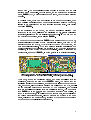
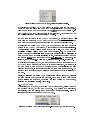
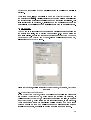
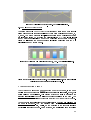
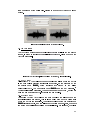
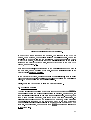
Figure 2: The averages of the medium quadratic error with respect to the measurements of the
different participants in the Round Robin 3. On the left, the average error, including the
parameters T30, EDT, G, C80, D50, Ts and LF is shown. On the right, including the parameter LFC
(few participants computed this parameter). The yellow bar with the black triangle below
identifies the computer’s code 㻾㻭㻵㻻㻿. Lower values indicate better results.
In 2004 a new model for the Head Related Transfer Function (HRTF’s), based
on wavelet transforms and sparse filters, was developed, leading to a great
computing
economy in
22, 25-27, 29-34
auralization.
the
data
processing
to
generate
the
room
In 2006 a modal model was introduced to predict the low frequency behavior,
increasing the number of different models implemented in the computer’s code
㻾㻭㻵㻻㻿.24 This module is called only below the room’s cutoff frequency
(typically around 63~125 Hz).
In 2009, apart from other improvements, the auralization module was fully
incorporated to the computer’s code
㻾㻭㻵㻻㻿,㻌 in
its release 4.1, providing the
17, 28,
generation of the acoustic virtual reality in a room still in a design phase.
36, 37
Also, in 2009 it was introduced a module for acoustical simulation in external
16
spaces,
allowing the assessment of acoustical field in urban spaces and the
use of the computer’s code to predict the sound pollution in such spaces. This
release is
㻾㻭㻵㻻㻿㻌5.
In 2010, a model for the HRTF based on artificial neural networks (ANN) was
38-42
prepared,
aiming to generate the binaural responses and, as a
consequence, furnishing the auralization with a stronger numerical efficiency
and with a shorter computing time. This technique is in its final tests and will
be implemented in the computer’s code
㻾㻭㻵㻻㻿, in the release 6.
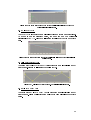
1.4 The Resources
The computer’s code
㻾㻭㻵㻻㻿㻌 㻡㻌 calculates
the impulse quadratic response of
the room, the decay curves – global and by octave bands –, and all the most
usual room acoustic quality parameters, for each pair source-receiver (S-R),
10,11
following the ISO standards.
It also computes the binaural impulse
responses for each receiver, generating the room auralization, at that point. It
applies to auditorium, concert halls, opera houses, classrooms, and several
other public spaces such as airports, train stations, industrial plants, and urban