1
The Canadian Survey of Experiences with Primary Health Care, 2007-2008 – User Guide
Users should also note that some software packages may not allow the generation of estimates
that exactly match those available from Statistics Canada, because of their treatment of the
weight field.
9.3
Definitions of Types of Estimates: Categorical and
Quantitative
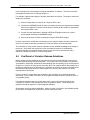
Before discussing how the 2007-2008 CSE-PHC data can be tabulated and analyzed, it is useful
to describe the two main types of point estimates of population characteristics which can be
generated from the microdata file for the CSE-PHC.
9.3.1
Categorical Estimates
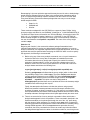
Categorical estimates are estimates of the number, or percentage of the surveyed
population possessing certain characteristics or falling into some defined category. The
number of people who would definitely or probably recommend their primary care
provider to a friend or relative or the proportion of people who have been an overnight
patient in a hospital, nursing home or convalescent home, for at least one night, in the
past 12 months are examples of such estimates. An estimate of the number of persons
possessing a certain characteristic may also be referred to as an estimate of an
aggregate.
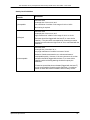
Examples of Categorical Questions:
Q: In general, would you say your health is…?
R: Excellent / Very good / Good / Fair / Poor
Q: In the past 12 months, did you require any routine or ongoing care?
R: Yes / No
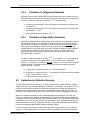
9.3.2
Quantitative Estimates
Quantitative estimates are estimates of totals or of means, medians and other measures
of central tendency of quantities based upon some or all of the members of the surveyed
population. They also specifically involve estimates of the form
Xˆ / Yˆ where X̂ is an
estimate of surveyed population quantity total and Yˆ is an estimate of the number of
persons in the surveyed population contributing to that total quantity.
An example of a quantitative estimate is the average number of nights spent as a patient
in a hospital, nursing home or convalescent home in the past 12 months by respondents
who spent at least one night in such a facility. The numerator ( X̂ ) is an estimate of the
total number of nights spent in institutions in the past 12 months and its denominator ( Yˆ )
is the number of persons who reported having spent at least one night in such a facility.
Examples of Quantitative Questions:
Q: For how many nights in the past 12 months?
R: |_|_|_| nights
Q: Including yourself, how many persons usually live in your household?
R: |_|_| persons
26
Special Surveys Division