1
Chapter 4. – PID Tune and Communications
The word Gain scheduling is the historical name, and it doesn’t mean
absolutely that only the Proportional band value can be changed, because
this technique is now extended to all the 3 terms, including the integral time
and the derivative time.
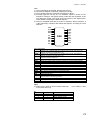
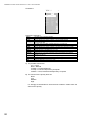
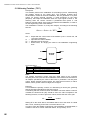
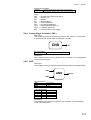
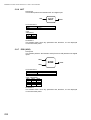
The PID module of the AC series controllers has 3 analog inputs, named KP,
KI, KD, whose values multiply the configured 3 terms parameters (Gain,
Integral Time and Derivative Time), to determine the coefficients values to
use in the PID formula, as explained below:
PBu =
PB p
TI u = TI p * KI
KP
TDu = TD p * KD
where PBu, TIu and TDu are the coefficients of the 3 terms, used in the PID
formula, while the PBp, TIp and TDp are the values set by the user.
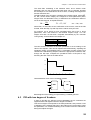
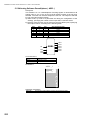
For instance, let us guess to have calculated three sets of the 3 terms
parameters, each one related to well defined setpoint range. You can
imagine that each set has been computed automatically by the controller
Tuning facility, as described in the Chapter 4.1.
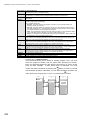
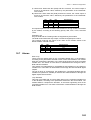
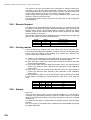
Setpoint Range
0-300
300-500
500-700
Optimal PB
10
13,3
20
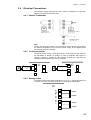
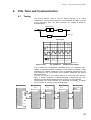
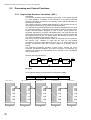
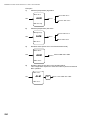
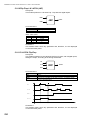
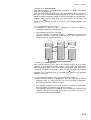
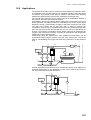
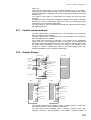
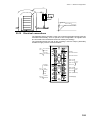
The best result is achieved if the Gain parameter is set according to the
value of the setpoint. This can be implemented automatically, exploiting the
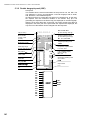
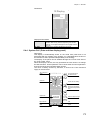
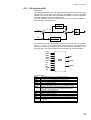
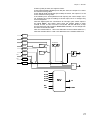
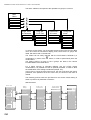
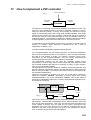
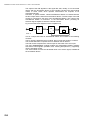
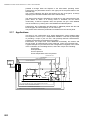
scheduling facility, as illustrated below. A linearizator module, whose input
variable is the PID Working Setpoint, selects the appropriate coefficient, that,
through the KP input, multiplies the predefined value of PB (that is 20),
achieving the Gain value in the table above.
2.0
1.5
1.0
300
700
500
Characterization curve of the Linearizator module
WSP
1
KI
1
KD
PID
LIN
KP
Block diagram of the strategy for implementing a variable gain PID.
4.3
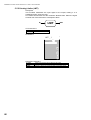
PID with two degree of freedom
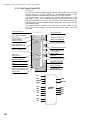
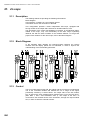
In order to provide very effective control capabilities, the AC controllers are
supplied with a PID algorithm with two degree of freedom.
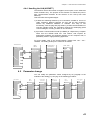
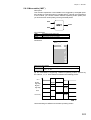
This second degree corresponds to the Beta parameter, that provides a sort
of weighting of the setpoint that goes in the PID formula. The benefit of using
this parameter, is a consistent lowering of the overshoot and the undershoot,
during the setpoint changes.
39