1
Chapter 1: Introduction to JavaScript
General Equivalence
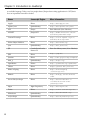
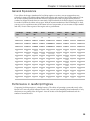
If you follow the changes introduced in JavaScript engines over time, you can compare browsers
generally in terms of JavaScript object model equivalencies and support of the ECMA standard. If you
are to infer anything from the chart that follows, it might be that years of cooperation by browser
vendors has begun to break down in recent times. Rapid evolution of the Firefox browser in particular
has made it hard for the others to keep pace. With the recent introduction of the ECMAScript 3.1 draft,
you may see less rapid innovation in the future in lieu of cooperation, at least in terms of object models
and APIs, if not in other aspects of the engine such as performance.
JavaScript
Ver.
JScript
Ver.
ECMA
Ed.
IE Ver.
Netscape
Ver.
Firefox
Ver.
Opera
Ver.
Safari
Ver.
Chrome
1.0
1.0
Pre
3.0
2.0
n/a
n/a
?
n/a
1.1
2.0
Pre
n/a
3.0
n/a
n/a
?
n/a
1.2
3.0
Pre
4.0
4.0-4.05
n/a
n/a
?
n/a
1.3
3.0
1 and 2
4.0
4.06-4.7
n/a
n/a
?
n/a
1.3
4.0
1 and 2
n/a
n/a
n/a
n/a
?
n/a
1.4
5.0-5.1
1 and 2
5.0-5.01
Server only
n/a
n/a
?
n/a
1.5
5.5
3
5.5
6.0
1.0
6.0-9.0
?
1.0
1.5
5.6
3
6.0
6.0
1.0
6.0-9.0
?
1.0
1.5
5.7
3
7.0
6.0
1.0
6.0-9.0
?
1.0
1.5
5.8
3
8.0
6.0
1.0
6.0-9.0
?
1.0
1.6
n/a
3
n/a
7.0
1.5
n/a
?
n/a
1.7
n/a
3
n/a
8.0
2.0
n/a
3.0
n/a
1.8
n/a
3
n/a
n/a
3.0
n/a
n/a
n/a
1.9
n/a
3
n/a
n/a
3.1
n/a
n/a
n/a
Performance in JavaScript Engines
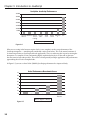
Comparing JavaScript engines is a dodgy business. The choice of operating system and exactly what
kind of test is run can greatly influence results. Still, you can learn something from benchmarks, if only
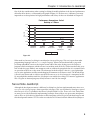
that browsers are getting faster. In Figure 1-4 are the results of the SunSpider benchmark tool on a
number of recent browsers.
15