1
Accessibility and Interactive TV: Design Recommendations for the Brazilian Scenario
2 Accessibility, Universal Design and Television
The term accessibility is commonly associated with the commitment to improve the
quality of life to the elderly as well as to people with disability (e.g. perceptual,
cognitive, motor, multiple impairment), as they generally feel a direct impact from
obstacles in different environments, products, and services [2][5][19][23].
Nevertheless, accessibility considered as the possibility of reaching certain physical
spaces, information, products and services, is concerned with quality of life for every
human being.
For a more inclusive society, able to acknowledge the differences among people, it
is even more important that proposals for the accessibility of people with specific
needs be connected to the promotion of the quality of life for everyone
[9][19][23][31]. Thus, people with different abilities, whether resulting from aging
and disability or not, will benefit from accessible products and services, which do not
discriminate them.
Accessibility is directly related to usability and, furthermore, to quality in use of
computer systems [3][4][19]. Access and use of Information and Communication
Technology (ICT) has received different names within the Human-Computer
Interaction field: Universal Accessibility, Universal Usability, Inclusive Design, User
Interfaces for All [13][23][30][31]. This approach to design does not imply the
development of a unique solution for everyone [31]. It implies the proposal of flexible
solutions involving a wide understanding of the role that these systems are supposed
to play in the society, the acknowledgment of diversity of contexts and situations in
which technology is employed, besides the participation of users in design and
evaluation activities [19].
Federal Brazilian laws in effect [2] define accessibility as the possibility for
persons with disability to access and use any physical means, communication media,
products and services. TV programs are formally considered as accessible as long as
they follow the Standard NBR 15290:2005 [2] established by the Brazilian
Association of Technical Standards (ABNT). Along with other regulations in effect
[5][20], this norm is based on the provisioning of assistive services by TV
manufacturers and broadcasters: closed caption, audio description, dubbing and sign
language window (in Brazil, the Brazilian Sign Language - LIBRAS).
Although the current regulations demand the provisioning of these services,
unofficial discussion lists point out that users, mainly those with disabilities, who
count on such resources as the only way to access information on TV, question the
amount and quality of information made available.
3 Interactive Digital TV Accessibility: A Preliminary Analysis
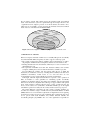
Organizational Semiotics (OS) [17] has guided our research about iDTV and its
artifacts have been used as analytical tool. [27]. Through OS, every technical system
is within the core of a socio-organizational context and surrounded by the formal and
informal layers of the society or the social organization. Thus, the technical systems
are under the influence of both formal and informal levels and, at the same time, they