1
IN THE FIELD TECHNIQUES
TONE RESPONSE
PINPOINTING
With practice in the field, you will
learn to classify buried objects
according to the different tones and
the clarity and repeatability of the
tones.
Accurate pinpointing takes practice
and is best accomplished by "X-ing"
the suspected target area.
1 When a buried target is
identified by a repeatable
tone response, continue
sweeping the coil over the
target in a narrowing side-toside pattern.
2 Take visual note of the place
on the ground where the "beep"
occurs.
3 Stop the coil directly over this
spot on the ground.
4 Turn your stance 90 degrees,
facing the target from a
different angle.
5 Sweep the coil back and
forth, making visual
reference of the intersection
of these two sweep paths.
6 If necessary, "X" the target at
different angles to "zero in"
on the exact location on the
ground at which the beep
occurs.
If you experience confusing and nonrepeating tones, do the following:
1 Turn the SENSITIVITY knob
to the 2:00 position
2 Ground Balance the detector
as described on Page 8.
3 Use the DISC mode.
4 Turn the DISCRIMINATION
knob to High.
It is easiest to start in the DISC mode;
ferrous objects will be automatically
eliminated, and the DISCRIMINATION
knob can be used to eliminate other
types of trash items. While searching
an area of ground in DISC mode,
move the DISCRIMINATION knob to
different settings until you understand
the relationship between discrimination
levels and the types of metals
eliminated at each level.
Only dig up targets that induce
repeatable tones. Each time you pass
the search coil over a possible target,
you should hear the same tone. If the
tone does not repeat on each pass,
varies in tone, or varies in location,
then the target is USUALLY not of
value.
Inconsistent tones are evidence of high
oxidation (rusted metals) or irregularly
shaped objects. Note, however, that
multiple tones may be evidence of
multiple targets. If you cannot pinpoint
the location of a very strong signal, lift
the coil higher off the ground until a
weaker, but more precise signal, is
heard. For very weak signals, try
moving the coil in short, rapid sweeps,
close to the ground.
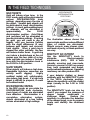
When pinpointing a target, try drawing an “X”,
as illustrated, over where the tone is induced.
9