1
9.
Incubate the microplate at room temperature for 5 minutes in the dark.
10. Measure fluorescence using a microplate reader set to 468 nm
excitation/507 nm emission maxima or other similar filter combination for
detecting green fluorescence.
11. Generate a standard curve to determine the unknown DNA concentration
(see Figure 2). Average the triplicate values for each sample and subtract
the average 0 ng DNA value from each data point. Plot the fluorescence
values for the DNA standards on the y-axis and pg/well DNA on the x-axis,
and fit a trend line through these points to generate a standard curve with
a y-intercept = 0. Use the equation for the standard curve trend line to
calculate the amount of unknown DNA in each well (y = fluorescence and
x = pg DNA per well). Note: the standard curve shown in Figure 2 is for
reference only. You must generate your own standard curve using your
instrument to calculate the amount of DNA in your unknown samples.
Table 1
assay format
(assay volume)
reader
Lowest DNA detected
96-well (200 uL)
1 pg
384-well (50 uL)
0.6 pg
Biotek Synergy™
H1m
96-well (200 uL)
5 pg
Spectramax®
Gemini XS
96-well (200 uL)
5 pg
AccuLite™ 470
PCR tube (200 uL)
5 pg
BMG
CLARIOStar®
Table 2
Considerations for Data Analysis
Calf thymus DNA can serve as a reference for most plant and animal DNA because
it is double-stranded, highly polymerized and is approximately 58% AT (42% GC).
Lambda dsDNA yields similar results. You may wish to use a standard similar to
your unknown samples in DNA length, structure (i.e., linear vs. circular), or GC
content. For bacterial DNA, a species-specific standard may be desired because
the GC content varies widely depending on the species.
The stated linear range of the AccuBlue™ NextGen dsDNA Quantitation assay
extends from 5 pg to 3 ng, when following the above protocol. We have observed
accuracy down to 1 pg or lower, depending on the microplate reader and assay
volume (Table 1). If lower concentration standards are desired, you can prepare
0.25 pg/uL and/or 0.1 pg/uL standards. For 0.25 pg/uL, combine 5 uL of the 2
pg/uL standard with 35 uL buffer; for 0.1 pg/uL, combine 10 uL of the 0.5 pg/uL
standard with 40 uL of buffer. Use 10 uL of these standards in the assay to obtain
2.5 pg and 1 pg data points. It is recommended to prepare the standards on the
same day as the assay is performed.
Compound
Initial concentration
in DNA sample
Final concentration
in assay (200 uL)
Decrease
in Signal
Sodium Chloride
500 mM
25 mM
7%
Magnesium Chloride
100 mM
5 mM
30%
Sodium Acetate
600 mM
30 mM
11%
Ethanol
20%
1%
8%
Phenol
2%
0.10%
10%
SDS
0.2%
0.01%
87%
SDS
0.02%
0.001%
13%
Triton X-100
0.2%
0.01%
18%
Triton X-100
0.02%
0.001%
8%
Tween-20
0.1%
0.005%
8%
dNTPs
2 mM
100 uM
1%
If the fluorescence of any of the unknown samples is higher than the linear range,
further dilute the sample and add 10 uL of the diluted sample to perform the assay.
For consistency, it is best to use the same volume of sample in all the wells.
Due to differences in instruments, check instrument settings to optimize for
the best linearity. Some factors that can affect the final linearity and relative
fluorescence intensity are: (1) the excitation and emission wavelengths and
bandwidths, (2) cut-off filters, (3) sensitivity (gain) settings, (4) pipetting accuracy,
and (5) microplate manufacturer.
The effects of common DNA contaminants such as salts, solvents, detergents and
nucleotides on the AccuBlue™ NextGen assay are listed in Table 2.
Related Products
Catalog
number
Product
E90001
AccuLite™470 Mini Fluorometer
31027
AccuClear™ Ultra High Sensitivity dsDNA Quantitation Solution
(1000 assays)
31028
AccuClear™ Ultra High Sensitivity dsDNA Quantitation Kit with 7
DNA Standards (1000 assays)
31006
AccuBlue™ High Sensitivity dsDNA Quantitation Kit (1000 assays)
31008
AccuBlue™ High Sensitivity dsDNA Quantitation Solution (1000
assays)
31007
AccuBlue™ Broad Range dsDNA Quantitation Kit
31009
AccuBlue™ Broad Range dsDNA Quantitation Solution
41003
GelRed™ Nucleic Acid Gel Stain, 10,000X in water
31041-T
Forget-Me-Not™ qPCR Master Mix, trial size
31003-T
Fast EvaGreen® qPCR Master Mix, trial size
Please visit our website at www.biotium.com for information on our life science
research products, including environmentally friendly EvaGreen® qPCR master
mixes, fluorescent CF™dye antibody conjugates and reactive dyes, apoptosis
reagents, fluorescent probes, and kits for cell biology research.
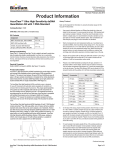
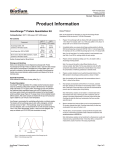
Figure 2. Linearity of AccuBlue™ NextGen dsDNA quantitation assay
between 5 and 3000 pg per well in a 96-well microplate assay with
excitation/emission at 468/507 nm. The inset shows the lower portion
of the curve.
AccuBlue, AccuClear, and AccuLite are trademarks of Biotium, Inc. AccuBlue technology is covered by U.S.
Patents. Materials from Biotium are sold for research use only, and are not intended for food, drug, household,
or cosmetic use.
AccuBlue™ NextGen dsDNA Quantitation Kit
PS006
Page 2 of 3