1
Prevent Contamination and Nonspecific Amplification
Overview
PCR assays require special laboratory practices to avoid false positive
amplifications. The high throughput and repetition of these assays can lead to
amplification of a single DNA molecule.
Using UDG to
Minimize
Reamplification
Carryover
Products
SYBR® Select Master Mix contains heat-labile uracil-DNA glycosylase (UDG).
UDG is also known as uracil-N-glycosylase (UNG). Treatment with heat-labile
UDG is useful in preventing the reamplification of carryover PCR products.
The heat-labile UDG used in the SYBR® Select Master Mix is a 26-kDa
recombinant enzyme derived from the thermolabile UDG gene isolated from
marine bacteria, and expressed in E. coli.
UDG acts on single- and double-stranded dU-containing DNA. It acts by
hydrolyzing uracil-glycosidic bonds at dU-containing DNA sites. The enzyme
causes the release of uracil, thereby creating an alkali-sensitive apyrimidic site in
the DNA. The enzyme has no activity on RNA or dT-containing DNA (Longo et
al., 1990).
Using NTC
Controls
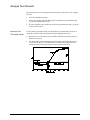
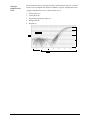
No Template Control (NTC) reactions can be used to identify PCR
contamination. NTC reactions contain all reaction components (SYBR® Select
Master Mix, primers, water) except sample, and therefore should not return a CT
value.
Design Primers to
Avoid PrimerDimers
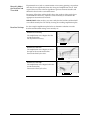
Use primers that contain dA nucleotides near the 3´ ends so that any primerdimer generated is efficiently degraded by UDG at least as well as any dUcontaining PCR products. The farther a dA nucleotide is from the 3´ end, the
more likely partially degraded primer-dimer molecules can serve as templates
for a subsequent PCR amplification.
Production of primer-dimers could lower the amplification yield of the desired
target region. If primers cannot be selected with dA nucleotides near the ends,
consider using primers with 3´ terminal dU-nucleotides. Single-stranded DNA
with terminal dU nucleotides are not substrates for UDG (Delort et al., 1985) and,
therefore, the primers are not degraded. Biotin-dUMP derivatives are not
substrates for UDG.
For more information about designing primers, see “Guidelines for Designing
Primers” on page 26.
Do not use UDG in subsequent amplifications of dU-containing PCR template,
such as in nested PCR protocols. The UNG degrades the dU-containing PCR
product, preventing further amplification.
PCR Good
Laboratory
Practices
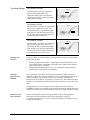
When preparing samples for PCR amplification:
•
Wear a clean lab coat (not previously worn while handling amplified PCR
products or used during sample preparation) and clean gloves.
•
Change gloves whenever you suspect that they are contaminated.
•
Maintain separate areas and dedicated equipment and supplies for:
Sample preparation
PCR setup
PCR amplification
Analysis of PCR products
SYBR® Select Master Mix User Guide
11