1
WINTERIZING TRAVEL TRAILER
Preparing your recreation vehicle for winter is very important for most states and Canada. Failure to
prepare the coach will cause supply lines and water heater to freeze causing breakage. Repairs due
to freezing are not to be covered under the terms of your Jayco Limited Warranty.
Please keep in mind that your towable RV was not designed for use during sub-freezing weather.
There is no commodity or product that can be added to the fresh water systems to ensure freeze
protection while the system is in use, other than RV antifreeze. Do not drink water that contains
antifreeze. This includes non-toxic RV antifreeze.
I
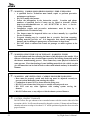
WARNING: Do not use Ethylene Glycol (automotive antifreeze) or Methanol
(windshield washer antifreeze) in your fresh water system. They are harmful and may
be fatal if swallowed.
The method for winterizing your travel trailer after draining and flushing your drainage system is
listed below.
To Wintertize
1.
2.
3.
4.
Make sure all holding tanks are empty.
Run the pump until dry, about 15-20 seconds.
Using an air hose and adapter, blow air through the city water connection.
Leave the faucets, drains and toilets open. Any remaining water will blow out in five to ten
minutes.
5. Pour one cup of non-toxic RV antifreeze into all drain P-traps.
LP GAS SYSTEM
It is because of the LP gas system that your RV has the convenience of a refrigerator, stove,
water-heater, and furnace. This system has containers that contain the fuel and also regulators to
control the pressure of the fuel and supplies the gas vapor to the various appliances. When correctly
used, the LP gas system is very effective and will ensure the comfort and added convenience for
your vehicle. This system is also potentially very dangerous and should be used with care.
Liquefied petroleum (LP) is a product that is refined from crude oil through natural gases. LP gas is a
colorless and odorless gas that in the liquefied state resembles water. An odorant is added as a
warning agent. This is usually a sulfur compound which gives the gas the rotten egg, stinky, skunk
oil odor. It is extremely important to become familiar with the odor associated with LP gas.
LP gas is stored in a pressurized canister in a liquid state. As the gas is released from the canister, it
becomes vapor that is needed for the operation of the appliances. In the liquid state, propane should
not run through the appliances. A liquid gas will damage the o-rings in the valves and also leave a
sticky, oily residue causing poor or no operation in the regulator.
The Systems
33