1
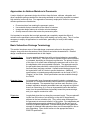
Outlets:
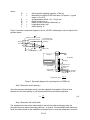
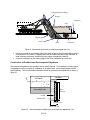
Short pipes that carry the water from the edgedrains to the side ditches.
Non-perforated smooth, rigid pipes are recommended for outlets. This
pipe must resist construction and maintenance traffic.
Headwall:
Headwalls made of PCC are used to house drainage outlets to prevent
them from damage caused by routine maintenance activities. They also
help prevent slope erosion and aid in locating outlet pipes. Headwalls
should be placed flush with the slope of the embankment so that routine
maintenance activities are not impaired. Removable rodent screens are
recommended with headwalls to prevent small animals from entering the
outlets.
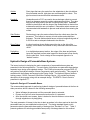
Side Ditches:
Ditches dug to carry the water collected from the outlets away from the
pavement. This feature is common to both surface and subsurface
drainage. The side ditches should have a minimum longitudinal grade of
0.005 m/m and an adequate freeboard to be effective.
Storm Drains:
In urban locations where ditches cannot be dug on the side of the
highway, storm drains are installed to carry the surface and subsurface
runoff.
Daylighting:
In a daylighted pavement section, the edges of the base and subbase
layers are exposed to allow water trapped in these layers to flow directly
into the side ditch. Such a design is the conceptual opposite of a
“bathtub” section.
Hydraulic Design of Permeable Base Systems
The issues involved in designing the main components of a permeable base system are
presented in the following sections. The main topics of discussion are permeable base design,
separator layer design, and edgedrain design. The FHWA microcomputer program DRIP (9)
can perform the hydraulic design of these components rapidly and accurately. This program is
available with the software accompanying the Design Guide. The National Highway Institute
training course 131026, Pavement Subsurface Drainage Design, (10) provides a summary
description of the program, along with an example design. The DRIP 2.0 User’s Guide is
presented in Appendix TT.
Hydraulic Design of Permeable Bases
The recommended approach for performing hydraulic design of permeable bases is the time-todrain procedure, which is based on the following assumptions:
•
•
•
Water infiltrates the pavement until the permeable base is saturated.
Excess runoff will not enter the pavement section after it is saturated.
After the rainfall event ceases, water is drained to the side ditches or storm drains
through edgedrains or by daylighting.
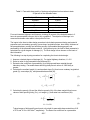
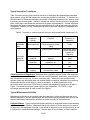
The main parameter of interest in the time-to-drain procedure is the time required to drain the
permeable base to a pre-established moisture level. The design standard based on this
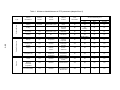
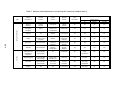
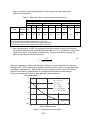
parameter rates the permeable base quality of drainage from “Excellent” to “Poor.” Table 3
presents guidance for selecting permeable base quality of drainage based on this method.
SS-6