1
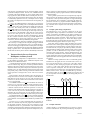
number of call frames on the stack to the same number as in
ORIG STATE.
BACK UP TO SAME () :
case DEEPER:
*.? → *
case SHALLOWER:
* → *.c
case SAME:
Return
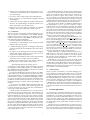
Both algorithms for REVERSE NEXT and REVERSE STEP adjusts
the number of call frames on the stack to the same number of call
frames as ORIG STATE and then according to the last command in
the command history, the algorithms decide how many and which
commands of the commands history to execute.
Restore last checkpoint Ci
Re-execute until breakpoint B − 1
If no previous breakpoints found
Set ORIG STATE to state (time) as of Ci
Set i to i − 1
If i = 0, FAIL
Ifelse goto BEGIN
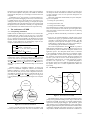
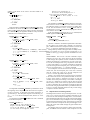
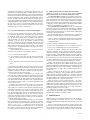
The algorithm for REVERSE FINISH is defined as going backwards in time to the site at which the current function was called.
The following scenario is presented: a function A is calling function B. The user decides to issue a reverse finish while inside function B. reverse finish will take the program to the site
where function B was called.
If the target debugger implements the f inish command, then
URDB supports the REVERSE FINISH command.
REVERSE NEXT ( ORIG STATE ) :
REVERSE FINISH ( ORIG STATE ):
case DEEPER:
Repeat
If STATE(* → *.n) = ORIG STATE, then:
REVERSE NEXT()
BACK UP TO SAME()
until reaching SHALLOWER level.
* → *.n
case SHALLOWER:
The undo-command k command is implemented in the follow* → *.s
ing way. When a user requests undo-command k for some intecase SAME:
ger k, URDB restores the last checkpoint and then re-executes the
case ORIG STATE:
first n − k of the user commands since the last checkpoint.
*.n → * [If LEVEL(*.n) = LEVEL(*), then Return] All algorithms presented in this paper allow for multiple check*.s → * [If LEVEL(*.s) >= LEVEL(*), then Return]
points. For example, if a user is currently at checkpoint C5 it is
*.? → *
possible to reach C1 by issuing a sequence of URDB reverse comcase NOT ORIG STATE:
mands.
* → *.n
reverse-continue The reverse-continue command is implemented in one of two ways. If the time since the last checkpoint
is small enough, then repeated continue commands are executed
REVERSE STEP ( ORIG STATE ) :
from the last checkpoint. (A breakpoint is set at the current posicase DEEPER:
tion so that the checkpoint does not go beyond the current time.)
If STATE(* → *.n) = ORIG STATE, then:
A count of the number n of continue commands is maintained.
BACK UP TO SAME()
Upon discovering the last breakpoint, prior to the current time, the
* → *.n
process is re-executed with n − 1 continue commands.
case SHALLOWER:
If no breakpoints were hit between the last checkpoint and the
* → *.s
current time, then the checkpoint prior to that one is restored,
case SAME:
with the “current time” being set to the last checkpoint. The
case ORIG STATE
reverse-continue algorithm is then repeated.
*.s → * ; then Return
Finally, it can happen that the time from the last checkpoint
*.? → *
to the current time is above the specified threshold. In that case,
case NOT ORIG STATE
a binary search strategy is employed (see Section 4), with the
If STATE(* → *.s) = ORIG STATE, then:
condition of the binary search being to test whether a breakpoint
* → *.s
was seen. If a breakpoint is found in both the first and second
Else if STATE(* → *.n) = ORIG STATE, then:
half of a binary search, search recursively explores the second half,
* → *.s
in order to determine the last breakpoint encountered. When the
Else:
time interval being explored falls below a specified threshold, the
* → *.n
reverse-continue algorithm falls back to the previous strategy
of repeated continue commands.
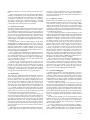
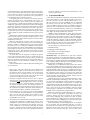
The algorithm for REVERSE CONTINUE is presented next. From
the beginning of the computation until the time the user requests a
3.3 Implementation of the Debug Monitor
reverse-continue, N checkpoints were taken. Checkpoint i is
The debug monitor uses the concept of breakpoint events. A breakrepresented by Ci . The checkpoints sequence is the following: C1 ,
point event is a process state (time) at which a breakpoint was hit.
C2 , . . ., CN . C1 is the first checkpoint taken, whereas CN is the
If one hits the same breakpoint multiple times, one must distinlast one.
guish the different breakpoint events. In gdb and some other debugThe algorithm for REVERSE CONTINUE starts with i initialized
gers, one can determine a unique breakpoint event as the debugger
to N (the last checkpoint).
travels backward and forward in time. One does this by noting the
number of times that a breakpoint was hit by the debugger. For exREVERSE CONTINUE ( ) :
ample, gdb reports that number through the gdb command info
BEGIN: Restore last checkpoint Ci
breakpoints.
Repeat continue until ORIG ST AT E
For debuggers that do not associate a number with each breakLet B be the number of breakpoints found
point, the filename and line number of that breakpoint serve the
If more than one breakpoint found
6
2010/3/26