1
MAINTENANCE
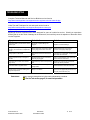
Your Boehringer Regulators have been designed to provide years of trouble free operation. Most service
activity is the result of aspiration of bodily fluids into the regulator. The routine use of an appropriate collection
canister greatly reduces needed service. To determine your cleaning/maintenance schedule:
•
Periodically inspect the overall condition of the instrument. Test the gauge accuracy and check the
instrument function as described under ‘Test’. Simply clearing the small orifices in the gauge view tube
and the regulator body can remedy many performance conditions (see troubleshooting). Return to
service if the instrument performs appropriately per the ‘Test’ requirements. It is especially important on
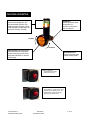
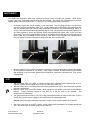
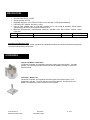
the CASS regulator to ensure the regulator orifice, found opposite the control valve, is free of lint and
other debris. The orifice is approximately 0.3mm. A 29 gauge needle or #80 drill or smaller tool may be
used to clear any accumulated lint from this entry. If the orifice of your regulator has a stainless steel
filter, this can be cleaned by wiping the outside of the filter with a lint free cloth.
0.3mm orifice
•
stainless steel filter
Based on data from your periodic inspections, determine a cleaning/maintenance schedule appropriate
for the operational conditions of your facility. Clean, inspect, lubricate, and test based on your schedule
and according to the Instrument Cleaning and Disinfection, Instrument Lubrication and ‘Test’ section
outlined below.
TEST
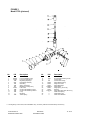
1. With the control valve in the REG or CONTIN position and a collection system attached with a 14 Fr.
catheter, regulator should control vacuum from 10-100% of full scale (FS).
2. With the control valve in the REG position and housing turned all the way off, with suction port occluded,
gauge should read zero.
3. With the control valve in the REG position, adjust regulator to the middle of the scale and occlude the
catheter. Gauge movement should be less than 5% of the full scale of the regulator. This
measurement is called droop.
4. The gauge should be accurate to ±5% FS for any measurement within the range of the scale. If this is
not the case, please return the gauge to the manufacturer for repair/replacement.
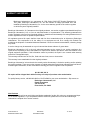
CAUTION: Inaccurate gauge calibration may lead to a high suction condition applied to the patient.
5. With the control valve in the OFF position, suction should be at atmospheric and gauge should read
zero. With suction port occluded, gauge should read zero.
3720.013 Rev F
Released October 2010
P/N 33575
User Manual 3720
8 of 15