1
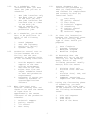
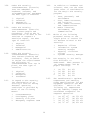
Remember, you are responsible for overseeing the
work accomplished. Provide feedback to the production
control coordinator, I/O control clerk, and shift supervisor, as needed, to improve performance and operation.
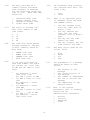
Researching the Problem
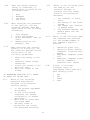
In researching the problem, you will need the abort
code. With the abort code, you can determine the cause
and what action will need to be taken to get the user
processing again.
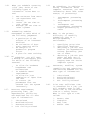
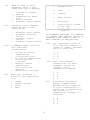
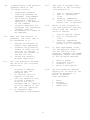
Talk to the subsystem coordinators; are they
satisfied with the service and the products?
Look carefully at new applications:
Solving the Problem
How does the new application affect the
other applications running concurrently?
To solve the problem, the operator may have to
reboot the computer, reload a disk file, contact the
programmer, or have the users restart processing. All
these solutions are dependent on what the abort code is.
Can the system efficiently handle the new
work or do adjustments need to be made to
the job mix and schedules?
Monitoring Help-Desk Support
What is the impact of the new application on
online user response time?
You will need to review the help-desk log to
determine if the problems reported can be corrected by
changing or adding a training program. To solve the
problem, you may need to update the program
documentation to show the problem and its cause and
solution. Be sure the users are receiving the types and
levels of support they need. Listen to them. Ask if they
are satisfied with the help-desk support. What else do
they need? Listen to your staff, get their ideas, and work
with them to continually improve support.
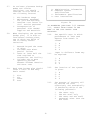
Look carefully at modified applications:
What is their impact on the system?
Does it take more or less time to process the
modified applications?
Were any problems encountered?
Do you need to talk to users about the impact
of changes on the overall workload or
throughput time?
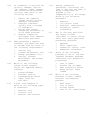
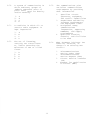
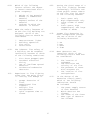
Look for trends in the production process:
PRODUCTION CONTROL
— Are there times when the system seems
overloaded and slow?
When you hear the term production control, you
usually think of the quality of the facility’s output
products. This is not the only area of concern. You
should be looking at all areas of production, particularly
daily operations.
— Are jobs backlogged that must be run the
next day?
— Are there times when the system is almost
idle?
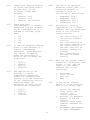
DAILY OPERATIONS
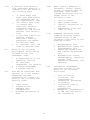
Your review of daily operations and asking yourself
these questions will provide valuable input to that
process as well as having an impact on how jobs will be
scheduled in the future.
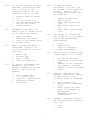
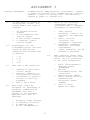
You will want to look at the previous day’s log.
Evaluate what happened.
l Were all scheduled jobs run?
OUTPUT REPORTS
l When something went wrong, was the user
notified?
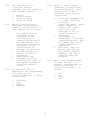
Output reports can be broken into two major
categories—management and customer/user reports.
l What action was taken to correct the problem?
l Was the job rerun?
Management Reports
l Was it necessary to rerun a series of jobs? If so,
was it done?
Management reports are usually a consolidation of
information prepared for presentations and briefings.
These reports sometimes require a cover letter or your
comments as to the content. You will need to review
l Are there corrections/adjustments you need to
make to the workload schedule for today?
1-21