1
2
·
H. Thimbleby
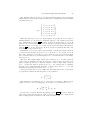
paper explains the theory in detail and shows it applied to three real case studies.
Push button devices are ubiquitous: mobile phones, many walk-up-and-use devices (such as ticket machines and chocolate vending machines), photocopiers, cameras, and so on are all examples. Many safety critical systems rely on push button
user interfaces, and they can be found in aircraft flight decks, medical care units,
and nuclear power stations. Large parts of desktop graphical interfaces are effectively push button devices: menus, buttons and dialog boxes all behave as simple
push button devices, though buttons are pressed via a mouse rather than directly
by a finger. Touch screens turn displays into literal push button devices, and are
used, for example, in many public walk-up-and-use systems. The world wide web
is the largest example by far of any push button interface.
For concreteness, this paper will consider handheld push button devices, and
moreover ones that can be represented as finite state machines. Finite state machines are mathematical structures and as such do not exist in any concrete form
for users: they are therefore at best a design or analysis tool. Finite state machines
have had a long history in user interface design, starting with Newman [10] and
Parnas [11] in the 1960s, and reaching a height of interest in user interface management systems (UIMS) work [18]; now the concerns of HCI have moved on [9] — a
continual, technology-driven pressure, but one that tends to leave open unfinished
theoretical business.
Users cannot be expected to reason about the behaviour of finite state machines:
they are (typically) far too big, and as a formalism they are so versatile that they
have no structure that really helps thinking about them. Obviously some finite state
machines will have interesting structure (e.g., ones designed using statecharts [6]),
but in these cases it is easier to think about the structure than the finite state
machine itself. What the user can see, however, is buttons and their effects. This
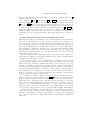
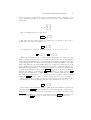
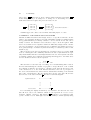
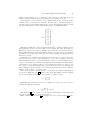
paper shows that each button is a matrix; it thus turns out that users — whether
they know it or not — are doing matrix algebra when they press buttons.
Matrices have three very important properties. Matrices are standard mathematical objects, with a history going back to the nineteenth century:1 this paper
is not presenting and developing yet another notation and approach, but it shows
how an established and well-defined technique can be applied fruitfully to serious
user interface design issues. Secondly, matrices are very easy to calculate with, so
designers can work out user interface issues very easily, and practical design tools
can be built. Finally, matrix algebra has lots of structure and properties: designers
and HCI specialists can use matrix algebra to reason about what is possible and
not possible, and so on, in very general ways.
Matrices are not a panacea for specifying all manner of user interfaces; on the
contrary, a major advantage is that difficulties in employing a matrix approach
correspond well with difficulties in user interfaces. If designers used matrix algebra,
they would be very likely to avoid such user interface complexities in the first place.
This paper will give many examples of this claim. It is important to note that many
of these poor aspects of user interface design are extremely hard to describe in
everyday words, let alone to describe clearly in words: typical user interface design
1 The Chinese solved equations using matrices as far back as 200bc, but the recognition of matrices
as abstract mathematical structures came much later.