1
Assembly & Usage
The basic SpitJack unit comes fully assembled and ready to operate.
Building the fire
We suggest that you build the fire in advance. A mature (very hot) fire is essential for good results
and takes about an hour to get going. Instructions for building a fire can be found on our web site
http://www.spitjack.com.
Setting up the SpitJack on the hearth
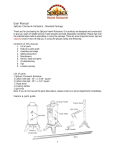
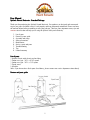
The fully assembled rotisserie (directions below) needs to be positioned correctly both to cook the
food safely and efficiently and to protect the power cord from burning. Layout the Spitjack, spit, and
tripod stand in front of your fireplace with the SpitJack on the side of the hearth closest to the electric
outlet. If you will be using an extension cord, make sure it is properly rated. Make sure the power
cord and/or extension does not cross in front of the fire.
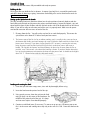
1. Distance from the fire. You will need a very hot fire to cook food properly. This means the
spit will have to be about 6-10 inches from your heat source.
2. The hottest part of the fire (as far as radiant cooking goes) is usually in the center and near
the bottom and ideally you would arrange the setup so that the food would be in front of the
hottest area. However, if you have a larger fireplace (42” or more), centering the unit may
bring the power cord (and the SpitJack itself) too close to the heat source and create a
hazard. The SpitJack and power cord should always be placed as far away from the fire as
possible, even if this means a less-than-ideal cooking scenario. If you have doubts about this,
use an oven thermometer to determine the heat near the power cord. It should not be higher
than 180° F. (Shown below with the clockwork model)
Loading and securing the food
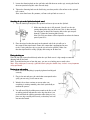
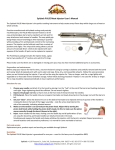
1. Clean the spit with warm soapy water, rinse and dry thoroughly before using.
2. Insert the food onto the pointed end of the spit.
3. Using gentle pressure, draw the spit into the food
trying to keep it in the center of the food mass. Be
mindful of the pointed end of the spit. It is sharp
and can cause injuries if not handled properly.
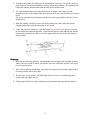
4. Continue to add food items (if necessary). Try not to fill up the spit. The hottest part of the
fire is in the center and cooking times may vary at the ends if it is full. Center the food on the
spit.
2