1
Diplomarbeit
Lightweight Virtualization on
Microkernel-based Systems
Steffen Liebergeld
27. Januar 2010
Technische Universität Dresden
Fakultät Informatik
Institut für Systemarchitektur
Professur Betriebssysteme
Betreuender Hochschullehrer: Prof. Dr. rer. nat. Hermann Härtig
Betreuender Mitarbeiter:
Dipl.-Inf. Adam Lackorzyński
III
Erklärung
Hiermit erkläre ich, dass ich diese Arbeit selbstständig erstellt und keine anderen als die
angegebenen Hilfsmittel benutzt habe.
Dresden, den 27. Januar 2010
Steffen Liebergeld
Abstract
Microkernels were invented as a foundation for systems that can be tailored and adhere
to strict security requirements. As with any new system, application availability is crucial
to its adoption. Reusing a standard OS kernel on top of the microkernel is a pragmatic
way of inheriting an OS’es API and with it its applications.
In the past, standard OS kernels were ported to run on top of microkernels. It
turned out that substantial efforts were needed to implement the equivalent of a CPU,
which was the model the OS originally assumed. In addition, this approach incurs
substantial run-time overhead. Many OS activities such as context switches are security
sensitive and have to be implemented with microkernel provided abstractions. Due to the
microkernel involvement, rehosted kernels suffer from inherent performance disadvantages.
Virtualization technology promises better performance with less changes to the standard
OS. A port of KVM showed that virtualization on a microkernel-based system is feasible
and standard OSes running in a VM perform better than rehosted OSes. However, this
KVM port in turn depends on a rehosted kernel.
In this thesis, I present a solution that uses virtualization to host a slightly modified
Linux on the Fiasco microkernel. This solution shows a significant performance improvement compared to previous solutions, supports SMP, is well integrated and has a
substantially reduced resource footprint. I also show, how the para-virtualized kernel
can be used to do faithful virtualization.
Acknowledgements
I would like to thank Professor Hermann Härtig for allowing me to work in the operating
systems group. I want to mention the tremendous help of my supervisor Adam, who
always had an open ear whenever I asked him for advise. Thanks go to Torsten Frenzel
as well, who provided me with ideas that helped me jump start my implementation. I
owe Michael Peter a depth of gratitude, because he provided me with numerous hints
for this thesis. A am grateful to Björn Döbel, who wrote the Ankh network multiplexer
during this thesis. Thanks go out to the people that proofread the text and helped me
cope with the language. These people are Adam Lackorzyński, Torsten Frenzel, Michael
Peter and Jean Wolter.
A good working atmosphere is crucial to my productivity, therefore I want to thank
the students of the student-lab, for their companionship and their helpful remarks.
I also want to thank my parents for funding a large part of my studies. Stefanie
deserves special thanks, because she rarely got to see me due to my work commitment.
Contents
1 Introduction
1.1 Structure . . . . . . . . . . . . . . . . . . . . . . . . . . . . . . . . . . .
1
3
2 Background
2.1 Security . . . . . . . . . . . . . . . . . . . . . . . . . . . . . . . . . . .
2.1.1 Building Decomposed Systems with Encapsulated Components
2.1.2 Access Control . . . . . . . . . . . . . . . . . . . . . . . . . . .
2.2 Virtualization . . . . . . . . . . . . . . . . . . . . . . . . . . . . . . . .
2.2.1 Virtualization Basics . . . . . . . . . . . . . . . . . . . . . . . .
2.2.2 Nomenclature . . . . . . . . . . . . . . . . . . . . . . . . . . . .
2.2.3 Virtualization of the x86 Architecture . . . . . . . . . . . . . .
2.2.3.1 Software Virtualization . . . . . . . . . . . . . . . . .
2.2.3.2 Hardware Virtualization . . . . . . . . . . . . . . . . .
2.2.4 Platform Virtualization . . . . . . . . . . . . . . . . . . . . . .
2.2.5 Peripheral Device Virtualization . . . . . . . . . . . . . . . . .
2.3 Discussion - Are VMMs Microkernels Done Right? . . . . . . . . . . .
2.4 Summary . . . . . . . . . . . . . . . . . . . . . . . . . . . . . . . . . .
.
.
.
.
.
.
.
.
.
.
.
.
.
5
5
6
8
9
9
10
11
11
12
14
14
15
16
3 Related Work
3.1 Microkernels . . . . . . . . . . . . . . . . . . .
3.1.1 Fiasco . . . . . . . . . . . . . . . . . . .
3.1.2 L4Ka::Pistachio . . . . . . . . . . . . . .
3.1.3 EROS . . . . . . . . . . . . . . . . . . .
3.2 Rehosted Operating Systems . . . . . . . . . .
3.2.1 L4Linux . . . . . . . . . . . . . . . . . .
3.2.2 OK:Linux aka Wombat . . . . . . . . .
3.2.3 User-Mode Linux . . . . . . . . . . . . .
3.2.4 Pre-virtualization . . . . . . . . . . . . .
3.2.5 Summary . . . . . . . . . . . . . . . . .
3.3 Virtual Machine Monitors . . . . . . . . . . . .
3.3.1 Xen . . . . . . . . . . . . . . . . . . . .
3.3.2 Lguest . . . . . . . . . . . . . . . . . . .
3.3.3 NOVA OS Virtualization Architecture .
3.3.4 KVM . . . . . . . . . . . . . . . . . . .
3.3.5 KVM-L4 . . . . . . . . . . . . . . . . .
3.3.6 Hardware Assisted Virtualization for the
3.3.7 VMware Workstation . . . . . . . . . .
.
.
.
.
.
.
.
.
.
.
.
.
.
.
.
.
.
.
17
17
18
18
18
18
19
20
20
21
22
22
22
24
24
24
25
26
26
. .
. .
. .
. .
. .
. .
. .
. .
. .
. .
. .
. .
. .
. .
. .
. .
L4
. .
. . . . . . .
. . . . . . .
. . . . . . .
. . . . . . .
. . . . . . .
. . . . . . .
. . . . . . .
. . . . . . .
. . . . . . .
. . . . . . .
. . . . . . .
. . . . . . .
. . . . . . .
. . . . . . .
. . . . . . .
. . . . . . .
Microkernel
. . . . . . .
.
.
.
.
.
.
.
.
.
.
.
.
.
.
.
.
.
.
.
.
.
.
.
.
.
.
.
.
.
.
.
.
.
.
.
.
.
.
.
.
.
.
.
.
.
.
.
.
.
.
.
.
.
.
.
.
.
.
.
.
.
.
.
.
.
.
.
.
.
.
.
.
XI
Contents
4 Design
4.1 Requirements . . . . . . . . . .
4.2 Architecture . . . . . . . . . . .
4.3 Para-Virtualization . . . . . . .
4.4 Security Considerations . . . .
4.5 Virtual Machine Monitor . . .
4.5.1 Core Virtualization . . .
4.5.2 Platform Virtualization
4.5.3 Peripheral Devices . . .
4.5.4 System Environment . .
4.5.5 Multiprocessor Support
4.6 Staged Virtualization . . . . . .
4.7 Summary . . . . . . . . . . . .
.
.
.
.
.
.
.
.
.
.
.
.
.
.
.
.
.
.
.
.
.
.
.
.
.
.
.
.
.
.
.
.
.
.
.
.
.
.
.
.
.
.
.
.
.
.
.
.
.
.
.
.
.
.
.
.
.
.
.
.
.
.
.
.
.
.
.
.
.
.
.
.
.
.
.
.
.
.
.
.
.
.
.
.
.
.
.
.
.
.
.
.
.
.
.
.
.
.
.
.
.
.
.
.
.
.
.
.
.
.
.
.
.
.
.
.
.
.
.
.
.
.
.
.
.
.
.
.
.
.
.
.
.
.
.
.
.
.
.
.
.
.
.
.
.
.
.
.
.
.
.
.
.
.
.
.
.
.
.
.
.
.
.
.
.
.
.
.
29
30
30
32
33
34
34
35
35
37
37
37
38
5 Implementation
5.1 Core System . . . . . . . . . . . . . . . . . . . .
5.1.1 Hardware Virtualization Interface . . . .
5.1.2 Fiasco Hardware Virtualization Interface
5.1.3 Control Loop . . . . . . . . . . . . . . . .
5.1.4 Virtual Interrupts . . . . . . . . . . . . .
5.2 System Environment . . . . . . . . . . . . . . . .
5.2.1 Boot Loader . . . . . . . . . . . . . . . .
5.2.2 SMP Support . . . . . . . . . . . . . . . .
5.3 Peripheral Devices . . . . . . . . . . . . . . . . .
5.3.1 Design Pattern . . . . . . . . . . . . . . .
5.3.2 Serial Line . . . . . . . . . . . . . . . . .
5.3.3 Graphical Console . . . . . . . . . . . . .
5.3.4 Network Interface . . . . . . . . . . . . .
5.3.5 Hard Disk . . . . . . . . . . . . . . . . . .
5.3.6 Summary . . . . . . . . . . . . . . . . . .
5.4 Staged Virtualization . . . . . . . . . . . . . . . .
5.5 Summary . . . . . . . . . . . . . . . . . . . . . .
.
.
.
.
.
.
.
.
.
.
.
.
.
.
.
.
.
.
.
.
.
.
.
.
.
.
.
.
.
.
.
.
.
.
.
.
.
.
.
.
.
.
.
.
.
.
.
.
.
.
.
.
.
.
.
.
.
.
.
.
.
.
.
.
.
.
.
.
.
.
.
.
.
.
.
.
.
.
.
.
.
.
.
.
.
.
.
.
.
.
.
.
.
.
.
.
.
.
.
.
.
.
.
.
.
.
.
.
.
.
.
.
.
.
.
.
.
.
.
.
.
.
.
.
.
.
.
.
.
.
.
.
.
.
.
.
.
.
.
.
.
.
.
.
.
.
.
.
.
.
.
.
.
.
.
.
.
.
.
.
.
.
.
.
.
.
.
.
.
.
.
.
.
.
.
.
.
.
.
.
.
.
.
.
.
.
.
.
.
.
.
.
.
.
.
.
.
.
.
.
.
.
.
.
.
.
.
.
.
.
.
.
.
.
.
.
.
.
.
.
.
41
41
41
42
42
44
44
45
46
48
48
49
49
50
50
52
52
53
6 Evaluation
6.1 Performance Benchmarks . . . . . . . . . . . . .
6.1.1 Compute Benchmark . . . . . . . . . . . .
6.1.2 Custom Benchmark . . . . . . . . . . . .
6.1.3 Kernel Compile . . . . . . . . . . . . . . .
6.1.3.1 Vmexit Reasons . . . . . . . . .
6.1.3.2 Idle VMs . . . . . . . . . . . . .
6.1.3.3 Handing IO Memory Accesses to
6.2 Variation Benchmarks . . . . . . . . . . . . . . .
6.2.1 Impact of Different Page Sizes . . . . . .
6.2.2 Impact of World Switches . . . . . . . . .
6.2.3 Screen Refresh . . . . . . . . . . . . . . .
. . . . . .
. . . . . .
. . . . . .
. . . . . .
. . . . . .
. . . . . .
the VMM
. . . . . .
. . . . . .
. . . . . .
. . . . . .
.
.
.
.
.
.
.
.
.
.
.
.
.
.
.
.
.
.
.
.
.
.
.
.
.
.
.
.
.
.
.
.
.
.
.
.
.
.
.
.
.
.
.
.
.
.
.
.
.
.
.
.
.
.
.
.
.
.
.
.
.
.
.
.
.
.
.
.
.
.
.
.
.
.
.
.
.
55
56
56
57
58
61
61
61
64
64
65
65
XII
.
.
.
.
.
.
.
.
.
.
.
.
.
.
.
.
.
.
.
.
.
.
.
.
.
.
.
.
.
.
.
.
.
.
.
.
.
.
.
.
.
.
.
.
.
.
.
.
.
.
.
.
.
.
.
.
.
.
.
.
.
.
.
.
.
.
.
.
.
.
.
.
.
.
.
.
.
.
.
.
.
.
.
.
.
.
.
.
.
.
.
.
.
.
.
.
.
.
.
.
.
.
.
.
.
.
.
.
Contents
6.3
Staged Virtualization . . . . . . . . . . . . . . . . . . . . . . . . . . . . .
7 Real-time Tasks in Virtual Machines
7.1 Background . . . . . . . . . . . . . . .
7.2 Case Study: Xenomai . . . . . . . . .
7.3 Single Unmodified RT Guest . . . . .
7.4 Multiple Slightly Modified RT Guests
7.5 Modified RT Design . . . . . . . . . .
7.6 Summary . . . . . . . . . . . . . . . .
66
.
.
.
.
.
.
67
67
68
68
69
70
72
8 Outlook and Conclusion
8.1 Outlook . . . . . . . . . . . . . . . . . . . . . . . . . . . . . . . . . . . .
8.2 Conclusion . . . . . . . . . . . . . . . . . . . . . . . . . . . . . . . . . .
75
75
77
Glossary
79
Bibliography
81
.
.
.
.
.
.
.
.
.
.
.
.
.
.
.
.
.
.
.
.
.
.
.
.
.
.
.
.
.
.
.
.
.
.
.
.
.
.
.
.
.
.
.
.
.
.
.
.
.
.
.
.
.
.
.
.
.
.
.
.
.
.
.
.
.
.
.
.
.
.
.
.
.
.
.
.
.
.
.
.
.
.
.
.
.
.
.
.
.
.
.
.
.
.
.
.
.
.
.
.
.
.
.
.
.
.
.
.
XIII
List of Figures
2.1
2.2
Shadow page table . . . . . . . . . . . . . . . . . . . . . . . . . . . . . .
Nested Paging . . . . . . . . . . . . . . . . . . . . . . . . . . . . . . . . .
12
13
3.1
3.2
3.3
3.4
3.5
3.6
3.7
3.8
L4Linux . . . . . . . .
User-mode Linux . . .
Xen . . . . . . . . . .
Lguest . . . . . . . . .
NOVA . . . . . . . . .
KVM . . . . . . . . .
KVM-L4 . . . . . . . .
VMware Workstation .
4.1
4.2
4.3
4.4
4.5
4.6
Comparison System Calls . . . .
Setup with two VMs. . . . . . . .
Comparison of Architectures . .
TCB of different hard disk access
Staged Virtualization. . . . . . .
Envisioned system architecture. .
.
.
.
.
.
.
.
.
.
.
.
.
.
.
.
.
.
.
.
.
.
.
.
.
.
.
.
.
.
.
.
.
.
.
.
.
.
.
.
.
.
.
.
.
.
.
.
.
.
.
.
.
.
.
.
.
.
.
.
.
.
.
.
.
.
.
.
.
.
.
.
.
.
.
.
.
.
.
.
.
.
.
.
.
.
.
.
.
.
.
.
.
.
.
.
.
.
.
.
.
.
.
.
.
.
.
.
.
.
.
.
.
.
.
.
.
.
.
.
.
.
.
.
.
.
.
.
.
.
.
.
.
.
.
.
.
.
.
.
.
.
.
.
.
.
.
.
.
.
.
.
.
.
.
.
.
.
.
.
.
.
.
.
.
.
.
.
.
.
.
.
.
.
.
.
.
.
.
.
.
.
.
.
.
.
.
.
.
.
.
.
.
.
.
.
.
.
.
.
.
.
.
.
.
.
.
.
.
.
.
.
.
.
.
.
.
.
.
.
.
.
.
.
.
20
21
23
24
25
25
26
27
. . . . . .
. . . . . .
. . . . . .
schemes. .
. . . . . .
. . . . . .
.
.
.
.
.
.
.
.
.
.
.
.
.
.
.
.
.
.
.
.
.
.
.
.
.
.
.
.
.
.
.
.
.
.
.
.
.
.
.
.
.
.
.
.
.
.
.
.
.
.
.
.
.
.
.
.
.
.
.
.
.
.
.
.
.
.
.
.
.
.
.
.
.
.
.
.
.
.
.
.
.
.
.
.
.
.
.
.
.
.
.
.
.
.
.
.
30
31
32
36
38
39
5.1
5.2
5.3
5.4
5.5
Control Loop . . . . . . . . . . . . . . . . . . . . . .
A comparison of the boot process of PCs and VMs. .
Split driver setup . . . . . . . . . . . . . . . . . . . .
Ankh network multiplexer with two clients . . . . . .
Output of diffstat . . . . . . . . . . . . . . . . . . . .
.
.
.
.
.
.
.
.
.
.
.
.
.
.
.
.
.
.
.
.
.
.
.
.
.
.
.
.
.
.
.
.
.
.
.
.
.
.
.
.
.
.
.
.
.
.
.
.
.
.
.
.
.
.
.
43
46
49
51
53
6.1
6.2
6.3
6.4
6.5
6.6
6.7
6.8
6.9
6.10
6.11
6.12
6.13
Compute Benchmark . . . . . . . . . . . . . . . . . . . . . . . . .
bench.sh . . . . . . . . . . . . . . . . . . . . . . . . . . . . . . . .
test.sh . . . . . . . . . . . . . . . . . . . . . . . . . . . . . . . . .
Bench.sh benchmark . . . . . . . . . . . . . . . . . . . . . . . . .
Kernel Compile Script . . . . . . . . . . . . . . . . . . . . . . . .
Kernel Compile . . . . . . . . . . . . . . . . . . . . . . . . . . . .
Kernel Compile Overhead . . . . . . . . . . . . . . . . . . . . . .
Vmexit reasons during kernel compile. . . . . . . . . . . . . . . .
Kernel compile with idle VMs. . . . . . . . . . . . . . . . . . . .
Kernel Compile with different types of hard disk access schemes .
4K versus 4M Pagesize . . . . . . . . . . . . . . . . . . . . . . . .
Impact of World Switch System Call . . . . . . . . . . . . . . . .
Kernel Compile in L4Linux with, and without the refresh thread.
.
.
.
.
.
.
.
.
.
.
.
.
.
.
.
.
.
.
.
.
.
.
.
.
.
.
.
.
.
.
.
.
.
.
.
.
.
.
.
.
.
.
.
.
.
.
.
.
.
.
.
.
56
57
57
58
59
60
60
61
62
63
64
65
66
XV
List of Figures
6.14 Kernel Compile within a second-stage VM . . . . . . . . . . . . . . . . .
66
7.1
7.2
7.3
69
72
73
XVI
Xenomai architecture . . . . . . . . . . . . . . . . . . . . . . . . . . . . .
RT task control loop . . . . . . . . . . . . . . . . . . . . . . . . . . . . .
Real-time VM setup . . . . . . . . . . . . . . . . . . . . . . . . . . . . .
1 Introduction
In the past two decades, computers have evolved into an ubiquitous tool. They are used
all over the world for everyday work, for managing finances and for communication.
Unfortunately, computer systems are less reliable than they should be. They are
vulnerable to attacks that—if successful—may result in the disclosure of confidential
information, which, in turn, may lead to serious financial losses. An examination of
actual attacks reveals that often weaknesses of the operating system (OS) are to blame.
In many cases, attackers compromise a single application and from there widen the
exploit to the whole machine. While an OS cannot protect individual applications from
being compromised, it should prevent the attacker from reaching out further.
The issues that plague OSes are a consequence of their development history. Early on,
users primarily ran applications they knew and trusted. Under the premise that the user
trusts its application, there was no need for the OS to restrict the privileges of individual
program instances. Any application started by the user inherited all of his privileges,
not only those needed to fulfill its task. Although this mechanism was sufficient at that
time, today the usage scenario is different. As computers are hooked up to the Internet
nowadays, users often face software the trustworthiness of which they cannot assess.
Even worse, software can run without explicit consent of the user. Web-browsers, for
example, automatically execute scripts downloaded from websites to enrich the web
experience. Although the usage scenario changed, the assumptions that underlay the
security mechanisms were never questioned. As such, modern systems have to cope with
attacks that they were not designed to resist.
In addition to inadequate privilege mechanisms, the growing complexity in the kernel
becomes problematic. Standard OSes were devised at a time when people did not foresee
the complexity of today’s systems. Over time, the computer evolved into the capable
machines that we use today. With every innovation, the OS vendors had to implement
new features, thus adding to the OS’es complexity. Complex systems tend to be more
prone to bugs, which can reduce the reliability of the system by their own or even be
exploited by attackers. Mechanisms that are employed to mitigate the risks of complexity
at user level are not readily applicable to kernel components, as address spaces cannot
be used to implement protection domains within the kernel.
These flaws are deeply embedded within the OS, which makes attempts to fix them
difficult, especially if backward compatibility has to be ensured. Therefore, it is unlikely
that the deficiencies of existing OSes will be removed in the near future. Instead, new
systems will grow up that will follow new architectural paths.
Because of their architectural merits, microkernels are likely to serve as a foundation
for new systems. In microkernel-based systems, the amount of code running in privileged
mode is small enough to be thoroughly audited or even validated using formal methods.
OS services, such as device drivers and protocol stacks, are implemented in user land
1
1 Introduction
with address spaces providing hardware enforced isolation boundaries. In such a system,
faults are contained, i.e. a faulty component such as a failing device driver, cannot bring
down the whole machine. Accordingly, microkernel-based systems allow applications
with tiny trusted computing bases.
Instead of ACLs or derivatives thereof, modern microkernels use capability based
schemes for access control, which foster the adherence to the principle of least authority
at system level. That is, applications can be configured with the minimal set of privileges
needed for their correct operation. An attacker who seizes control over an application
is therefore also restricted to the privileges that were selectively granted. The obvious
goal then is, to structure the system into many small components each of which carries
minimal privileges.
The improvements on security and availability of microkernel-based systems are paid
for with giving up on backward compatibility. Accordingly, only few native applications
will be initially available, which makes a migration path that allows gradual adoptions
of existing applications desirable.
One solution is to establish an encapsulated legacy environment that can be instantiated
multiple times. A pragmatic way of creating such a legacy environment is to reuse a
standard OS kernel. Although an attacker may still succeed with its initial attack on a
target in a legacy domain, he finds himself encapsulated in the latter. That gives other
applications the chance to go unharmed, provided they reside in other domains.
In the past, standard OS kernels were adapted to run on top of a microkernel. The
resulting three-tier architecture—microkernel, OS kernel, application— had to run on
hardware that supported only two privilege levels. As a result, both OS kernel and
application run unprivileged with the OS kernel relying on microkernel services to
manage its processes. Security critical operations, such as memory management, have
to be mediated by the microkernel. Therefore, porting a standard OS kernel involved
in-depth kernel modifications, which require intimate knowledge of the kernel. Due to
the microkernel involvement, rehosted kernels face inherent performance disadvantages
compared to the native kernel.
The recent addition of hardware virtualization support to commodity processors creates
the opportunity to reuse an OS kernel largely unchanged. That not only dispenses with
the need for laborious changes but also overcomes the performance disadvantages of the
previous approach. In previous work, virtual machines were a synonym of a duplicate of
a physical machine (faithful virtualization). Para-virtualization, i.e. virtual devices with
no corresponding physical implementation, was only employed if not doing so would
result in severe performance degradations. Even though faithful virtualization can host
unmodified OSes—an advantage that is of little importance for systems that are available
with their sources—, its implementation introduces significant complexity, mainly due to
device emulation.
In this thesis, I present a solution that uses virtual machines to run a slightly modified
standard OS kernel, and thereby avoids the costs involved with faithful virtualization,
both in terms of performance and complexity. In a second step, I will show how functionality of the para-virtualized OS kernel can be used to support faithful virtualization
as well.
2
1.1 Structure
1.1 Structure
This thesis is structured in the following way. First, in Chapter 2, I introduce the benefits
of microkernels and their access control scheme. Second, technology that enables the
reuse of standard OS applications on top of microkernels will be presented. Chapter
3 introduces important examples that are in use today, and discuss their strengths
and weaknesses. In Chapter 4, I will present a design that is of less complexity and
offers better performance than previous solutions. Chapter 5 gives insight into the
implementation of a prototype that I developed. This prototype will be evaluated in
Chapter 6. In Chapter 7, I present three solutions on how real-time (RT) tasks can be
supported in the future. The thesis will be rounded up with a short outlook on future
projects that are enabled with this work, as well as a conclusion.
3
2 Background
In this chapter I will first give an overview of the importance of security in modern
computing. Thereafter, I will introduce microkernels as a key technology on the way to
more secure computing. The discussion of the security aspect will then be completed by
an overview of access control. I will then proceed by introducing virtualization. The
chapter will then conclude with a short discussion on virtual machine monitors versus
microkernels.
2.1 Security
Computers are taking up new importance in our lives. People use their computers to
store and manage their private data such as digital pictures, diaries and even do banking.
Companies rely heavily on the digital work flow and store huge amounts of mission
critical data. The confidentiality of data, meaning that it may only be revealed to
authorized persons or systems, has to be enforced at all times because the disclosure
of confidential data may cause substantial economic damage. Similarly, the integrity of
data has to be ensured; For a company to rely on data, unauthorized modifications must
be disabled or at least be detectable. Another major issue is the availability of data. If a
trade in the stock market is delayed, the prices may already have risen, causing losses
for the trader. All in all we can say that the demand for security of the information we
manage on computers today has risen.
Most of the operating systems kernels in use today, such as Microsoft Windows, Linux
and *BSD, are implemented as one single entity. Subsystems communicate by means
of procedure calls and shared memory. There are no practical boundaries between
subsystems, and we refer to such systems as being monolithic.
An analysis of of the software stack of current monolithic operating systems reveals
severe problems concerning robustness and security: An attack to any subsystem such
as a network stack can be used to gain control over the full machine. Even the latest
incarnation of Windows is prone to these attacks as became visible to the general public
when Microsoft issued a security bulletin describing a vulnerability in its file-sharing
protocol stack [Cor]. A study on Microsoft Windows XP discovered that the majority of
crashes was caused by bad drivers [GGP06]. Such crashes cannot be avoided beforehand
because drivers are written by third parties that may not provide the source code for
thorough analysis. A solution is to run drivers in an isolated domain, containing faults
and errors and therefore preventing a breakdown of the whole system. Such a system
allows a restart of failed drivers and can therefore continue its operation.
In widely used operating systems isolation between applications is insufficient; To trust
an application we have to trust the whole software stack, which is unnecessarily large
5
2 Background
and makes applications depend on functionality they do not need. We need a system
that allows applications with a custom tailored trusted computing base (TCB).
Studies have shown that even well-engineered and reviewed code contains an average
of two bugs or possible attack vectors per 1000 source lines of code (SLOC) [MD98]. A
minimal Linux kernel already comprises 200.000 SLOC, standard configurations being
much bigger [PSLW09].
Asides from the kernel, the X-Server running on top of it contains 1.25 millions SLOC,
all of which are executed with root privileges, and—if compromised—allows the attacker
access to all data on the system. Applications, such as web browsers are also quite
complex; For example Firefox comprises 2.5 millions SLOC. Any bug, such as a buffer
overflow, in this huge stack may be used not only to compromise the browser and the web
banking session therein, but can also escalate to compromise a user’s data [PSLW09].
Because all OS subsystems run in privileged mode without isolation from one another,
a monolithic kernel is not a suitable basis for secure systems. Furthermore, it is difficult to
retrofit modern access control schemes that would allow more fine grained access control,
which might render a user’s data less prone to attacks, without breaking backward
compatibility. Asides, further technology, for example support for real-time applications
is hard to add, as well.
Instead we should seek to create an architecture that enables us to build decomposed
systems in which applications with a small TCB can be built and access permissions can
be controlled at a fine granularity.
2.1.1 Building Decomposed Systems with Encapsulated Components
One proven way of dealing with the software complexity is modularization and restricting
interaction to well defined interfaces. However, if all components run in privileged mode
no improvement in security is achieved because there are no means of isolation between
them. While we have to trust all code running in privileged mode, the situation is
different for unprivileged code: Address spaces provide a boundary that can be used to
establish strict isolation between processes [Hei05]. By moving subsystems into user-land
processes, we can safely decompose the system in a way that faults and errors can be
confined to one subsystem only.
The base system, or kernel, that establishes the required isolation between components
must be small, because to make sure that the isolation property holds, the workings of
the kernel have to be verified either per extensive testing, by code reviews, or even by
formal verification. Verification techniques available today scale poorly and are typically
limited to hundreds or at best thousands of lines of code [Hei05].
The idea of building a system on top of a small kernel, a microkernel, came up in the
1980ies. Early solutions were built with Unix in mind. The most important representative
of such a first generation microkernel is Mach. Mach has a number of system calls that
geared towards supporting Unix. Moreover, its task and thread structures are pretty
much aligned to those of Unix. Inter-process communication (IPC) is asynchronous,
which requires in-kernel complexity such as buffer allocation and queue management.
At that time, first generation microkernels were pretty much en vogue in the systems
research community. Numerous different operating system personalities such as Unix and
6
2.1 Security
DOS were implemented on top of them, essentially proving the versatility of microkernels.
While drivers remained inside the kernel, a new concept was introduced: user-level
pagers. With this new concept memory management could now be done in user land,
which helped to achieve much more flexibility [ABB+ 86].
Unfortunately, Mach and other microkernels showed a significant overhead compared
to monolithic systems. Consequently, they did not catch on in the marketplace, and
general interest in microkernels ceased [Lie96].
At that time, Jochen Liedtke devised a new generation of microkernels. Contrary
to the designers of first-generation microkernels, he started from scratch following the
rationale:
”A concept is tolerated inside the microkernel only if moving it outside
the kernel [..] would prevent the implementation of the system’s required
functionality.” [Lie95]
He proposed three basic abstractions: tasks, threads and IPC. Tasks are used as isolation
domains and are usually implemented using address spaces. All activity inside of tasks
is called thread [Lie95]. Threads communicate with each other using synchronous and
therefore unbuffered IPC, which proved to be much faster than asynchronous IPC as
used in first generation microkernels [Lie94].
According to Jochen Liedtke a microkernel avoid implementing policy wherever possible to retain flexibility. Therefore, user land can run multiple policies in parallel.
Such flexibility allows the implementation of a number of different operating system
personalities, each with its own policy, and they all can run side-by-side [Lie96]
Moreover, interrupts and exceptions are translated by the microkernel into IPC allowing
hardware drivers to be implemented in user land and therefore to run encapsulated with
respect to faults and errors [Lie96].
Memory management is done in user land as well: Address spaces are constructed in a
hierarchical fashion. Page faults are exposed to pagers, special programs that implement
a memory management policy. A secure mechanism allows page mappings to be created,
and an unmap operation ensures that memory can be revoked any time without the
mappee’s consent. Memory management operations except unmap require consent and
are therefore piggybacked onto IPC.
The first implementation of such a second generation microkernel written by Jochen
Liedtke was called L4 [Lie96]. Today the name L4 is used for a family of successors that
implement this interface [AH].
Microkernels of the second generation proved to be a suitable platform upon which
highly decomposed, secure systems can be built [PSLW09]. Microkernel-based systems
are regarded as being highly modular, providing good fault isolation, being flexible and
tailorable [Lie96].
Microkernels impose a slight overhead compared to monolithic systems: Instead of
calling subsystems with method invocations, communication is done using IPC. An IPC
call from one user land server to another requires switching from user privilege level
to kernel privilege level, possibly switching address spaces and switching back to user
level. Thus microkernels introduce transition overhead as well as increasing the TLB
and cache footprint. Because there are a number of servers communicating with each
7
2 Background
other to provide the operating system’s functionality, IPC performance is very important.
Härtig and colleagues were able to show that a port of Linux onto a modern second
generation microkernel undergoes an overhead compared to native Linux of only 5 to
10% [HHL+ 97].
2.1.2 Access Control
Microkernels establish isolation between tasks with separate address spaces and allow
those components to communicate with IPC; To enforce an access control policy, mediation of IPC is needed. In the following I will describe some of the challenges therein.
Each software component is a possible target for attackers, and—if compromised— also
puts the data it can access at risk. Therefore, in a secure system, a software component
should be given the minimal set of access permissions that are needed for its correct
operation (principle of least authority).
Under certain circumstances processes can be fooled into using the permissions they
have in an unforeseen way; The problem was first described with a compiler that was
granted the permission to write to a file A for accounting purposes. If the name of file A
is handed to the compiler as the target for debugging output, the compiler will overwrite
the accounting data. The problem here is not that the compiler exercised an operation
it was not allowed to, but that it was fooled into using its permissions in the wrong way.
This problem is known as the confused deputy problem [Har88].
Imagine a company A such as a bank that wants to buy software from another company
B to process confidential data. Now company B does not allow company A to view the
source code of the software because doing so would violate its trade secrets. But without
being able to fully analyze the software, how can company A be confident that the
software will not leak the confidential information? What is needed here is confinement,
a property of a system that enforces that a process cannot leak information to third
parties. So if company A uses a system that implements confinement, it can be confident
that the software bought from company B cannot leak the confidential information.
Such problems can only be mitigated with an adequate access control mechanism.
Early L4 microkernels implemented a simple access control scheme: clans and chiefs;
Every task belongs to a clan, and may freely communicate with any task therein. One
task of the group is the chief. Communication between tasks of different groups must pass
through their corresponding chiefs. IPC is dispatched and redirected by the microkernel,
which places a significant performance burden on inter-clan IPC. Therefore, despite
being flexible, clans and chiefs is no longer actively used.
In current microkernels such as OKL4 and Fiasco a new mandatory access control
mechanism is used: object-capabilities. With object capabilities access to an object is
granted only if the task holds the appropriate capability. A task may grant an access
permission to another by mapping the corresponding capability. Similar to memory pages,
capabilities can be unmapped without the mappee’s consent. Thus an access control
policy can be implemented. A user land can be built that implements the principle of
least authority, which means that all tasks have the minimal set of permissions needed
to fulfill its commission [MI03].
8
2.2 Virtualization
Object-capabilities unify access permissions and designators. Thus systems using
object-capabilities are less prone to the confused deputy problem than systems that
employ two different mechanisms as is needed for systems that employ Access Control
Lists [MI03].
Communication also requires capabilities. Therefore the confinement problem is
solved, because a task can only communicate with tasks that it has been given the
capability [MI03].
2.2 Virtualization
In the last years virtualization has become popular in the low-end server and even in the
consumer market for a number of reasons, most of which are due to inabilities of current
operating systems:
The workload on typical server machines does not fully utilize the machine and
demand for computation time comes in bursts. Virtualization is used to consolidate
several underutilized servers into one physical machine, whereby energy is saved and
space in the data center is freed. Virtual machines can be easily deployed and removed,
which gives the operators more flexibility, and allows product testers to set up a number
of machines each with different configurations.
With live migration techniques improved load balancing and fault tolerance can be
achieved. A virtual machine can be moved away from an overloaded or faulty server.
Fault tolerance may also be improved by check-pointing virtual machines; If the virtual
machine fails, it can be restored from an earlier checkpoint.
Operating system developers may use the inspection mechanisms provided by virtualization to develop and debug systems. The same inspection mechanisms can be
used to monitor the virtual machines behaviour and alert the operator on any misbehaviour [CN01].
End users use virtualization to run applications written for different operating systems
concurrently. Virtual machines may also be used to run outdated operating systems
developed for architectures that are no longer physically available. This may enlarge
the lifespan of important legacy applications. Furthermore, virtualization enables legacy
applications to run on new operating systems, which may be a way to provide a migration
path and thus foster the adoption of the new operating system.
In the following chapters, I will give an introduction to virtualization including
definitions on terms that will be used throughout this thesis.
2.2.1 Virtualization Basics
One early attempt at properly defining the term virtualization was done by Popek and
Goldberg in 1974 [PG74]. As the basis for their considerations they used a processor
architecture with two different modes of execution: Privileged mode that has the
full set of instructions available and unprivileged mode that only allows a subset of
instructions. This setup is typical of microprocessors used in machines intended for
multi-user operation.
9
2 Background
They defined a virtual machine (VM) as an efficient, isolated duplicate of the real
machine that is established by a control program, which they call a virtual machine
monitor (VMM). According to their definition a VMM has three important characteristics: First, it provides an environment for programs that is essentially identical to
the original machine; Second, programs running in that environment shall have little
decreases in execution speed; Finally that the VMM is in full control of the system’s
resources.
The first characteristic means that programs running in the virtual environment must
produce the same results like on a real machine. Temporal behaviour however cannot
be recreated because the timing of the program flow is altered by all interventions of
the VMM. The efficiency requirement demands that a statistically dominant subset of
the virtual processor’s instructions runs directly on the physical processor. The third
characteristic, resource control, means that the program running inside the VM should
be able to use only those resources that it has been explicitly granted access.
Further definitions by Popek and Goldberg include:
Trap: A trap is an unconditional control transfer from unprivileged to privileged mode
executed by the processor.
Privileged instruction: A privileged instruction may only be executed in privileged processor mode. If its execution is attempted while the processor is in an unprivileged
mode, the execution must cause a trap.
Sensitive instruction: The term sensitive instruction refers to any instruction that has
influence on the authority of the control program in one of the following ways:
• changes the processor mode without trap
• attempts to alter the amount of resources available
• produces different results when run in different processor modes or in different
locations
With these definitions in place they draw the following conclusion:
”For any conventional [..] computer, a virtual machine monitor may be
constructed if the set of sensitive instructions for that computer is a subset
of the set of privileged instructions” [PG74].
In other words, a computer architecture is virtualizable if all sensitive instructions
trap.
If an architecture is virtualizable, a VMM can be built in the following way; Guest
code, both privileged and unprivileged, runs in unprivileged mode on the host. When
sensitive instructions trap, the VMM steps in to emulate them and thus recreate their
native behaviour. Thereafter it returns control to the guest. This scheme is called trap
and emulate.
2.2.2 Nomenclature
All code running inside the VM will be called the guest, as opposed to the host, which
hosts the VMs.
10
2.2 Virtualization
All host code running in privileged mode will be referred to as the hypervisor. All
code controlling the VM execution will be called the VMM. VMM and hypervisor must
not necessarily be different entities, but can be combined. The combined system will
also be called hypervisor.
2.2.3 Virtualization of the x86 Architecture
The x86 instruction set includes a number of sensitive instructions that are not privileged
and do not trap when executed in unprivileged mode. Therefore privileged code of a
VM cannot run in unprivileged mode without loss of equivalence. Therefore the x86
instruction set is not virtualizable [RI00].
The remainder of this chapter will focus on virtualization on such a platform, and
will be followed with an overview of hardware extensions that were created to aid
virtualization.
2.2.3.1 Software Virtualization
There are essentially two approaches virtualization on architectures that are not virtualizable: Either privileged code has to be emulated or the VMM has to analyze
guest privileged code on the fly and replace sensitive instructions that do not trap with
instructions that do. I will classify the first solution as emulation and binary translation,
and the second one as patching.
Unfortunately both techniques incur a serious performance deterioration: Emulation
of code is typically by factors slower than its native execution. Causes for this slowdown
are inherent: Under emulation the whole CPU state has to be duplicated in software
and the emulation of an instruction must produce the same result as when run on the
physical CPU. Typically, to emulate one instruction, a number of host instructions have
to be executed, a fact known as instruction inflation. Instruction fetch requires extra
effort inducing loop overhead that can account for a fair portion of the overall overhead.
As such, emulation does not fulfill the efficiency criterion by Popek and Goldberg.
Binary translation is a dynamic translation of guest binary code into host code that
takes place at run time. The result is host code that often is a subset of the x86
instruction set, for example user mode instructions only. Translation is done only when
code is to be executed (lazy), and cached to speed up subsequent executions. The cache
for translated code has to be invalidated upon writes, thus overhead arises from cache
management.
In both emulation and binary translation host CPU registers have to be used both
to keep administrative data of the emulator and register contents of the guest forcing
register pressure that requires additional memory accesses to store and load register
content.
Today’s hardware is able to do concurrent computations for example in pipe-lined
execution and simultaneous address translations. In emulation these operations are run
serially.
Patching techniques achieve better performance than emulation but require thorough
analysis and replacement strategies that make the technology more complex. In practice
11
2 Background
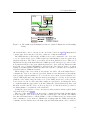
Figure 2.1: Illustration of a shadow page table that maps guest virtual to host physical
addresses.
shortcuts were implemented to increase performance. However, such shortcuts deviate
from the x86 interface and do not work in the general case.
Operating systems have to be in control of the memory management of the machine
and rely on segmentation and paging to achieve memory protection. For security reasons,
a VM is not allowed to manipulate host page tables and segments. Page table and
segment manipulations are privileged operations that cannot be delegated to a VM
because it would enable the VM to manipulate kernel memory an thus seize control.
Therefore, VMMs on x86 have to emulate the memory management unit (MMU).
The guest memory is usually virtualized by multiplexing host address spaces in a way
that provides the VM with the illusion of being in control of the memory management.
This requires the VMM to be involved in any memory relevant operation of the VM
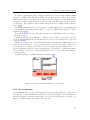
and to keep track of mappings of VM memory to host memory. In order to do this, the
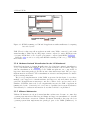
VMM has to implement an additional page table that maps guest virtual addresses to
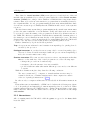
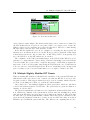
host physical addresses. Such a page table is called a shadow page table, an example
of which is shown in Figure 2.2.3.1.
2.2.3.2 Hardware Virtualization
During the last decade, together with the increasing power of CPUs, virtualization
technology gained significance; VMware was the market leader because they were the
only ones who could do efficient virtualization of x86. The entry barrier for other
contenders in the x86 market was exceptionally high. When the x86 was enhanced to
64bit, legacy mechanisms like segmentation were intentionally left out. Unfortunately
that also broke VMware’s virtualization technique, which used segments to protect the
hypervisor [pag]. Intel and AMD, two major contenders in the x86 market, investigated
hardware extensions to aid virtualization and thereby lower the entry barrier to the
12
2.2 Virtualization
Figure 2.2: MMU virtualization without VMM intervention: Nested paging.
virtualization market. They came up with similar, but differently named solutions. In
this thesis, I use the notation of AMD.
Modification of the instruction set was not an option as it would break backward
compatibility. A possibility would have been to introduce a new processor flag that, if
set, causes all sensitive instructions to trap. This would enable VMMs implementing the
trap and emulate scheme as proposed by Goldberg and Popek.
Instead, the CPU state was duplicated with the introduction of a less privileged
processor mode that is called the guest mode in contrast to the standard processor
mode, which is now called host mode. A switch between guest and host mode is fairly
complex because the processor state that is not or only indirectly accessible, for example
segment registers, has to be stored and exchanged. A transition to guest mode is initiated
with the privileged instruction vmrun.
The CPU can be configured to intercept certain instructions, faults and interrupts
while executing in guest mode. An intercept results in an unconditional fallback to host
mode (VM exit) that is augmented with information about its cause. Intercepts may be
used to let the host receive and handle interrupts to remain in control over the machine.
They can also be used to let the VMM assist in operations that are not handled by
hardware virtualization (for example device virtualization). A vmmcall instruction is
available in guest mode to voluntarily initiate a VM exit.
To aid in removing the performance bottleneck imposed by emulating the MMU,
both AMD and Intel created an hardware extension that implements another stage in
address translation in hardware and thus mitigates the need for the VMM to intervene
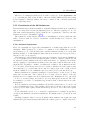
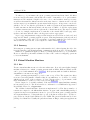
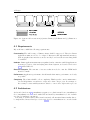
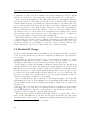
on guest page-table manipulation. This hardware extension is called nested paging. An
host address space is used as guest physical memory upon which the guest can build
address spaces: The address resolution is done by the MMU, and involves parsing of
the guest page table to translate a guest virtual address to the guest physical address
and subsequently parsing of the host page table to find the corresponding host physical
address (see Figure 2.2).
13
2 Background
2.2.4 Platform Virtualization
Virtualizing the CPU and memory management falls short of virtualizing a whole machine;
An operating system relies on the services of a number of tightly coupled devices that
need to be implemented in the VMM because of performance considerations.
Such devices include an interrupt controller and a timer device. Both are of less
complexity compared to peripheral devices and can therefore be implemented without
increasing the VMM complexity significantly.
2.2.5 Peripheral Device Virtualization
Providing the VM with peripheral devices such as a keyboard, a mouse, network interface
cards, hard disks and graphics cards is essential to the usability of the VM. In contrast to
platform virtualization, which has to be implemented in software by the VMM, peripheral
devices may be virtualized in several ways.
One solution would be to fully emulate an existing device. To do so, the VMM has to
implement a full device model and to intervene on any device access. Such a solution
allows guest operating systems to run unmodified by using their native drivers.
Such a solution increases VMM complexity, because it requires the full device model
to be implemented. Another source of complexity comes from the means needed to
safely emulate device memory: In x86, device memory may be mapped straight into
the physical memory space of the machine. It is then accessed using regular memory
operations. A write to device memory is usually unbuffered and interpreted by the device
as a command, which is immediately acted upon. To provide the VM with the illusion
of direct device memory access, the VMM has to recreate its behaviour. However, there
is no way to trap on memory accesses other than page faults. Therefore, the VMM has
to make sure that accesses to device memory regions in guest memory cause a page
fault and thus enable the VMM to gain control. It may then emulate the instructions
accessing the memory region, update the device models accordingly before returning to
the VM. This requires the VMM to provide an instruction emulator, which comes with
the risk of bad performance and increases the VMM complexity. In the literature this
technique often called full- or faithful virtualization.
Device operations often consist of many commands that update the device state
incrementally until the actual operation is executed. Because in faithful virtualization
each IO operation has to be handled by the VMM, such behaviour causes significant
numbers of world switches, thus causing substantial performance penalties.
A different approach is to present the VM with a custom device interface that does
not resemble a physical device. Interfaces of physical devices are often inefficient, and
require incremental device state updates for complex device commands, which cause
numerous traps to the VMM and subsequent instruction emulation. Instead, a custom
interface can make use of efficient shared memory communication, which increases the
expressiveness of commands and thereby reduces the number of VMM interactions. The
interface used by the guest to command the device can be implemented using calls to
the VMM that resemble system calls used by applications to request services from the
OS. Instead of requiring the implementation of a device model of an existing device,
14
2.3 Discussion - Are VMMs Microkernels Done Right?
an abstracted device model can be created, which, because it is not restricted to the
limitations of the machine interface, may be of less complexity than a model of a physical
device.
In summary, such a solution is of less complexity than faithful virtualization and may
provide better performance [BDF+ 03]. However, providing the VM with an interface
that is different from the physical machine breaks the equivalence criterion of classical
virtualization and is therefore called para-virtualization. Para-virtualization requires
custom drivers for the guest OS to make use of virtual devices.
Both faithful and para-virtualization require the VMM to implement back ends to the
virtual devices. This can be done in several ways, for example by vesting the VMM with
device drivers that directly access the machine and are multiplexed by the VMM, or by
relying on services of the host operating system.
The third approach is to give direct device access to the VM. However, great care is
needed to avoid security pitfalls: Direct memory access (DMA) allows devices to directly
read and write from main memory without OS intervention, bypassing its isolation
mechanisms such as paging. If the VM is allowed to directly drive devices using DMA,
it must be counted to the TCB of the system. This huge increase of the TCB is not
wanted for most scenarios. Hardware innovations that mitigate this problem are already
in preparation: IO MMUs can be used to provide devices with a virtual view on main
memory and thus restrict access [AMD07].
Another solution would be to use the VMM as a proxy for direct device access; The
guest OS uses an adapted device driver that instead of directly writing to device memory
issues a call to the VMM, which can then inspect and validate the command and issue it
to the device memory on behalf of the VMM.
Devices such as network interface cards (NICs) even support multiplexing in hardware
and can be used as-is (as long as they do not facilitate DMA).
2.3 Discussion - Are VMMs Microkernels Done Right?
Hand and colleagues [HWF+ ] initiated an interesting discussion by boldly claiming that
virtual machine monitors—while striving for different targets—achieve many of the goals
of a microkernel-based system. Their arguments are that VMMs establish a more versatile
interface than microkernels do and mitigate the need for fast IPC. The microkernel
community was quick to respond and refute most of Hand’s arguments [HUL06].
However I think that the discussion is worthwhile because despite comparing apples
with oranges it sheds light on important similarities of both microkernels and VMMs:
While microkernels surely represent the smallest possible kernels, VMMs may also be
small in size compared to monolithic kernels. Both systems multiplex memory and CPU
time for their clients. The difference lies in the interfaces they present; VMMs present
the full machine interface, whereas microkernels provide an abstracted interface.
Virtualizing an operating system alone does not automatically provide stronger security;
VMMs can only provide isolation as strong as separate physical machines do. However, it
is worth looking at lessons learned from microkernel systems research: With microkernels
it is possible to build applications that have a tiny TCB.
15
2 Background
Given the premise that commodity operating systems are inherently insecure and it is
not possible to make them more secure without compromising application compatibility,
how can we use the untrusted applications of a commodity operating system for tasks
that demand strong security?
The solution may be a combination of a microkernel and a VMM in a split-application
scenario [Här02]. The VM may communicate with secure applications on top of the
microkernel through a well-defined secure channel.
An example of such an application is secure online banking. The user runs a commodity
browser in a virtual machine. When the user is prompted to provide his private key to
authenticate himself, the VM sends a message to a small application running on top of
the microkernel. This secure application must show the information from the website
and allow the user to input his private key, encrypt it and send it back to the browser
in the VM. The browser than sends the encrypted data to the bank and the user is
authorized. Thus, the untrusted software stack in the VM has no chance to compromise
the authentication process for example by sniffing the private key.
2.4 Summary
In this chapter I motivated why secure computing is of importance and introduced
microkernels as basis for secure systems. I then introduced virtualization and its building
blocks. This was completed by a discussion about the similarities and differences of
virtual machine monitors and microkernels, and why it may be a good idea to combine
both.
16
3 Related Work
This chapter gives an overview on projects related to this thesis. Presented systems
include the microkernels Fiasco and L4Ka::Pistachio. Additionally, I will give a brief
introduction to the capability-based EROS operating system to show that a secure and
robust operating system can be built using object-capabilities. I will also present the
rehosted operating systems L4Linux, Wombat/OK:Linux and User-Mode Linux as well
as important examples of VMMs.
3.1 Microkernels
In this chapter I will introduce two second generation microkernels. Beforehand, I will
shortly revisit the major design features that constitute second generation microkernels.
When we refer to second generation microkernels, we usually mean microkernels of the
L4 family. The L4 specification was devised by Jochen Liedtke and includes three basic
abstractions: Address spaces are represented by tasks and used as isolation domains;
Activity inside of tasks is abstracted as threads; Communication between threads is
done with synchronous inter process communication (IPC).
Address spaces can be constructed with three operations [Lie95]:
Grant One task may grant a page to another task if the recipient agrees. The granted
page is removed from the granter’s address space and included into the grantees
address space.
Map A task may map a page to another task on agreement. Thereafter, the mapped
page is visible in both the mapper’s and the mappee’s address space.
Unmap A task may unmap a page without consent of the mappee. The page will be
recursively unmapped from all address spaces that contain mapping of the page.
With these operations address spaces can be constructed recursively by user land servers.
In an L4 system a special task, sigma0, initially owns all physical memory. Upon that a
hierarchy of pagers can be built.
In L4 IPC is the basic mechanism for communication between threads. IPC is
unbuffered and synchronous: Only if both sender and receiver agree and are ready, the
kernel does a rendezvous of both and delivers the message. This modus operandi proved
to perform well [Lie94]. Upon this mechanism other techniques such as remote procedure
calls may be implemented.
17
3 Related Work
3.1.1 Fiasco
The Fiasco microkernel is a project at TU-Dresden that arose from an effort to create
a real-time capable microkernel. It is written in the high level programming language
C++, and runs on x86, x86/64, ARM and PowerPC platforms. A Linux user land
port is also available for development purposes. Support for symmetric multi-processing
(SMP) is available, and the kernel has been shown to offer good performance with
a port of Linux [HHL+ 97]. Its sources are provided under the terms of the GPL to
encourage community participation. Originally, it implemented the L4 specification and
has since been used as a research vehicle to explore and evaluate evolutions in the field
of microkernel research. It includes refined support for standard monolithic operation
systems and is platform for a ported version of Linux. Fiasco is co-developed with its
run-time environment.
Fiasco sports support for secure virtual machines, which is another embodiment of
protection domains alongside tasks. Contrary to tasks, its interface does not consist of
system calls and virtual memory, but of a virtual CPU and virtualized memory including
a virtual MMU. VMs are subject to the same address space construction rules as tasks.
Recently support for object-capabilities was added to the kernel. On top of it, a
capability-based run time environment was developed that follows the principle of least
authority and aids developers in building applications. This run time is named L4
Runtime Environment (L4Re).
3.1.2 L4Ka::Pistachio
L4Ka::Pistachio is a microkernel developed by the System Architecture Group at the
University of Karlsruhe in collaboration with the DiSy group at the University of New
South Wales, Australia. It is written in C++ and runs on x86, x86-64 as well as PowerPC
machines. The microkernel provides SMP support and fast local IPC [pis].
3.1.3 EROS
The Extremely Reliable Operating System, or EROS for short, is an attempt to build
a system that uses capability-based privilege management for any operation without
exception. It has a small kernel and uses a single level storage system for persistence,
which is transparent to applications. The EROS system is a clean-room reimplementation
of its commercial predecessor KeyKOS written in the high-level language C++ for the
x86 platform. Address spaces are used for isolation and object-capabilities for access
control. Early microbenchmarks show performance comparable with Linux.
EROS and its predecessors showed that efficient and secure capability-based systems
can be constructed.
3.2 Rehosted Operating Systems
Implementing a rich user land on top of a microkernel is a challenge of its own as can be
observed with the Gnu Hurd project [WB07].
18
3.2 Rehosted Operating Systems
A pragmatic solution is the port of a monolithic kernel to run as a user land server
that executes unmodified applications. Such a port is called rehosting. The rehosted
kernel has to be modified to run as an application on the host OS. That means, it has
to be ported from the machine interface, where it is in full control, to the application
binary interface (ABI) of the host operating system. To run unmodified applications,
the rehosted OS must behave like the original with respect to user land. For example
applications make assumptions about the layout of their address space and would not
run if it is altered. Similarly, they rely on the correct behaviour of synchronisation
mechanisms. Therefore a rehosted OS has to be in control of its applications. In contrast
to running on a real machine the rehosted OS must employ mechanisms of the host; For
example the rehosted OS must not manipulate hardware page tables directly, but has to
employ host mechanisms to create the address spaces of its applications.
During the next paragraphs I will introduce three important examples of rehosted
operating systems: L4Linux, Wombat/OK::Linux and User-Mode Linux.
3.2.1 L4Linux
L4Linux is a rehosted monolithic kernel. Its basis is the Linux kernel and it runs as a
user land server on the Fiasco microkernel.
L4Linux executes in its own address space, and runs its applications in separate L4
tasks. L4Linux applications can be forced to give control to the L4Linux server with
a system call that has been enhanced for this specific purpose [Lac04]. Similarly, the
Fiasco microkernel was enhanced in a way that it supports special threads that are not
allowed to do system calls directly, but whose faults, exceptions and system calls are
reported to their corresponding pager. L4Linux uses these special threads to run its
applications and remain in their control. To administer client address spaces, L4Linux
uses L4 map and unmap operations, which increases the costs for memory management
compared to native Linux.
Native Linux maps itself in the upper gigabyte of its applications address spaces. An
entry into the Linux kernel, for example a system call, requires a privilege level switch
only. In L4Linux, the upper gigabyte of the application’s address space is occupied by
the Fiasco microkernel. When an application wants to voluntarily enter the L4Linux
kernel, it executes an INT 0x80 (like in native Linux), which is intercepted by Fiasco.
The microkernel synthesizes a message on behalf of the application and switches to the
L4Linux address space to deliver the message. L4Linux receives the message and can
now run the operation as requested by the application. In summary, entering the kernel
from an application requires two privilege level and one address space switch in L4Linux
in contrast to one privilege level switch in native Linux. This is one example where
the L4Linux setup incurs overhead. L4Linux is a highly optimized rehosting effort, and
despite inherent performance disadvantages performs well in many workloads.
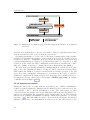
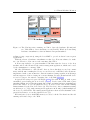
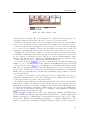
L4Linux runs encapsulated and is binary compatible to Linux. An illustration of
L4Linux is given in Figure 3.1. L4Linux runs Linux applications side by side with L4
applications with a small TCB.
19
3 Related Work
Figure 3.1: L4Linux running as a user land server on top of the L4 microkernel Fiasco.
3.2.2 OK:Linux aka Wombat
Wombat is a port of Linux to the L4Ka::Pistachio microkernel. The basic architecture is
similar to L4Linux, with the Wombat kernel residing in its own address space. The main
emphasis on this port was to efficiently support Linux on L4 on embedded platforms.
The work was done at NICTA [LvSH05].
The Wombat project is currently stalled, but its intellectual properties live on in the
Open Kernel Lab’s OK:Linux project, which runs on top of the OKL4 microkernel. The
currently available version of OK:Linux is based on Linux 2.6.24.9. Unfortunately no
further information on the project is available.
3.2.3 User-Mode Linux
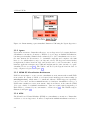
User-mode Linux (UML) is a port of the Linux kernel to the Linux API. The UML
binary is mapped into the address spaces of all its applications. UML remains in control
by using the ptrace system call trace facility to keep track of system calls as well as
signals to remain in control of faults and exceptions [Dik00]. Being a full fledged Linux
port, it runs the same binary applications as the host [Dik01].
For any UML application a tracing thread is employed that intercepts system calls.
This mechanism allows only interception but not canceling of system calls. Therefore
the tracing thread nullifies the original system call by issuing the getpid() system call,
which results in an unnecessary kernel entry. UML uses signals to force control to the
UML kernel during a system call or interrupt. Signal delivery and return are slow and
impose a noticeable performance deterioration [ska].
To protect the UML binary from its applications a jail mode was introduced that
remaps the UML binary in a read only fashion while executing an UML application, and
remapping it with write permission on context switches. This modus operandi slows
down UML context switches considerably and does not protect the UML binary from
being read, which can be used by attackers to tell whether or not this attacked system is
running UML.
20
3.2 Rehosted Operating Systems
To improve performance and security, a patch was developed that enhances Linux
support for UML. With this patch UML can run in a separate address space and is
therefore inaccessible to its applications, which solves the security problems. Additionally,
the patch obviates signal delivery on system calls and thus improves performance
considerably. The patch is called SKAS, which is short for Single Kernel Address
Space [ska].
Another patch further improves performance by enhancing the ptrace mechanism with
a new command that allows system calls to be canceled. This patch is called User-Mode
Linux Sysemu [sys].
Both patches have not yet found their way into the main Linux source tree and are
currently outdated.
UML uses virtual devices which are constructed from software resources provided by
the host [Dik01]; UML may use any host file as a block device and attach to any host
network interface.
UML was created to show that the Linux system call interface is sufficient to host
itself. It is now used as a tool for operating system developers, who want to make use of
general purpose debuggers. It can also be used for sandboxing and jailing hostile code
as well as untrusted services. Another application is consolidation of physical machines.
Ports of UML to other host operating systems may be used to provide the Linux interface
on such systems.
A running instance of UML is illustrated in Figure 3.2.
Figure 3.2: User-mode Linux running on top of Linux.
3.2.4 Pre-virtualization
Pre-virtualization is a form of automated OS rehosting that attempts to achieve the
performance of paravirtualization with little porting expenditure. Pre-virtualization
allows an adapted operating system binary to be run on bare hardware as well as on a
number of different hypervisors such as L4 and Xen.
21
3 Related Work
To achieve good performance the guest operating system kernel is modified. Modifications are largely automatic, and include the rewrite of assembly code to pad sensitive
instructions, the analysis of high level source code to find sensitive memory accesses,
as well as structural modifications such as the introduction of function-call overloads
and an empty region within the guests virtual address space. A hypervisor can decide
whether or not to modify the guest kernel to make it benefit from para-virtualization.
Possible run time modifications include the injection of VMM code and the replacement
of sensitive instructions as well as replacement of kernel functions. The injected VMM
code can, for example, implement mode switches of the virtual CPU, batch page table
updates, and issue efficient calls to the hypervisor where appropriate.
A prototype implementation supports L4 kernels as well as Xen as back end, and
supports the Linux operating system as guest. This implementation already showed
good performance, with only 5.5% performance degradation with the Xen back end and
14.6% with the L4 back end, both compared to native Linux [LUY+ 08].
3.2.5 Summary
Rehosting an operating system requires substantial work, both in adapting the OS to the
host OS’s interface and in implementing optimizations in the host OS to aid in rehosting.
With lots of optimization applied, rehosted operating system achieve good performance.
However, achievable performance is limited because of the overhead of mapping operations
to host mechanisms.
3.3 Virtual Machine Monitors
3.3.1 Xen
Xen is a virtual machine monitor for the x86 architecture. It provides an idealized virtual
machine abstraction to which operating systems such as Linux, BSD and Windows XP
can be ported with minimal effort [BDF+ 03]. Both systems with and without hardware
virtualization extensions are supported.
Guest operating systems must be ported to run on top of Xen. The required modifications are reasonably small for Linux: Only about 3000 lines of code had to be added,
which is about 1.36% of the total x86 code base. Xen provides good performance, with
little virtualization overhead of only a few percent [BDF+ 03].
Xen is designed to be in full command of the machine, with virtual machines running
in less privileged mode. The Xen kernel is a combination of a VMM and a hypervisor.
It is usually referred to a hypervisor.
The idealized virtual machine abstraction implemented by Xen has a number of
restrictions compared to the full machine interface: A guest cannot install fully-privileged
segment descriptors as segmentation is used to protect Xen from guest operating systems
and segments must not overlap with the top end of the linear address space. Updates to
page tables are batched and validated by the VMM. The guest OS must run at a lower
privilege level than Xen. Usually the guest kernel runs on Ring 1, with guest applications
22
3.3 Virtual Machine Monitors
Figure 3.3: The Xen hypervisor running one VM to drive the hardware (Dom0) and
two VMs with no direct hardware access (DomU). Windows is run using
hardware virtualization, whereas Linux is run paravirtualized.
in Ring 3 (ring compression), using the host MMU to provide isolation between guest
applications.
With the advent of hardware virtualization technology, Xen was enhanced to make
use of it. Therefore, Xen can now also run unmodified OSes.
A Xen setup includes one para-virtualized VM that runs the devices of the host
machine and is called Dom0. It also runs a management application, which can be used
by the administrator to manage VMs.
All other VM instances—called DomU—have no direct hardware access, but communicate with Dom0 for multiplexed device access. Devices for all VMs besides Dom0 are
implemented with a custom interface; Data is transferred using asynchronous IO rings,
and interrupts are delivered using an event mechanism. Because Dom0 has full device
access, it belongs to the trusted computing base of all VMs [MMH08].
A typical Xen setup is depicted in Figure 3.3.1. Xen runs in Ring 0, with a paravirtualized guest driving the host devices (Dom0). It also runs a VM with a paravirtualized Linux, and a VM with an unmodified Windows (using hardware virtualization).
The DomU VMs do not access physical devices. A device access of the DomU running
Linux is initiated by the Xen device driver (a). The Xen device driver communicates using
an efficient protocol (b) with a management application in Dom0 (c) which multiplexes
the device for all DomUs. The management application then uses mechanisms of the
guest OS in Dom0 to access the physical device (d).
If Dom0 drives devices with DMA memory accesses, both the Xen kernel and the OS
running as Dom0 belong to the TCB.
23
3 Related Work
Figure 3.4: Linux running a para-virtualized Linux in a VM using the Lguest hypervisor.
3.3.2 Lguest
Lguest is an extension to Linux that allows it to act as a hypervisor by leveraging hardware
virtualization extensions. Contrary to KVM it does not support faithful virtualization,
but runs para-virtualized Linux kernels exclusively. For device virtualization it resorts to
the virtio framework. It is meant to be of minimal complexity and comprises only 5000
lines of code, which makes it easy to modify and extend. The hypervisor functionality
is implemented with a kernel module, and as such can be loaded at run time. A tiny
launcher application initiates new VMs and implements the virtio interface for paravirtualized device access [Rus]. The VM is controlled by the Lguest kernel module. A
setup of Lguest is depicted in Figure 3.4.
3.3.3 NOVA OS Virtualization Architecture
NOVA is an attempt to create a secure virtualization environment with a small TCB
from scratch. It consists of NOVA, a novel microkernel with hypervisor functionality (a
microhypervisor), which aims to be small and efficient. NOVA supports capabilitybased access control, and has a minimal interface for hardware virtualization. On top of
NOVA runs a multi-server user environment. Aside from drivers, it also runs the VMM
Vancouver, which does faithful virtualization. Vancouver runs entirely unprivileged.
Each VM is coordinated by its own instance of Vancouver [Ste]. The NOVA setup is
illustrated in Figure 3.5.
3.3.4 KVM
The Kernel-based Virtual Machine (KVM) is a virtualization extension to Linux that
enables it to act as a hypervisor. It strives to implement faithful virtualization and uses a
24
3.3 Virtual Machine Monitors
Figure 3.5: NOVA OS Virtualization Architecture, running a VM with Linux and one
with Fiasco.
Figure 3.6: KVM running a VM side by side with normal Linux applications.
slightly modified instance of Qemu for emulation. KVM requires hardware virtualization
extensions and supports nested paging.
In a KVM setup the full monolithic Linux kernel runs in privileged mode and—in
terms of security—counts to the TCB of all applications and VMs running on top of it.
A KVM setup is illustrated in Figure 3.6. It runs one VM with the help of Qemu side
by side with Linux applications.
3.3.5 KVM-L4
Peter and colleagues ported KVM to run on an L4 system. The KVM kernel module was
ported to run in L4Linux. Its communication with the hardware was modified to make
use of Fiasco’s support for VMs. The microkernel is the only privileged component and
enforces isolation between VMs and applications, KVM-L4 does not increase the system’s
25
3 Related Work
Figure 3.7: KVM-L4 running one VM and L4 applications with a small trusted computing
base side-by-side.
TCB. Therefore this setup allows applications with a tiny TCB to run side by side with
virtual machines. This setup is a huge improvement compared to native KVM in terms
of security. KVM-L4 does not degrade performance compared with KVM [PSLW09].
In Figure 3.7 you can see a setup with KVM-L4 running a VM on top of the Fiasco
microkernel.
3.3.6 Hardware Assisted Virtualization for the L4 Microkernel
In his Diploma thesis, Sebastian Biemüller introduced hardware assisted virtualization
on top of an L4 microkernel [Bie06]. He proposed an extension to the L4 API to support
efficient virtualization. For this purpose the VMM was split into two components: A
hypervisor that runs privileged and the monitor that runs in user land. The prototype
implementation used Intel’s VT-x virtualization extension and implements a software
memory management unit.
The prototype implementation of this VMM, as presented in the thesis, does not have
multiprocessor support for virtual machines and supports only an L4 microkernel as
guest OS. It implements an interrupt controller, a timer device and a serial console.
Similar to KVM-L4, this work does not significantly increase the TCB of applications
running side-by-side. Conversely, it does not have a capability based system as substrate.
Unfortunately no evaluation information about this work has been published.
3.3.7 VMware Workstation
VMware Workstation is a hosted virtual machine architecture. It runs on commodity
operating systems such as Windows and Linux and supports virtualization both with
and without hardware extensions. VMware Workstation installs a driver into the host
operating system that implements the privileged part of the VMM (VMDriver). A
26
3.3 Virtual Machine Monitors
Figure 3.8: VMware Workstation running two virtual machines on a Linux host.
second component runs as an application and is used to translate IO operations of the
VM to host primitives (VMApp) [SVL01].
VMware Workstation has a fixed set of virtual devices that may be used by the guest.
Host drivers are used as a back end. A set of custom drivers can be installed into guest
operating systems to make it aware of virtualization and use more efficient IO interfaces.
An example VMware Workstation running on a Linux host is illustrated in Figure 3.8.
In this example it drives two virtual machines. In a VMware setup, both the hosting
monolithic kernel and the VMDriver component belong to the TCB.
27
4 Design
Innovations in operating systems often imply breaking backward compatibility. However,
the availability of applications is a crucial prerequisite for the adoption of an OS. As the
development of complex applications is usually a slow and expensive process, providing
a stable interface is an important aspect in the development of new operating systems.
Linux is a free, open source operating system kernel. It is used in many applications
in the embedded, desktop and even server domain. During the years many companies
started to use Linux and add to its already large application basis with their software.
Because of this variety of available software I chose Linux as the target interface of my
work.
On top of Fiasco, Linux applications are supported with two projects; L4Linux and
KVM-L4. L4Linux (see Chapter 3.2.1) is a version of Linux that has been rehosted
to run directly on the L4 API. The rehosted Linux kernel has inherent performance
disadvantages compared to native Linux: As illustrated in Figure 4.1, a kernel entry
in native Linux (a) requires only one privilege level switch. In L4Linux (b) the same
system call needs to be mediated by the microkernel, requiring two privilege level and
one address space switch.
Virtualization extensions recently added to mainstream processors simplify the implementation of virtual processors. When the guest runs in a VM, the microkernel is
not involved with the guest’s operations such as system calls, as shown in Figure 4.1
(c). Therefore, the performance disadvantages of rehosted kernels related to processor
virtualization do not apply to OSes running in VMs.
Virtualization extensions are used on top of L4 with KVM-L4. Its VMs already yield
good performance. However, KVM-L4 relies on the services of L4Linux and Qemu, and
thus has a substantial resource footprint.
In this thesis I want to make Linux applications usable on top of a microkernel. They
should run with as much performance as possible. The solution shall require less resources
than KVM-L4.
For its security properties, such as a tiny TCB and strong isolation between user land
components, a microkernel is an ideal basis for secure systems. In this thesis, I will
present a solution that uses a VM to run a Linux kernel on a microkernel.
I will proceed by defining the requirements of this work. Thereafter, I will present the
overall architecture. The architecture will be refined in Section 4.3 with a discussion
about the device interface. Section 4.4 will introduce the different attack scenarios that
I consider. The design of the VMM will be introduced in Section 4.5.
29
4 Design
Figure 4.1: System call execution in (a) native Linux, (b) L4Linux and (c) Linux in a
VM.
4.1 Requirements
My work has to fulfill the following requirements:
Functionality The whole range of Linux software shall be supported. Therefore Linux
applications must not need to be adapted. Interaction through standard interfaces
such as graphical use interfaces, mouse and keyboard as well as networking shall
be available.
Isolation Linux applications must run encapsulated and not interfere with L4 applications.
Security properties of the underlying microkernel system, as described in Section
2.1.1, must still hold.
Resource Footprint The amount of resources that is needed to run the VMM itself
should be small.
Performance Application performance should match their native performance as closely
as possible.
Complexity The solution shall be of low complexity. This keeps the costs for maintenance
low and helps future researchers to adapt it for their own projects. It can improve
the security because small systems are suited to a more thorough revision process.
4.2 Architecture
As described in Section 2.2, virtualization requires core, platform and device virtualization.
Core virtualization is concerned with CPU and memory virtualization, both of which
are done by hardware extensions.
Following Jochen Liedtke’s microkernel rationale, all uncritical functionality has to
be implemented in user land (see Section 2.1.1). Core virtualization is concerned with
30
4.2 Architecture
Figure 4.2: Setup with two VMs.
security critical operations: The vmrun instruction to switch the CPU to guest mode is
a privileged instruction and thus can only be executed by the microkernel.
The microkernel must retain control of the machine at all times; More specifically, it
has to receive and handle all system interrupts. For example, if the guest were able to
consume the system timer interrupt, the host would not be able to schedule and thus
loose control over the machine. That is why the microkernel must enforce that host
interrupts occurring during VM execution are intercepted and delivered to the host.
Similarly, the VM’s memory must be constructed using the microkernel’s secure
mechanisms, which ensure that a VM can only access memory that has been allocated
for its operation. In a high-level view, VMs are protection domains similar to tasks.
Therefore, the same memory construction mechanisms that are used for tasks also apply
to VMs. VMs are allowed to communicate with their VMMs only.
Peter and colleagues [PSLW09] were able to implement secure VMs by adding only
500 lines of code to the Fiasco microkernel, which is an insignificant increase of the TCB.
As described in Section 2.2.5, object-capabilities are a mechanism that allows systems
that adhere to the principle of least authority. With support for object-capability based
access control, a VMM can be built in user land that has the minimal set of permissions.
With both object-capability and secure hardware virtualization support Fiasco is a viable
choice for this thesis.
Coordination of the VM execution, platform and device virtualization are up to a
VMM that is implemented in a task. The VMM runs as an ordinary task and is subject
to the strong security properties of the microkernel.
For added security, different critical Linux applications can be run in separate VMs.
It is therefore desirable that VMs are isolated from each other. In a scenario where the
VMM is shared among several VMs, a malicious VM can attack the VMM and thereby
render all its VM siblings compromised. This scenario can be avoided if a VMM drives
one VM only. Consequently, I will employ one VMM per VM as illustrated in Figure
4.2, which shows a setup with two VMs.
Figure 4.3 gives an impression of the setup of Linux (a), L4Linux (b), KVM-L4 (c)
and the envisioned architecture (d). Linux runs in privileged mode, with its applications
running unprivileged. L4Linux and its applications run in user land on top of the
microkernel. KVM-L4 uses L4Linux and Qemu to do faithful virtualization. The
envisioned architecture is similar to KVM-L4 in that it employs a VM. Contrary to
31
4 Design
Figure 4.3: Architectural overview of (a) Linux, (b) L4Linux, (c) KVM-L4 and (d) the
envisioned system
KVM-L4, it depends neither on L4Linux nor Qemu, which promises a much reduced
resource footprint.
4.3 Para-Virtualization
The VMM has to provide the VM with (virtual) devices (platform and device virtualization). One option is to provide the VM with virtual duplicates of physical devices. In
general, this requires both an implementation of the device model, and an instruction
emulator (as described in Chapter 2.2.5). Another option is to provide a custom device
interface. Such an interface may use efficient shared memory communication and obviate
an instruction emulator. A custom device interface requires custom drivers for the guest.
KVM-L4 does faithful virtualization, and therefore provides a guest with an exact
duplicate of a physical machine, including a complement of devices. As described in
Chapter 2.1.2, faithful virtualization requires instruction emulation and device models.
Both are implemented in Qemu, which runs as a separate application. KVM-L4 achieves
about 92 percent native performance [PSLW09], which is on par with native KVM.
KVM and Qemu are widely used, and actively developed by a number of skilled
people all over the world. Therefore, I assume that the emulator has received careful
tuning. The remaining overhead of about 8 percent results from inherent costs for device
virtualization: IO intercepts, instruction emulation and update of device states. Many
workloads cause frequent device interaction, and are therefore limited by the performance
of device virtualization.
Implementing device virtualization inside the VMM is one possible optimization that
spares the overhead incurred with switching to an external component, but the costly
IO intercepts and performance penalties caused by emulation cannot be avoided.
32
4.4 Security Considerations
Therefore, to achieve better performance than KVM-L4, I decided to go without full
hardware backward compatibility. Instead, I will provide the VM with custom device
interfaces, thereby avoiding emulation altogether. The device interface will use calls to
the VMM, using the vmmcall instruction (hypercalls). Hypercalls will facilitate shared
memory communication to increase the expressiveness of individual commands and thus
significantly reduce their number.
16bit real mode is a relic from the early days of x86. It is used by all current OSes for
their early set up only. During operation, protected mode (32bit) is used exclusively.
Whereas AMD SVM supports hardware assisted virtualization of real mode code, only
the most recent Intel processors with Intel-VT have that capability. With the prospect
of future Intel-VT support, I decided to not support real mode code. As with 16 bit
mode, the BIOS is a remnant of former times. Its only purpose is to provide a backward
compatible environment during the boot up stage. With VMs starting directly in 32bit
mode, the BIOS is rendered unnecessary as well.
A number of OSes cannot be modified, either because they are distributed without
sources, or their license does not allow modification. These OSes cannot be adapted to
the target VM and therefore cannot run para-virtualized. The most prominent example
is Windows, which runs a huge variety of commercial applications. In a second step I
facilitate Linux functionality to establish virtual machines that do faithful virtualization.
I will later revisit fully backward compatible VMs in Section 4.6.
4.4 Security Considerations
In this section I will shed light on the security implications of VMs on microkernel-based
systems. There are a number of attack scenarios that are of no concern in this thesis:
Attacks on the Linux kernel originating from malicious Linux applications or from the
network may target guests in the VM as well. Although virtualization might be used to
increase security, for example with analysis of the VM’s behaviour, these scenarios are
out of scope of this work.
A VM running on a microkernel-based system poses a potential threat both to the
microkernel and to its applications. For this thesis I assume that the microkernel itself is
resistant to attacks. This assumption draws on the microkernel’s properties as described
in Section 2.1.1. Especially for VMs, I assume that the mechanism used to construct the
VM’s protection domain is valid and does not allow the VM to access memory without
permission. The kernel ensures that it receives physical interrupts and thus remains in
control at all times.
I also assume that the microkernel mechanisms work to protect tasks from each other:
The secure memory construction mechanism ensures that tasks can only access memory
to which they were granted permission, and the capability system is correct and does
not leak access rights. Furthermore, I assume that the peers used for services are well
behaved, and safeguard the interests of all their clients.
Another class of attacks involve the VMM: Because the VM can only communicate
with the VMM, attacks originating from the VM are limited to the VMM. One scenario
is that a guest application might attack the VMM and thereby compromise its Linux
33
4 Design
kernel. Under the assumption that the world switch path is immune to attacks, the only
attack vector is the hypercall interface of the VMM. Configuring the VM such that the
vmmcall instruction is privileged and thus hypercalls are allowed to the the guest kernel
exclusively, this class of attacks can be avoided. Another interaction between the VMM
and guest applications are preemptions. However, these preemptions are transparent to
the VM and cannot be exploited.
The guest kernel may attack the VMM though the hypercall interface. However, even
if it succeeds, the security situation of the remainder of the system is unchanged. That is
because the VMM is encapsulated and assumed to act on behalf of the VM. Because the
VMM exercises control over the attacker VM only, the only privilege that an adversary
could gain is access to its own VM. As the attacker runs in privileged mode in the VM,
it holds full control over the VM regardless whether it controls the VMM or not.
Another source of attacks are external attackers. The input to the VM is mediated by
device managers. It is up the device manager to do protocol multiplexing and to fend of
attacks on the protocol.
4.5 Virtual Machine Monitor
The VMM coordinates the VM execution and provides it with resources such as virtual
devices and memory. It runs encapsulated in an L4 task and manages resources for
the VM. Also, it includes an implementation of platform devices such as an interrupt
controller and provides the VM with access to peripheral devices.
The following sections will introduce the design of these components.
4.5.1 Core Virtualization
CPU and memory virtualization are handled with hardware virtualization extensions,
which are under control of the microkernel. The VMM uses the microkernel’s interface
to command its VM.
With para-virtualization, the guest can voluntarily leave the VM execution with the
vmmcall instruction. This mechanism is used to implement calls to the VMM that work
similar to system calls: Register contents are used to select commands and to pass values
to the VMM. Additional information can be provided in shared memory. As stated
before, these calls are called hypercalls.
Asynchronous communication from the system to the guest is done with virtual
interrupts. Once injected, the guest’s execution is preempted and its interrupt handler is
called according to the guest’s interrupt descriptor table. From that point on the regular
interrupt handling procedures apply.
The VMM’s control loop coordinates the VM’s execution; It instructs the microkernel
to switch to the VM with a system call. Upon return, it checks the VM state to decide
on the next action, for example to react on a hypercall. The control loop also injects
virtual interrupts. It must not block as that would halt the VM execution.
Upon start up, the VMM allocates a memory region of appropriate size and access
permission, and maps it into the virtual machine to be used as guest physical memory.
34
4.5 Virtual Machine Monitor
During the whole VM lifetime, the VMM has access to VM (physical) memory, which
can be used for efficient shared memory communication between the VM and the VMM.
An alternative to allocating all memory at once is demand paging. Whenever the VM
accesses a page that has not been used before, the VMM receives a page fault and maps
a fresh page into the VM.
In this thesis I chose the former approach because it allows the mapped memory region
to be contiguous in physical memory. Whereas this allocation scheme is more wasteful
on system memory, it simplifies the address translation if the guest is allowed to directly
drive DMA enabled devices.
4.5.2 Platform Virtualization
As described in Chapter 2.2.4, the VMM has to implement platform devices such as an
interrupt controller (IC) and a timer device.
For the design of the IC, it is reasonable to align it with the high level abstractions of
Linux. If done so, the Linux operations correspond directly to IC ones. As for a virtual
device, interrupts are flagged by helper threads in a shared data structure, and delivered
to the VM by the VMM’s control loop.
The timer thread periodically blocks with a timeout, upon which it flags the timer
interrupt at the virtual IC.
4.5.3 Peripheral Devices
For a VM to be useful, it has to be provided with virtual devices. The L4 system
includes device managers, servers that multiplex access to hardware. For example Ankh
implements a virtual network switch, thereby multiplexing the physical network card.
Similarly, we have a secure console that securely multiplexes the system’s frame buffer
and maintains a secure input indicator, which cannot be forged by clients. These device
managers consist of a device driver and multiplexing logic. Client communication with
device managers is done with IPC and shared memory. These services are a natural
choice for the back ends of virtual devices.
The VMM makes use of to the device managers to present the VM with a custom
interface. The guest OS needs special drivers to communicate with the virtual devices.
Because these drivers implement an abstracted interface only, I will call them stub
drivers. The VMM’s task is limited to translating the stub driver’s commands into IPC
messages, which are forwarded to the device manager.
Asynchronous events, such as the availability of packets, are signaled using IPC or
asynchronously using User-Irqs. For each device manager, the VMM employs a blocking
helper thread to receive the notification and flag the event as interrupt at the virtual IC.
Virtio provides a para-virtualization interface, which is used by Lguest and by KVM
(optionally). It implements device drivers for a network card, a serial console and a
generic block driver [Rus08]. It is up to the VMM to implement back ends to the virtio
device interfaces. By using the virtio interface, I could benefit from existing drivers,
but would have to implement complex mappings to the L4 device manager’s interfaces,
which would significantly increase the complexity of the VMM.
35
4 Design
Figure 4.4: TCB of an L4 application where (a) the VM drives the hard disk, (b) hard
disk commands are mediated by the VMM and (c) hard disk commands are
handed out to an external server.
Instead, I opted to adapt existing L4Linux stub drivers. Because these already fit well
to the device manager’s interfaces, the translation to IPC should be much easier, which
would help in keeping the VMM simple.
Unfortunately, not all devices can be shared using L4 device managers; For example,
there is currently no device manager for hard disks available. For such devices one VM
in the system may be allowed to directly operate on the physical hardware.
Secure device discovery is enabled by the IO server, which presents its clients with
a virtual bus infrastructure. IO allows device access to be restricted to clients in a
configurable fashion: It has an interface to map device memory into client address spaces
and grants access to IO ports. In this thesis, I want to use IO to present the guest kernel
with a virtual bus containing only the hard disk. The guest can then use its device
discovery algorithms as usual. Depending on the intended use of the system, the VM
may be allowed to access device memory directly.
However, allowing the VM to directly access devices that employ direct memory
access (DMA) is problematic with respect to security: A malicious guest may use
DMA to manipulate physical memory of the host and thus seize control of the machine.
Consequently, this particular VM belongs to the TCB of all applications in the system.
In Figure 4.4 the TCB of an L4 application is illustrated for this setup (a).
To mitigate this problem, the VM must not have access to device memory or IO ports.
Instead, guest driver could be modified to issue hypercalls to the VMM. The VMM
could then validate the command and make sure it accesses only memory regions that
belong to the VM. After successful validation the VMM writes the command into device
memory. As illustrated in Figure 4.4, this removes the VM from the TCB of an L4
application (b).
That still leaves the VMM in the TCB of the system, which might be prone to
attacks from the VM. To further increase security, this checking functionality might be
implemented in an even smaller external server, which further decreases the TCB (c).
As discussed in Chapter 2.2.5, IO MMUs allow DMA main memory accesses to be
restricted in a secure fashion. Therefore, a VM running on a system using an IO MMU
can drive DMA enabled hardware without having to be counted to the system’s TCB.
36
4.6 Staged Virtualization
4.5.4 System Environment
On x86 systems, OS kernels are usually loaded by a boot loader, which typically operates
in real mode. It is installed in a predefined location and started directly after BIOS
initialization. Its task is to prepare the machine for the OS (bootstrap) according a
boot protocol. Upon receiving control, the OS queries the BIOS for system information,
initializes itself and switches to protected mode, which is then used throughout system
operation.
I decided not to support real mode code, which is no restriction for most standard OS
apart from booting. However, with no support for real mode code, no standard boot
loader can be used. Instead, it is the VMM’s duty to bootstrap the guest. Guests are
started directly in protected mode. BIOS calls are available in real mode only, which is
not available in the VM. Instead, BIOS information such as the physical memory layout
has to be provided by the VMM.
4.5.5 Multiprocessor Support
One of the goals of this thesis is to make multiple CPUs available to a VM (SMP). As
described in Section 4.5.1, a virtual CPU is implemented with a thread running the
control loop.
To run multiple CPUs, the VMM employs multiple control loops, each with its own
thread. If control loops are mapped onto different physical CPUs, the VM can make use
of real concurrent execution.
In SMP systems, CPUs communicate with one another using inter-processor interrupts
(IPIs). Operating systems make use of IPIs to start processors, trigger remote function
execution and to do synchronization.
For this thesis, I decided to equip each virtual CPU with an advanced programmable
interrupt controller (APIC) back end, which contains facilities for IPI delivery.
4.6 Staged Virtualization
Many operating systems do not come with source code access and can therefore not
be adapted to run directly in a VM established by the VMM. Microsoft Windows is
the most prominent example. It is in wide use and gained a huge amount of available
commercial software over the years. Another class of operating systems are legacy OSes
that are no longer supported by its vendors but still run important legacy software.
It is desirable to make this huge body of software available. Faithful virtualization,
the recreation of an existing physical machine, is a solution to this problem as it enables
virtualization of unmodified OSes.
Peter and colleagues showed that KVM can be ported to run on top of the Fiasco
microkernel [PSLW09], and that its performance is on par with native KVM. This KVM
port requires an instance of L4Linux and Qemu.
I plan to do a similar setup that, instead of requiring L4Linux, uses a VM with a
para-virtualized Linux. To describe this, I will use the following notation: The VM
that runs the modified Linux instance will be called first-stage VM, whereas the VM
37
4 Design
Figure 4.5: Staged Virtualization.
established by KVM, which does faithful virtualization, and runs unmodified OSes will
be called second-stage VM.
To support staged virtualization, KVM needs to be modified. Instead of building guest
physical memory using Linux mechanism, and running the vmrun instruction itself, it
needs to use hypercalls. The VMM translates these calls into the appropriate L4 system
calls.
Figure 4.5 gives an impression of this setup. The second-stage VM is run in the
following way: VM execution starts in Qemu, which does its initialization. As soon
as possible, it switches from emulation to execution using hardware virtualization. It
therefore instructs KVM (a) to do a world switch. Contrary to native KVM, which does
the world switch itself, in staged virtualization, KVM does a hypercall to instruct the
VMM to do the world switch (b). The VMM then does the world switch on behalf of
KVM using the microkernel interface (c). On intercepts, the second-stage VM is left
(d), and the VMM resumes execution of the first-stage VM (e). Upon receiving control,
KVM analyzes the exit reason of the second-stage VM, and switches back to Qemu (f) if
needed.
4.7 Summary
The system architecture is illustrated in Figure 4.6. The VMM uses the microkernel’s
interface to control the VM execution (control loop) and memory. It uses L4 device
managers as back ends for virtual devices. The guest’s stub drivers communicate
using hypercalls, which the VMM translates into IPC messages that are sent to the
corresponding device managers. Asynchronous system events are received by blocking
threads, flagged at the virtual IC, and eventually injected into the VM by the control
loop.
38
4.7 Summary
Figure 4.6: Envisioned system architecture.
In summary, the VMM contains the following components:
Boot Loader The guest is bootstrapped, provided with required system information,
and finally started by setting the instruction pointer to the guest’s kernel entry.
Instead of using a standard boot loader, these operations are done by the VMM.
Control Loop The VMM runs one control loop per virtual CPU. The control loops
coordinate the execution of the VM, handle hypercalls, and inject virtual interrupts.
Platform Devices Platform devices, the global interrupt controller, APIC, and a timer
device are implemented directly in the VMM.
Peripheral Devices Peripheral devices are accessed using a custom hypercall-based
protocol that uses shared memory. The VMM maintains threads that receive
external events and flag them at the IC. Guest stub driver’s commands are forwarded
to the corresponding device manager
39
5 Implementation
The implementation of the VMM started with the decision to use the C++ programming
language. I did this in the hope that an object oriented design will both simplify the
implementation and help to produce clean and easily extensible code. The resulting
VMM, which will be called Karma, can serve as a starting point for further research.
In this chapter, I describe details of the VMM implementation. I will begin by
explaining the core system, including core virtualization. Then, the system environment
is presented, which includes platform virtualization, infrastructure needed to boot Linux,
as well as SMP support. In the next section, I present how device virtualization is done.
The chapter will be completed with a description of staged virtualization.
5.1 Core System
The Fiasco microkernel has support for the hardware virtualization extension SVM. In
this chapter I will describe how the interface for this extension looks like and how it
can be used to implement a VMM in unprivileged user land. First, I will describe the
coordination of CPU virtualization and how the VM is provided with memory, looking
at both the hardware and the Fiasco interface. Having provided this knowledge, I will
explain the workings of the control loop.
5.1.1 Hardware Virtualization Interface
In x86 hardware-assisted virtualization the whole CPU state is duplicated for a VM. A
world switch from host to guest mode is initiated with the vmrun instruction and left
with an vmexit as described in Chapter 2.2.3.2. I will now give more details on hardware
virtualization and how it is implemented in Fiasco.
In AMD SVM, an in-memory data structure, the virtual machine control block (VMCB),
contains information about the virtual CPU: The virtual CPU’s state is saved in the
state save area. The state save area does not save general purpose registers, which need
to be saved explicitly. Information that is used to control the behaviour of CPU in guest
mode is saved in the control area.
The control area is used to control which instructions and events (e.g. host interrupts)
are to be intercepted. It also contains information about the cause of the VM exit.
Memory virtualization is handled by nested paging, which works upon a regular host
address space that is used as guest physical memory. A guest address is translated from
guest virtual to guest physical using the guest’s page table. Subsequently, it is translated
from guest physical to host physical using a host page table. Both operations are done
by the MMU and do not require VMM interaction.
41
5 Implementation
5.1.2 Fiasco Hardware Virtualization Interface
The Fiasco hardware virtualization interface provides system calls to initiate a world
switch and to create a host address space to be used as a host page table for nested
paging.
A new VM kernel object was devised, which inherits the memory management interface
of L4 tasks. Therefore, the address space for nested paging is created in the same way,
like a task’s address space : It is constructed by the VMM using map operations on the
VM capability.
The VMM allocates a VMCB for the virtual CPU, and initializes it in a way that
the guest can be bootstrapped. A world switch is initiated with the l4_vm_run_svm
system call on the VM object capability. The VMM passes both the VMCB and the
general purpose registers of the guest, which are not handled by the VMCB, along with
the invocation. As described in Section 4.2, Fiasco enforces some of the values of the
VMCB for security reasons.
The VM executes in the scheduling context of the thread that executed the l4_vm_run_svm. Therefore, it behaves like the calling thread with respect to scheduling. Host
interrupts occurring during VM execution cause a VM exit, which are visible to the
VMM as return from the l4_vm_run_svm system call.
5.1.3 Control Loop
I will now explain how the VMM’s control loop works. In an abstract view, a control loop
consists of a world switch and subsequent handling of VM exit conditions. Exit conditions
can either be asynchronous or synchronous: Asynchronous exits occur for purposes that
may be unrelated to the VM state, such as physical interrupts. Synchronous exits
happen either to handle VM state transitions or voluntarily by the VM, for example for
hypercalls.
In the most basic control loop two exit reasons need to be handled, that is asynchronous
exits such as host interrupts and the basic synchronous exit reason of an error. Possible
error conditions are for example invalid CPU states and guest initiated shutdown events
In the next refinement step, I implemented support for virtual interrupts: The back
ends of virtual devices contain a blocking thread. Whenever a device manager has new
input, it notifies this thread with an IPC message, or a User-Irq. The thread then
registers the event at the virtual IC as a pending interrupt, a mechanism, which will be
described in Section 5.2. On each VM exit, the control loop checks the IC for pending
interrupts. If an interrupt is pending, it is injected into the VM. Interrupt injection will
be described in more detail in Section 5.1.4.
Stub drivers issue hypercalls to send commands to driver back ends. Hypercalls are
issued by providing required information in registers and shared memory, and voluntarily
leaving the VM execution with the vmmcall instruction. The control loop handles
hypercalls by analyzing the predefined designation register and forwarding the command
to the back end component for processing. Driver back ends will be explained in detail
in Section 5.3.1.
42
5.1 Core System
loop_forever
begin
i f ( interrupt_pending ( ) )
i n j e c t _ i n t e rr u p t ( ) ;
vmexit_reason = l4_vm_run_svm ( VMCB , registers )
s w i t c h ( exit_reason )
begin
c a s e Vmmcall :
send_command_to_driver_back_end ( )
break
c a s e Asynchronous_exit :
break
c a s e Hlt :
wait_until_interrupt_pending ( )
break
c a s e Error :
print_error_message ( )
shutdown_vm ( )
break
end
end
Figure 5.1: Illustration of the Control Loop.
When an OS is idle, it executes the Hlt instruction, which, on a physical machine,
suspends the processor until an interrupt occurs. In the VM, the Hlt instruction is
handled by the control loop, which yields the processor for other activities that are
ready to execute, until a virtual interrupt is flagged as pending by an event thread. The
complete control loop is sketched in Figure 5.1.
At the moment, yielding the CPU is implemented with a timeout IPC of 1ms and
subsequent polling, which is problematic with respect to interrupt latency. In this
implementation interrupt latency can be as large as 1ms. I also implemented an
alternative that uses asynchronous User-Irqs. In this implementation, the control loop
blocks on a User-Irq that can be triggered by event threads on incoming events. Once
the event thread has triggered the User-Irq, the control loop immediately continues
execution. This implementation does not use polling, and in theory should keep the
interrupt latency low. However, in my measurements the first implementation performed
better. The reasons for this counter-intuitive behavior are unknown and subject to future
research.
In summary, the control loop has to handle the following exit reasons:
1. Asynchronous Exits:
Interrupt The VM was left because of a host interrupt. After the host OS returned
control to the control loop pending interrupts are injected into the VM.
2. Synchronous Exits:
Vmmcall The VM explicitly called the VMM. Such hypercalls are done by stub
drivers to send commands to device managers.
43
5 Implementation
Hlt When the guest executes a Hlt instruction, the CPU is yielded to other
activities that are ready to execute.
Error An error condition occurred. Possible errors include invalid VM states and
shutdown events.
5.1.4 Virtual Interrupts
The control loop can inject only one interrupt per vmrun. However, after a leaving VM
execution, multiple event threads can receive notifications from their device managers
and flag them as pending interrupts. Whereas the the control loop injects the first
interrupt immediately, the next pending interrupt can only be injected as soon as the
VM is left again. Thus, if the VM is left upon physical interrupts only, the interrupt
latency for virtual interrupts can be rather large. Even worse, the VMM could receive
at a faster rate, than it can inject them, which would result in outstanding interrupts
that are never injected.
Therefore, depending on the number of pending interrupts, two different injection
schemes are used: If one interrupt is pending, it is injected via the SVM virtual interrupt
injection mechanism. If two or more interrupts are pending the first interrupt is injected
as virtual interrupt, and virtual interrupt intercepts are enabled. The virtual interrupt
intercept causes a VM exit at that exact point in time before the virtual interrupt is
taken by the guest (e.g. when the guest enables interrupts). Upon virtual interrupt
intercept, the VMM injects the first interrupt via the event injection mechanism of SVM
and the second one as virtual interrupt. When only one interrupt is pending, it is injected
as virtual interrupt and virtual interrupt intercepts are disabled. With this scheme we
can make sure that the interrupt latency is short and all interrupts are injected.
5.2 System Environment
My implementation draws on work done by Torsten Frenzel, a PhD student at the chair
for operating system research at TU-Dresden, who is working on a VMM that targets
the ARM platform with the ARM TrustZone architecture [Lim]. At the time I started
working on my thesis, he already had implementations for both a timer and an interrupt
controller (IC). I used his code to jump start my VMM implementation, and modified it
where necessary.
The IC implementation consists of a stub driver residing in Linux and a back end
residing in the VMM. The back end consists of a shared data structure holding the
interrupt state, and access functions both for the interrupt threads to trigger interrupts
and for the control loop to poll for pending interrupts.
The timer back end resides in the VMM and contains a blocking thread that uses
timeout IPC to get a notion of time. It periodically flags timer interrupts at the virtual
IC, which are subsequently injected by the control loop.
Timer interrupts are the basis for scheduling and timeouts both in the host and the
guest kernel. Because the VMM’s timer interrupt is driven with timeouts of the host,
the guest timer interrupt granularity is limited by that of the host. In this thesis, I
configured Linux to use 100HZ timer granularity on a host Fiasco with 1KHZ granularity.
44
5.2 System Environment
Instead of implementing a stub driver, I adapted the existing i8253 timer driver to
communicate with the back end instead of the physical device.
5.2.1 Boot Loader
In this chapter I will first describe the boot process of a typical PC. Thereafter, I will
describe how Linux boots in Karma.
After powering the system up, the processor starts execution from a fixed state; The
processor starts in real-mode (16 bit) at the fixed address 0xffff0. At this address, it
starts to execute the basic input-output system (BIOS), which is custom tailored to the
machine. The BIOS does initial checks, finds and initializes installed devices. It then
copies a block from the specified boot location (e.g. the first hard disk) into memory.
This block is called the master boot record and contains the boot loader. After loading
the master boot record the system starts the boot loader therein.
The boot loader sets up the system according to the boot protocol of the operating
system. It then loads the operating system kernel and finally leaves the system to the
operating system’s boot code.
The operating system then further configures the system for its needs: It sets up the
segment descriptor tables and the interrupt descriptor table. It also calls BIOS code
for system information such as the layout of the systems physical memory. This system
initialization is done in real mode to prepare the system execution in protected (32 bit)
mode.
Once in protected mode, the OS sets up the initial page tables and turns on paging.
Thereafter, it discovers devices and initializes them with the corresponding drivers. It
then proceeds to start the first user process.
The initial boot process of PC hardware is essentially unchanged since the first PC
that had an 8086 processor running 16bit code. This means a lot of the complexity of
the boot process stems from these early systems and has the only function to prepare
the system for protected mode.
For a VM we can remove this legacy code: When a VM is set up, the host system is
already up and running. The VMM sets up the system, initializes the virtual devices,
sets up the physical memory and configures the CPU for guest mode. This means the
VMM can do both the tasks of the BIOS and the boot loader and start up the system in
protected mode.
Doing so dispenses with the need for a BIOS emulation and thus reduces the complexity
of the VMM. For Intel-VT systems, booting the system directly in protected mode also
obviates an instruction emulator.
The Linux kernel supports booting from machines that employ the EFI 1 for machine
initialization and booting. EFI boots systems in protected mode. It defines the layout of
physical memory as well as the initial values of segment registers. Information about the
32 bit boot process can be found in the implementation of the Lguest virtual machine
implementation in arch/x86/lguest, as well as in the official kernel documentation.
1
extensible firmware interface
45
5 Implementation
Figure 5.2: A comparison of the boot process of PCs and VMs.
The VMM has to do all system configuration that is normally done in real mode on
behalf of the VM. This includes setting up the VM’s initial segment descriptor table
(GDT): Linux requires all segments to have the base address zero and the range of 4GB.
The information that is normally queried from the BIOS can be provided to the kernel
through a data structure. It should include the video mode of the built in graphics card
and the layout of physical memory. Additionally it includes the kernel’s boot arguments
and configuration that is normally provided by the boot loader.
An initial user land may be loaded from a file system image, which is loaded into
physical memory. Such a file system image is usually called a ramdisk. For Linux the
ramdisk is placed into the uppermost memory region,
A comparison of the boot process of PCs and VMs can be see in Figure 5.2.
5.2.2 SMP Support
In this section I will introduce how I implemented support for multiple CPUs.
I will follow the naming conventions that Intel laid out in the MP specification [Int]:
The system boots from the bootstrap processor that is elected either by the BIOS or by
the hardware. The bootstrap processor is used to boot the operating system. All other
CPUs in the system are called application processors and are activated by the operating
system.
An SMP system consists of a bootstrap processor and one or more application processors. Each processor in the system has its own advanced programmable interrupt
controller (APIC).
The APICs have their own IDs and are able to send inter-processor interrupts (IPIs)
to other APICs in the system. They also deliver interrupts from the system’s peripheral
devices.
On x86 systems with multiple CPUs, the BIOS provides the OS with information
about all available processors and their status (enabled, disabled). This data is either
stored in a data structure called the MP table, or in ACPI tables.
The PC boots with the bootstrap processor. During boot time, the operating system
reads an in-memory data structure, the MP table, or ACPI tables to find other processors,
46
5.2 System Environment
and initializes the APIC. It then calibrates and activates the APIC timer and sends IPIs
to activate the application processors.
The Linux in the VM has the same boot sequence. The VMM starts up with one
control loop, which is used as the bootstrap processor. Inside the VM, Linux does all
initialization as described before.
There are two solutions to provide Linux with the information about how many
(virtual) CPUs are available. Either the VMM creates an MP table (like described
before), or Linux retrieves this information with hypercalls. I decided to use the former
solution because the algorithm to create an MP table is simple, and I did not have to
alter the early boot process of Linux, which can be tricky.
Once the bootstrap processor has done its initialization it activates the application
processors. On a bare machine processor activation is done with IPIs, which are
sent by the bootstrap processor’s APIC to the target processor’s APIC. On x86, the
application processor is initialized in 16 bit mode, which I wanted to avoid. Therefore,
I paravirtualized the activation of application processors with a hypercall. The VMM
creates a new APIC instance and a VMCB that contains the CPU state of the application
processor that is started. The application processor starts up in protected mode, and its
segment and interrupt descriptor tables are set up in the same way like on the bootstrap
processor. The VMM then creates a new thread that runs a control loop using the newly
created VMCB.
The APIC implementation is similar to the IC implementation; An APIC can trigger
an IPI at another APIC (both direct IPIs as well as broadcasts are supported). The
control loop belonging to that APIC polls for interrupts at each VM exit, and injects
them into the VM. Therefore, to keep IPI latency low, the target processor has to be
forced to leave VM execution, which can be done by triggering a physical interrupt on
that processor.
In Fiasco, IPIs are used to signal remote CPUs to deliver cross-CPU IPC and UserIrqs. IPC is synchronous, and would require the sender to wait until the receiver is
ready. User-Irqs instead are asynchronous and allow the sender to continue execution
immediately. I employ an additional event thread per CPU to wait for an incoming
User-Irq. Because this thread runs directly on the target CPU, a User-Irq sent to this
thread forces the target processor to leave the VM execution. Its control loop can then
immediately inject the IPI.
The control loop of the bootstrap processor additionally polls at the IC for device
interrupts. Therefore, in this implementation interrupts of peripheral devices are injected
into the virtual bootstrap CPU only. Linux usually controls interrupt affinity, for example
to do interrupt load balancing. In this thesis, I decided to ignore the interrupt affinity
to decrease the APIC implementation’s complexity. This is in conformance with the
physical APIC’s default behaviour, and in my testing Linux was able to handle it without
problems. However, support for interrupt affinity can be added in the future, if needed.
APIC Timer Calibration Linux calibrates the APIC timer by disabling interrupts and
reading the CPU’s timestamp counter and APIC timer value two times in a row and
comparing the difference in both values. While that algorithm works great on real
47
5 Implementation
machines, it did not work in the VM. The APIC clock granularity is limited, because it
can only be a multiple of the host timer granularity. During the timer calibration, a host
interrupt may occur. Host interrupt handling increases the timestamp counter of the
CPU, but may be short enough that the APIC timer does not change until control is
given back to the VM. Because host interrupts cannot be disabled by the VMM, timer
calibration in the VM gives arbitrary results even though the APIC timer has a fixed
frequency. Therefore I disabled the timer calibration in Linux and instead provided it
with a fixed value.
5.3 Peripheral Devices
Peripheral devices are needed for usability. For example, it is desirable for the VM to
have access to the network, hard disk and to use a graphical console, including keyboard
and mouse for input. To support these devices, I made use of existing device managers
that multiplex the device functionality. L4Linux contained stub drivers for these device
managers, which I used as a starting point for my implementation.
In the next section the main design pattern of the device driver stubs will be introduced.
I will then give more details on the implementation of the serial line, L4con and Ankh
driver stubs. Thereafter, I will explain how I let the VM access the physical hard disk.
5.3.1 Design Pattern
I will now explain a pattern that is common to all device driver stubs. In the following
sections I will give more details about the specific drivers.
As described in Section 4.5.3, a stub driver is implemented in the guest operating
system. It contains all driver logic and implements the interface to the guest operating
system. More specifically, the stub driver glues together the logic of the corresponding
device manager’s IPC interface and the guest OS interface.
In the Fiasco hardware virtualization interface the VM cannot directly execute IPC.
Instead, the stub driver’s commands are mediated by the VMM.
Therefore, each stub driver is accompanied by a driver back end in the VMM (thereafter
called proxy driver), which executes the IPC operations on its behalf. The driver back
end contains a blocking thread that waits for incoming notifications. Notifications can
be issued by device managers in the event of input, or by the microkernel to forward
interrupts from hardware devices2 . This thread will be referred to as event thread.
Upon receiving a notification, the event thread registers a virtual interrupt as pending
at the IC, which is then injected into the VM by the control loop. To make sure that the
latency between a device notification and the subsequent injection is low, event threads
have a higher priority then the thread running the control loop.
Once the guest OS receives the interrupt, it executes the interrupt handler that belongs
to the stub driver. Figure 5.3 shows a comparison of a stub driver in L4Linux and the
driver setup in Karma.
2
On Fiasco such notifications can be implemented either per IPC, or asynchronously with (User-)Irqs.
48
5.3 Peripheral Devices
Figure 5.3: One the left hand side there is a standard L4Linux kernel with a stub driver.
The stub driver consists of the driver logic and the L4 IPC interface for
communication with the L4 device manager. On the right hand side both
Karma and a Linux VM are depicted. The stub driver in the Linux kernel has
been split so that the driver logic remains inside of Linux, and the L4 IPC
interface resides in the VMM. A custom hypercall-based protocol connects
both parts.
5.3.2 Serial Line
A serial line is the most simplistic interface for input and output. For a serial line only
two operations are needed; A read operation reads a byte from the line and a write
operation writes to the line. Availability is signaled to the client. Such a simple serial
line interface is implemented in Fiasco and is used for the console. I implemented a small
driver back end in the VMM to make use of this interface.
The stub driver was derived from the L4Linux serial driver by Adam Lackorzyński.
The Linux serial line interface has operations for IO of single characters, but also for
whole strings. Instead of implementing the single character interface only and breaking
strings up to their characters, I implemented a hypercall that allows the VMM to print
the whole string directly from guest memory.
5.3.3 Graphical Console
A graphical console is provided by the L4 device manager L4con. Clients get a shared
memory area that they can use to draw their graphical output (frame buffer). L4con
composes the final display from these shared memory regions. In L4con only one client
is visible at a time, and an indication about which client is active is drawn to a special
screen area that cannot be manipulated by clients. Operations such as screen refreshes
are initiated by clients over the IPC based protocol L4Re::Framebuffer.
L4Linux contains a stub driver that implements the L4Re::Framebuffer interface,
and thus acts as a client of L4con for graphics output. I used this stub driver with
modifications: As described before, the VM cannot make use of IPC directly. Therefore
49
5 Implementation
I split the L4Linux stub driver so that the IPC interface of L4con is implemented in the
proxy driver in the VMM and the driver logic resides in Linux.
I mapped the shared memory region for graphical output, offered by L4con, into the
VM’s physical address space, and made it visible to Linux as device memory. Drawing
an image to the screen is done by the stub driver by writing the image data directly
into the device memory and then sending a command to the proxy driver to refresh the
screen area. The proxy driver forwards the command to L4con to execute the refresh
operation. A similar scheme is used for console input: Input events are stored in a shared
memory region, and the proxy driver’s event thread translates the notifying IPC into a
virtual interrupt, which is then injected into the VM to be processed by the stub driver.
The L4Re::Framebuffer interface used by L4con is also used by DOpE, which is a
console multiplexer that draws clients in floating windows. Therefore the VMM can
make use of both console multiplexers without modification.
5.3.4 Network Interface
Network interface cards are multiplexed by Ankh. Ankh provides each of its clients with
a shared memory area for in- and outgoing traffic. Each client gets its own MAC address
and all routing between clients and the outgoing interface is done transparently by Ankh.
IPC is used both by Ankh to notify clients of new incoming data and by clients to notify
Ankh of outgoing data. Figure 5.4 depicts Ankh multiplexing a network card with both
an instance of L4Linux and a VMM with Linux in a VM as clients.
When I started this thesis, no Ankh stub driver was available for L4Linux and I started
the implementation of the stub driver by using the stub driver of Ankh’s predecessor as
template. Like for the graphical console, I made the shared memory region visible to
Linux as device memory. The stub driver implements the Ankh client interface, with the
exception of IPC, which is done by the in-VMM proxy driver.
5.3.5 Hard Disk
At the time this thesis was written, there was no working device manager for hard disks.
Linux has a large driver base and therefore supports many devices out of the box. So
one way of supporting devices that do not have L4 device managers is to allow one VM
to drive the device. The driver VM could export a device interface to other VMs, but
that is out of scope for this work.
A Linux driver communicates with devices either with IO ports or by reading and
writing directly to device memory. In this thesis I allowed the VM to access the hard
disk, which is connected to the system with serial ATA (SATA). The SATA controller
implements the AHCI interface, which makes use of memory mapped IO.
To access the hard disk, Linux needs to be provided with device information, such as
the interrupt number and the location of the device memory.
In the L4 system access to devices is managed by the L4 server IO. IO iterates over the
PCI configuration space and ACPI tables to find attached peripheral devices. It allows
the administrator to construct virtual busses that present clients with only the devices
50
5.3 Peripheral Devices
Figure 5.4: The Ankh network multiplexer with two clients: L4Linux and a VM running
Linux.
the client should be able to directly access. As described in Section 5.3.1, I implemented
both the stub driver and the back end to make use of this mechanism.
The AHCI interface relies heavily on DMA both to send commands to the device and
to receive data from the device. DMA requires special handling because it requires host
physical addresses. The VM does not know about host physical devices. Therefore I
implemented a hypercall that makes the VMM query the data space provider for the
host physical address of the guest physical address zero (base address). Linux uses this
hypercall once on during initialization, and saves the base address. Later on, when
setting up a DMA transfer, Linux uses this base address to calculate the host physical
addresses without VMM involvement.
When I mapped the device memory directly into the VM to allow the Linux driver to
command the device I encountered a problem. Linux accesses this memory through the
nested paging address translation. To correctly use device memory, writes must not be
cached. Although I made sure that the memory was mapped correctly on the host side
(with the cache disable bits), the writes done by the Linux drivers were cached, and the
device did not work. I could verify that caching is a problem by modifying the driver
to explicitly flush the appropriate cache line (using the clflush instruction) after each
IO memory write and the device worked as expected. I could then fix the problem by
modifying Linux to set different cache attributes.
Letting the guest OS drive a device directly is security sensitive if that requires DMA,
as described in Section 4.5.3.
Therefore, I also implemented another way to command the hard disk: In that scheme,
I did not map the device memory into the VM’s address space but only into the VMM’s.
I modified the Linux driver to call the VMM to both read values from device memory and
write commands to device memory. This has the advantage that the VMM can verify the
command, and the VM is removed from the system’s TCB. This scheme can be extended,
51
5 Implementation
to hand DMA commands out to an external server, which would remove the VMM from
the TCB as well. However, external analysis comes at the cost of performance, as will
be discussed in the evaluation chapter.
5.3.6 Summary
In my solution Linux has access to the most important peripheral devices. In my work I
support the following devices:
Serial Line Interface A virtual serial line is provided with an interface that translates
to the log interface of L4Re. Both the vcon Fiasco interface or any other service
implementing the log interface can be used as back end.
Network Interface Card In this setup Linux contains a stub driver to make use of the
multiplexing capabilities of the Ankh NIC multiplexer. In my measurements I
found that this setup is able to saturate the physical interface. At the time of
this writing the Ankh NIC multiplexer was experimental and I was not able to do
reproducible benchmarks.
Graphical User Interface A graphical user interface (GUI) is provided with an interface
to the L4Con protocol; both L4Con and DoPE can be used as back ends. The
Linux stub driver implements the Linux framebuffer abstraction. As such it also
supports the X11 window system for graphical output.
PCI Bus I added a stub driver that allows Linux to make use of virtual PCI busses as
provided by the IO server.
Hard Disk With no device multiplexer for block devices in place, I chose to implement
support for accessing a physical hard disk. This access must be restricted to one
VM. Allowing the VM to make use of DMA transfers is sensitive with respect to
security, and adds the VM to the TCB of all applications. Therefore, I implemented
two methods to drive the device: Either the VM accesses the device’s IO memory
directly, or these accesses are handed out to the VMM. By handing the device
commands out to an external server, the TCB might be further reduced.
5.4 Staged Virtualization
Support for a second-stage VM that does faithful virtualization is done with KVM.
Running KVM in a VM upon the Karma VMM required the following adaptions:
Karma implements a back end, which provides the guest with a hypercall interface to
initiate a world switch, to create and destroy a VM and to set up the VMs memory.
On initialization of a second stage VM, KVM does a hypercall to make the KVM
back end acquire a fresh VM capability. A world switch into the new VM is done with
a hypercall as well: The hypercall is augmented with the address of the second-stage
VM’s VMCB and the general purpose registers. Using this information, the back end
52
5.5 Summary
44 files changed , 2697 insertions (+) , 133 deletions ( −)
Figure 5.5: Output of diffstat
executes the l4_vm_run_svm system call, which makes Fiasco switch the CPU to the
second-stage VM. Like in ordinary VMs, Fiasco ensures that it remains in control at
all times. Therefore, the second-stage VM’s execution is left upon physical interrupts.
Thereafter the Karma control loop takes control and returns to the first-stage VM.
Initially the second stage VM’s address space is empty. Upon VM page faults, KVM
does a hypercall to map a page into the VM.
I could do the adaptions to KVM rather quickly, because the points in the KVM code
that needed to be adapted, are the same as in KVM-L4.
5.5 Summary
Complexity I created the VMM with its future use in mind. Therefore, I wanted to
keep its overall complexity low so that other people can easily understand the application
logic and start extending it. An indication of the complexity of an application can be
given with its total of lines of code. My VMM implementation has about 3800 lines of
code. The line count alone can be misleading, so here are more numbers:
• Lines of code: 3800
• Files: 24 headers, 13 implementation files
• Classes: 21
An important aspect is the complexity of the modifications done to the Linux kernel.
The code encompasses the stub drivers, adaptions needed to make use of DMA transfers
using the physical hard disk and the modifications I made to the start up process of
application CPUs (see Section 5.2.2).
The complexity of the patch to the Linux kernel is visualized with the output of diffstat
in Figure 5.5. The stub drivers comprise about 2300 lines.
I was able to port the patch to a new Linux version in about one hour. I think that
the effort to keep the virtualized Linux up-to-date is reasonably small.
Resource Footprint Karma VMM needs 284KB of memory for an instance3 , which is
an improvement compared to KVM-L4. KVM-L4 requires L4Linux and Qemu, which at
a rough estimate need about 16MB of memory on their own.
3
The resource footprint of 284KB has been measured for an instance with 3 virtual CPUs. Each virtual
CPU requires memory on its own. Therefore, instances with more than 3 virtual CPUs would require
slightly more memory.
53
5 Implementation
Additional resources are needed to run the L4 device managers. There is one device
manager instance per physical device. Every device manager needs resources on a per
client basis. The L4con secure console for example allocates a memory area with the
size of the framebuffer that each client uses to draw its graphical output. Additionally,
some memory needs to be available as main memory for the VM.
Limitations At the moment IO ports are not supported; writes to an IO port are
ignored, and reads return a fixed value. In Linux, applications can request the rights to
directly access IO ports from the kernel. An example is the hwclock application, which
can read the current time directly from the system’s clock. In turn, it can set the clock
to another value by writing to its IO ports.
In my solution such applications do not work. In the future, IO ports can be emulated,
if required.
In the current implementation, the KVM port is a proof of concept, and supports only
one second stage VM at a time. Support for multiple second stage VMs would require
the VMM to distinguish between individual VMs, which can be done by augmenting the
hypercalls used by KVM with a VM identifier.
54
6 Evaluation
The goal of this work was to run unmodified Linux applications on top of the microkernel
Fiasco. I created a solution that is of low complexity (5.5), has a small resource footprint
(5.5), and runs unmodified Linux applications, with few exceptions (5.5). An important
aspect of my work was that the overhead in terms of execution time should be comparable
with those of native Linux.
System The measurements were done on the following system:
• Machine:
– CPU: AMD Phenom 8450 X3, 3 Cores, 2100Mhz, 128KB L1-, 512KB L2- and
2048KB L3 cache
– Memory: 4GB
– Hard Disk Controller: ATI Technologies Inc. SB700/SB800 SATA Controller
• Fiasco:
– Version: 20 October 2009
• L4Linux:
– Version: 12 November 2009
– Linux Version: 2.6.31
– Graphics: VESA, Mode 0x117
• Native Linux:
– Version: 2.6.31.5
– Graphics: VESA, Mode 0x117
• Karma:
– Version: 4 January 2010
– Graphics: VESA, Mode 0x117
• KVM Setup:
–
–
–
–
–
Nested Paging: Enabled
VGA: Disabled
Hard Disk Access: IDE
Version: KVM-84, Qemu 0.9.1
Host: Linux 2.6.31 PAE
55
6 Evaluation
Time Sources Time inside a VM is not guaranteed to be in compliance with the
wallclock time. Instead, it may drift, and therefore be inaccurate. In my measurements
I took such drift into account by using an external clock source.
Linux running in a VM on top of Karma issues hypercalls to get time stamps. The
Karma VMM receives the hypercall and creates a time stamp from the CPU’s time
stamp counter. A time stamp was taken immediately before and after the benchmark,
and the delta denoted the benchmark measurement.
In KVM, I used ntpdate immediately before and after the benchmark to make sure
clock drift inside of KVM are evened out. Ntpdate is a tool that synchronizes the wall
clock to an external server using the network time protocol (NTP).
Structure In the next sections, I will present the measurements I did to evaluate
my work. First, I will present the benchmarks I used to give an impression of the
existing implementation. These benchmarks are concerned with CPU virtualization,
memory virtualization and overall performance. Second, I tweaked system parameters
and measured how they affect the overall system performance. I did this to get an
idea where further optimization might be needed. This chapter will be completed with
measurements that evaluate the performance of second stage VMs.
6.1 Performance Benchmarks
In this section, I will evaluate the performance of Karma. First, I measured the
performance of the CPU virtualization with a compute benchmark. Second, I devised
a custom benchmark that stresses the OS interface as well as the performance of both
the memory virtualization and –for SMP– the IPI implementation. Third, I measured
the compilation of a Linux kernel from source to binary, to evaluate the overall system
performance.
6.1.1 Compute Benchmark
To measure the performance of CPU virtualization, I used an application that uses a
brute force approach to find prime numbers. The measured run time is given in Figure 6.1.
As expected, CPU virtualization imposes an insignificant overhead to compute-intensive
workloads.
Native
Karma
Nested VM
KVM
Time
5m 4s
5m 5s
5m 8s
5m 7s
Percent
100
99.67
98.70
99.02
Figure 6.1: Compute Benchmark
56
6.1 Performance Benchmarks
#! bin / sh
sh test . sh eins &
EINSPID=$ !
sh test . sh zwei &
ZWEIPID=$ !
sh test . sh drei &
DREIPID=$ !
wait $EINSPID
wait $ZWEIPID
wait $DREIPID
Figure 6.2: bench.sh
6.1.2 Custom Benchmark
I devised a small custom benchmark to inquire about the performance of the memory
virtualization. It stresses the Linux system call interface by creating a huge number of
processes that do few computation. In compliance with its file name, I will call it the
bench.sh benchmark. Bench.sh and its sibling test.sh can be seen in Figures 6.2 and 6.3.
This benchmark causes Linux to send a huge number of IPIs to reschedule and migrate
processes, and is therefore ideal to measure the performance of the IPI implementation.
Process creation and destruction also stresses the memory subsystem, address spaces
need to be created and destroyed. Additional computation is needed for synchronization
in the file system layer of Linux. Again, I compared native Linux, Karma Linux, L4Linux
and KVM Linux.
If the benchmark is executed with one virtual CPU, its runs faster in a VM established
by Karma, than it does in native Linux. I think that this is a result of scheduling
anomalies caused by the virtual clock, which is currently running slightly slower than the
physical clock, and the difference in the amount of injected timer interrupts correlates
with the speedup.
#! bin / sh
FILE=$1
count=0
w h i l e [ $count −le 100000 ]
do
count=$ [ $count +1]
rm −rf $FILE . txt
touch $FILE . txt
dd i f =/dev / zero bs=500K count=3 of=$FILE . txt 2>/dev / n u l l
gzip −9 $FILE . txt
cat $FILE . txt . gz > / dev / n u l l
rm −rf $FILE . txt . gz
done
Figure 6.3: test.sh
57
6 Evaluation
3,500
Native
Karma
L4Linux
KVM
3,000
Time in Seconds
2,500
2,000
1,500
1,000
500
0
1
2
3
Number of CPUs
Figure 6.4: Bench.sh benchmark
The bench.sh benchmark is a pathological case for L4Linux, which shows bad performance. The bad performance of L4Linux is caused by the frequent interaction with the
Fiasco microkernel to create tasks, to populate them with memory and subsequently to
destroy them.
6.1.3 Kernel Compile
The performance of a Linux system can be measured in many ways. A benchmark that
stresses a lot of operating systems services is compiling the Linux kernel.
In the measured scenario, I used an install of the Linux distribution Debian in version
5 (Lenny) as basis. The compiler version is gcc 4.3.1. The compilation time is measured
with an external clock, as described in in the previous section, and therefore does not
rely on virtual time, which may drift. The measured results can be seen in Figure 6.5.
To reduce the performance impact of L4con, which is used for in- and output, and
therefore minimized the amount of text output of the kernel compile. Furthermore, I
disabled the Ankh network multiplexer. All data, including the compiler binary and the
kernel source code, are located on the physical hard disk. I ran the kernel compile twice
and measured the second cycle only. Thus, I can ensure that all caches used by Linux
are warm and the influence of hard disk latencies is minimized. In all scenarios, the VMs
were equipped with 420MB of main memory.
The performance of the Karma VM is compared to a natively running Linux and
L4Linux. All measured kernels had the same kernel configuration, with the exception of
Karma and L4Linux specific settings. All configurations used a framebuffer device for
output. Additionally, I measured native KVM, whose performance should closely match
that of KVM-L4. The results can be seen in Figure 6.6. For clarification, the overhead
compared to native Linux is depicted in Figure 6.7.
58
6.1 Performance Benchmarks
#!/ bin / sh
tar xjf linux − 2 . 6 . 3 0 . 5 . tar . bz2
cd linux − 2 . 6 . 3 0 . 5
make i386_de fconfig
make −j 3
make clean
. / time
make −j 3 >/dev / n u l l 2>&1
. / time
Figure 6.5: Script used for measuring the run time of a kernel compilation. The ./time
binary is a custom binary which does a hypercall to make the VMM take
a time stamp. The difference of the two printed timestamps is the actual
run time. In KVM ./time was replaced by ntpdate, which synchronized the
VM’s clock to an NTP server, and the time stamps were taken after the
synchronizations.
The Linux X11 framebuffer drivers do not refresh areas of the screen, for example to
keep track of mouse-pointer movements or video playback. Therefore, both L4Linux and
Karma employ a thread, which refreshes the whole screen repeatedly to make sure all
drawing operations become visible. For this benchmark, I disabled the periodic redraw
operation because it is not needed for console output and seriously degrades performance
(I will revisit the refresh overhead in Section 6.2.3).
I expect the virtualized Linux to have only slightly reduced performance compared to
native Linux. Overhead occurs because of the execution time that is needed for both the
VMM and its transitions to the Fiasco microkernel to execute a world switch. Since both
the VMM and the Fiasco world switch path have low complexity I expect this overhead
to be small.
The KVM setup is included only to give an impression of the performance of a wellestablished virtualization platform. However, the measured setup differs in important
properties: Contrary to all other measurements, which use AHCI for hard disk access,
the benchmarks in KVM used IDE. Furthermore, I disabled graphical output and instead
used a serial line. Because of these differences, the numbers measured in the KVM setup
are not directly comparable to the other benchmarks.
The measurements met my expectations: With one CPU, Karma Linux ran the kernel
compile with a negligible performance overhead. For SMP, the overhead is slightly larger,
which results from the IPI implementation, which leaves room for optimization. In a
more general view, the Karma scales well for multiple CPUs.
In my measurements KVM performed worse than expected. I measured the virtualization overhead of KVM to be about 15 percent. I expected the overhead to be about 8 to
10 percent, which are caused by the switches between the VM and Qemu. The measured
overhead can be a result of the different setup, for example, KVM used IDE to access
the hard disk, whereas Karma, L4Linux, and native Linux used SATA. I suppose that
with more thorough tuning the KVM performance can be significantly improved.
59
6 Evaluation
800
Native
Karma
L4Linux
KVM
700
Time in Seconds
600
500
400
300
200
100
0
1
2
3
Number of CPUs
Figure 6.6: Kernel compile times
18%
Karma
L4Linux
KVM
16%
Overhead in Percent
14%
12%
10%
8%
6%
4%
2%
0%
1
2
3
Number of CPUs
Figure 6.7: Kernel compile overhead relative to native Linux. No data is available for
L4Linux on 2 and 3 processor setups.
60
6.1 Performance Benchmarks
CPU
Hypercalls
Preemptions
Hlt
Injected Interrupts
0
85275
1583361
8736
21549
1
12206
191852
9591
19608
2
11617
194254
9250
19710
Figure 6.8: Vmexit reasons during kernel compile.
6.1.3.1 Vmexit Reasons
An interesting aspect is why and how often the VM execution is left during a real-world
load scenario. Therefore, I measured the kernel compile: the VM was configured to use
three CPUs, 512MB Ram and to use the L4con Framebuffer-interface. Additionally, I
measured how many interrupts are injected during the benchmark. The numbers are to
be seen in Figure 6.8. I counted all involuntary VM exits caused by host interrupts as
preemptions.
Additionally, I wanted to know which device back ends received the most hypercalls:
• IC: 66572
• APIC: CPU0: 11594, CPU1: 8098, CPU2: 7712
These numbers indicate that the IC interface and the APIC interface are used very
often, and may bring performance increases if they are optimized.
Another conclusion to draw from these numbers is that there are much more preemptions than injected interrupts. Therefore, as an optimization the kernel world switch
path could be modified to only return to the VMM when there is a virtual interrupt
pending.
6.1.3.2 Idle VMs
To estimate how much computation time is lost on idling VMs, I measured the kernel
compile with different numbers of idle VMs running side by side with the measured VM.
The measured numbers are visualized in Figure 6.9. As expected, the overhead of
idle VMs is small. Interestingly, the kernel-compile times did not increase linearly with
the number of idle VMs. Instead, for odd numbers of idle VMs the kernel compile took
longer than the same benchmark with one more idle VM. I guess that this slowdown is a
result of a scheduling anomaly.
As an optimization, the VMs could be configured to use one-shot timers to reduce the
frequency of timer interrupts when there is little load, which would increase the time of
hibernation.
6.1.3.3 Handing IO Memory Accesses to the VMM
To reduce the TCB of the system it is desirable to not let the VM directly execute
any DMA transfers. To do this, I implemented an alternative; The Linux AHCI-driver
61
6 Evaluation
800
0
1
2
3
4
700
Time in Seconds
600
500
400
300
200
100
0
1
2
3
Number of CPUs
Figure 6.9: Kernel compile with idle VMs.
resorts to hypercalls, to make the VMM analyze the command and execute it on behalf
of the driver. To further decrease the TCB, device commands could be handed out to a
separate task.
The actual implementation of the algorithms needed to analyze the device commands
is out of scope for this work. Instead, I slowed the hypercall down to get an impression
of how much performance such an analysis would cost. The slowdown was done with a
tight loop. The first experiment slowed all write accesses to the IO memory down by
10000 cycles, which simulates the analysis in the VMM, which would consist of copying
all commands out of the VM, analysing them and finally issuing them. Read accesses
are used to inquire the state of the device and previous commands. For read operations,
little copying is needed, and the analysis should be straightforward. Therefore, I slowed
down read accesses by 3000 cycles only.
In the next experiment, I increased both slowdowns by factor 10 to simulate analysis
in a external server, which requires IPC, and is therefore slower than analysis in the
VMM.
Whereas both experiments use pessimistic numbers, the measured numbers indicate
that the overall slowdown is small, and the proposed setup is feasible.
Below are the kernel compile times with the same setup like in 6.1.3 for comparison:
For the kernel-compile benchmark, the additional world switches resulting from the
hypercalls that instruct Karma to do IO-memory accesses (read and write) on behalf of
the VM, do not impose a significant performance degradation. Even command analysis
in a separate task is feasible and the performance degradation is small.
62
6.1 Performance Benchmarks
700
(0)
(1)
(2)
600
Time in Seconds
500
400
300
200
100
0
1
2
3
Number of CPUs
Figure 6.10: Comparison of kernel compile different types of direct hard disk access.
(0) is the kernel compile in VM with direct hard disk access, whereas in
(1) and (2), Linux has no access to IO memory and instructs Karma via
hypercalls. In (1) Karma spends 10000 cycles before writing the command
and 3000 cycles before reading values, to simulate analysis of the commands.
In (2) Karma waits 100000 cycles before writing and 30000 before read, to
simulate command analysis by a separate task.
63
6 Evaluation
450
4K
4M
400
Time in Seconds
350
300
250
200
150
100
50
0
Bench.sh
KernelCompile
Pagesize
Figure 6.11: Comparison Performance of Bench.sh and a kernel compilation with 4K and
with 4M pages (superpages).
6.2 Variation Benchmarks
In this section, I will present three benchmarks. In these benchmarks, I tweaked system
parameters and measured their impact on the overall performance. I did this to get an
impression where the system can be optimized.
6.2.1 Impact of Different Page Sizes
An interesting aspect is the page granularity of the host address space that is used as
guest physical memory. With nested paging, two address translations need to be done:
From guest virtual to guest physical and from guest physical to host physical. Both
translations are cached in the translation lookaside buffer (TLB). To reduce the TLB
pressure, address spaces used for nested paging are augmented with a address space
identifier (ASID). The host has ASID zero, whereas VMs can be assigned their own IDs.
With ASIDs, VM page translations do not evict TLB entries of the host.
If the host address space used as guest physical memory is built with super pages
(4MB), less work is required to translate from guest physical to host physical. To show
this effect, I measured both bench.sh and a kernel compile in a VM with 3CPUs and
512MB Ram, both with 4K pages and 4M pages. The results can be found in Figure
6.11.
The impact of a fine grained host address space on the guest’s performance is about
18 percent for the bench.sh benchmark, which is rather large. For the kernel-compile
benchmark the difference is much smaller (about two percent).
64
6.2 Variation Benchmarks
700
600
Time in Seconds
500
400
300
200
100
0
1
2
3
Number of CPUs
Figure 6.12: Kernel compile benchmarks with a custom slowdown of the world switch
path. The red bars denote zero slowdown, light green denotes a slowdown
of 5000 CPU cycles and the dark green bar denotes a slowdown of 10000
CPU cycles.
6.2.2 Impact of World Switches
An important aspect in virtualization is how fast a switch between guest and host and
vice versa can be executed. To get an impression how the world switch influences the
overall system performance, I measured the kernel compile with an artificially degraded
world switch path. The VM used 3 CPUs, 512Mb Ram and the framebuffer interface.
The measured numbers are depicted in Figure 6.12, and indicate that the world switch
path complexity does not have a significant impact on the performance of complex tasks
such as a kernel compile.
6.2.3 Screen Refresh
One of my goals was to support X11 (graphical) applications. Because X11 can make
use of framebuffer devices X11 applications are supported with the L4con interface.
However, the X11 framebuffer drivers do not update the screen for example after the
mouse-pointer moved. Similarly, windows containing video playback are not refreshed.
In both L4Linux and Karma we use a thread to periodically refresh the whole screen.
This seriously degrades the overall performance. To show the impact on performance, I
measured a kernel compile in L4Linux with and without the refresh thread. The results
can be seen in Figure 6.13. The refresh thread causes the performance to drop by about
33 percent. These numbers apply to Karma as well, because the mechanism is the same.
65
6 Evaluation
L4Linux with Refresh Thread
L4Linux without Refresh Thread
Kernel Compile Time
18m 25s
12m 11s
Figure 6.13: Kernel Compile in L4Linux with, and without the refresh thread.
Kernel Compile
800
Karma
Nested VM
KVM
700
Time in Seconds
600
500
400
300
200
100
0
1
2
3
Number of CPUs
Figure 6.14: Comparison kernel compile in nested and native KVM.
A possible optimization is to keep track of the dirty state of the memory pages that
contain the images within the framebuffer. A refresh would then only refresh those
screen areas, whose dirty state has changed.
6.3 Staged Virtualization
The performance of the KVM port as described in Section 4.6 can best be compared to
native KVM. I did the kernel-compile measurements with the same kernel, compiler and
environment configuration as described in Section 6.1.3. Each VM was equipped with
420MB memory. I did not enable the Karma VMM’s refresh thread, and I disabled VGA
output in both KVM and nested KVM. The measured numbers can be see in Figure
6.14.
The KVM port is in an early state, whereby little optimization has been applied. In
this setup, each KVM world switch requires two physical world switches: One to issue
the vmrun-hypercall and another to switch into the second-stage VM.
66
7 Real-time Tasks in Virtual Machines
Electronic control units have changed the way how complex systems are built. They find
application in various fields ranging from commodity multimedia players, over industrial
installations, to safety critical airplane controls. In these scenarios, the logical correctness
of a computation alone is not sufficient; The utility also depends on timely availability
of the result.
Complex systems such as cars contain dozens of controllers, which poses a problem
with regard to cost, weight, power consumption and reliability. Device manufacturers
therefore strive to consolidate applications that used to run on dedicate control units
onto fewer compute nodes. However, running on the same node gives rise to the problem
of erratic interference. A crashing controller task must not bring down other tasks.
Likewise, all tasks on a node must be executed in a timely manner that allows them to
meet their deadlines. The OS running the node must therefore enforce strong spatial
and temporal isolation. Informally, temporal isolation is ensured if the only reason for a
job to miss its deadline is a contract violation –e.g. a worst case execution time (WCET)
overrun– on its part. In particular, the misbehaviour of other jobs will never result in
deadline misses of conforming jobs.
A microkernel enforces isolation between components. It can therefore isolate RT
tasks that are placed in different protection domains. As spatial isolation is not sufficient
for RT workload, appropriate measures have to be taken to guarantee timely execution.
All components between the hardware and the actual application have to be designed
with that goal in mind. Besides the microkernel’s scheduler, a VMM is of particular
interest in that respect.
The remainder of this chapter is structured as follows: I will first analyse what
constitutes a real-time OS (RT-OS) and supplement it with a case study of Xenomai, a
typical representative. Afterwards, I will present three designs for RT-VMs.
7.1 Background
Instead of consisting of one continuous computation, RT tasks are made up of jobs, which
become ready for computation at different instants of time. The timely execution of
jobs can only be guaranteed, if they have well known characteristics, such as a bounded
worst-case execution time, or minimal time between releases.
With that information at hand, the OS can check a priori for a given set of RT tasks
whether a feasible schedule exists (admission). A task is only accepted for processing if
its admission does not preclude a feasible schedule.
During execution, the OS can monitor the behaviour of individual jobs, in particular
whether it stays in the limits that were specified during its admission. A job that misses
67
7 Real-time Tasks in Virtual Machines
its deadline can cause subsequent jobs of other tasks to miss their deadlines as well.
Therefore, if a contract violation is detected, the OS may take actions such as suspending
the wrongdoer and thus allowing all compliant tasks to meet their deadlines.
It is the responsibility of the scheduler to pick the next job to run among all runnable
ones. Scheduling decisions are taken at events such as release events or blocking of
tasks. After each scheduling decision, a dispatch operation makes the chosen job run.
In classical systems, both scheduling and dispatching are tightly integrated within the
scheduler.
7.2 Case Study: Xenomai
Xenomai is a system that combines a real-time executive and a standard OS. Its architecture is depicted in Figure 7.1. It is built upon Adeos (Adaptive Domain Environment for
Operating Systems), a small component that has exclusive control of interrupts. Adeos
runs entities, which are called domains. Domains are fully preemptable and ordered
according to their priority. Adeos presents them with events, for example interrupts,
according to their order.
A domain is free to take appropriate measures when presented with an event of interest.
In particular, it may decide to keep executing. An RT domain would have a higher
priority than non-RT domains. Lower priority domains can consume only the fraction of
CPU time that the higher priority domains are idle.
To support complex scenarios in a well-defined manner, Xenomai implements
semaphores and mutexes for synchronization within the RT world. The synchronization
facilities are aware of scheduling related issues such as priority inversion, and take appropriate measures to avoid them. Additionally, it provides streamlined communication
channels between the Xenomai and the Linux domain. This can be used for example to
analyse data accumulated by RT tasks in regular Linux applications [Ger].
After the Linux kernel has booted the system, Adeos is brought into position by
loading it as a kernel module. With Adeos in place, additional domains can be set up.
After Adeos has taken over, Linux can still run non-RT applications. RT tasks are set
up with the help of the Linux domain. After they have been loaded, they enter into RT
execution mode, whereafter the RT domain schedules them.
RT tasks run in privileged mode with no means of isolation among each other. Even
worse, any malicious or faulty RT task may bring down the whole system.
7.3 Single Unmodified RT Guest
The simplest means to achieve RT capable VMs is to give special treatment to one
designated VM. An RT OS is used inside it to provide an appropriate environment for its
tasks. Scheduling relevant events like timer expirations are first brought to the attention
of the RT VM. When the RT VM yields the CPU, other activities are given a chance to
run.
Depending on the objective, the VM should not use all the CPU time and allow the
host OS and its (best-effort) applications to run as well. The mechanisms required to
68
7.4 Multiple Slightly Modified RT Guests
Figure 7.1: Xenomai architecture
enforce that are rather simple: The kernel tracks what portion of time is not claimed by
the VM. If that fraction drops below a negotiated value over a longer period of time, the
VM is considered non-complying and completely suspended. Therefore a misbehaving
RT VM cannot bring the rest of the system to a halt.
If the RT OS signals idle periods, for example by executing the interceptable hlt
instruction, no modifications are needed at all. However, a major drawback of this design
is that such a system can only accommodate one RT VM per CPU. Consequently, it is
up to the RT OS to isolate RT tasks from one another.
The compliance on the VM’s part mainly hinges on the RT OS. If the RT OS does not
guarantee to comply with the contract that governs the relationship between the RT and
best-effort tasks, the operator has to weigh the importance of RT tasks up against the
importance of the best-effort tasks: Suspending the RT VM in the case of misbehaviour
is not an option for critical RT applications. However, availability is also an important
part of security; secure best-effort tasks must not be brought to a halt by the VM.
7.4 Multiple Slightly Modified RT Guests
Whereas running RT tasks in a VM shields the remainder of the system, RT tasks can
still interfere with each other for the common case that the RT OS does not provide
adequate isolation. VMs suggest themselves as protection domains, which leaves the
problem of scheduling more than one of them in a timely manner.
One solution is to run multiple slightly modified guest OSes, which are scheduled
round robin with fixed shares of CPU time. The guest OSes are given the illusion of
running on a slower CPU.
The guest OS signals timeouts that it needs to implement its internal schedule to the
host, which is in command of the system timers. Release timeouts, marking the point in
time when an RT task gets ready, are accepted without modification. The guest may
use timeouts to provision against WCET overruns. These timeouts are calculated by the
guest under the assumption that the job runs on a slower CPU. In reality, it is run at
full native speed within the guest’s time slice. The difference in computing time needs to
69
7 Real-time Tasks in Virtual Machines
be taken into account by the host, which is done by shortening the provided job length
with the slowdown factor. In the same way compute timeouts need to be shortened.
Such a design allows multiple modified RT guests that need only slight modification,
and achieves isolation of RT tasks provided they reside in different VMs. Using their
original admission checks, guests make sure that their tasks are schedulable under the
given conditions (CPU slowdown). The host has to determine a VM time slice length
that allows each guest to meet their deadlines. If chosen too long, then a guest might be
allocated CPU time at a point in time that is too late for it to meet its deadline. On the
other hand, if chosen too short, then every guest will meet its deadline but secondary
effects such as switch overhead may become so large that they have to be taken into
account, which will also negatively affect the schedulability.
This design is limited to time driven RT job releases. Event driven job releases can
occur any time the external event (for example an interrupt) occurs. Even if the host
would know which event belongs to which VM and could inform the VM of the event,
the latency until the job can actually be executed is bound to the fixed VM time slice
length. This latency can be big enough to make the job miss its deadline.
7.5 Modified RT Design
I propose a different scheme whereby scheduling is done by the host scheduler. Compared
to the previously sketched approaches, more intrusive modifications to the guest OSes
are necessary.
As with the two previous designs, I seek to reuse as much as possible of complex
infrastructure that RT OSes provide. Compared to the previous designs, more of the
scheduling facilities will be moved from the guest VMs to the microkernel:
In the envisioned design, all scheduling decisions are taken at the host. Just like in an
ordinary RT OS, the host is the only entity in the system that has a global view on all
RT tasks and can take informed decisions. Support for scheduling decisions that require
intensive knowledge about the synchronization facilities and resource access protocols
provided by the guest require further research, which is out of scope for this work. The
steps needed to make a job actually run are done by the guest’s dispatcher. I will now
detail the design with a description of its workings.
Before entering them into RT execution mode, the RT guests register each of their RT
tasks with the host, who does an admission test encompassing the RT tasks of all guests.
For any admitted task, the host establishes an identifier, which is also brought to the
guest’s notice.
In RT operation mode, the host scheduler picks the most eligible job and generates
an upcall1 to the job’s VM. The job’s identifier, which accompanies the upcall, allows
the guest’s dispatcher to find the corresponding job and resume its execution. Job
completion would be signaled to the host with a hypercall.
The envisioned design allows multiple RT VMs. Therefore, separate VMs could be
used to isolate RT tasks from one another. Because the host scheduler is provided with
enough information, and a defined communication channel with the guest’s dispatcher is
1
An upcall may be implemented as a injected interrupt.
70
7.5 Modified RT Design
in place, event driven RT jobs are supported. Furthermore, the design is much more
flexible than the other two designs and allows up to 100 percent CPU utilization.
This design places the following requirements on the VMM; It needs to implement
an hypercall for the admission of guest RT tasks, and it also needs to be able to relay
scheduling decisions to the guest’s dispatcher with a bounded delay.
Conceivable Implementation I now detail how such a scheme could be implemented
on top of the current Fiasco microkernel. In the current interface, kernel scheduling
contexts are bound to threads. Therefore, upon admission, the VMM creates one thread
(RT-thread) with the scheduling parameters given by the guest for each RT task. The
microkernel schedules a job by running the associated thread. It is up to this thread
to trigger further actions that eventually lead to the job to run in the VM. Once an
RT-thread is activated, it writes its identifier into a known location in guest memory.
Then it signals the scheduling event to the guest by marking an interrupt for injection
and initiating a world switch2 . The guest interrupt handler recognizes a dispatch event.
Instead of activating the scheduler –as it would do in an unmodified system– it directly
sets the dispatcher in motion. That, in turn, reads the identifier, finds the corresponding
job and makes it run. The RT thread’s control loop is depicted in Figure 7.2
A return from the world_switch() system call can have two reasons: Either the
job is completed, or the job has been preempted. When a VM is scheduled after an
preemption, control is not transferred back to it. Instead, its VMM is given control.
That is different from the execution of threads, which are first class kernel objects with
respect to scheduling and are not controlled by a third party such as a VMM. For them,
preemptions are transparent and thus not directly noticeable. Preemptions occur for
example when a higher priority job is released and is immediately scheduled. Scheduling
decisions are taken at the host, and are visible to the RT thread only with a return from
the world_switch(). Therefore, after returning from the world_switch(), the control loop
has to check whether the job is completed3 or it has been preempted in favour of another
job. In the latter case, the execution of the unfinished job has to be resumed. To that
end, the job’s identifier is made visible to the guest and a dispatch event is injected.
Because there is only one location for the task ID, which is used by all RT threads, a
preemption between writing the ID and entering the VM gives rise to a race condition.
As a result, the guest might receive the wrong ID and thus dispatch the wrong RT task.
Supplying the ID and the world switch must therefore be atomic. Unfortunately, that
cannot be ensured by the current design because the RT threads cannot influence their
preemption. Thus, a solution has to involve the microkernel. The world switch system
call could be enhanced with two additional parameters; The ID and a memory address
inside the VM, where the ID should be written. Before executing the world switch, the
kernel would check whether the VM has enabled interrupts, which is an indication that
the previous job was dispatched, and temporarily disable concurrency (for example by
2
This mechanism assumes that the previous VM resumption has made all the VM state available, i.e.
it does not hold parts of it on its kernel stack where it is hard to recover from. Only with the last
state is it possible to resume the VM.
3
Job completion is signalled with a hypercall, which can be detected by the RT thread by analyzing
the VMCB.
71
7 Real-time Tasks in Virtual Machines
w h i l e ( task active )
{
w a it _ f o r _ r e l ea s e ( ) ;
w h i l e ( job_not_done ( ) )
{
write_job_id ( ) ;
world_switch ( ) ;
}
}
Figure 7.2: RT task control loop
using a lock) and write the specified ID into guest memory before executing the world
switch.
Figure 7.3 gives an impression of the targeted system architecture.
7.6 Summary
In this chapter, I introduced RT support for virtual machines. I discussed several
architectures and presented a sketch of the implementation of a solution for real-time VMs
that is flexible and does not compromise on CPU utilization. Its actual implementation
is out of scope for this thesis and part of future, more elaborate work.
72
7.6 Summary
VM
VM
Lin u x
Applicat ion
Lin u x
Applicat ion
unprivileged
privileged
Lin u x
Applicat ion
VM
Lin u x
Applicat ion
unprivileged
privileged
RT Xen om ai Dom ain
RT Task
VM
RT Task
Lin u x Dom ain
RT Pipe
RT Xen om ai Dom ain
RT Task
Syn ch
Syn ch
Dispat ch er
Dispat ch er
Adeos
Adeos
VMM
VMM
Adm ission
unprivileged
privileged
M icrokern el
Lin u x Dom ain
RT Pipe
Sch edu ler
Sch edu lin g Decision
N ot ificat ion
RT Th read
n on -RT Th read
Dispat ch Operat ion
Figure 7.3: Real-time VM setup
73
8 Outlook and Conclusion
8.1 Outlook
Optimizations Further performance increases can be achieved with the following two
optimizations.
• In the current implementation, updates to the IC, such as masking an unmasking
of interrupts, are done via hypercalls, each of which causes execution to leave the
VM. Instead, the IC stub driver could update the IC state in a VM accessible
shared memory data structure, which is queried by the IC back end.
• In this work, the Fiasco world switch system call returns on every host interrupt,
regardless of the VM state. The measured numbers (see Section 6.1.3.1) show that
there are 10 times more preemptions than interrupt injections. As an optimization,
a flag in the calling thread’s UTCB could indicate the availability of virtual
interrupts. On physical interrupts, the world switch system call would return only
if this flag is set, which would decrease the amount of surplus VMM involvement.
In a more advanced scenario, event threads could write the virtual interrupt into
the UTCB, and the microkernel would inject them into the VM. Thus, the control
loop’s duties would be reduced to hypercall and error handling. However, such a
solution comes at the cost of increased kernel complexity. For the KVM port, an
additional flag needs to be introduced, which disables virtual interrupt injection
and instead returns to the control loop. Otherwise, virtual interrupts intended for
the first-stage VM would be injected into the second-stage VM.
• The KVM port could be optimized to not return from the second-stage VM into the
first-stage VM on every physical interrupt. A return into the first-stage VM is only
needed, if virtual interrupts need to be injected. After leaving the second-stage
VM, the control loop would check for pending virtual interrupts, and would resume
the second-stage VM immediately if none are pending.
Future Work This work opens up a range of possible projects. I will now introduce
the most important ones that I have in mind.
Device Manager for Block Devices Currently the hard disk can only be accessed by
a single VM, but it cannot be shared directly among VMs. Sharing would be
possible for example using a network file system that is exported by the VM with
write access and used by all other VMs. A solution for direct disk sharing would
be to implement a device manager. It would include the hard disk drivers, and
export a block based interface to clients. The multiplexing can be done in several
75
8 Outlook and Conclusion
ways, for example by providing each VM with its own virtual hard disk that is
represented by a file on the physical hard disk. Another solution would be to allow
write access to a single VM, and read only access to multiple VMs. This setup,
whereas simple to implement because the device manager would not need to know
about file systems, is rather restrictive to the VMs, but would enable setups where
a rich user land is needed, which cannot be loaded using a ramdisk.
Snapshots Snapshot functionality could be helpful for applications that need failure
resilience. I could imagine important web servers to run in a VM. The VMM would
detect errors, for example caused by attacks, and reset the VM to a known, save
state. Snapshot functionality could be supported with Dirk Vogt’s L4ReAnimator,
as introduced in his diploma thesis [Vog09].
Migration VM migration is a tool that is often used in load balancing scenarios: In a
data center, where there are multiple machines running the same microkernel-based
system, both Karma and its VM could be migrated from crowded nodes to nodes
with little load. With the aforementioned snapshot mechanism in place, migration
is a simple as copying the snapshot data to the other node, and subsequently
restoring from the snapshot.
Systems Debugger The VMM could be extended with a systems debugger. The a
debugger could be built upon the systems debugger created by Julian Stecklina
in his diploma thesis [Ste09]. Such a debugger would be a tremendous help for
system developers. Together with a snapshot mechanism this could be even more
useful, because a VM could be stopped at a certain point in execution, and different
scenarios could be played through while debugging.
System Services A Linux system provides a number of services that would be useful
to L4 applications as well. A prominent example is the file system, which could
be used by L4 applications to store and retrieve data. In L4Linux applications
can communicate directly with the L4 environment. Such applications are called
hybrid tasks.
Contrary to hybrid tasks, Linux applications in the VM cannot directly communicate with the outside. Instead, the VMM would have to act as a server. L4
applications would request service using IPC with the VMM. The VMM would
implement a stub driver, which would react on incoming client requests. The
request command would be written to a shared memory location, and the guest
would be notified with an interrupt. The guest’s stub driver would read the command from the shared memory region and forward it to the appropriate service
application. This forwarding could be done with a special device file, for example.
The application would answer the request by writing to the device file. The stub
driver would receive the answer, write it into the shared memory region and inform
the VMM, which would then send the reply IPC.
76
8.2 Conclusion
8.2 Conclusion
In this thesis, I devised a new solution to run Linux applications on top of the microkernel
Fiasco. Linux applications are supported without requiring modification. I also succeeded
in porting KVM, and can therefore also run all OSes that are supported by KVM. For
example, the KVM port runs Windows, *BSD and others. With these OSes, all their
applications become usable, which significantly enhances the range of available software.
In this work Linux runs encapsulated and does not increase the TCB of L4 applications.
The only exception to the encapsulation is hard disk access, which uses DMA. With
the VM driving DMA enabled devices, it must be counted to the TCB. I presented two
solutions to handle this problem, and remove the VMM from the TCB. The solutions
require device commands to be handed out of the VM, and and to be analyzed by an
external component. I measured the overhead of these solutions to be small. In the near
future all shipped computers will have IO MMUs, which allows DMA accesses to be
restricted, and thus resolves the problem entirely.
My solution has a small resource footprint, of about 284KB for an individual VMM
instance. As with any virtualization solution, additional resources are needed for device
virtualization and main memory for the guest.
My solution performs better than L4Linux and KVM in all benchmarks. The performance overhead is small for all but pathological cases. My solution supports VMs with
multiple CPUs. In my measurements SMP scaled well.
The complexity of the solution is low, with the VMM comprising about 3900 SLOC
and the required kernel patch consisting of only about 2700 SLOC modifications. The
kernel patch could be ported to a new kernel version in about one hour, which indicates
that the maintenance costs are low. The tiny VMM implementation lends itself to being
reused by other researchers for their own projects.
My solution is only applicable on machines that support hardware assisted virtualization. However, I expect that off the shelf desktop computers will be equipped with
processors capable of hardware virtualization in the near future. Today, the situation is
different in the embedded domain. Hardware virtualization is not available for example
on ARM, and we have to resort to L4Linux for such machines.
77
Glossary
APIC
ASID
Application Binary Interface
Access Control List, a mechanism for access control,
which is employed in standard OSes.
Advanced Configuration and Power Interface, a standard for a common interface for device and power
settings.
Advanced Host Controller Interface, an interface for
Serial Advanced Technology Attachment (SATA) controllers.
Advanced Programmable Interrupt Controller
Address Space Identifier
37
64
BIOS
Basic Input-Output System
36
DMA
Direct-Memory Access
36
GDT
GPL
Guest
Segment Descriptor Table
Gnu General Public License
All code running inside a virtual machine
45
17
10
Host
Hypervisor
Platform hosting a virtual machine
10
The privileged part of a virtual-machine monitor. If 10
both VMM and hypervisor run in privileged mode,
the combination is also called hypervisor.
IC
IDE
IPC
IPI
Interrupt Controller
Integrated Drive Electronics, a standard for a hard
disk interface.
Inter-Process Communication
Inter-Processor Interrupt
6
37
MMU
Memory Management Unit
12
NIC
NTP
Network Interface Card
Network Time Protocol
15
56
OS
Operating System
1
ABI
ACL
ACPI
AHCI
18
2
50
59
35
59
79
Glossary
PCI
Peripheral Component Interconnect, a standard for a
bus system, which is deployed in almost every PC.
50
RT
Real-time
3
SLOC
SMP
Source Lines Of Code
6
Symmetric Multi-Processing, a term often used for 37
machines with multiple CPUs.
Secure Virtual Machine, a processor extension 33
employed in modern AMD processors to aid virtualization.
SVM
TCB
TLB
Trusted Computing Base
Translation Lookaside Buffer
5
64
UTCB
User Thread Control Block, a part of the thread
control block, which is accessible in user land from
within in the thread’s address space
75
VESA
52
VMM
Video Electronics Standards Association, a standard
for a graphics card interface.
Video Graphics Array, a standard for a graphics card
interface.
Virtual Machine
Virtual Machine Control Block, a data structure containing both the virtual CPU’s state (state save area)
and settings to control its execution (control area).
Virtual-Machine Monitor
9
WCET
Worst Case Execution Time
67
VGA
VM
VMCB
80
59
9
41
Bibliography
[ABB+ 86] Mike Accetta, Robert Baron, William Bolosky, David Golub, Richard Rashid,
Avadis Tevanian, and Michael Young. Mach: A New Kernel Foundation for
UNIX Development. pages 93–112, 1986. 7
[AH]
A. Au and G. Heiser. L4 user manual. School of Computer Science. 7
[AMD07] I. AMD. O Virtualization Technology (IOMMU) Specification. AMD Corporation, 2007. 15
[BDF+ 03] P. Barham, B. Dragovic, K. Fraser, S. Hand, T. Harris, A. Ho, R. Neugebauer,
I. Pratt, and A. Warfield. Xen and the art of virtualization. ACM SIGOPS
Operating Systems Review, 37(5):164–177, 2003. 15, 22
[Bie06]
Sebastian Biemueller. Hardware-supported virtualization for the l4 microkernel. Diploma thesis, System Architecture Group, University of Karlsruhe,
Germany, September 29 2006. 26
[CN01]
P.M. Chen and B.D. Noble. When virtual is better than real. In Proceedings
of the 2001 Workshop on Hot Topics in Operating Systems (HotOS), pages
133–138, 2001. 9
[Cor]
Microsoft Corporation.
Microsoft security bulletin ms09-050.
http://www.microsoft.com/germany/technet/sicherheit/bulletins/
ms09-050.mspx. Online, accessed 03-01-2010. 5
[Dik00]
J. Dike. A user-mode port of the Linux kernel. In Proceedings of the 2000
Linux Showcase and Conference, volume 2, 2000. 20
[Dik01]
J. Dike. User-mode Linux. In Proceedings of the 5th annual Linux Showcase
& Conference-Volume 5, pages 2–2. USENIX Association Berkeley, CA, USA,
2001. 20, 21
[Ger]
P. Gerum. Xenomai-Implementing a RTOS emulation framework on
GNU/Linux. http://www.xenomai.org/documentation/xenomai-head/
pdf/xenomai.pdf. Online, accessed 15-12-2009. 68
[GGP06]
A. Ganapathi, V. Ganapathi, and D. Patterson. Windows XP kernel crash
analysis. In Proceedings of the 20th conference on Large Installation System
Administration table of contents, pages 12–12. USENIX Association Berkeley,
CA, USA, 2006. 5
81
Bibliography
[Har88]
N. Hardy. The confused deputy:(or why capabilities might have been invented).
ACM SIGOPS Operating Systems Review, 22(4):36–38, 1988. 8
[Här02]
H. Härtig. Security architectures revisited. In Proceedings of the 10th workshop
on ACM SIGOPS European workshop, page 23. ACM, 2002. 16
[Hei05]
Gernot Heiser. Secure embedded systems need microkernels. USENIX ;login:,
30(6):9–13, Dec 2005. 6
[HHL+ 97] H. Härtig, M. Hohmuth, J. Liedtke, S. Schonberg, and J. Wolter. The
performance of µ-kernel-based systems. In 16th ACM Symposium on Operating
System Principles (SOSP), pages 66–77, 1997. 8, 18
[HUL06]
G. Heiser, V. Uhlig, and J. LeVasseur. Are virtual-machine monitors microkernels done right? ACM SIGOPS Operating Systems Review, 40(1):95–99,
2006. 15
[HWF+ ]
S. Hand, A. Warfield, K. Fraser, E. Kotsovinos, and D. Magenheimer. Are
Virtual Machine Monitors Microkernels Done Right? 15
[Int]
Intel. Intel Multiprocessor Specification. http://www.intel.com/design/
pentium/datashts/242016.HTM. Online, accessed 14-10-2009. 46
[Lac04]
Adam Lackorzyński. L4Linux Porting Optimizations. Diploma thesis, University of Technology Dresden, 2004. 19
[Lie94]
Jochen Liedtke. Improving IPC by kernel design. In Proceedings of the
fourteenth ACM symposium on Operating systems principles, pages 175–188.
ACM New York, NY, USA, 1994. 7, 17
[Lie95]
Jochen Liedtke. On-microkernel construction. In 15th ACM Symposium on
Operating System Principles (SOSP). Citeseer, 1995. 7, 17
[Lie96]
Jochen Liedtke. Toward real microkernels. Commun. ACM, 39(9):70–77,
1996. 7
[Lim]
ARM Limited. ARM Security Technology Building a Secure System
using TrustZone® Technology. http://infocenter.arm.com/help/topic/
com.arm.doc.prd29-genc-009492c/PRD29-GENC-009492C_trustzone_
security_whitepaper.pdf. Online, accessed 21-01-2010. 44
[LUY+ 08] J. LeVasseur, V. Uhlig, Y. Yang, M. Chapman, P. Chubb, B. Leslie, and
G. Heiser. Pre-virtualization: soft layering for virtual machines. In Computer
Systems Architecture Conference, 2008. ACSAC 2008. 13th Asia-Pacific,
pages 1–9, 2008. 22
[LvSH05] B. Leslie, C. van Schaik, and G. Heiser. Wombat: A portable user-mode
Linux for embedded systems. In Proceedings of the 6th Linux. Conf. Au,
Canberra, 2005. 20
82
Bibliography
[MD98]
Y.K. Malaiya and J. Denton. Estimating defect density using test coverage.
Rapport Technique CS-98-104, Colorado State University, 1998. 6
[MI03]
M.S. Miller and C. Inc. Capability myths demolished. 2003. 8, 9
[MMH08] D.G. Murray, G. Milos, and S. Hand. Improving Xen security through
disaggregation. In Proceedings of the Fourth ACM SIGPLAN/SIGOPS international conference on Virtual Execution Environments, pages 151–160. ACM
New York, NY, USA, 2008. 23
[pag]
How retiring segmentation in AMD64 long mode broke VMware. http:
//www.pagetable.com/?p=25. Online, accessed 23-09-2009. 12
[PG74]
Gerald J Popek and Robert P Goldberg. Formal requirements for virtualizable
third generation architectures. Commun. ACM, 17(7):412–421, 1974. 9, 10
[pis]
L4Ka::Pistachio microkernel. http://l4ka.org/projects/pistachio/.
Online, accessed 22-09-2009. 18
[PSLW09] Michael Peter, Henning Schild, Adam Lackorzynski, and Alexander Warg.
Virtual machines jailed: virtualization in systems with small trusted computing bases. In VDTS ’09: Proceedings of the 1st EuroSys Workshop on
Virtualization Technology for Dependable Systems, pages 18–23, New York,
NY, USA, 2009. ACM. 6, 7, 26, 31, 32, 37
[RI00]
J.S. Robin and C.E. Irvine. Analysis of the Intel Pentium’s ability to support
a secure virtual machine monitor. In Proceedings of the 9th conference on
USENIX Security Symposium-Volume 9, pages 10–10. USENIX Association
Berkeley, CA, USA, 2000. 11
[Rus]
Rusty Russell. Lguest: The Simple x86 Hypervisor. http://lguest.ozlabs.
org/. Online, accessed 11-01-2010. 24
[Rus08]
R. Russell. virtio: towards a de-facto standard for virtual I/O devices. 2008.
35
[ska]
skas mode. http://user-mode-linux.sourceforge.net/old/skas.html.
Online, accessed 23-09-2009. 20, 21
[Ste]
Udo Steinberg. NOVA Microhypervisor. http://os.inf.tu-dresden.de/
~us15/nova/. Online, accessed 15-01-2010. 24
[Ste09]
Julian Stecklina. Remote Debugging via Firewire. Diploma thesis, University
of Technology Dresden, 2009. 76
[SVL01]
J. Sugerman, G. Venkitachalam, and B.H. Lim. Virtualizing I/O devices on
VMware workstation’s hosted virtual machine monitor. In USENIX Annual
Technical Conference, pages 1–14, 2001. 27
83
Bibliography
[sys]
User-Mode-Linux SYSEMU Patches. http://sysemu.sourceforge.net/.
Online, accessed 23-09-2009. 21
[Vog09]
Dirk Vogt. L4ReAnimator - A restarting framework for L4Re. Diploma thesis,
University of Technology Dresden, 2009. 76
[WB07]
N.H. Walfield and M. Brinkmann. A critique of the GNU hurd multi-server
operating system. 2007. 18
84