1
Tech Review Draft Tech Review Draft Tech Review Draft Tech Review Draft Tech Review Draft Tech Review Draft Tech Review Draft Tech
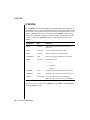
constraint
A restriction on what kinds of data can be inserted or updated in tables. See
also check constraint, primary-key constraint, referential constraint, NOT NULL
constraint, and unique constraint.
control character
A character whose occurrence in a particular context initiates, modifies, or
stops a control function (an operation to control a device, for example, in
moving a cursor or in reading data). In a program, you can define actions that
use the CTRL key with another key to execute some programming action (for
example, entering CTRL-W to obtain on-line Help in Informix products). A
control character is sometimes referred to as a control key. Compare to
printable character.
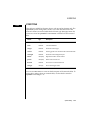
cooked files
See buffered disk I/O.
correlation name
The prefix that you can use with a column name in a triggered action to refer
to an old (before triggering statement) or a new (after triggering statement)
column value. The associated column name must belong to the triggering
table.
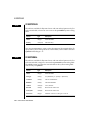
corrupted
database
A database whose tables or indexes contain incomplete or invalid data.
corrupted index
An index that does not correspond exactly to its table.
coserver
The functional equivalent of a database server that operates on a single node.
See connection coserver, participating coserver.
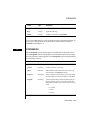
current row
The most recently retrieved row of the active set of a query.
cursor
An identifier associated with a group of rows; conceptually, the pointer to the
current row. You can use cursors for SELECT statements or EXECUTE
PROCEDURE statements (associating the cursor with the rows returned by a
query) or INSERT statements (associating the cursor with a buffer to insert
multiple rows as a group). A select cursor is declared for sequential only (regular cursor) or nonsequential (scroll cursor) retrieval of row information. In
addition, you can declare a select cursor for update (initiating locking control
for updated and deleted rows) or WITH HOLD (completing a transaction does
not close the cursor). In ESQL/C, a cursor can be dynamic, meaning that it can
be an identifier or a character/string variable.
cursor
manipulation
statements
The SQL statements that control cursors; specifically, the CLOSE, DECLARE,
FETCH, FLUSH, OPEN, and PUT statements.
Glossary 9