1
the duration of a note. Also note that MIDI keyboards normally do not transmit
Breath Controller messages, however it is usually possible to reassign the
output of other MIDI controllers (such as the Mod Wheel) so that they transmit
MIDI Breath Controller messages.
AT (Aftertouch): Many types of MIDI keyboard have the ability to detect how
much pressure is applied to a key. This pressure can be varied continuously
as the note is sounding. MIDI messages that transmit the current value of the
key pressure are called Aftertouch messages.
Aftertouch messages consist of a Status byte and two Data bytes. The
message's first Data byte defines the note value while the second Data byte
determines the current Aftertouch value. Aftertouch values can range from 0
to 127. Note that not all MIDI keyboards transmit Aftertouch messages.
however it is usually possible to reassign the output of other controllers so
that they transmit MIDI Aftertouch messages.
In order to produce realistic wind instrument sounds it is important to be able
to control the way that notes are triggered and connected to subsequent
notes. On a real wind instrument the player can choose to play each note
separately, or to connect notes to the ones that follow. If each note is played
separately, then each has its own attack portion. If two or more notes are
played in a “legato” (connected) manner then only the first note will have an
attack portion. This can be imitated on a keyboard by using a combination of
playing technique and SaxLab 2’s Monomode setting. Three modes are
available: Leg (Legato), Alt (Alternate) and Ret (Retrigger). With respect to
these three settings, the key point to understand is the difference between
playing keyboard notes that overlap and playing notes that are detached.
First, let’s consider SaxLab 2’s Ret (Retrigger) mode. In this mode, no matter
how you play keyboard notes (legato or detached), each note will have an
attack portion. In this case, each note will sound as a complete and separate
note.
Next, let’s consider SaxLab 2’s Leg (Legato) mode. In this case, if two or more
notes are played in a “legato” (connected) manner, where the following note is
played before the previous note is released, then only the first note will have
an attack portion. Notes following the initial note will be automatically
connected to the preceding note. However, notes that are played in a
detached manner will still have an attack portion. In this way, the keyboard
playing style that is used determines how notes play back.
Alt (Alternate) mode combines the two modes described above. In this case
every second legato note has its own attack portion regardless of how it is
played. Notes that are played in a detached manner will still have their own
attack portion.
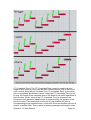
The differences between Leg (Legato) and Ret (Retrigger) modes are
illustrated in the pictures shown below. The main difference between Leg
(Legato) mode and (Ret) Retrigger mode is in the way the samples are
retriggered. In Leg (Legato) mode, the instrument will only play the attack
portion of the sound if the previous key has been released before the next key
SaxLab 2.1.6 User Manual
Page 21