1
USOO7890285B2
(12) United States Patent
(10) Patent N0.:
Manfredi
(54)
(75)
(45) Date of Patent:
SCALABLE INTEGRATED TOOL FOR
6,456,955 B1
9/2002 Andrews et al.
6,876,941 B2 *
4/2005 Nightingale .............. .. 702/120
Inventorr
6,978,218 B1
12/2005 Kolb et al.
7,440,863 B2 * 10/2008 Manfredi .................. .. 702/108
Charles Manfredi, Oakhursts NJ (US)
_
_
_
2002/0156757
Notice:
10/2002
Brown
.. ... ..
2003/0008648 A1
2003/0084340 A1
100% Bims et 31'
50003 50116112 et al'
U_S_C_ 154(1)) by 349 days_
2004/0109453 A1
6/2004 Wirth
Clalmer'
(21) Appl' NO" 11/286’198
NOV_ 22, 2005
(65)
. . . . ..
707/1
702/120
2002/0192624 A1* 12/2002 Darby et al. .............. .. 434/236
Subject to any disclaimer, the term of this
patent is extended or adjusted under 35
This patent is subject to a terminal dis-
Filed:
A1*
2002/0183956 A1 * 12/2002 Nightingale
(U )
(22)
*Feb. 15, 2011
COMPLIANCE TESTING
(73) ASSlgneez aide“; Technomg‘es’ Inc" sama Clara,
(*)
US 7,890,285 B2
2004/0128646 A1
7/2004 Jindal et al.
2004/0145598 A1
7/2004 Parent et al.
2005/0071720 A1
3/2005 Dattaram et al.
2006/0041840 A1*
2/2006
2006/0077895 A1
4/2006 Wright
Blair et al. ................ .. 715/513
2006/0155411 A1*
7/2006 Khoche et al. ............ .. 700/108
2006/0161836 A1*
7/2006
Thomson et al. .......... .. 715/505
Prior Publication Data
US 2006/0247885 A1
Nov. 2, 2006
Related US. Application Data
(commued)
(63) Continuation-in-part of application No. 11/ 119,255,
OTHER PUBLICATIONS
?led on Apr' 29’ 2005’ HOW pat' NO' 7’440’863'
I t Cl
“Standardization of data 0W for laboratory automation soft on XML
technology”, IEEE Xplore, Oct. 2006 , 2 pages.
(51)
11
.
.
G01R 31/00
(2006.01)
G06F 11/30
(2006.01)
G21C 17/00
(200601)
(Continued)
_
_
Primary ExamineriMichael P Nghlem
(52)
U.S.Cl. ..................................... .. 702/120; 702/182
(58)
Field of Classi?cation Search ............... .. 702/ 108,
(
57
ABSTRACT
)
702/182,189,120,81,115,117,118; 703/21,
See a
pp
(56)
lication ?le for com lete search histo 703/22
p
ry'
References Cited
US. PATENT DOCUMENTS
5,280,617 A *
1/1994
5 841 771 A *
11/1998
_____
from one or more analytical instruments and/or software is
inputted, and calculations are performed on the data to pro
duce one or more outputs. At least one of the outputs may be
Brender et al. ............ .. 717/159
Irwin et al‘
Methods, tools, systems and computer readable media for
compliance testing instrumentation and/or software. Data
_ _ _ __ 370/360
5,878,383 A *
3/1999 Carter ............... .. 702/182
5,961,448 A *
6,054,865 A *
10/1999 Swenson et al.
600/301
4/2000 Bald et a1. ................ .. 324/551
compared to ?rst and second test _ limits, and compliance
status of the at least one output relative to the ?rst and second
test 11ml“ 15 rePom/d
Input Data in Native Format
37 Claims, 9 Drawing Sheets
/“ l l 0
Convert Data to Technology ,4} 20
Neutral Format
L_____I@une?99_13_ala_____1
Perform Calculations
/“ 1 30
Output Standardized
/_1 40
Results
US 7,890,285 B2
Page 2
SSI4Chromatography Data System. http://WWW.scisW.com/prod
U.S. PATENT DOCUMENTS
ucts/cds/indeX2.htm pp. 2, Mar. 3, 2005.
2006/0247878 A1*
11/2006
Manfredi .................. .. 702/108
2006/0247885 A1
11/2006 Manfredi
2008/0059123 A1* 3/2008 Estberg et
2008/0201098 A1*
2008/0215638 A1*
al. ............ .. 702/188
8/2008 Manfredi
9/2008 Manfredi .
.
OTHER PUBLICATIONS
“metadata”, Webopedia 2007 , 2 pages.
Of?ce Action dated Jan. 29, 2010, in US. Appl. No. 12/150,030 for
“Integrated Tool For Compliance Testing Within An Enterprise Con
tent Management System”.
Agilent4Cerity Enterprise Content Manager (ECM) http://WWW.
chem.agilent.com/Scripts/PDS.asp?IPage:16769 pp. 1-2, Feb. 19,
2005.
AnIMLiAnalytical Information Markup Language. http://animl.
sourceforgenet/ pp. 1-8, Feb. 19, 2005.
Microsoft Of?ce Online: Visio 2003 Home Page http://of?ce.
microsoft.com/en-us/FX010857981033.ast pp. 1-2, Apr. 28, 2005.
FormMaXiE-Forms Software for Business Forms Designing and
Filli . . . http://WWW.cutepdf.com/Products/FormsMax/ pp. 1-2, Feb.
Agilent4Cerity Pharmaceutical for QM QC. http://wwwchem.
18, 2005.
agilent.com/Scripts/PDS.asp?IPage:272 pp. 2, Mar. 3, 2005.
Revision of ChemStations PlusiAgilent Technologies http://WWW.
Waters Laboratory InformaticsiEmpower TM Chromatography
laboratorytalk.com/news/agi//agi134.html pp. 2, Jan. 15, 2002.
Data Software. http://WWW.Waters.con?watersdivision/contentd.
asp?Watersit:JDRS-5KXPGA pp. 2, Feb. 18, 2005.
* cited by examiner
US. Patent
Feb. 15, 2011
Sheet 1 019
US 7,890,285 B2
Input Data in Native Format /"l l 0
Convert Data to Technology f1 20
Neutral Format
___
l
I 155-5155 Data—R-&lu5tion_—_:
1 based on Technology Neutral 1" l 25
L
Formatted Data
_:
_______ __g___*___u_
Perform Calculations
/“ l 30
l
Output Standardized
Results
FIG. 1
"140
US. Patent
Feb. 15, 2011
US 7,890,285 B2
Sheet 2 0f 9
cow
96RE85:Q892E6mG ma2n6
"Ev2?scbwh
(U¢9N"3m5o:ra2t6ome
032 w%-(nogw
(
3
5
H
a
2
O
9
5
/
0
onmwé(oOEmN
<3(G85a9vu68a:m2
w5.3022-52
<om20
.UEN
@QH(wS2@RWE8Q5NU
US. Patent
Feb. 15, 2011
US 7,890,285 B2
Sheet 3 0f 9
wo?bcm AUI
mzswom
ooH\
@m
.5
ano
wowmom
\cowm?wc@m8w5 wa
0%
.Eggwemcou?suEU
o\om
gmNEE1/
@wou
_\
Q
US. Patent
Feb. 15, 2011
Sheet 4 0f9
US 7,890,285 B2
100
404/406
/
f/J
j 408
414
——>
Record Forms
Data Storage and
Fonnat Converswn
a]
Q]
J 410
Data Reduction
/ 416
Extract Using
/‘ Mining Engine
440
Engine
/ 48
Automated
%
Calculation
f 412
/*
Report
442
Generator
Engine
q]
f 420
Customizable
444 “J
FIG. 4
Report
US. Patent
Feb. 15, 2011
Sheet 5 0f 9
US 7,890,285 B2
Sm
.UEm
PuEomfzncwae
.6:520
ON
US. Patent
Feb. 15, 2011
US 7,890,285 B2
Sheet 9 0f 9
28Em98@M3chH208o1:62w5 @MN9mm
Jm
¢m
6%Ecu.3o8s:?9eo»m
m
w W82hwmE“5:Q6ai.38Es;2UwQ0M \@?2N3lQ>5o6?%I;T/ $1
a“c?.86#@>on628%:5wv3n2g5 8E2nQ.6vE20%30 E02a30E8m>":8%é5vo3w;2e
(i5mN6R5 DMcmE2Hov3V;s$2w8%ma30
\823052:7
¢N /c06:n\h8m3o>E52g@QwBsza8:;Uun@ 2:8mi2>B“o5#ES.3:6o852w8k<a
@2:gm$moviB58?Q2oSc0xE6n9maQt8.E? $B265wm2:822ES5eo6m3?w26.a803
moQ:8W>wn6v8%Mo63:a$2me acQ“EmUo58%M8V;3s§?5vmo
RX.“
m
o86:32N58%6>hV3:2m5:e mA;3:En6.cdov:2am?e o 1
325W3*W
¢QME“N83N0SE2m
wwm_M:cam“2aand~38
~2535NE6<v80\i:o/5Na2m
F/wow 72mg
2T1%“
w(3N6wM)2
aGE
US 7,890,285 B2
1
2
SCALABLE INTEGRATED TOOL FOR
COMPLIANCE TESTING
wherein the one or more outputs are standardized and are
directly comparable to outputs resultant from carrying out the
method carried on another set of one or more other analytical
CROSS-REFERENCE
instruments, irrespective of manufacturer or model of the
other analytical instruments.
This application is a continuation-in-part application of
application Ser. No. 11/119,255 ?ledApr. 29, 2005, now US.
Pat. No. 7,440,863, which is incorporated herein by reference
in its entirety and to which application we claim priority
under 35 USC §l20.
Methods, systems and computer readable media may com
pare at least one of the outputs to ?rst and second test limits,
and report compliance status of the at least one output relative
to the ?rst test limit and to the second test limit.
Methods, systems and computer readable media are pro
vided for compliance testing at least one of instrumentation
BACKGROUND OF THE INVENTION
and software, by inputting data from at least one analytical
instrument or software; performing one or more calculations
on the inputted data to produce one or more outputs; compar
Quali?cation of instruments for regulated markets has tra
ditionally followed one of two models: paper-based protocols
ing at least one of the outputs to ?rst and second test limits;
and reporting compliance status of the at least one output
relative to the ?rst test limit and to the second test limit.
Methods, systems and computer readable media are pro
vided for compliance testing at least one of instrumentation
that are run on instruments using the native controllers of the
respective instruments; and external calculations or quali?
cation routines that are embedded into the controlling soft
wares of the instruments, respectively. Some efforts at auto
mated data collection have required that an alternative data
20
path be employed for the data collection while still control
ling the instrument using its native controller. Examples of
proprietary embedded software suites include Cerity NDS
or software associated with an instrument to initiate the test
(Agilent Technologies, Inc. for chemical/pharmaceutical
quality assurance and quality control, and Empower CDS
(based on Waters Millenium software, Waters, Inc. These
and software, to display a test protocol form on a user inter
face and prompt a user to input information regarding a test
for qualifying a result of a test; prompt at least one instrument
25
protocol in response to an input by the user into the test
protocol displayed on the user interface, or results from
another instrument in response to a test protocol run on the
software suites are limited to the suite of instruments that they
another instrument; automatically calculate results of the test
can control.
protocol run on the at least one instrument; and output status
of the results as determined by at least one set of dual test
Thus, even though these suites are pro?cient for producing
data and results for quali?cation/quality assurance tasks for
30
the particular instruments that they control, such suites cannot
provide standardization of the data types that are processed,
nor calculations across controller platforms. Further, data is
maintained in a proprietary format that requires the collecting
data system to be present and functioning for viewing and
35
reprocessing any data used/outputted by these systems.
Recently, an integrated single source of data collection and
storage, EZChrom Elite, was introduced by Scienti?c Soft
ware Inc. While offering a relatively large driver set, this
solution is still limited by the available drivers that are pro
vided with the solution
Further, all of the current solutions, including those men
least one calculation on at least one of the data outputted by an
one or more outputs required for a set of prede?ned criteria;
40
These and other advantages and features of the invention
reading the details of the methods, systems and computer
readable media as more fully described below.
45
BRIEF DESCRIPTION OF THE DRAWINGS
different manufacturers, to compile reports thereon. It would
FIG. 1 shows a ?owchart of events that may be carried out
be further desirable that such a solution provides standard
50
readily used to generate reports using data generated from
instruments having different platforms, and/or still other
instruments that aren’t included with any established plat
55
instruments from most, if not all manufacturers, to readily
prepare reports therefrom and/or otherwise manipulate the
data as needed
SUMMARY OF THE INVENTION
during processing according to at least one embodiment of
the present invention.
FIG. 2 illustrates one example of a form that may be used
forms. Accordingly, there is a need for solutions that are
generally applicable for use with data generated/collected by
and interactive forms providing procedural information
including calculation instructions.
will become apparent to those persons skilled in the art upon
It would be desirable to provide a solution capable of
incorporating data from different instruments, as well as from
ization among various data types so that one platform can be
of analytical hardware and controlling software during com
pliance testing is provided to include: a data reduction engine
con?gured to reduce outputted by an analytical or other
instrument; a calculation engine con?gured to perform at
analytical or other instrument and the reduced data to produce
tioned above, as applied to instrument quali?cation, require
decoupling of the native system that controls the instrument
to be quali?ed, in one fashion or another.
limits.
A system for standardizing characterizations of at least one
60
by an embodiment of the present invention.
FIG. 3 is a schematic ?ow chart illustrating process ?ow
according to an embodiment of the present invention.
FIG. 4 is a block diagram illustrating functions and pro
cesses that may be managed through a business process man
ager according to an embodiment of the present invention.
FIG. 5 illustrates an extraction of information from a form.
FIG. 6 is a ?ow chart illustrating further details of process
?ow by an embodiment of the present invention.
Methods, systems and computer readable media for com
pliance testing at least one of instrumentation and software
are provided for: inputting data from at least one analytical
instrument or software performing one or more calculations 65
on the data to produce one or more outputs; and selecting
from the one or more outputs to populate a ?nal report;
FIG. 7 is a schematic representation of an embodiment of a
system for use in creating a compliance report for chromato
graphic instrumentation.
FIG. 8 illustrates another example of a form used in per
forming a test and qualifying test results against dual test
limits.
US 7,890,285 B2
3
4
FIG. 9 illustrates another example of a form used in per
forming a test and qualifying test results against dual test
limits.
outputted by other instruments, regardless of model or manu
facturer. Methods, tools and computer readable media for
generating, transmitting and storing forms speci?c for a
user’s needs are provided, including, but not limited to com
DETAILED DESCRIPTION OF THE INVENTION
pliance validation forms. Systems include computers and
associated hardware that may be connectable to a network
(for intemet or intranet use) that can execute rules for a
Before the present systems, methods and computer read
able media are described, it is to be understood that this
selected form (e. g., one non-limiting example is a form suit
able for submission to a regulatory agency such as the FDA).
invention is not limited to particular hardware, software, for
mats or media described, as such may, of course, vary. It is
In one embodiment, a system is provided to perform analyti
also to be understood that the terminology used herein is for
cal hardware quali?cations.
the purpose of describing particular embodiments only, and is
Calculations may be performed to answer a series of ques
tions relating to one or more performance tests designed to
not intended to be limiting, since the scope of the present
invention will be limited only by the appended claims.
determine compliance of an analytical instrument and/ or soft
Where a range of values is provided, it is understood that
each intervening value, to the tenth of the unit of the lower
limit unless the context clearly dictates otherwise, between
the upper and lower limits of that range is also speci?cally
disclosed. Each smaller range between any stated value or
intervening value in a stated range and any other stated or
ware under consideration with a set of prede?ned criteria.
Such prede?ned criteria may be criteria de?ned for regulated
industries. For example, “prede?ned criteria” include, but are
not limited to regulations set forth in the Food, Drug, and
Cosmetic Act. Prede?ned criteria are limits and criteria that
20
intervening value in that stated range is encompassed within
the invention. The upper and lower limits of these smaller
ranges may independently be included or excluded in the
range, and each range where either, neither or both limits are
included in the smaller ranges is also encompassed within the
ance to these acceptance criteria provides documented evi
dence of a device’s operation within expectation of intended
use. Such compliance is required by law and is listed in the
25
invention, subject to any speci?cally excluded limit in the
set according to a user’s needs, such as when dual limits, are
limits are also included in the invention.
Unless de?ned otherwise, all technical and scienti?c terms
used herein have the same meaning as commonly understood
by one of ordinary skill in the art to which this invention
belongs. Although any methods and materials similar or
equivalent to those described herein can be used in the prac
30
tice or testing of the present invention, the preferred methods
35
Forms may be used as built-in records to store data as it
The forms are further useable as a basis for generating reports
in a variety of formats. However, as reports are changed, the
underlying processes (e. g., the forms containing the data from
which the reports are generated) stay the same. Basic univer
sal forms stay the same, while the data they contain can be
used to report in many different ways. The forms may be
provided to a user in a “wizard-type” environment (i.e., as a
40
claims, the singular forms “a”, “and”, and “the” include plural
referents unless the context clearly dictates otherwise. Thus,
for example, reference to “a limit” includes a plurality of such
“wizard-type” interface), wherein the user is prompted for
simple tasks, the response to which are incorporated into a
much larger data product. In this way the user only has to deal
with simple, single item tasks, one-at-a time.
An enterprise content manager (ECM) may be employed to
limits and reference to “the form” includes reference to one or
45
provide a secure platform to manage all data storage, meta
data extraction and archival of data. Alternatively, the system
may operate independent of an enterprise content manager to
The publications discussed herein are provided solely for
their disclosure prior to the ?ling date of the present applica
perform data reduction, calculations, and output results, as
well as other forms-based functions as described herein. One
tion. Nothing herein is to be construed as an admission that
the present invention is not entitled to antedate such publica
provided, for example.
occurs, lending to use of the forms for tracking/audit trails.
and materials are now described. All publications mentioned
more forms and equivalents thereof known to those skilled in
the art, and so forth.
Code of Federal Regulations under headings Part 210, 211,
820, 58, and 21 -Part 11 as well as other such regulations and
guidance as applies. Optionally, criteria such as limits may be
stated range. Where the stated range includes one or both of
the limits, ranges excluding either or both of those included
herein are incorporated herein by reference to disclose and
describe the methods and/or materials in connection with
which the publications are cited.
It must be noted that as used herein and in the appended
represent best practices and manufacturers’ speci?cations
relating to instrument operation and performance. Compli
50
non-limiting example of an ECM that may be employed is a
tion by virtue of prior invention. Further, the dates of publi
cation provided may be different from the actual publication
Cerity ECM, available from Agilent Technologies Inc. Since
dates which may need to be independently con?rmed.
the present system.
Referring to FIG. 1, data is inputted to the system in its
DEFINITIONS
an ECM is an enterprise system, it also provides scalability to
55
A “platform” as used herein refers to a support infrastruc
ture for acceptance and coordination of tools and applications
required to perform a series of related, but diverse tasks.
An “enterprise content manager” refers to a system, scal
able to enterprise levels, composed of various hardware and
software elements that support the secure collection, indexing
60
and storage of electronic objects.
able media for processing data outputted by analytical instru
are directly comparable with results from processing data
ogy neutral format (event 120) so that all further processing is
with respect to data that is all in the same format, regardless of
which instrument was used to originally output the data in its
native format. Data conversion may be performed when the
system is associated with an ECM content manager, by the
ECM content manager. Alternatively, data may be provided to
the system that is already in a technology neutral format, as
for example, when an instrument owner converts the output
ted instrument data to a technology neutral format, and then
Disclosed herein are methods, systems and computer read
ments in a standardized manner so that results of processing
native format at event 110, for initial conversion to a technol
65
this converted data is directly inputted to the system. Under
this option, the system does not perform events 110 and 120,
as the data inputted is already in a technology neutral format.
US 7,890,285 B2
5
6
As another option, if data cannot be submitted to the system
in a technology neutral format and an ECM is not employed,
the analog data outputted by an instrument may be received
be provided by the system. In FIG. 2, form 200 includes ?elds
instructing the following data to be inserted and stored:
Instrument Name 202; Other Name 204; Channel Descrip
by the system and then converted via an A/D converter to a
tion: Split-Splitless 206, Purged-Packed 208, Volatiles Inlet
digital signal to be inputted into the system. The digital signal
210; Model Number 212; Serial Number 214; and License
may be provided in a technology neutral format, such as a .cdf
Certi?cate ID 216. Forms 200 may be run as an applications
program interface (API) and, as such need not ever be even
visualized by a user of the system when all data ?elds can be
format (e.g., AIA, AnDI, etc.) or proprietary formats such as:
bxx, pts, raw, .ch or dat, for example. Data reduction may be
performed at event 125 by a data reduction engine as
automatically identi?ed from the technology neutral format
described below, if needed. By performing calculations/fur
ther processing (event 130) on technology neutral formatted
data or digital signals having been converted from the analog
ted data and/or native CDS and populated into form 200 to
output of an instrument, with the present system, calculations
are thereby standardized, so that results (event 140) are
provided to display one or more forms. In a case where
directly comparable between data produced by various
interface 250 can display form 200 so that a user can interac
instruments, models and manufacturers. The standardization
is made possible by the system’s ability to convert data from
tively select an entry (as in the case of Model Number 212,
shown in FIG. 2, where a drop down menu is provided from
which the user can select the proper entry) or manually input
an entry, such as by typing, cutting and pasting, scanning or
some other alternative data entry mechanism that requires
intervention on the part of the user. Further alternatively, the
complete all data ?elds.
Alternatively, or additionally, a user interface 250 may be
automatic population of all required data is not possible, user
external sources into a technology neutral format, input of
data that is already in a technology neutral format, or read
proprietary data, which is then data reduced and calculated by
20
common components. Further, this standardization may be
applied to data sources manually, semi-automatically (requir
ing some manual application) or automatically, and such data
may require data reduction, or may be in a ready-to-process
form. In this way data that characterizes the operation of
25
instrumentation or controlling data systems can be used for
user interface 250 may be optionally used to enter all data
required by a form, either as a result of user preference to do
so, or because an instrument being considered is suf?ciently
old or unsophisticated, so as to lack a sophisticated enough
software interface to supply some or all of the data automati
the purposes of quali?cation of said device irrespective of
proprietary or native format. One non-limiting example of a
cally by interfacing with the present system.
technology neutral format that may be employed by the
protocol that prompts the user to input information regarding
present system is referred to as Analytical Information
As another alternative, a user interface may display a test
30
Markup Language (AnIML, see http://animl.sourcefor
ge.net/) which is an open source, XML-based standard for
formatting analytical data. By converting all data to a tech
nology neutral format, and then processing the converted data
all according to the same protocols, results are generated that
are standardized and directly comparable among results for
different instruments which may be different models and/or
made by different manufacturers.
As noted, the computerized data system (CDS) that is in
place for operating the instrument(s) to obtain the data on
35
results of a test. In some instances, the test may be automated,
wherein the system may prompt one or more lab instruments
to initiate a test protocol in response to one or more answers
inputted into the user interface by the user in response to
questions asked on an interactive form/test protocol, or in
response to results from another instrument (e. g., in response
to a test protocol designed for that instrument).
The system may also provide a report detailing processes
and/or instruments that do not comply with selected speci?
cations (i.e., a protocol deviation form).
40
which a report is to be generated may be used as direct input
to the system. Thus, original data collected for a report may be
The forms may be XML based forms that can be directly
rendered to a ?nal report (such as in pdf format, or other
format suitable for paper documents, for example). Thus, for
accomplished using the native controlling software (of the
example, forms 200 may be displayed in pdf or some other
CDS) of the instrument(s) without the need to go through
external analog to digital conversion or other manipulation.
As noted, the data collected may alternatively be collected in
analog form andA/D converted for input to the system. Origi
document format on user interface 250 when part or all of
45
auto detection of calculation engines provided by the system.
nal data, which may be preserved for possible reanalysis by
the native CDS, may also be converted to an accepted tech
nology-neutral format allowing the data to be submitted to a
Forms 200 may be left in native XML format and thereby
function as storage for the data that they contain. Forms 200
50
single reprocess and calculation engine for consistent reduc
tion and processing. By using the native CDS, the present
system may also make use of the drivers employed by the
When used interactively, forms may be presented to a user
according to need and thus, forms that apply only to the
instrument(s) under test are presented, thereby reducing
55
delivery complexity and error potential, while at the same
time providing audit trails for tracking, since the forms may
be saved, as noted above. By converting proprietary data into
standardized data (i.e., data having a technology neutral for
mat), the system may provide data in a standardized output
60
form. Thus, inconsistent output from instruments can be con
verted to consistent input to an engine that can do calculations
in a very predictable, standardized way, which is an important
and to instruments having different standards/CDS’s as a
result of being produced by different manufacturers.
Instructions may be instantiated as forms 200 (e.g., see
FIG. 2) to provide procedural information, while also func
tioning as data repositories. Forms 200 may be constructed in
many different ways and presented to have as many different
appearances, some of which are dictated by the information to
consideration for quali?cation and compliance reports.
be displayed/ stored and much of which may be ?exibly
designed. The instrument/process type as well as the required
input to the form 200 dictates the content and appearance of
form 200. FIG. 2 shows one example ofa form 200 which is
in no way meant to be limiting, as many different forms may
may be further rendered from the XML format to an HTML
version for use with a browser.
native CDS, thereby further facilitating the universal appli
cability of the present system to different types of instruments
them are to be interactively ?lled out by a user. As noted, part
or all of forms 200 may be programmatically ?lled out from
Once native data has been converted into technology neu
65
trally formatted data, or, alternatively, after converting analog
signals outputted from an instrument to digital signals, or
after receiving digital output signals from an instrument,
US 7,890,285 B2
7
8
metadata may be created by data reduction engine 302 (FIG.
3) of the system 100 so that algorithms from the instrument’s
data, etc.). With respect to data reduction and calculation, the
results may be standardized and independent of the originat
10 system(s) do not need to be relied upon, and this further
ensures standardization of results. For example, for applica
tion to chromatography, the present system does not rely upon
the software 12 running the chromatography instrument 10
ing data-system or controlled instrument, as noted above.
Reports based on those results are fully customizable, as
reports ranging from simple summary reports to traditional,
fully described compliance protocols may be outputted.
from which the raw data is generated to determine what is a
peak in the data or where to de?ne the location of that peak, as
such determinations are made based upon calculations and
The library can be modi?ed, typically added to, to increase
functionality, but it does not have to be a different library
based on the data system that the instrument used, contrary to
algorithms run by the data reduction engine 3 02 of the present
system. Data reduction engine 302 reads the data having been
converted into technology neutrally formatted data, or other
wise, and converts this digital representation of an analog
function into data representing features described/character
same applies to other calculations, such as those determining
what is currently required. Consequently, calls become con
sistent and calculations become reusable and portable. For
example, a library may be created to calculate peak precision,
signal-to-noise, etc., and library 304 may be built to accept
only consistent input forms because the input format will
always be the same, since the engine for extracting data (data
reduction engine 302) will always be the same. Running
and/ or ?ltering noise levels, etc. Using this approach, consis
processes in this way provides consistent metrics across all
tent results are determined for data across the board, whether
a particular type of instrument 10 was manufactured by one or
20
manufacturers, types and models of instrumentation. For
example, peak detection and baseline evaluation can be per
formed as de facto standards against which all systems/in
25
able and portable, being applicable to calculation of the
de?ned data speci?cations based upon data inputted from the
data reduction engine 302, and wherein data reduction engine
302 may be applied to data from any applicable instrument for
ized by the data (e.g., peaks, noise, gradient steps, etc.). The
another particular manufacturer, or whether the instrument 1 0
is a different model than another, both of which data is being
struments may be evaluated. Thus, such a library 304 is reus
processed from.
As one example, signal data from a chromatography instru
ment 612, as inputted to system 100 by the native controlling
software for the instrument is just a series of changing signals
over time. Reduction engine 302 converts these signals
which it makes sense to calculate the prescribed speci?ca
tions, since the data from the instrument will have been con
verted to a technology neutral format that the data reduction
(which may or may not have been converted to a technology
neutral format into useable data, e.g., peak area, noise calcu
lations, etc.iwhich can be fed to calculation engine 306*
e.g., there are 5 peaks and those 5 peaks have peak areas of 2,
2.1, 1.9, 2 and 2 and the mean is X, with standard deviation of
engine 302 is con?gured to receive as input.
30
personnel will no longer need to be trained for operating with
regard to each different piece of equipment, but can instead be
Y, etc. so that these values can be compared to an acceptance
standard, or with like values calculated with regard to another
instrument 612.
Depending upon the instrument that has generated the data,
trained to run the standardized processes. For example, under
35
a data reduction engine 302 may not even be needed. For
example, a balance already outputs data that is reduced to
numbers that are useable by calculation engine 306 and so this
data does not need to be further reduced, although it may be
converted to a technology neutral format. Further, other alter
native reduction engines 3 02 may be included with the system
100 as part of a library that may be accessed for non-standard
reduction requirements. By performing data reduction with a
component of system 100, this separates reliability on each
instrument’s software for performing such functions.
Accordingly, all data reduction is standardized across reports
that are prepared by system 100, and performance is all stan
dardized by evaluation by the same system.
Further, since the data is standardized, only one method
need be developed to produce a particular type of report based
ating in various locations under multiple (e.g., three) different
purposes, it might then be necessary to replicate the compli
40
45
50
55
set produced by data reduction engine 302 for formulating
standardized results 308. Calculation engine 306 performs
converted to the technology-neutral format, as instructed by
forms 200, such as for the performance of quali?cation ser
vices on analytical instruments as well as other instruments.
As noted, forms 200 may act as instructions for processes
carried out by calculation engine 306, as well as for data
60
data has been converted to a technology neutral format, the
back end processing is consistent (e.g., processing by data
reduction and calculation engines, etc.). Library 3 04 typically
ized tasks in the back end processing (e.g., calculation/iden
ti?cation of peaks; calculation of statistics describing the
software of the particular instrument upon which reports are
to be generated. In this way the system is readily adaptable to
new/various hardwares as well as softwares, given the generic
nature of the protocols.
As noted, system 100 may further employ a calculation
engine 306 to perform calculations on the reduced metadata
calculations on metadata in the reduced metadata set received
from data reduction engine 302 as well as any calculations
that may need to be performed on other data that has been
ogy neutrally formatted data) received by data reduction
engine 302, these data sets can be properly manipulated with
contains a set of calculations forperformance of the standard
ance procedures as many times as there are multiple plat
forms. By providing the present system as built on an inde
pendent platform, it is not dependent upon the operating
on the data, as opposed to the current need to create a method
a single consistent method. Thus although the method for
acquisition of data may vary depending upon the computer
data system from which the data is being acquired, once that
conditions prior to the present invention, it would not be
unusual for an instrument (piece of hardware) 10 to be oper
proprietary operating software platforms. For compliance
for each instrument that employs a different data type or
format. Thus, calculation engine 306 can perform calcula
tions based upon a single library 304 (e.g., series of calcula
tions tailored to a speci?c type of report for a particular type
of data reporting). For consistent raw data sets (i.e., technol
The standardization of processing will advantageously
reduce training requirements for operating personnel, since
storage repositories of the results of these calculations. Forms
200 can contain any combination of input types including
interactive manual input, information detected by software of
system 100 and/or the CDS of the instrument being consid
ered and/ or calculated reduced data. Forms 200 may further
include launch points for executables that perform detection,
65
calculation, or any other function called for by the process.
Forms 200 may be version controlled and stored as record of
the data collection process leading to a resulting ?nal report.
US 7,890,285 B2
9
10
In this way the stored versions of forms can serve as an audit
through descriptions of all six sound systems options in the
trail from the time of initial collection of the data all the way
through to the time of the issuance of the ?nal report.
When standardizing all data to a technology neutral format
and creation of metadata from the same, calculations by cal
culation engine may be carried out by calls to a consistent and
tested library, as the calculations are reusable and portable.
In order to manage data storage, metadata extraction and
archival of data, as well as compilation of ?nal reports and
user’s manual until the matching sound system is found. An
automated report application for owner’s manuals would pre
pare this user’ s manual based upon the options chosen by the
owner, so that when the owner looked up the description of
the sound system, only one sound system would be described
in the owner’s manual, i.e., the description for the sound
system actually selected by the owner for his/her car.
The automatically populated forms 200 as well as the ?nal
other form management functions, system 100 may employ
report 444 may be stored into ECM 404 when an ECM is
employed, so that ECM 404 is the location of the initial
collection, calculation, meta-data and ?nal data, as well as
audit trails. Thus, system 100 may include a relational data
base with tools such as data reduction engine 302, calculation
an enterprise content manager (ECM) 404, as noted earlier.
ECM 404 may provide a secure platform on which to manage
the functions described. FIG. 4 illustrates a ?owchart of func
tions and processes that may be managed by ECM 404 via
business process manager (BPM) 406. BPM 406 manages
?ow so that data storage and format conversion (to a technol
ogy neutral format) are carried out by ECM 404 at event 408,
engine 306, and record mining engine 440, for example,
sitting on top of it.
Reports 444 can take on any form, and may be selected by
followed by reprocessing/data reduction by data reduction
engine at event 41 0, functions of which were described above.
Further calculations are carried out by calculation engine 306
at event 412, which may be based upon instructions contained
in forms 200 and the data populated into form 200 may be
recorded and stored in ECM 404 at event 414. The record
forms 200 may then be data mined at event 416 by record
mining engine 440 to extract speci?c items of data/metadata
a user. For example, a report may be created in summary form
or in full detail, with or without a logo, etc. While the reports
20
provided, as noted above, whereby the user is provided with
selectable choices, via user interface 250, to determine the
25
that are required to populate a ?nal report.
FIG. 5 illustrates data extraction from a form 200 to obtain
information needed for preparing a report, wherein a portion
of a record form 200 is shown from which a particular data
entry 502 is located. Record mining engine 440 may employ
toolsets for mining data, e.g., name-value pairs may be taken
from forms 200 and calculation engine 306 may further
extract those values needed by identifying such values based
upon the names associated with the values in the name-value
pairs. Data from a form 200 can be calculated and the result
ing calculations may be returned to the same form 200 or to
another form 200 as needed for purposes of organization,
Audit trails may be automatically provided by the metadata
30
stored as forms 200 by ECM 404, as alluded to above. Further
BPM 406 may provide e-mail noti?cation, scheduling and
review, electronic signature functions, etc.
Referring now to FIG. 6, a ?ow chart that further explains
process ?ow by a system employing an ECM 404 and BPM
35
406 is shown. As noted above, a user interface may or may not
be needed, which may depend upon the choice of the user, the
types of instruments being reported upon, and/ or whether the
system is capable of fully automatically obtaining all infor
As shown, forms 200 actually do contain the information/
An automated report application (automated report genera
tor) 442 may be optionally included, and if used, functions to
format of the report 444 to be produced. Thus, depending
upon the selection made, different groupings of metadata
from the underlying forms 200 are selected and combined
into a format of the ?nal form selected.
readability, clarity, etc.
data received from the software of the instrument being con
sidered, and that data can be mined to ?ll out automated report
applications or otherwise to ?ll out a ?nal report 444. In this
way, forms 200 act as a repository that canbe mined in various
ways4compliance, asset management, etc. Once a ?nal
report 444 is signed, however, the data that was mined to ?ll
out the ?nal report document 444 can no longer be changed,
ensuring inviolable metadata, so that an effective audit trail is
maintained.
444 are customizable, the underlying forms 200 created by
the system 100 do not change so that standardization is pre
served. Auto-documentation feature 442 may be optionally
mation required to generate a ?nal report. System control
40
API’s 602 are provided for running processes so that there is
not a need to display the process on user interface 250. The
45
business process manager (BPM) 406 permits ?exible for
matting of process. For example, the process can be changed
just by changing/rearranging a ?ow chart similar to that
which is shown in FIG. 6. For example, ?ow charts used may
be ?ow charts produced by Microsoft Visio e.g., see http://
o?ice.microsoft.com/en-us/FX0l0857981033aspx, or other
alternative chart building software that allows ?ow charts to
be readily modi?ed interactively. Such chart building soft
50
wares provide a visual manifestation of a process imple
automatically populate documents at event 418 which are
mented and controlled by BPM 406. As a simple example, if
then outputted as a customizable report 444 at event 420.
a current process ?ow of system 100 includes a process or
Automated report generator 442 is an application that facili
tates that construction of con?guration-speci?c documents
from a library of all possible con?gurations. Automated
report generator 442 allows documents to be populated with
content learned through many various mechanisms, such as
the mechanisms that have populated forms 200. An analogy
to one function of the automated report application 442 is
subprocess de?ned by steps A>>B>>C>>, but the current
user/client requires step C to be performed after step A and
55
before step B, then the current process chart can be interac
tively rearranged, such as by dragging step C between steps A
and B and dropping it there to result in a process/subprocess
with reference to an automobile and an automobile user’s 60
de?ned by the steps A>>C>>B. Accordingly, the system 100
provides a great amount of ?exibility for customizing the
process control, which is then managed by BPM 406 using
manual that accompanies the automobile. Because the owner
forms-based process management 604 as was described ear
will typically have many options from which to choose from,
lier.
the owner’s manual is typically written to describe each of
these options. Thus, for example, if an owner has a particular
type of sound system, but there are six different sound system
options for the owner’s car, in order to access information
about the sound system, the owner will typically have to page
client’s or manufacturer’s data system (i.e., Instrument’s
Data System 606) to be fed into ECM 404. Accordingly, any
type of instrument, model of instrument or manufacturer of an
The technology neutral design of system 100 allows any
65
instrument may be included as instruments 612 from which
US 7,890,285 B2
11
12
data can be received by system 100. For example, Instrument
1 may be a liquid chromatography/ gas chromatography
instrument 612 produced by a ?rst manufacturer, Instrument
2 may be a liquid chromatography/ gas chromatography
instrument 612 produced by a second manufacturer, Instru
ment 3 may be still another liquid chromatography/ gas chro
matography instrument 612 produced by a third manufac
Such reduction provides checks on the interplay between the
hardware and software of a system to be quali?ed at each
quali?cation event without burdening the hardware quali?
cation event with data reduction evaluation of the native CDS.
This assures that the more frequent requirements for hard
ware quali?cation provide the maximum value with respect to
CDS veri?cation, without forcing extensive CDS evaluation.
Further, the controlling system (CDS) need not be quali?ed
turer, Instrument 4 may be a mixed vendor system, Instrument
5 may be a refrigerator with an embedded microprocessor or
for use in the qualifying of hardware, since it is not used for
other associated hardware/ software con?gured to input data
to system 100 (or alternatively, data from this instrument may
be manually inputted via interface 250 if Instrument 5 is not
suf?ciently automated), and Instrument 6 may be a centri
calculations on the raw data produced by the instrument (after
conversion to a technology neutral format, if necessary),
such purpose by system 100. Rather, system 100 performs
thereby taking the instrument’s controlling software out of
the loop and effectively separating the instrument’ s hardware,
fuge, wherein the same considerations apply as described
with regard to Instrument 5. A “mixed vendor system” refers
to systems produced by more than one manufacturer/vendor.
Examples of mixed vendor systems include, but are not lim
ited to: a computer data system manufactured by a ?rst vendor
and controlling an instrument manufactured by a second ven
dor; a computer data system produced by a ?rst vendor that
from the associated software, so that the report can focus on
the hardware, independent of qualifying the instrument’s
controlling software.
The modularity provided by system 100 facilitates modu
lar instrument quali?cation after repair. The process ?ow
20
manager 406 may present forms speci?c to the tests associ
ated with the requali?cation of a module. The resultant data
can be associated with the module, stack and existing com
pliance documentation to requalify the module. Thus, if a
module needs to be repaired, then that module can be requali
25
?ed, rather than having to requalify the entire system, i.e.,
controls instruments produced by second, third and fourth
different vendors; or a computer data system produced by a
?rst vendor and controlling a single instrument made up of
components produced by different vendors, etc. As long as
the associated computer data system can successfully drive
the mixed vendor system, the present system can process the
quali?cation may be done on a modular basis.
BPM 406 may control the work?ow from collection of data
data in a manner as described.
through approvals/ signatures of ?nal report 444, and may be
tightly integrated into ECM 404. The entirety of processing
As noted above, if the instrument’ s data is proprietary data,
the proprietary data may be converted to technology neutral
may be web browser-based or terminal servers-based so that
formatted data, (e.g., AnIML, etc.) using data system control
API’s 602 (or, if provided in human readable form, the data
may be added to the forms manually and included into quali
?cation processing with any required calculations, or may be
converted from an analog signal outputted by the instrument
to a digital signal inputted to the system) and both the propri
etary data and the converted (technology neutral, A/D con
verted, and/ or manually inputted) data may be saved in ECM
no footprint is imposed upon the user’ s quali?ed computer. In
instances where ECM 404 has been incorporated into a cus
tomer’ s system, local interfaces (e.g., user interface 250) may
be employed.
35
compliance report for chromatographic instrumentation. Sys
tem 100 is represented as interfacing with native CDS to
404.
The data can then be further processed by data reduction
engine 302, calculation engine 306 and reporting engine 608.
receive data inputs. In this example, the equipment being
40
Reporting engine 608 requires at least one of a data mining
application (e. g., record mining engine 440) or a middleware
component con?gured to provide an input ?le to reporting
engine 608 to correctly populate a report.
Once ?nal report 444 has been generated, BPM 406 can
direct reviews and signatures electronically at event 610. The
?nal report, both signed and unsigned may be stored in ECM
404. Further, all intermediate forms 200 and the data that they
45
store may be stored in ECM 404 to maintain a complete audit
50
Typically, however, a common data system controller (CDS)
is provided to control all of the mixed vendor modules, as
BPM 406, in which case forms 200 may be presented to a user
that functions similarly to the inbox of an e-mail service) are
presented to a user of system 100 for forming a compliance
FIG. 6 may be based on forms and the instructions contained
ing capability may be provided by the forms designer appli
55
anything that is currently available in the market.
task can be emailed or placed into inbox 706. At event 708,
quali?cation to be performed. In response to this choice sys
The data path that the instrument 612 uses is the same data
such calculations. This effectively reduces the native com
puter data system (CDS) to a controller and data acquirer.
report. For example, simple instructions can be provided in a
“wizard” like environment (i.e., where simple tasks are com
pleted sequentially and interactively). Thus, if a message is
placed in inbox 706 that instructs a simple task to be per
formed, once the task is performed or “Done”, then the next
whether or not BPM 406 is employed, a user, or manager
assigning tasks to a user, may choose the type of test or
uct of these methods, providing a clear differentiator over
be employed for performing calculations. Advantageously
system 100 provides everything that is needed for performing
noted above. Forms 200 (which may optionally be driven by
by placement into a user-speci?c inbox, e.g., BPM Inbox 706,
therein. WYSIWYG (“what you see is what you get”) author
path that system 100 uses for reports such as compliance.
However, the calculations performed on the data for whatever
report is to be produced, do not need to be performed on the
instrument itself, nor does the instrument’s software need to
reported on is mixed vendor equipment 612, in which case,
any or all of the vendor’s computer data systems 704 may be
employed through which data is inputted to system 100.
trail, as was also discussed. All processing represented in
cation for designing forms 200. Secure data handling is
ensured by ECM 404. Standardized results are the end prod
Referring now to FIG. 7, a schematic representation of an
embodiment of system 100 is shown for use in creating a
tem 100 may then run a template to call the correct forms to be
60
completed for the chosen test. Con?gure stack 710 provides a
con?guration-speci?c template which determines the
required tests, forms and instructions to be processed. Forms
for Instruction 712 are one option for processing, herein these
forms 200 associated with a quali?cation event may contain
65
simple instructions for processing with no data entry poten
tial. Forms for Acquisition Process 714 provide another
option for processing according to forms associated with a
US 7,890,285 B2
13
14
quali?cation event in which forms 200 may describe the setup
of the native data system to perform speci?c runs and acquire
speci?c data from the instrument and/or software to be quali
?ed. Those same forms 200 may provide controls for entry
(which may be manual and/or automated) of the results
forms 200. Calculation engine 306 may mine forms 200 that
have been populated by the reprocessing by data reduction
engine 302, or may obtain data from mining results based on
matching names to name-value pairs as described above,
perform the instructed calculations, and, together with the
reprocessed data, output metadata 730, which is chromato
graphic metadata in this example. This processing may also
obtained from the processes run with respect to the native
computer data system to obtain the speci?c data. Forms for
Manual Entry 716 are forms 200 in which manual entry may
be made directly to. Alternatively, entry may be made to these
forms 200 via an application supplied user interface when
be API driven, so that all processing may be carried out in the
background, without interrupting a user for interactive input.
10
required by a system being tested. Manual data 718 refers to
However, even if all the automation cannot work as
intended, (such as when an instrument lacks adequate soft
ware or other capability for automatically interacting with
system 100, for example) then system 100 may launch user
a further embodiment of forms 200 that may be created such
that form elements are present to allow manual, interactive
entry of data from an attendant user. Forms 200 may also be
interface 250 to accept some interactive input from a user,
constructed as a mixed model where some elements of the
under guidance of a standard operating procedure, so that the
forms 200 are automatically ?lled in when the data is avail
able to the system. When data is not available to the system for
user can interactively choose information to be ?lled in. Even
the calculation engine 306 is designed to work as an API, as
noted. However, a user interface 250 may also be provided for
automatically ?lling in the forms 200, such data can be inter
actively ?lled in (manually) by a user.
Compliance auto detection engine 720 may be an applet
calculation engine 306 to allow a user to use it as a custom
20
calculator, for example, so that the same results can be manu
very similar to calculation engine 306 that stores or accesses
ally calculated, through interface with a user, since the cus
identifying characteristics regarding various types, manufac
tom calculator uses the same engine 306 that the automated
turers, etc. of equipment. So for example, where a form
client uses.
requests a model number and serial number of an instrument
612, rather than requiring a user to manually enter this infor
mation, autodetection engine 720 queries the software 704
associated with the piece of equipment 612 to obtain the
required information and then automatically enters it into the
form 200 from which the request originated. If autodetection
engine 720 is unsuccessful in automatically retrieving some
25
(ies) depending upon the particular instrument from which
data is being obtained. Examples of metadata entries that may
need to be entered manually include, but are not limited to
results of data collected from a source other than the data
30
or all of the information that was queried for, system 100
leaves the entries for this information on the applicable forms
200 blank and presents the forms for manual completion in
Data storage and format conversion of the inputted data
may be performed by system 100 (optionally, by ECM 404 as
controlled by BPM 406) in accordance with the instructions
contained in forms 200 selected for processing the data,
wherein forms 200 identify the particular data that is needed.
In this example, data may be converted to AnIML formatting
autodetected data 722 and metadata 730 are mined for the
speci?c data required by the ?nal report 444 to be created
35
AnIML format as well as in the native CDS format. Analog
data from an instrument may be A/D converted into a stan
dardized format 724' for use by the system 100, such as AIA
or Native EZC format or other compatible input format to
master ?le 734, from which the automated report application
40
such forms. Further alternatively, a ?nal report may be com
45
piled by mined data that is simply assembled and attached to
the forms 200 containing metadata. Everything between the
raw data (e.g., original data received from an instrument or
instrumentation software) and the ?nal reported values is
50
considered metadata. Metadata may be raw data or mined
data or a combination thereof as it is used to populate a form.
Some pre-?nal data may already be provided on a form while
additional pre-?nal data may need to be added by the process.
In any case, once the data is converted, data reduction
The data on the forms 200 can all be considered metadata in
the sense that it is used to create the ?nal report data so it
55
be guided by BPM 406, as noted above). Reprocessing/data
reduction calculations can be can be driven by API, so that no
user interface is required (i.e., No-GUI Reprocess 728). Thus,
data can be inputted directly from an instrument’s operating
renders the ?nal document 440.
Alternatively, an automated report application need not be
implemented. For example, ?nal reports 732' may be embod
ied by completed forms 200 without the need to data mine
reduction engine 302, for example.
engine 302, (whether integrated to ECM 404 or standalone)
may perform reprocessing of the data in accordance with the
needs of the ?nal report to be generated, as instructed by the
forms 200 that need to be ?lled out (and which may optionally
(such as by using record mining engine 440), and the mined
data may be forwarded to an automated report generator
application 442 that assembles the mined data into an auto
mated report input ?le 732 which is forwarded to an unparsed
724 or other common data form (CDF), such as AIA (Ana
lytical Instrument Association) or ANDI (Analytical Data
Interchange) format (typically annotated with .CDF exten
sions). When converting to AnIML, Native Data AnIML
package 726 may be employed to provide/ store the data in the
source provided by the native CDS, such as readings from
onboard sensors, readings from external measurement
devices, etc. Forms 200 that contain the manual data 718,
addition to the automatic generation (autodetected data 722)
to whatever extent was possible.
Any or all of the manual data 718, autodetected data 722
and metadata 730 may require some additional manual entry
60
software 704 to instrument 100 where it may be converted to
quali?es as data about the ?nal report data.
In instances wherein BPM 406 is employed, BPM 406 may
then forward the ?nal document, such as via e-mail, for
example, to have the ?nal document (which may be in pdf
format, as in the example shown in FIG. 7) signed. Altema
tively, the ?nal document may be manually forwarded by a
user, such as by the user emailing or otherwise forwarding the
a technology-neutral format and then fed directly to data
?nal document. The ?nal report cannot be modi?ed by those
reduction engine 302.
reviewing it, but must be reprocessed by the system 100 if
The reduced/reprocessed data is forwarded to calculation
engine 306 (in this example, calculations are performed for a
compliance report, and engine 306 is referred to as a compli
ance engine) for further calculations that are instructed by
changes are to be made. The process ?ow for such a rerun or
65
re-evaluation involves returning the process to the step that
begins processing the information that is desired to be re
evaluated. However, if this is not done, then any changes will
US 7,890,285 B2
15
16
still be captured by system 100 (or by ECM 404, if used)
through its automatic audit trails functionality. Further, BPM
needs. A stack, for example, may include all of one type of
instrument, different vendors’ instruments, or any combina
tion of instruments, as the complexity of the stack can be
programmed into an instrument con?guration master form
200. Instrument con?guration master forms 200 may be lim
ited to only those instruments and vendors that are con?gu
ration master approved, to prevent a user from arbitrarily
406, together with ECM 404 may track the review process
and store records of the same to maintain the chain of the audit
trail. The ?nal report 440 is thus a defensible piece for use in
meeting compliance regulations.
Forms 200 provide the basis for processing data by system
100. Wizard-like central data collection may be provided
wherein either the automated client or a user are provided
attempting to add an instrument to an instrument con?gura
tion master form for which there is no procedure for process
with simple tasks to complete by ?lling in the appropriate
ing.
Using the methods and systems described herein, non
data, which may require a user to type in, scan in, select, or
otherwise enter data, or which may require the automated
client to query the instrument’s software for the data which is
then inputted to the form, or to perform calculations on select
vendor speci?c instrument quali?cations may be processed
using a native controlling software of an instrument com
bined with a technology-neutral, standardized, post-collec
technology neutral data having been converted from the
tion data reduction and reporting model. Such processes may
native data received from the software of the instrument, or
be provided by universally applicable, scalable, automated,
other processing as instructed by the particular task presented
secure and consistent platform for the development, and
by the form. In their most basic con?guration, forms 200 are
provided to generate a customer deliverable, typically a ?nal
delivery of instrument quali?cation. Original data collected
for the quali?cation may be accomplished using the native
report containing speci?cally requested or required data.
Thus, forms 200 with standard defaults may be provided to
automatically generate such a ?nal report.
Further, forms 200 stored in ECM 404 may be con?gured
to function to provide an audit trail (such as by storing ver
sions of the forms as they are completed, together with data
and time stamp, for example). Further, forms 200 may be
con?gured to contain instructions for all processing by sys
tem 100. For example, certain forms 200 may contain speci?c
instructions for calculations to be performed by calculation
engine 306. Thus, forms 200 can be interactively ?lled out by
20
25
controlling software without the need to go through external
analog to digital conversion or other manipulation. However,
the system 100 is not precluded from using alternative data
input methods, including, but not limited to data that has
already been digitized; manual input of data, etc., as already
noted above. Original data may be preserved for possible
reanalysis by the native controlling software, and may also be
converted to an accepted technology-neutral format allowing
the data to be submitted to a single reprocess and calculation
30
engine for consistent reduction and processing. Instructions
may be instantiated as forms, which may provide procedural
a user through user interface 250, and/or can be programmati
information as well as act as data repositories. Forms may be
cally ?lled out by autodetection processes or calculation
presented according to need and apply only to the instrument
engines.
under test to reduce delivery complexity and error while
Various combinations of forms 200, automation and cus
tom reporting may constitute a ?nal report by system 100. For
providing audit trails for tracking.
35
?nal product. By adding the automated calculation engines,
ing test speci?cation and report de?nitions in making quali
?cation protocols. Each protocol may contain tests, with set
points and limits, required to be executed on any single instru
40
such as data reduction engine 302, calculation engine 306 and
records mining engine 440, for example, processing may be
fully automated to provide a ?nal report, if only according to
45
include, but are not limited to: accuracy and stability of col
umn temperature; wavelength accuracy; signal noise and
whereby a ?nal report 444 can be customized. Note also, that
the modules need not be combined as described, or in the
order as described. For example, forms 200 may be combined
only with automated report application 442, so that a ?nal
report 444 generated from manual inputs to forms 200 may be
ment or named group of equipment. Although FIG. 8 shows
an example of a form 200 for testing ?ow accuracy and
precision of solvent ?ow rate in a liquid chromatography
apparatus, other tests/ forms that may be included in a quali
?cation protocol for such a liquid chromatography apparatus
a defaulted form of the ?nal report 444. Adding the autodou
mentation application 442 provides further ?exibility,
FIG. 8 shows an example of a form 200 that may be pro
vided for qualifying equipment, and may be used for record
example, forms 200 alone may be interactively ?lled out by a
user to prepare a ?nal report. Using ECM 404 together with
forms 200, forms 200 along with the ?nal report 444 may be
centrally stored and provide an audit trail for support of the
drift; injection precision and carry over; response linearity;
solvent gradient composition accuracy, stability and linearity;
and sample temperature accuracy. Of course, quali?cation by
50
customized using the automated report application 442.
the present system 100 and forms 200 are not limited to liquid
chromatography apparatus, but may be applied to other
instrumentation, softwares and hardwares, as indicated
Further, a hierarchy of forms 200 may be provided for more
ef?cient completion of forms 200 during processing. For
above. A default list of tests, set points and limits may be
example, a master form may be set up to feed other process
provided for each type of quali?cation and instrument that
may be quali?ed by the system 100, using recommended
forms. A master form generally contains information that is
globally the same with respect to all process forms that it
55
tests. The default set of tests may be accepted by a user, or a
user-selected set of tests, optionally with user selected set
feeds. Accordingly, this permits global information to be
?lled out only once, after which is automatically appears in all
of the subordinate forms 200 fed by that master form 200.
Different types of master forms 200 may also be created. For
example, a quali?cation master form 200 may contain global
tings can be used for a custom con?gured quali?cation pro
cedure.
60
While FIG. 8 is described with reference to a ?ow accuracy
and precision test, it is noted that common features that apply
information such as customer information (address, names,
to forms 200 for other quality tests are described here. The test
etc.), instruments that a quali?cation will be covering, and/or
acceptance limits for instrument categories. An instrument
name 222 is typically provided by the system, although, for
custom-designed tests, form 200 may allow editing of the test
con?guration master form 200 may contain a named con?gu
ration mapped to con?guration details (e.g., a stack of instru
ments 612) and/ or override limits for speci?c equipment
65
name 222. A brief test description 224 may also be provided.
Field 226 may be manipulated by the user to run the identi?ed
test (i.e., “Run”, as shown), or to omit running this test, by
US 7,890,285 B2
17
18
toggling the ?eld to “Don’t Run”, for example by selecting
case, passes the quali?cation, but may not meet internal stan
dards. Or this may alert the user that the instrument, although
button 227 to visualize a drop down menu from which to
select either “Run” or “Don’t Run”. The customer reference
?eld 228 allows the user to input a description tailored to the
need recalibration and/ or repair soon, since it failed the more
user’s needs for easily identifying/describing the test that is
stringent limit.
currently passing, should be tested more frequently, as it may
being performed, wherein speci?c equipment tested may also
In other instances, a user may want to set user limits 232
be identi?ed. Test settings 230 (such as ?ow rates, for this
less stringently than the recommended limits 234, depending
upon the user’s needs. Thus, for example, if something less
example) are typically preset by the system, but may be
stringent than the system’ s recommended limit is still a useful
modi?ed by a user for customized testing, and many other
purposes, such as by selecting from a drop down menu of
available settings when selection on button 231.
FIG. 9 shows another example of a form 200 that may be
may set limit 232 to be less stringent than recommended limit
234. Upon running a dual limit test, the resulting status of the
provided for qualifying equipment, and may be used for
recording test speci?cation and report de?nitions in making
equipment tested is outputted. Default status names provided
by the system include “Pass”, “Pass recommended limit
quali?cation protocols, in which dual limit features are used
for qualifying instruments according to their age or number of
hours of use. In this example, the limits fro newly installed
instruments have been chosen by the user to match the limits
recommended 236 by the system/form 200, while a second
ary set of limits 234 in this example have been chosen to be
only”, and “Fail”, where “Pass” indicates the test result meets
both of the set limits 232 and 234, “Pass recommended limit
only” indicates that the test result mess the less stringent limit,
but not the more stringent limit, and “Fail” indicates that the
or useable limit for the user’s intended purpose, then the user
20
While the present invention has been described with refer
ence to the speci?c embodiments thereof, it should be under
stood by those skilled in the art that various changes may be
less stringent than the ?rst set of limits 232 and are to be used
for instruments that have been in operation for a year or more
and for which it is generally accepted that a less stringent
performance limit can be applied to account for normal wear
and tear and mechanical degradation. Regardless of what the
25
steps, to the objective, spirit and scope of the present inven
tion. All such modi?cations are intended to be within the
30
tations, in the judgment of the protocol developers.
Dual test limits (i.e., a more stringent limit and a less
stringent limit) may be provided for any or all tests per
formed. The forms 200 may have system recommended limits
preset in both sets of limits, which are then modi?able by a
user, as noted in the example of FIG. 9 above. In the example
shown in FIG. 8, the user has maintained the system preset
limits in limit set 234 and limits 232 have been modi?ed to
less stringent limits. The user speci?cation second limit 232
for Flow Rate 1: Accuracy has been changed to a less stringent
said method comprising:
inputting data from at least one analytical instrument or
controlling software of an analytical instrument to a
system;
converting said inputted data of said at least one analytical
instrument or said controlling software to a technology
40
45
report; wherein said one or more outputs are standard
ized and are directly comparable to outputs resultant
from said method carried out on another set of one or
50
55
limits appropriately, as can be noted in the names that have
been entered by the user in the example of FIG. 9. For
more other analytical instruments or controlling soft
wares for analytical instruments, irrespective of manu
facturer or model of said other analytical instruments;
comparing at least one of said outputs to ?rst and second
test limits indicative of said instrument’s performance;
and
reporting compliance status of said at least one output
based on said comparing to said ?rst test limit and to said
second test limit.
2. The method of claim 1, wherein said data is converted to
said technology neutral format prior to said inputting.
example, terminology naming the limits (i.e., names 232N
3. The method of claim 1, wherein said data is converted to
and 234N) can be modi?ed by the user to match the corporate
60
said technology neutral format after said inputting.
4. The method of claim 1, wherein at least one of said ?rst
and second test limits is user-settable.
5. The method of claim 1, wherein one of said ?rst and
or practices. The operator ?elds 238 for the limits may also be
if the instrument passes limit 234, but fails limit 232, the user
is identi?ed as such and knows that the instrument, in this
performing one or more calculations on said inputted data,
compliance system, to produce one or more outputs;
selecting from said one or more outputs to populate a ?nal
233 (or 235) corresponding to the limit to be modi?ed, and
user modi?able. For example, the user may select button 239
and select a “E” operator or a “Z” operator.
As another example of the use of dual limits, the user may
want to make limits 232 more stringent than limit 234, so that
neutral format;
using a computer-implemented analytical instrument
in this case is left at the system recommended limit (i.e.,
Z 5.00%). The user may modify a limit by selecting the button
glossary, procedural requirement, or department preferences
scope of the claims appended hereto.
The invention claimed is:
1 . A computer-implemented method of compliance testing,
limit (i.e., 2 10.00%) thanthe corresponding limit 234, which
selecting a value from a resulting drop down menu of values.
Thus, a user may individually modify any single limit 232 or
234 to a value that is less stringent or more stringent than the
corresponding limit 234 or 232 in that dual limit set for a
particular test. In the example of FIG. 8, the user has set the
user speci?cation limits 232 for accuracy and precision to be
less stringent and more stringent, respectively, than the rec
ommended limits, with regard to Flow Rate 1. For Flow Rate
2, the user speci?ed limits 2322 have been left equal to the
recommended limits 234. The names 232N and 234N for
each respective limit may also be user modi?able, to name the
made and equivalents may be substituted without departing
from the true spirit and scope of the invention. In addition,
many modi?cations may be made to adapt a particular hard
ware, software, instrument, module, process, process step or
?rst 232 and second 234 limits are chosen to be by a user, the
system recommended limits 236 are always provided in
forms 200. For example, the recommended limits 236 pro
vided may be provided as speci?cations typically found to
meet international industry standards and regulatory expec
test result does not meet either limit. These status names may
also be user-modi?able to any name or term desired.
second test limits is automatically preset.
65
6. The method of claim 1, wherein said performing one or
more calculations comprises data reduction, said data reduc
tion being carried out by a data reduction engine, wherein the

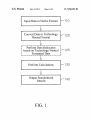
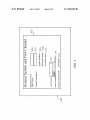
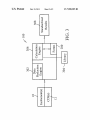
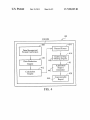
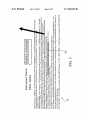
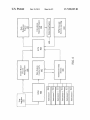
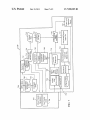
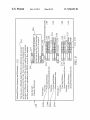
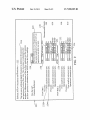



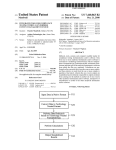

![Main lSetup l Cleanup] Parameters Locals}](http://vs1.manualzilla.com/store/data/005794368_1-f1180d1b21e5ef681561217b8f35e179-150x150.png)