1
US007694017B2
(12) Ulllted States Patent
(10) Patent N0.:
Saitoh
(54)
(75)
US 7,694,017 B2
(45) Date of Patent:
COMMUNICATION APPARATUS, IP
6,687,755 B1 *
ADDRESS ACQUISITION METHOD AND
6,894,994 B1 *
Apr. 6, 2010
2/2004 Ford et a1. ................ .. 709/245
5/2005 Grob et a1.
370/335
ROAMING METHOD
2001/0023446 A1 *
2001/0024953 A1*
9/2001
9/2001
709/229
455/432
Inventor:
2002/0045423 A1*
4/2002 Sashlhara et al. ........ .. 455/111
Atsushi Saitoh’ Tama (JP)
'
OTHER PUBLICATIONS
(73) Asslgneez Mltsuml Electnc Co" Ltd" Tokyo (JP)
.
.
( >1< ) Not1ce:
.
.
“Linksys Wireless USB Network Adapter”, Linksys, 2001*
.
“Links s Wireless Network Access Point”, Links s, 2001.*
Subject to any d1scla1mer, the term ofthls
Archivz‘org, “Instant Wireless», Jun‘ 2001*
gage? llssixgeltdegé‘gdadlusted under 35
Wavitll User manual, Dec. 2001, Mitsumi.*
.
.
.
a
( ) y
y
s.
Primary ExamineriThu Nguyen
_
Assistant Examinerilulian Chang
(22) Flled'
NOV‘ 13’ 2002
(65)
(74) Attorney, Agent, or FirmiLadas & Parry LLP
Prior Publication Data
Us 2003/0097473 A1
(30)
y
* cited by examiner
(21) Appl' NO‘: 10/293’639
.
Balogh .... ..
Balogh ........... ..
(57)
May 22’ 2003
ABSTRACT
In a wireless network in which an addressing server allocates
Foreign Application Priority Data
an IP address, there are provided an IP address ‘acquisition
method, a commun1cat1on apparatus and a roammg method
NOV.
16,
. . . . . . . . . . . . . . . . . . . . . . . . . . . ..
whereby a terrninal can automatically acquire an
address
from the addressing server. An IP address acquisition method
(51)
Int‘ Cl‘
for acquiring an IP address for a terminal 14 from a address
G06F 15/16
(2006-01)
ing server 18 comprises the steps of: providing the terminal
US. Cl- .................................................... ..
a temporary
address in a Case that a ?rst Commu
(58)
Field Of Classi?cation Search ................ .. 709/245
nication apparatus 10 is not capable of connecting With a
(56)
See application ?le for complete search history.
References Cited
second communication apparatus 12 when the ?rst commu
nication apparatus 10 receives an IP address request message
from the terminal 14; discarding the temporary IP address
from the terminal 14 when it becomes possible to connect
U.S. PATENT DOCUMENTS
with the second communication apparatus 12 and a commu
6,064,649 A *
5/2000
Johnston ................ .. 370/3102
6,195,705
2/2001
Leung
B1 *
.. ...
. . . ..
5/2001 Nishino ........ ..
6,246,670 B1 *
6/2001
Karlsson etal. ........... .. 370/244
6,577,609 B2*
6/2003
Sharony ................... .. 370/312
6,601,093 B1 *
7/2003 Peters ...................... .. 709/220
14
.. 455/4352
1o
8
nication path is established; and acquiring an IP address for
709/245
6,233,452 B1 *
-
-
mumea 10h Pa
'
1 Claim, 8 Drawing Sheets
12
<1
1a
9
pc
8
DHGP
(DHCP CLIENT)
STA
lP=X-X'X-X
"P
(5)DHCP DISCOVER lP=192-16B.1-1
lP=X.X.X.X
(default)
Server
(UDHCP mom/ER
(2)DHOP OFFER
(3)0HGP REQUESTA
(march, Request
(7)Probe Response
f
(B)Authentication
(9)Authantication
(10)Assoc Request
(11)
Assoc Response
(IP=172.16.40.10)
(12)0HOP DISCOVER
(13)DHCF' OFFER
(14}DHCP REQUEST
lP=l72.16.40.11
-
the terhthha1 lilhhem the addresslhg Server 18 “a the eem
(15JDHCP ACK
lP=l72.16.4U.10
(4)DHCP AcK
SETTINGS OF AP
_
US. Patent
Apr. 6, 2010
Sheet 1 of8
US 7,694,017 B2
FIG.1 PRIOR ART
54
f
10
FIG.2
N ETWO RK
US. Patent
Apr. 6, 2010
Sheet 2 of8
US 7,694,017 B2
5m“aE» 22
QUE
“a
3&0mom
405.2
m
0.4.2 .521
IE .53.“
Nu
US. Patent
Apr. 6, 2010
US 7,694,017 B2
Sheet 4 0f 8
FIG.5
START
$101
S112
STATION
2
MODE?
SEND
Probe Request
RJ45 CABLE
CONNECTED
?
SEND
Authentication
ADDRESS
MANUAL
SEND DHCP
S107
S115
SETTING
OPERATION
RECEIVE
Authentication
P
?
YES
NORMAL OPERATION
S316
SEND Association
Request
NO
SEND DHCP OFFER
'
No
$110
RECEIVE
DHCP REQUEST
‘.7
53“
YES
SEND DHCP ACK
I
RECEIVE
Association
SEND DHCP
RELEASE
S119
NO RMAL
OPERATION
US. Patent
Apr. 6, 2010
Sheet 5 0f 8
US 7,694,017 B2
FIG.6
START
S201
AP MODE?
NO
YES
N0
$202
( TO STA )
RJ45 CABLE
CONNECTED
?
YES
8204
AUTOMATIC
[P ADDRESS
NO
S205
SETTING?
YES
.'
S206
,
g
SEND DHOP DISCOVER
S207
RECEIVE
DHGP OFFER?
YES S308
SEND DHCP REQUEST
RECEIVE
DHCP ACK ?
NORMAL OPERATION
TO IP
ADDRESS
MANUAL
SETTING
OPERATION
US. Patent
Apr. 6, 2010
Sheet 7 of8
wmw
US 7,694,017 B2
(km 3m
On
QOE
19.5 Siam.
3%
US. Patent
Apr. 6, 2010
US 7,694,017 B2
Sheet 8 0f 8
FIG.9
(
START
)
'
NORMAL OPERATION
S301
YES S203
l SEND Probe Request 1
YES
S304
' ECEIV
' robe Response
$305
8
ISEND ReAssociation Request]
‘SEND ReAssociation Request‘
7
No
RECEIVE
ReAssociation
Response?
YES v
US 7,694,017 B2
1
2
COMMUNICATION APPARATUS, IP
ADDRESS ACQUISITION METHOD AND
IP address automatically in a wireless LAN, it is necessary to
ROAMING METHOD
perform complicated tasks for setting some apparatuses to
BACKGROUND OF THE INVENTION
implement a wireless LAN and further reboot a PC to apply a
new setting.
As mentioned above, even when the DHCP is used to set an
SUMMARY OF THE INVENTION
1. Field of the Invention
The present invention relates to communication appara
tuses connecting between a terminal and a network by wire
IP address acquisition method and a roaming method in
It is a general object of the present invention to provide a
communication apparatus, an IP address acquisition method
and a roaming method in which the above-mentioned prob
which the terminal can acquire an IP address from an address
lems are eliminated.
less, and more particularly to a communication apparatus, an
10
A more speci?c object of the present invention is to provide
ing server.
a communication apparatus, an IP address acquisition
method and a roaming method in which a terminal can auto
matically acquire an IP address from an addressing server in
a wireless network necessary for the IP address.
2. Description of the Related Art
In order to communicate by using IP (Internet Protocol) in
a network such as a LAN (Local Area Network), it is neces
sary to acquire and set an IP address for a terminal. There are
two methods to set the IP address for the terminal; One is a
method in which the IP address is manually set. The other is
a method in which the IP address is set by using DHCP
20
In order to achieve the above-mentioned objects, there is
provided according to one aspect of the present invention an
IP address acquisition method for acquiring an IP address for
(Dynamic Host Con?guration Protocol). When the IP address
a terminal from a dynamic addressing server in a communi
is manually set, a network administrator needs to manage IP
cation system having a ?rst communication apparatus con
nected with the terminal and a second communication appa
addresses for terminals therein so that an identical IP address
cannot be simultaneously allocated to a plurality of terminals.
In contrast, under the DHCP, an IP address is dynamically and
automatically allocated to a terminal. In the DHCP, when a
25
ratus connected with the dynamic addressing server wherein
the ?rst communication apparatus communicates via the sec
ond communication apparatus connected by wireless with the
?rst communication apparatus, the method comprising the
terminal gains access to a DHCP server, an IP address is
allocated for the terminal. The DHCP is currently used in a
steps of: providing a temporary IP address to the terminal in
large number of networks.
a case where it is impossible to connect the ?rst communica
On the other hand, a wireless LAN has been widespread
recently. As shown in FIG. 1, in a wireless LAN, information
is communicated by wireless between a station 10 connected
30
request message from the terminal; discarding the temporary
with a PC 14 and an access point 12 connected with the LAN.
In FIG. 1, the station is connected with the PC 14 by a ?xed
line, and the access point 12 is connected with a network by a
?xed line. Also, a DHCP server 18 is connected with the
network.
In such a wireless LAN, IP addresses have to be allocated
to not only the PC 14 but also the station 10 and the access
point 12 that are serving to implement wireless communica
tion.
A description will be given of a procedure to set an IP
address for the PC 14 by using the DHCP server 18 under this
con?guration. At the beginning, there are prepared the same
number of IP addresses as the number of access points. In this
35
40
?rst communication apparatus may serve for the step of pro
viding a temporary IP address to the terminal and the step of
discarding the temporary IP address from the terminal, and
45
the terminal may serve for the step of acquiring an IP address
for the terminal.
According to the above-mentioned invention, in a state that
there is no connection between the ?rst communication appa
ratus and the second communication apparatus and the ?rst
communication apparatus cannot connect to the second com
there is only one access point 12. Next, a temporary IP
address is manually set to the PC 14. As the temporary IP
address, there is provided an IP address whose network
50
prepared address. After receiving the temporary IP address,
the PC 14 is engaged to set the prepared IP address to the
station 10 and the access point 12. Since this con?guration
has just the access point 12 therein, the station 10 and the
access point 12 may have an identical IP address. Thus, the
identical IP address is allocated to the station 10 and the
access point 12.
The station 10 and the access point 12 to which the iden
tical IP address is allocated are connected with the PC 14 and
a network 16, respectively. In this manner, the PC 14 gains a
connection with the network 16 via the station 10 and the
access point 12. After that, an IP address setting of the PC 14
is modi?ed into a setting such that the PC 14 acquires an IP
address through DHCP, and then the PC 14 is rebooted to
IP address from the terminal when it is possible to connect the
?rst communication apparatus with the second communica
tion apparatus and establish a communication path; and
acquiring an IP address for the terminal from the dynamic
addressing server via the communication path.
In the above-mentioned IP address acquisition method, the
con?guration, just one IP address should be prepared because
address (to be mentioned later) is identical to that of the
tion apparatus to the second communication apparatus when
the ?rst communication apparatus receives an IP address
munication apparatus, when receiving an IP address request
message from the terminal, the ?rst communication appara
tus provides the terminal with a temporary IP address. After
establishing a connection with the second communication
apparatus, the ?rst communication apparatus makes the ter
minal discard the temporary IP address and the terminal can
acquire an IP address from the dynamic addressing server via
55
the established communication path.
Additionally, there is provided according to another aspect
of the present invention an IP address acquisition method for
60
acquiring an IP address for a terminal from a dynamic
addressing server in a communication system having a ?rst
communication apparatus connected with the terminal and a
the PC 14 can acquire an IP address from the DHCP server 18
second communication apparatus connected with the
dynamic addressing server wherein the ?rst communication
apparatus communicates via the second communication
apparatus connected by wireless with the ?rst communication
apparatus, the method comprising the steps of: establishing a
communication path between the ?rst communication appa
via the station 10 and the access point 12.
ratus and the second communication apparatus in a case
apply the modi?cation. In the above-mentioned procedure,
65
US 7,694,017 B2
3
4
Where it is possible to connect the ?rst communication appa
ratus to the second communication apparatus When the ?rst
communication apparatus receives an IP address request mes
second communication apparatuses. Also, even if the termi
nal has already acquired an IP address from the dynamic
addressing server, the terminal can acquire an IP address
sage from the terminal; transferring the IP address request
message to the dynamic addressing server; and acquiring an
IP address for the terminal from the dynamic addressing
server via the communication path.
In the above-mentioned IP address acquisition method, the
?rst communication apparatus may serve for the step of estab
lishing a communication path betWeen the ?rst communica
tion apparatus and the second communication apparatus and
the step of transferring the IP address request message to the
dynamic addressing server, and the terminal may serve for the
step of acquiring an IP address for the terminal.
According to the above-mentioned invention, in a state that
corresponding to a netWork address to Which the another one
of the second communication apparatuses belongs by dis
carding the old IP address if necessary. As a result, the roam
ing is successfully accomplished.
Additionally, there is provided according to another aspect
of the present invention a communication apparatus for relay
ing by Wireless betWeen a terminal and a dynamic addressing
server, comprising: a temporary IP address providing part
providing the terminal With a temporary IP address When an
IP address request message is received from the terminal; and
a temporary IP address throWing part discarding the tempo
rary IP address from the terminal.
According to the above-mentioned invention, When it is
impossible to establish a communication path With the
there is no connection betWeen the ?rst communication appa
ratus and the second communication apparatus, When receiv
ing an IP address request message from the terminal, the ?rst
communication apparatus attempts to connect to the second
communication apparatus. After establishing a communica
tion path, the ?rst communication apparatus sends the IP
address request message to the dynamic addressing server via
the established communication path. As a result, the terminal
can acquire an IP address from the dynamic addressing
server.
dynamic addressing server, the temporary IP address part
20
makes it possible to communicate betWeen the communica
tion apparatus and the terminal. Once the communication
path betWeen the dynamic addressing server and the terminal
is established, the temporary IP throWing part makes the
terminal discard an IP address and send an IP address request
message again. As a result, the terminal can acquire an IP
25
address from the dynamic addressing server.
Additionally, there is provided according to another aspect
Additionally, there is provided according to another aspect
of the present invention a roaming method for conducting a
roaming in a communication system having a ?rst communi
cation apparatus connected With a terminal and a plurality of
second communication apparatuses connected With a
dynamic addressing server Wherein the ?rst communication
apparatus has communicated via one of the second commu
nication apparatuses that maintains a connection by Wireless
of the present invention a communication apparatus for relay
ing by Wireless betWeen a terminal and a dynamic addressing
server, comprising: a maintaining part maintaining an IP
address request message When the IP address request mes
sage is received from the terminal; and a transferring part
30
transferring the IP address request message maintained.
With the ?rst communication apparatus and conducts a roam
ing from the one of the second communication apparatuses to
another one of the second communication apparatuses, the
35
method comprising the steps of: requesting a reconnection
With the another one of the second communication appara
tuses and establishing a communication path When the ?rst
communication apparatus detects a disconnection betWeen
the ?rst communication apparatus and the one of the second
communication apparatuses; discarding an IP address from
the terminal When a netWork address of the one of the second
communication apparatuses is different from a netWork
address of the another one of the second communication
40
Other objects, features and advantages of the present
detailed description When read in conjunction With the
accompanying draWings.
45
BRIEF DESCRIPTION OF THE DRAWINGS
FIG. 1 is a diagram illustrating a con?guration of a Wireless
LAN;
50
communication apparatuses.
FIG. 2 is a diagram illustrating a con?guration of a Wireless
LAN according to an embodiment of the present invention;
FIG. 3 is a block diagram illustrating hardWare of a com
In the above-mentioned roaming method, the ?rst commu
nication apparatus may serve for the step of requesting a
reconnection With the another one of the second communica
tion apparatuses and establishing a communication path and
the step of discarding an IP address from the terminal, and the
transferred to the dynamic addressing server and an IP
address is allocated to the terminal.
invention Will become more apparent from the folloWing
apparatuses; and acquiring an IP address from the dynamic
addressing server via the communication path established by
a reconnection request of the ?rst communication apparatus
and conducting a roaming from the one of the second com
munication apparatuses to the another one of the second
According to the above-mentioned invention, When an IP
address request message is received from the terminal, if it is
possible to establish a connection path betWeen the terminal
and the dynamic addressing server, the IP address request
message is maintained. After the communication path is
established, the maintained IP address request message is
munication apparatus;
FIG. 4 is a sequence diagram illustrating hoW a DHCP
55
server allocates an IP address in a case that it is impossible
that a ?rst communication apparatus is connected With a
terminal may serve for the step of acquiring an IP address
second communication apparatus When the ?rst communica
from the dynamic addressing server.
According to the above-mentioned invention, even if the
?rst communication apparatus has already acquired an IP
address from the dynamic addressing server, When the ?rst
tion apparatus receives an IP address request message from a
terminal;
60
FIG. 5 is a ?owchart illustrating a process in an STA mode;
FIG. 6 is a ?owchart illustrating a process in an AP mode;
FIG. 7 is a sequence diagram illustrating hoW a DHCP
server allocates an IP address in a case that it is possible that
a ?rst communication apparatus is connected With a second
65
communication apparatus When the ?rst communication
communication apparatus detects a disconnection With one of
the second communication apparatuses, the ?rst communica
tion apparatus can request a reconnection With another one of
the second communication apparatuses, establish a commu
nication path and accomplish a roaming from the one of the
apparatus receives an IP address request message from a
second communication apparatuses to the another one of the
terminal;
US 7,694,017 B2
6
5
FIG. 8 is a diagram illustrating a con?guration wherein a
apparatus in the STA mode and an apparatus in the AP mode,
sets an authentication algorithm. These settings can be set by
roaming is conducted; and
FIG. 9 is a ?owchart illustrating a roaming process.
connecting with a computer such as a PC.
The description will now be given of a way in which the PC
14 acquires an IP address from the DHCP server 18 by using
the communication apparatuses 10 and 12 provided under the
DETAILED DESCRIPTION OF THE PREFERRED
EMBODIMENTS
above-mentioned con?guration. The description will be
In the following, embodiments of the present invention will
be described with reference to the accompanying drawings.
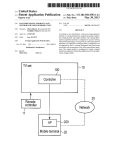
FIG. 2 shows an entire con?guration according to the
embodiment of the present invention. In FIG. 2, there are
illustrated communication apparatuses 10 and 12, a PC 14
connected with the communication apparatus 10, a network
16 connected with the communication apparatus 12, and a
given separately from two cases: One case is that it is impos
sible to connect with the communication apparatus 12 when
the communication apparatus 10 receives an IP address
request from the PC 14. The other is that it is possible to
connect with the communication apparatus 12 when the com
munication apparatus 10 receives an IP address request from
the PC 14. It should be noted that the communication appa
DHCP server 18 connected with the network 16. The com
ratuses 10 and 12 are represented as an STA 10 and anAP 12
munication apparatus 10 is connected with the PC 14 in a
cable such as a 10Base-T, and the communication apparatus
in the following description, respectively.
12 is also connected with the network 16 in a cable such as a
10Base-T.
of the case that it is impossible to connect with the commu
A description will now be given of the communication
apparatuses 10 and 12. The communication apparatuses 10
A description will now be given, with reference to FIG. 4,
20
and 12 are formed of a similar type of communication appa
ratus, and can switch into a plurality of modes to be men
tioned later. FIG. 3 shows a block diagram illustrating hard
ware of the communication apparatuses 10 and 12. The
communication apparatuses 10 and 12 shown in FIG. 3 com
prise a CPU for control 20, a frame buffer memory 22, an
Ethernet MAC Controller 24 for connecting to a network, a
MAC part 26 in a MAC layer serving for a media access
control in a MAC sub-layer, a PHY part 28 for serving as an
interface with a physical layer, and an antenna 30. In this
DHCP server 18 sends a message “DHCP OFFER” (reply for
search) back to the AP 12 to show that the DHCP server 18
25
works. At step (3), the AP 12 sends a message “DHCP
REQUEST” (IP address request) to the DHCP server 18. At
step (4), the DHCP server sends a message “DHCP ACK”
(reply for IP address request) back to the AP 12, and an IP
30
by the DHCP server 18. On the other hand, when the DHCP
address (for example, 172.16.40.10) is allocated to the AP 12
server 18 cancels out an IP address that has been allocated to
a DHCP client, the DHCP server 18 sends a message “DHCP
RELEASE” to invalidate the IP address allocated. In the
above manner, since the AP 12 has a connection with the
con?guration, data from the Ethernet MAC Controller 24 is
temporally stored in the frame buffer memory 22. Then, the
MAC part 26 performs a media access control in accordance
with the CSMA/CA method (IEEE802.11) for the data, and
35
network 16, the above-mentioned some settings regarding the
40
AP 12 can be manipulated from another PC via the network
16.
A description will now be given of a correspondence
between the PC 14 and the STA 10 being in the STA mode.
Suppose that the PC 14 has such a setting that the PC 14
the data is formed as a frame in accordance with the
IEEE802.11 and is delivered in the PHY part 28, which is
eventually propagated through the antenna 30. On the other
hand, data from the antenna 30 is lifted in the PHY part 28
from the physical layer to the MAC sub-layer, and the MAC
part 26 performs a media access control for the data. Then, the
data is temporally stored in the frame buffer memory 22 and
is sent through the Ethernet MAC Controller 24. The CPU for
control 20 is responsible to control such a data receiving and
sending process.
nication apparatus 12 when the communication apparatus 10
receives an IP address request from the PC 14. At the begin
ning, at step (1), the AP 12 sends a message “DHCP DIS
COVER” (search) to search a DHCP server 18.At step (2), the
acquires an IP address by using DHCP. Further suppose that
an IP address (for example, 19216811) is allocated to the
SAT 10 as a default and that the SAT 10 uses the IP address
45
A description will now be given of the above-mentioned
operational mode. As the operational mode, there are pre
pared at least two modes: a station mode (Hereinafter, notated
until the SAT 10 knows an IP address of the AP 12 by estab
lishing a connection with the AP 12. Currently, the STA 10
and the AP 12 are assumed to have no connection each other.
In the above situation, at step (5), the PC 14 sends a mes
sage “DHCP DISCOVER” to the STA 10.At step (6), the STA
10 sends a message “DHCP OFFER” back to the PC 14. At
as an STA mode) and an access point mode (Hereinafter,
notated as an AP mode). The STA mode is a mode as the 50 step (7), the PC 14 sends a message “DHCP REQUEST” (IP
communication apparatus 10 for performing a connecting
address request) to the STA 10. At step (8), the STA 10 sends
a message “DHCP ACK” (reply for IV address request) back
to the PC 14 and a temporary IP address (for example,
19216812) is allocated to the PC 14 by the STA 10. In the
process with the PC 14. The AP mode is a mode as the
communication apparatus 12 for performing a connecting
process with the network 16 and serving as an access point
between the communication apparatus 10 and the network 16.
A description will now be given of some settings regarding
55
14, the above-mentioned some settings regarding the STA 10
can be manipulated from the PC 14. Now, since the STA 10
and the PC 14 are connected each other, if the STA 10 and the
the communication apparatuses 10 and 12. Among primary
setting items regarding the communication apparatuses 10
and 12, there are a mode setting regarding the above opera
tional modes, an SSID setting, a cipher setting, an authenti
cation setting, and a roaming setting. The SSID is a kind of a
AP 12 are connected, the PC 14 and the network 16 are
60
name of an apparatus and is an ID represented as a sequence
formed of 32 characters of anASCII code. The cipher setting,
which is involved in ciphering data exchanged between the
STA mode and the AP mode, sets a ciphering mode (a bit
length, a type of cipher, and a length of key). The authentica
tion setting, which is involved in authentication between an
above manner, since the STA 10 has a connection with the PC
65
connected.
Regarding a connection between the STA 10 and the AP 12,
at step (9), the STA 10 sends a message “Probe Request” to
the AP 12. At step (10), the AP 12 sends a message “Probe
Response” back to the STA 10. The exchange of these mes
sages serves to check whether or not it is possible to commu
nicate between the STA 10 and the AP 12. At steps (11) and
(12), the STA 10 and the AP 12 send messages “Authentica
US 7,694,017 B2
7
8
tion” each other to authenticate between the STA 10 and the
Request” to the AP 12 and is waiting for a message “Probe
AP 12.After completing the authentication, the STA 10 sends
Response” from the AP 12. When receiving the message
“Probe Response” at step S113, the STA 10 sends a message
a message “Association Request” to the AP 12 so as to con
“Authentication” to authenticate and is waiting for the mes
sage “Authentication” from the AP 12. When receiving the
message “Authentication” at step S115, the STA 10 sends a
message “Association Request” to connect with the AP 12
nect thereto. At step (14), the AP 12 sends a message “Asso
ciation Response” together with an IP address (172.16.40.10)
back to the STA 10. This IP address is the address that has
been already allocated to the AP 12 by the DHCP server 18.
and is waiting for a message “Association Response”. At step
S117, the STA 10 receives the message “Association
Response” from the AP 12. Through the above process, the
STA 10 has the connection with the AP 12. Now, the PC 14 is
The STA 10 uses this IP address as its own address instead of
the default IP address of the STA 10. After completing the
connection between the STA 10 and the AP 12 in the above
manner, the STA 10 sends a message “DHCP RELEASE” to
the PC 14 so as to invalidate the temporary IP address that has
ready to communicate with the DHCP server 18 via the two
communication apparatuses. In order to establish the connec
tion with the DHCP server 18 properly, the STA to needs to let
the PC 14 discard the temporary address that the STA 10 has
been allocated to the PC 14. At step (16), the PC 14 sends the
message “DHCP DISCOVER” again so as to acquire an IP
address. This message “DHCP DISCOVER” is sent to the
DHCP server 18 via the network 16 because the STA 10 and
already provided for the PC 14. Thus, the STA 10 sends a
the AP 12 have the connection currently. According to the
above-mentioned procedure that the AP 12 acquires the IP
address from the DHCP server 18; at step (17), the DHCP
server 18 sends the message “DHCP OFFER” back to the PC
14. At step (18), the PC 14 sends the message “DHCP
REQUEST” (IP address request) to the DHCP server 18. At
step (19), the DHCP server 18 sends the message “DHCP
ACK” (reply for IP address request) back to the PC 14,
whereby the PC 14 acquires an IP address.
A description will now be given, with reference to ?ow
charts in FIGS. 5 and 6, of the above process between the STA
message “DHCP RELEASE” to the PC 14 at step S118 and
20
DHCP server 18.
At step S201, it is determined whether or not a communi
25
cation apparatus is in the AP mode. If the communication
apparatus is not in the AP mode, the process proceeds to the
STA mode at step S202. Since the communication apparatus
(the AP 12) is in the AP mode in this case, the process
proceeds to step S203. At step S203, it is determined whether
30
or not the AP 12 is connected with an R] 45 cable, and in other
words, whether or not the AP 12 is connected with the physi
10 and the AP 12. FIG. 5 shows a ?owchart illustrating a
process regarding the STA mode, which corresponds to the
process of the STA 10 in this case. On the other hand, FIG. 6
shows a ?owchart illustrating a process regarding the AP
cal layer. If not, this step is repeated until the AP 12 has a
connection with the physical layer. If the connection is estab
mode, which corresponds to the process of the AP 12 in this
case.
A description will be given of a ?owchart illustrating a
process regarding the STA mode in FIG. 5. At step S101, it is
35
determined whether or not a communication apparatus is in
AP 12 sends a message “DHCP DISCOVER” to the DHCP
server 18 and is waiting for a message “DHCP OFFER”.
40
S103, it is determined whether or not the STA 10 is connected
with an R] 45 cable, and in other words, whether or not the
STA 10 is connected with the physical layer. If not, this step
is repeated until the STA 10 has a connection with the physi
cal layer. If the connection is established, at step S104, it is
determined whether or not an IP address acquisition setting of
lished, at step S204, it is determined whether or not an IP
address acquisition setting of the AP 12 is set as an automatic
setting. If not, the process proceeds to step S205 of a manual
setting. If the IP address acquisition setting is automatic, the
the STA mode. If the communication apparatus is not in the
STA mode, the process proceeds to the AP mode at step S102.
In this case, since the communication apparatus (the STA 10)
is in the STA mode, the process proceeds to step S103. At step
executes the normal operation at step S119.
A description will now be given, with reference to a ?ow
chart of FIG. 6, of a process regarding the AP mode. It should
be noted that the process regarding the AP mode shown in
FIG. 6 is related to the connection between the AP 12 and the
When receiving the message “DHCP OFFER” at step S207,
the AP 12 sends a message “DHCP REQUEST” to the DHCP
server 18 at step S208 and is waiting for a message “DHCP
ACK” from the DHCP server 18. When receiving the mes
45
sage “DHCP ACK” at step S209, the AP 12 proceeds to the
normal operation at step S210. The process to allocate an IP
address to the PC 14 by using the DHCP has been described
the STA 10 is set as an automatic setting. If not, the process
under the case that it is impossible to connect with the com
proceeds to step S105 of a manual setting. If the IP address
acquisition setting is automatic, the STA 10 sends a message
“DHCP RELEASE” for the following reason; When the PC
14 has already an IP address, it is likely to lack consistency
munication apparatus 12 when the communication apparatus
with the STA 10. Thus, the STA sends the message one more
time in order to invalidate the IP address allocated to the PC
14. Then, at step S107, the STA 10 executes a normal opera
tion. The normal operation means that the STA 10 is in a state
wherein the STA 10 is currently waiting for data or a message.
This state continues until the STA 10 receives the message
“DHCP DISCOVER” from the PC 14 that has received the
10 receives an IP address request from the PC 14.
50
tion apparatus 12 when the communication apparatus 10
55
DHCP server 18 works. At step (3), the AP 12 sends a mes
sage “DHCP REQUEST” (IP address request) to the DHCP
60
server 18. At step (4), the DHCP server sends a message
“DHCP ACK” (reply for IP address request) back to the AP
12, and an IP address (for example, 172.16.40.10) is allocated
to the AP 12 by the DHCP server 18. On the other hand, when
message “DHCP REQUEST” from the PC 14. At step S110,
when receiving the message “DHCP REQUEST”, the STA 10
sends a message “DHCP ACK” to the PC 14. Through the
above process, the PC 14 acquires a temporary IP address.
Then, the STA 10 proceeds to a process for connecting with
the AP 12. At step S112, the STA 10 sends a message “Probe
receives an IP address request from the PC 14.
At the beginning, at step (1), the AP 12 sends a message
“DHCP DISCOVER” (search) to search a DHCP server 18.
At step (2), the DHCP server 18 sends a message “DHCP
OFFER” (reply for search) back to the AP 12 to show that the
message “DHCP RELEASE”. At step S109, when receiving
the message “DHCP DISCOVER”, the STA 10 sends a mes
sage “DHCP OFFER” to the PC 14 and then is waiting for a
A description will now be given, with reference to FIG. 7,
of the case that it is possible to connect with the communica
65
the DHCP server 18 cancels out an IP address that has been
allocated to a DHCP client, the DHCP server 18 sends a
message “DHCP RELEASE” to invalidate the IP address
allocated. In the above manner, since the AP 12 has a connec
US 7,694,017 B2
10
tion with the network 16, the above-mentioned some settings
regarding the AP 12 can be manipulated from another PC via
the network 16.
A description will now be given of a correspondence
between the PC 14 and the STA 10. Suppose that the PC 14
has a setting in which the PC 14 acquires an IP address by the
DHCP. Further suppose that an IP address (for example,
“Probe Request” again. If the STA 10 can receive the message
“Probe Response”, the STA 10 sends a message “ReAssocia
tion Request” (reconnect request) at step S305. At step S306,
if the STA 10 receives a message “ReAssociation Response”,
the STA 10 returns to step S301. If not, it is determined
whether or not the STA 10 receives a message “DeAuthenti
cation”. The message “DeAuthentication” means an authen
tication denial, which is sent in a case that the STA 10 and the
19216811) is allocated to the SAT 10 as a default and that
the SAT 10 continues the IP address until the SAT knows an
IP address of the AP 12 by establishing a connection with the
AP 12. Currently, the STA 10 and the AP 12 are assumed to
have no connection each other.
In the above state, at step (5), the PC 14 sends a message
“DHCP DISCOVER” to the STA 10. At this time, the STA 10
attempts to connect to the AP 12.At step (6), the STA 10 sends
a message “Probe Request” to the AP 12. At step (7), the AP
12 sends a message “Probe Responses” back to the STA 10.
The exchange of these messages serves to check whether or
not it is possible to communicate between the STA 10 and the
AP 12. At steps (8) and (9), the STA 10 and the AP 12 send a
message “Authentication” each other to authenticate. After
20
completing the authentication, at step (10), the STA 10 sends
a message “Association Request” to the AP 12 so as to con
nect thereto. At step (11), the AP 12 sends a message “Asso
ciation Response” together with an IP address (172.16.40.10)
25
back to the STA 10. This IP address is the address that has
been already allocated to the AP 12 by the DHCP server 18.
The STA 10 uses this IP address as its own address instead of
the default address. In such a manner, after establishing the
connection between the STA 10 and the AP 12, the STA 10
sends a message “DHCP DISCOVER” that the STA 10 has
30
The message “ReAssociation Response” includes a new IP
address that the AP 32 allocates to the STA 10. When the IP
address is set to the STA 10, the roaming process for the STA
10 is completed. As mentioned above, if the AP 32 has a
network address different from the AP 12, the PC 14 also
needs to acquire a new address. Accordingly, the STA 10
sends the message “DHCP RELEASE” shown in FIG. 4 to the
PC 14 in order to let the PC 14 discard an IP address that the
PC 14 currently maintains. The PC 14 sends the message
“DHCP DISCOVER” to the DHCP server 18 in order to
already received from the PC 14, and the message “DHCP
acquire a new IF address. The message “DHCP DISCOVER”
is sent to the DHCP server 18 via the STA 10 and the AP 32,
because the STA 10 and the AP 32 have already established a
DISCOVER” is sent to the DHCP server 18 via the network
16. According to the above-mentioned procedure that the AP
12 acquires the IP address from the DHCP server 18, at step
AP 32, which is expected to be a substitute for the AP 12, do
not authenticate each other. If the STA 10 does not receive the
message “DeAuthentication”, the STA returns to step S306. If
the STA 10 receives the mes sage “DeAuthentication”, the
STA 10 sends a message “Authentication” for requesting the
authentication to the AP 32 at step S308 and is waiting for a
message “Authentication” meaning an acceptance of the
authentication. When receiving the mes sage “Authentica
tion” at step S309, the STA 10 sends a message “ReAssocia
tion Requests” (reconnect request) to the AP 32 at step S310
and is waiting for a message “ReAssociation Response” (re
connect reply). Then, the STA 10 receives the message
“ReAssociation Response” at step S311.
35
(13), the DHCP server 18 sends the message “DHCP
OFFER” to the PC 14. At step (14), the PC 14 sends the
message “DHCP REQUEST” (IP address request) to the
DHCP server 18. At step (15), the DHCP server 18 sends the
message “DHCP ACK” (reply for IP address request) back to
the PC 14, whereby the PC 14 acquires an IP address.
A description will now be given, with reference to FIG. 8,
of a roaming of the PC 14 possessing an IP address through
the above process. The roaming in this description means that
40
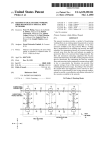
as shown in FIG. 8, the PC 14 and the STA 10 move and, in
turn, connect with an AP 32 different from the AP 12 with
which the PC 14 and the STA 10 have maintained a connec
tion heretofore. In this case, the STA 10 needs to discard an IP
address that the STA 10 has used and acquire a new IP
address. In addition, if the AP 32 has a network address
different from the AP 12, the PC 14 also needs to acquire a
45
connection each other through the above-mentioned process.
The PC 14 acquires the IP address in accordance with the
procedure of the DHCP shown in FIG. 4.
Under the above-mentioned embodiment of the present
invention, the operations (9) through (14) in FIG. 4, the opera
tions S112 through S117 in FIG. 5, and the operations (6)
through (11) in FIG. 6 correspond to a means to establish a
communication path. Also, the operation (6) in FIG. 4 and the
operation S109 in FIG. 5 correspond to a means to provide a
temporary IP address. The operation (15) in FIG. 4 and the
operation S118 in FIG. 5 correspond to a mean to discard the
temporary IP address. The operations S303 through S311
correspond to a reconnect request at a roaming.
50
The present invention is not limited to the speci?cally
disclosed embodiments, and variations and modi?cations
may be made without departing from the scope of the present
invention.
new address. In the following, a description will be given,
The present application is based on Japanese priority appli
with reference to a ?owchart of FIG. 9, of a roaming method
including a way in which these two addresses are allocated.
cation No. 2001-351469 ?led Nov. 16, 2001, the entire con
FIG. 9 shows the ?owchart illustrating a roaming process.
At step S301, the STA 10 performs a normal operation such as
a transit operation. At step S302, it is determined whether or
not the AP 12 disappears. If not, the process returns to step
S301 and the STA 10 performs the normal operation. If theAP
12 disappears, the STA 10 sends a message “Probe Request”
at step S303 and is looking for another AP. Regarding the
disappearing determination, when the STA 10 cannot receive
a beacon propagated by the AP 12, it is supposed that the AP
tents of which are hereby incorporated by reference.
55
from a DHCP server in a wireless communication system, the
wireless communication system including a station (STA)
physically connected with the DHCP client and an access
60
point (AP) physically connected with the DHCP server,
wherein
in response to receipt of an IP address request from the AP
via a network, the DHCP server assigns a ?rst IP address
12 disappears. After sending the message “Probe Request”,
the STA 10 is waiting for receiving a message “Probe
Response”. At step S304, if the STA 10 cannot receive the
message “Probe Response”, the STA 10 sends the message
What is claimed is:
1. A method for acquiring an IP address for a DHCP client
65
to the AP;
in response to detection of a physical connection with the
DHCP client, the STA assigns a possessed temporary IP
address to the STA itself and the DHCP client, thereby
US 7,694,017 B2
11
12
server via the STA and the AP Wirelessly connected With
each other to acquire a second IP address dedicated to
establishing a communication between the DHCP client
and the STA via the physical connection and enabling
the DHCP client,
Wherein the setting the STA comprises the DHCP client
the DHCP client to set the STA;
in response to receipt of an IP address request from the
DHCP client via a default IP address pre-assigned to the
STA, the STA transmits temporary IP address to the
transmitting a DHCP DISCOVER to the STA, the STA
transmitting a DHCP OFFER to the DHCP client, the
DHCP client transmitting a DHCP REQUEST for an IP
address to the STA, the STA transmitting a DHCP ACK
and the temporary IP address to the DHCP client, and the
DHCP client;
in response to detection of a physical connection With the
DHCP server, the DHCP server assigns an IP address,
DHCP client acquiring the temporary IP address by
receiving the DHCP ACK, thereby establishing a physi
thereby establishing a communication betWeen the
DHCP server and the AP via the physical connection and
enabling the DHCP server to set the AP;
When the STA establishes a Wireless connection With the
AP, the STA acquires the ?rst IP address and transmits an
IP address release to the DHCP client to cause the DHCP
client to invalidate the temporary IP address;
in response to receipt of the IP address release from the
STA, the DHCP client invalidates the temporary IP
address and transmits an IP address request to the DHCP
cal communication betWeen the DHCP client and the
STA, and
the method further comprises, upon establishing the physi
15
cal communication betWeen the DHCP client and the
STA, initialing the Wireless communication betWeen the
STA and the AP.