1
Cybernetics
Through action, the agent in the world will produce a mixture of interoceptive
and exteroceptive signals. The term perception refers to a generic combination
of exteroception and interoception, and represents a generic signal to be used as
an input by a control system. With all its simplicity, the combination of elementary
perception action loops can give rise to what will appear as complex, goal-oriented
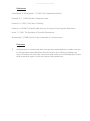
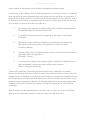
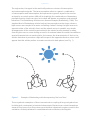
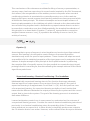
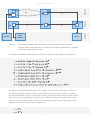
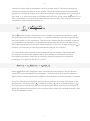
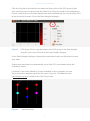
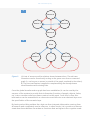
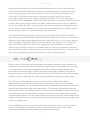
behaviour. The Braitenberg vehicles are a famous example (Braitenberg, 1986). The
simplest kind of Braitenberg vehicle had just two perception-action loops, where a
light sensor was coupled to a motor controlling a wheel. Having the light sensors in
opposite sides of the vehicle’s front, and the wheels set up in parallel, very simple
arrangements of the control loops resulted in the robots moving towards or away
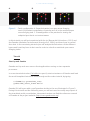
from a light source or even circling around it. An external observer would then attribute
special characteristics to each vehicle, for instance, the characteristic of ‘fear’ to the
vehicle that when it perceives a light will escape in the opposite direction, since it will
appear that this vehicle prefers to remain unnoticed in dark places (see Fig. 1).
+
+
+
+
Figure 1. Example of Braitenberg vehicles expressing ‘fear’ and ‘love’.
These synthetic examples of direct sensorimotor coupling driving navigation has
its biological counterpart in bacterial chemotaxis. Bacteria can orient themselves
towards food sources or flee poison provided that chemical receptors result in the
excitation of their ipsilateral or contralateral motor effectors, the flagella.
37