1
10.1.10 Recommended Next Calibration Date
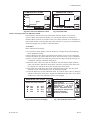
Recording the cell emf at calibration time, and monitoring the drift in cell emf with
time, gives an idea of how long it will take for measurement error to reach tolerance,
and thus recalibration can be scheduled before that date. The tolerance is a maximum of
60.5% of range, so if range is 0-25% O2 then tolerance is 25% O260.5% = 0.125% O2.
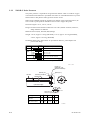
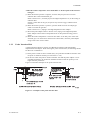
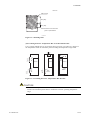
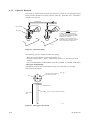
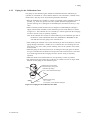
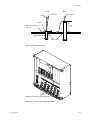
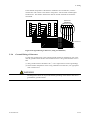
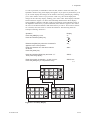
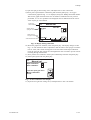
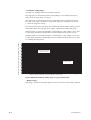
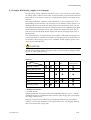
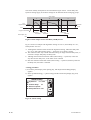
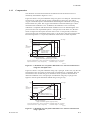
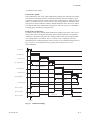
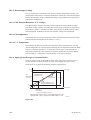
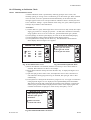
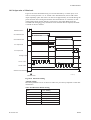
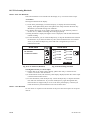
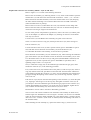
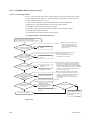
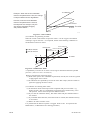
The instrument extrapolates a line through the most recent three cell emf readings (see
Fig.10.4), uses this to determine how long it will take for measurement error to exceed
tolerance, and recommends that a recalibration date.
Cell emf
2x ago
Predicts by extrapolating line through CAL
value 2x ago, Previous and This (present)
Prev
This
tolerance
Days
F10.4E.eps
Ideal next CAL
Fig.10.4 Predicting Next Recalibration Date
After the first three calibrations - which, however, must be separated by at least five
days, or the data is ignored by the autopredictor - the autopredictor starts operating.
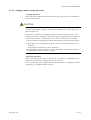
CAUTION
1) This function does not guarantee accuracy, it's just a guide.
2) The recommended date for the next calibration with be within the range of between 5
and 90 days.
3) If the predictor finds that the slope of the line becomes positive (the line slants
upward to the right), then it may recommend a next calibration date in five days
time.
4) After the predictor has made a calculation, changing the current output range does not
affect this (does not cause a recalculation).
10.1.11 Heater On-Time Ratio
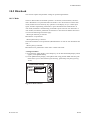
The probe sensor is heated to and maintained at 7508C. When the measured gas temperature is high, the amount of heater ON-time decreases.
10.1.12 Time
The current date and time are displayed. These are backed up with built-in batteries, so
the clock continues to run even if the power is switched off.
10-4
IM 11M12D01-01E