1
5.14 Standard IO facilities
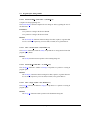
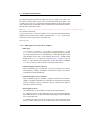
• [ Matches a nonempty sequence of characters from the specified set of accepted
characters; the next pointer must be a pointer to char, and there must be enough
room for all the characters in the string, plus a terminating NUL character. The
usual skip of leading white space is suppressed. The string is to be made up
of characters in (or not in) a particular set; the set is defined by the characters
between the open bracket [ character and a close bracket ] character. The set
excludes those characters if the first character after the open bracket is a circumflex ∧ . To include a close bracket in the set, make it the first character after the
open bracket or the circumflex; any other position will end the set. The hyphen
character - is also special; when placed between two other characters, it adds all
intervening characters to the set. To include a hyphen, make it the last character
before the final close bracket. For instance, [∧ ]0-9-] means the set of everything except close bracket, zero through nine, and hyphen. The string ends with
the appearance of a character not in the (or, with a circumflex, in) set or when
the field width runs out.
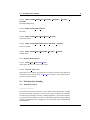
• p Matches a pointer value (as printed by p in printf()); the next pointer must be
a pointer to void.
• n Nothing is expected; instead, the number of characters consumed thus far from
the input is stored through the next pointer, which must be a pointer to int. This
is not a conversion, although it can be suppressed with the ∗ flag.
These functions return the number of input items assigned, which can be fewer than
provided for, or even zero, in the event of a matching failure. Zero indicates that, while
there was input available, no conversions were assigned; typically this is due to an
invalid input character, such as an alphabetic character for a d conversion. The value
EOF is returned if an input failure occurs before any conversion such as an end-of-file
occurs. If an error or end-of-file occurs after conversion has begun, the number of
conversions which were successfully completed is returned.
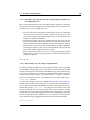
By default, all the conversions described above are available except the floating-point
conversions, and the %[ conversion. These conversions will be available in the extended version provided by the library libscanf flt.a. Note that either of these
conversions requires the availability of a buffer that needs to be obtained at run-time
using malloc(). If this buffer cannot be obtained, the operation is aborted, returning the
value EOF. To link a program against the extended version, use the following compiler
flags in the link stage:
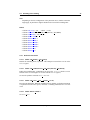
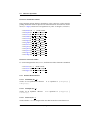
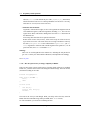
-Wl,-u,vfscanf -lscanf_flt -lm
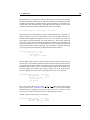
A third version is available for environments that are tight on space. This version is
provided in the library libscanf min.a, and can be requested using the following
options in the link stage:
-Wl,-u,vfscanf -lscanf_min -lm
In addition to the restrictions of the standard version, this version implements no field
width specification, no conversion assignment suppression flag (∗), no n specification,
Generated on Wed Nov 26 21:10:23 2003 for avr-libc by Doxygen
49