1
Advanced European Infrastructures for Detectors at Accelerators
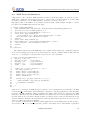
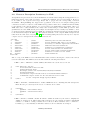
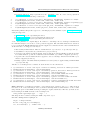
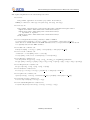
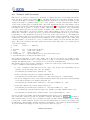
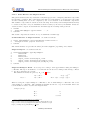
The required arguments for the various shapes are then:
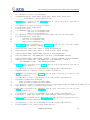
• For a Box:
<some_element type="Box" x="x-value" y="y-value" z="z-value"/>
fulfiling a constructor of the type: Box(dim.dx(), dim.dy(), dim.dz()).
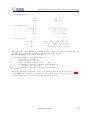
• For a Polycone:
<some_element type="Polycone" start="start-phi-value" deltaphi="delta-phi-value">
<zplane z="z-value" rmin="rmin-value" rmax="rmax-value"/>
<zplane z="z-value" rmin="rmin-value" rmax="rmax-value"/>
.... any number of Z-planes ....
<zplane z="z-value" rmin="rmin-value" rmax="rmax-value"/>
</some_element>
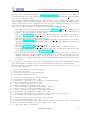
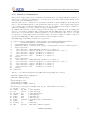
• For a ConeSegment the following constructor must be fulfilled:
ConeSegment(e.rmin(0.0), e.rmax(), e.z(0.0), e.startphi(0.0), e.deltaphi(2 ∗ M P I)),
where the above default values for the XML attributes rmin, z, startphi and deltaphi are used if
not explicitly stated in the XML element e.
• For a Tube the constructor is:
T ube(e.rmin(0.0), e.rmax(), e.z(0.0), e.startphi(0.0), e.deltaphi(2 ∗ M P I)).
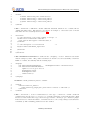
• For a Cone the constructor is:
doublermi1 = e.rmin1(0.0), rma1 = e.rmax1();
Cone(e.z(0.0), rmi1, rma1, e.rmin2(rmi1), e.rmax2(rma1)).
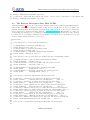
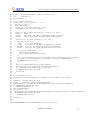
• For a Trap the constructor is:
if dz is specified: T rap(e.dz(), e.dy(), e.dx(),t oDouble(U nicode(pLT X))) Otherwise:
T rap(e.z(0.0), e.theta(), e.phi(0), e.y1(), e.x1(), e.x2(), e.alpha(), e.y2(), e.x3(), e.x4(), e.alpha2()).
• For a Trapezoid the constructor is:
T rapezoid(e.x1(), e.x2(), e.y1(), e.y2(), e.z(0.0)).
• For a Torus the constructor is:
T orus(e.r(), e.rmin(), e.rmax(), e.phi(M P I), e.deltaphi(2. ∗ M P I)).
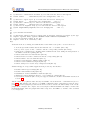
• For a Sphere the constructor is:
Sphere(e.rmin(), e.rmax(), e.deltatheta(M P I), e.phi(0e0), e.deltaphi(2. ∗ M P I)).
• For a Paraboloid the constructor is:
P araboloid(e.rmin(0.0), e.rmax(), e.dz()).
• For a PolyhedraRegular the constructor is:
P olyhedraRegular(e.numsides(), e.rmin(), e.rmax(), e.dz()).
DD4hep User Manual
23