1
VIRUS BULLETIN www.virusbtn.com
in people’s inboxes. Users were being fooled by the
messages, clicking the links, and their workstations were
being compromised. This was occurring regularly enough
for the IT personnel of the company to escalate the matter
to us1.
and the result is SPF None. It continues to pass it
down to the rest of the filter.
At the time, I knew that SPF was an anti-spoofing
technology but I didn’t know much more beyond the basics
so I did some research and learned a lot more. The spammer
was sending mail from a domain with no SPF records
in the ‘P1 Mail From’ and was spoofing the recipient’s
organization in the ‘P2 From’ address field. The result was
that the recipients of the message were fooled into believing
that it was from an internal sender because they recognized
their ‘own’ domain as the sender.
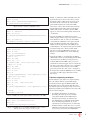
For example, suppose that the organization receiving the
mail was the government of Washington State2:
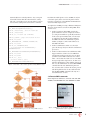
SMTP Mail From: [email protected]
P2 From: [email protected]
To: [email protected]
Subject: Update your credentials
Dear recipient,
We are upgrading our security infrastructure.
Please login to the following site and enter your
credentials so it will update in our systems
otherwise your account will be locked out.
http://security.wa.state.gov/user/login
Thanks for your co-operation in this regards.
Department of IT Security
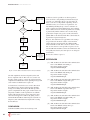
Let’s take this message apart and see what happened:
1.
The state of Washington has published SPF
records and tagged them with ‘-all’, which
means that receivers should Hard Fail any mail
that purports to come from its servers but whose
sending IP is not in its SPF record. This is
something that a responsible organization does
to prevent being spoofed and then delivered to
someone’s inbox.
2.
Upon receipt of the message, the spam filter
executes an SPF check on the email address in the
‘P1 Mail From’, which is the randomized
[email protected]. The domain zebuzez.com
exists in DNS and has an A-record but does not
publish SPF records. The spam filter checks it out
1
This was the first instance I had seen of a spear phishing attack,
although in retrospect it was probably less sinister than it sounds. A
targeted spear phishing attack customizes everything, right down to the
recipients. This attack spoofed the From: address, but nothing else in
the message content was customized.
2
The government of Washington State is not our customer, I use this as
an example.
3.
The URL in the message is a newly created domain,
and the message is sent from a new IP address that is
part of a botnet but is not on any blocklists. It evades
the spam filter’s other reputation checks and ends up
in the customer’s inbox. This is a false negative.
4.
The user sees the mail which appears to come
from their own internal department,
[email protected]. Since it seems to come from
a domain they recognize, they trust the message
and decide to click on the link. The spammer has
been clever enough to send the message in HTML
format and the link in the message actually points
to a spammer’s domain. The user’s computer has
now become part of a botnet because they clicked on
the link3.
If you only use SPF as part of your spam filter, then
your filter will be prone to these types of attack. Whether
spammers spoof your specific domain intentionally or
are randomizing the domains in the senders, the fact
is that SPF cannot prevent these emails from reaching
your inbox.
I was left scratching my head. How could we combat these
types of spam messages using content filtering? I started
to investigate SPF and how it executes on the ‘P1 From’
address. The SPF documentation discourages the use of
SPF on the ‘P2 From’ address because, while the P1 and
P2 From addresses are often the same, sometimes they
are not, and it is difficult to predict what will occur in the
event that they are not the same. Will a spam filter flag
legitimate messages as spam (i.e. generate false positives)?
For example, suppose that the state of Washington wanted
to send out a large mail campaign to residents of the state
who had opted in to receive special announcements – e.g.
about road repairs, government office closures, breaking
news reports or results of legislative changes. Rather than
sending these out themselves, the state might decide to use
a marketing company, say, Big Communications, Inc. The
marketing company wants the emails to look like they came
from the state of Washington, but needs to avoid them being
marked as spam.
Since SPF is the most common authentication technology,
they would do something like the following:
3
One dismissive argument I hear regarding SPF’s ability to prevent
spoofing by Hard Failing spoofed addresses is that all a spammer has
to do to circumvent it is to send mail from a slightly different account,
say, state.wa.gov.ghsataw.com. This is true, and spammers do this.
However, they also spoof the actual domains and they do this a lot. I
have not measured which is more prolific, but the spoofing occurs so
often that it is a legitimate scenario that requires a solution.
APRIL 2011
21