1
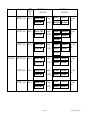
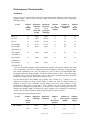
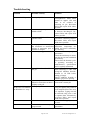
PCR contamination
Weak signal intensity of
electropherograms
Weak PCR product
Insufficient reaction products
applied to sequencer
Problems during purification of
sequencer products
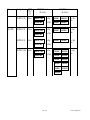
Signal intensity is too
high (Presence of high
fluorescent peaks –
artefacts)
Too much PCR product
Too much reaction products
applied to sequencer.
Noisy baseline (high
background)
Contaminated PCR product
Amplification of closely related
HLA genes
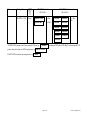
Poor PCR purification
Contaminated
reactions
sequencing
Page 22 of 25
Check the negative control for
evidence of contamination.
Decontaminate work area and
repeat PCR.
Repeat PCR to identify source
of contamination. Consider
using a fresh kit.
If the genomic DNA of a
sample
appears
to
be
contaminated, re-extract or
obtain an alternative source of
DNA.
Check gel image. Sequencing
weak PCR bands is NOT
recommended as the sequence
quality may be insufficient for
SBT.
Consider using a lower
dilution factor (e.g. 1:2, 1:3)
after PCR purification.
Check sequencer parameters.
Injection time and voltage may
need to be increased.
Use extreme care when
discarding the supernatant as it
may dislodge the pellet.
Check the gel image. Consider
using a higher dilution factor
following PCR purification.
Check the amount of DNA
polymerase used in the PCR.
Check instrument parameters.
Consider
reducing
the
injection time and voltage.
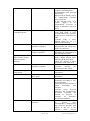
Refer to corrective actions
listed above.
Check
thermal
cycling
parameters.
Ensure ExoSAP treatment is
undertaken according to kit’s
user instructions.
Ensure that the PCR mixture is
mixed
thoroughly
with
ExoSAP
Consider
using
ExoSAP
following the manufacturers
procedure (increasing the
amount of enzyme), or
consider
an
alternative
purification technique.
Ensure that all steps are taken
to
prevent
cross
contamination. Change pipette
tips wherever possible. Add
liquids at the top of the
reaction
wells.
Prevent
For In-Vitro Diagnostic Use