1
OPERATION
THEORY OF OPERATION
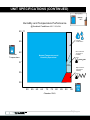
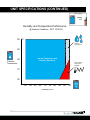
The SCO26H is engineered to provide a constant temperature CO2 incubation environment that
can be humidified to prevent dehydration of sample media. The unit can obtain a stable, uniform
temperature in its chamber, ranging from the room temperature (ambient) +8°C up to 60°C for
incubation applications. The CO2 range is a 0 – 20% concentration.
The incubator features a heated glass viewing door that allows visual inspection of samples without
compromising the chamber CO2 or humidity environment.
Heating
When powered, the incubator heats to and maintains the incubation chamber air temperature at the
currently programed temperature set point. An internal microprocessor stores the temperature set
point. The microprocessor board is wired to a solid-state temperature probe located in the chamber
airstream on the rear wall. When the processor detects that the chamber temperature has dropped
below the temperature set point, it pulses power to a heating element located in a recirculation air
duct above the chamber. Once the chamber temperature is stable most heating pulses correct for
deviations of less than 0.1°C.
The processor employs proportional-integral-derivative analytical feedback-loop functions when
measuring and controlling the chamber air temperature. PID-controlled heating pulse intensities
and lengths are proportional to the difference between the measured chamber temperature and the
current set point. The frequency of pulses are derived from the rate of change in that difference.
The integral function slows the rate of pulses when the temperature nears the set point to avoid
overshooting.
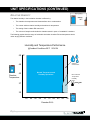
The SCO26H relies on natural heat radiation for cooling. The incubator can achieve a low-end
temperature of the ambient room temperature +8°C. The 8 degrees are generated primarily by the
operation of the blower fan motor and resulting air compression in the duct spaces.
The chamber door is self-heating to bolster the thermal uniformity and stability of the chamber, and
to minimize condensation on the glass viewing panel.
CO2 Atmosphere
The same microprocessor board controls the gas concentration of CO2 in the chamber atmosphere
by operating an internal injection solenoid valve connected to the gas input line. The processor
monitors CO2 concentration level in the incubator using an infrared sensor in the recirculation duct.
The sensor operates on the principle that a specific frequency set of infrared light is absorbed by
CO2. The more CO2 present in the air stream from the chamber, the more of that band of infrared is
absorbed. The sensor is only sensitive to CO2, so measurement accuracy is consistent, regardless
of the presence of other gasses in the incubator.
22 | P a g e