1
THEORY
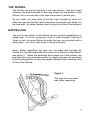
In use, the Soloist is attached to the climber and as the climber
ascends, the device moves freely along the rope, one end of which
has been anchored at the bottom of the climb. The climber clips the
anchored side of the rope into protection as he advances. If the
climber falls (in a relatively upright position), then the pull of the rope
will be from an upward direction, which will cause the jaw of the
device to lock against the rope and stop the fall.
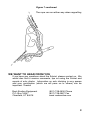
The device is backed up by tying a loop knot in the free side of the
rope. The knot may be attached to your harness or just left hanging
(but make sure it cannot come untied).
ATTACHING THE SOLOIST TO THE CLIMBER
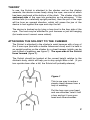
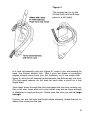
The Soloist is attached to the climber’s waist harness with a loop of
8 or 9 mm rope (tied with a double fisherman’s knot) and it is held in
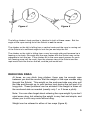
an upright position on the climber by a chest harness (which can be
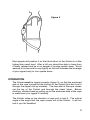
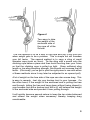
just a piece of webbing; see figure 1). The open side of the Soloist
faces forward (figure 2).
The Soloist should be located at the correct height relative to the
climber’s body, which will help you to stay upright after a fall. (If you
turn upside down after a fall, the Soloist will probably release).
Figure 1
This is one way to make a
simple chest harness from a
loop of webbing.
Put the loop over your head
and one shoulder, twist it half
a turn and put it over your
head and other shoulder.
2