1
US 7,970,914 B2
4
3
service options4collections of parameters relating to a
service or multiple services. For example, for an e-mail
network and/or can be automatically provisioned for services.
Such automatic provisioning can reduce labor costs for the
service, a user selectable e-mail address, a quantity of
e-mail addresses, an e-mail server storage capacity, a
service provider (by reducing and/ or eliminating installation
labor), increase customer adoption rate (by providing a low
barrier to acceptance), and/or provide a competitive advan
tage over the LEC’s (by providing faster service provision
service provider network connection speed, a number of
connectable communications devices, an e-mail pricing
plan, etc. As another example, for a telephone service, a
calling plan, a call pricing plan, a call-waiting service, a
ing).
In certain exemplary embodiments, the process can be
encapsulated in software that resides at the customer’s pre
mises inside the Network Agent, Interface Device, or Gate
way and within the Network. With wireless gateways for
IEEE 802.11b available at retail (buy.com, et cetera), this
caller ID service, an audio quality, a number of connect
able communications devices, etc.
capabilityian ability that has potential for use. Examples
include the type of device (e.g., POTS telephone, IP
phone (e.g., conforming to SIP, H.323, and/or MGCP/
MEGACO, etc. protocols), fax, printer, scanner, com
puter, multimedia device, cordless, wireless, etc.); net
work connection of the device (e.g., POTS, cable, IP,
process can allow any Multiple System Operator (MSO) to
offer second line voice services to cable modem customers,
with little added cost.
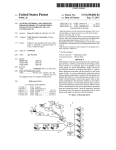
FIG. 1 is a block diagram of an exemplary embodiment of
ethernet, wireless, 802.1 lb, etc.); processing ability,
a system 1000, which can comprise one or more communi
memory, user interface, upgradablity, addressability,
etc., of the device;
cations devices 1100, 1200, 1300. Communications device
1100, 1200, and/or 1300 can be coupled, connected, and/or
user connection addressian identi?er via which other
users can communicate via the service provider’s net
work with the user, such as an e-mail address, a tele
20
installed on a local area network 1400. Also coupled, con
nected, and/or installed on a local area network 1400 can be
an information device 1500 running a network agent 1550,
which can detect one or more capabilities 1120, 1220, 1320 of
phone number, an IP address, etc.
communications devices 1100, 1200, 1300, respectively.
DETAILED DESCRIPTION
25
Information device 1500 can be coupled, connected, and/
or installed on a service provider’s network 1600. Also
Internet telephony, packet communications, home net
coupled, connected, and/or installed on a service provider’s
works, and other innovations are driving a need to change the
way that communication devices (telephones, computers,
multimedia devices, etc.) that attach to a service provider’s
network, are identi?ed, provisioned, served, and billed.
Opportunities exist to dramatically reduce the time/labor
network 1600, can be one or more servers 1700, 1800. Server
1700, possibly utiliZing a database 1740 coupled thereto, can
30
1550, and/or communications device 1100, 1200, and/or
1300. Server 1800, possibly utilizing a database 1840
required to provision services on these new devices.
coupled thereto, can provide one or more services 1820 via
network 1600 to agent 1550, and/or communications device
In certain exemplary embodiments, a “Network Agent”
can control access to a service provider’s network. The Net
35
work Agent can be implemented in software, ?rmware, and/
Each communications device 1100, 1200, 1300 can com
which one or more service options 1160, 1260, 1360, respec
tively, relating to the service provider’s network 1600 can be
work. The Network Agent can act as a proxy between a
40
In certain exemplary embodiments, a user can:
1. Subscribe to a service provider network and obtain a
45
FIG. 2 is a ?ow diagram of an exemplary embodiment of a
method 2000. At activity 2100, a network agent can be pro
vided for installation on a user’s premises. The agent can be
provided upon user request. The agent can be adapted to
couple to a service provider’s network via a physical connec
50
tion, which can comprise for example, a modem (e. g., cable,
2. Obtain a new communications device (such as a handset
or computer)
3. Use the new devices to access the service provider net
work provisioning process to request service
4. Have services authorized by the service provider
5. Provision services delivered by the service provider
DSL, telephone, wireless), optical ?ber connection, and/or
network
A typical scenario might be as follows: a customer contacts
a service provider to obtain service, and is provided with a
high bandwidth connection (e.g. cable, DSL, ?xed-wireless,
rendered to a user of communications device 1100, 1200,
1300. Service options 1140, 1240, 1340 can relate to network
1600, services 1720, 1820 available via network 1600, and/or
capabilities 1120, 1220, 1320 of communications devices
1100,1200, 1300.
and/ or enterprise network) and the public network and/or can
allow administration of the private/public boundary.
“Network Agent” interface.
1100,1200,and/or 1300.
prise a user interface 1140, 1240, 1340, respectively, via
or hardware. The Network Agent can be implemented in a
network interface, network gateway, and/ or within the net
private network (e. g., wired or wireless, LAN, IP-based home
provide one or more services 1720 via network 1600 to agent
free-space optics connection, etc. The agent can be adapted to
couple to a local area network associated with the user’s
premises.
55
At activity 2200, the agent can automatically detect instal
?ber, or free-space optics, etc.) and a local “Network Agent”
lation of a communications device on the local area network.
(perhaps housed in an interface unit such as a “set-top box”)
equipped with a wireless “home base stations”. At this point
the customer is free to purchase devices (eg telephones,
The communications device can be any information device,
such as a computer, telephone, multimedia device, etc.
computers, multimedia devices) at retail outlets (e.g.,
RadioShack, CompUSA) and bring them home. The devices
could then register through the Network Agent with the ser
vice provider’s network, could be provided with a suite of
At activity 2300, via a detector coupled to and/or integral to
60
capabilities of the communications device.
At activity 2400, via a user interface of the communica
tions device, a user can be automatically offered one or more
user-selectable service options relating to the service provid
service options, and could be provided with a network con
nection/contact address (eg telephone number, e-mail
address, IP address, username, etc.). Thus, communication
devices can be identi?ed and attached to a service provider’ s
the agent, the agent can automatically detect one or more
65
er’s network, which can include one or more services and/or
one or more servers. The one or more user-selectable service
options can relate to at least one capability of the communi