1
TUGboat, Volume 14 (1993), No. 4
With -check-values, citation key and field
values are matched against patterns to catch
irregularities and possible errors.
Dates of the month, like " J u l y 14", are converted to use month abbreviations, j u l #
" 14".
Page number ranges are converted to use endashes, instead of hyphens or em-dashes.
With -check-values, year numbers are checked
against patterns, then if no match is found, the
year values are checked against reasonable limits.
With -trace-f ile-opening, file open attempts are logged. This helps in the diagnosis
of problems such as missing files, or incorrect
file permissions.
0 On lexing or parsing errors, b i b c l e a n attempts
to resynchronize by flushing the input until it
finds the next line containing an initial @ character preceded by nothing other than optional
white space.
0 When an @ character begins a line, a new bibliography entry is assumed to have started. The
current brace balance is then tested to make
sure it is zero. A non-zero brace level is strongly
suggestive of an error, so b i b c l e a n issues an error message, and zeros the brace level.
0 At end-of-file, the brace level is tested. A nonzero brace level is very likely an error, and occasions an error message.
5
Pattern matching and initialization files
PC-DOS, PATH) and the first one in the BIBINPUTS
search path, and processes them in turn. Then,
when command-line arguments are processed, any
additional files specified by - i n i t - f i l e filename
options are also processed. Finally, immediately
before each named bibliography file is processed,
an attempt is made to process an initialization
file with the same name, but with the extension
changed to . i n i . The default extension can be
changed by a setting of the environment variable
BIBCLEANEXT. This scheme permits system-wide,
user-wide, session-wide, and file-specific initialization files to be supported.
When input is taken from s t d i n , there is no
file-specific initialization.
For precise control, the -no-init-f i l e s option
suppresses all initialization files except those explicitly named by - i n i t - f i l e filename options, either
on the command line, or in requested initialization
files.
Recursive execution of initialization files with
nested - i n i t - f i l e filename options is permitted;
if the recursion is circular, bibclean will finally get a
non-fatal initialization file open failure after opening
too many files. This terminates further initialization
file processing. As the recursion unwinds, the files
are all closed, then execution proceeds normally.
An initialization file may contain empty lines,
comments from percent to end of line (just like
option switches, and fieldlpattern or field/
patternlmessage assignments. Leading and trailing
spaces are ignored. This is best illustrated by the
short example in Table 1. Long logical lines can be
- -
m),
b i b c l e a n can be compiled with one of three different
types of pattern matching; the choice is made by the
installer a t compile time:
The original version uses explicit hand-coded
tests of value-string syntax.
The second version uses regular-expression
pattern-matching host library routines together
with regular-expression patterns that come entirely from initialization files.
0 The third version uses special patterns that
come entirely from initialization files.
The second and third versions are the ones
of most interest here, because they allow the user
to control what values are considered acceptable.
However, command-line options can also be specified in initialization files, no matter which patternmatching choice was selected.
When b i b c l e a n starts, it searches for initialization files, finding the first one in the system executable program search path(on UNIX and IBM
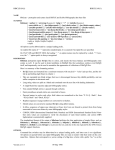
Table 1: Sample bibclean initialization file.
"/,% S t a r t with our departmental p a t t e r n s
- i n i t - f i l e /u/math/bib/.bibcleanrc
%% Make some small a d d i t i o n s
chapter = "\"D\""
%% 23
pages
= "\"D--D\""
%% 23--27
volume
= "\"D \\an\\d
D\"" %% 11 and 12
year
= \
"\"dddd, dddd, dddd\"I1 \
"Multiple y e a r s s p e c i f i e d . "
%% 1989, 1990, 1991
-no-fix-names
%% do not modify
%% a u t h o r / e d i t o r l i s t s