1
355458_2.book Page 28 Monday, March 4, 2002 5:07 PM
355458-001 RELIANCE/S active US
IMPLANTATION
28
•
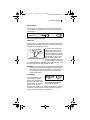
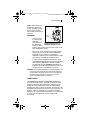
After tunneling, re-evaluate the lead to verify that no
significant change in signals or damage to the lead
has occurred during the tunneling procedure.
Reattach the lead terminals to the AICD pulse generator or
ECD cables. If the measurements are unacceptable, check
the electrical connections. A discontinuous or abnormal signal
may indicate dislodgment, a loose connection, or lead
damage. If necessary, reposition the lead electrodes until
acceptable values are obtained. To reposition the lead,
carefully withdraw the tunneled portion back to the venous
entry site. Release the permanent ligatures and reposition the
lead using procedures previously discussed.
Connection to a Pulse Generator
Consult the AICD physician’s manual for directions
concerning connecting the lead terminals to the pulse
generator.
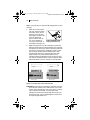
Verify the stylet is removed prior to connecting the lead to the
pulse generator.
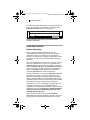
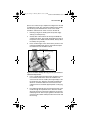
CAUTION: Insert the IS-1 lead terminal straight into the lead
port. Do not bend the lead near the lead-header interface.
Improper insertion can cause insulation damage near the
terminal ring that could result in lead damage.
Notes:
• If necessary, lubricate the lead terminal sparingly with sterile water to make insertion easier.
• If the lead terminal pin will not be connected to an AICD
pulse generator at the time of lead implantation, the lead
connector must be capped before closing the pocket incision. Place a suture around the lead cap to keep it in place.
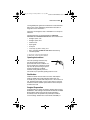
• Plug any unused DF-1 lead port on the pulse generator
with the DF-1 port plug (ENDOTAK RELIANCE S lead
only).
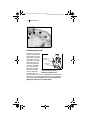
The pace/sense terminal is inserted into the AICD lead port
identified as the pacing/sensing port. The defibrillation
terminals are inserted into the AICD lead ports identified as
defibrillation, maintaining the polarity and electrode
configuration determined during DFT testing.