1
Section 2:
Adjusting The Controller For
Stable Control With Various Heaters
2.1
What is Tuning. The controller's most powerful feature is its ability to regulate virtually any heater
with stable temperature control. For stable control the controller requires two things; (1) the controller
must be set to the correct power level (see Section 3.6) and, (2) that it must be tuned to the heater being
used. Tuning is the process that matches the control characteristics of the controller to the heating
characteristics of the heater. The controller is said to be tuned to the heater when its memory is
programmed with values telling it how fast the heater warms up, cools off, and how efficiently it transfers
heat. For example, consider the difference between a heat lamp and a hot plate. When electricity is
applied to a heat lamp it begins to heat instantaneously, and when it's turned off it stops heating
instantaneously. In contrast, a hot plate may take several minutes to begin heating when electricity is
applied and even longer to start cooling when electricity is turned off. Your controller can regulate both a
heat lamp and a hot plate to 0.1o C. But, to do this it must be programmed with the time constants
describing how fast the heater heats when electricity is turned on and how fast it begins to cool when it's
turned off. These time constants are called the tuning parameters. Tuning has no affect on the cooling
outlet.
Every type of heater has its own unique set of tuning parameters. For the controller to heat with
stability, it must have programmed with the tuning parameters for the heater currently being used. Prior to
shipment, tuning parameters were programmed into the controller that maximize heating performance for
laboratory heating mantles since these are the most common heaters used in research. Tuning is regulated
by 5 of the temperature meter’s user programmable functions. The correct value for these 5 functions can
be calculated and loaded by the user manually, or the controller can do it automatically with its autotune
feature
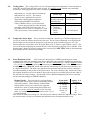
When Should the Controller be Tuned? If the controller is tuned to one type of heater, heating
mantles for example, any size heating mantle can be used without the need to retune. When changing
from heating mantles to a different type of heater, an oven for example, the controller should be tuned
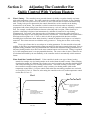
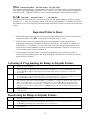
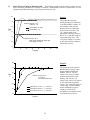
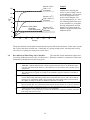
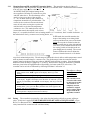
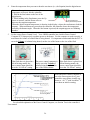
with values describing the oven’s heating characteristics. The effect of tuning is seen below. When
the controller is tuned for heating mantles, using it with any size-heating mantle yields stable
temperature control (Plot 1), but poor control results when the same tuning parameters are used with
an oven (Plot 2, Curve 1). However, after tuning the controller to the oven, stable temperature control
results (Plot 2, Curve 2).
Plot 2
Plot 1
80
80
70
70
60
Temp.
o
C
50
Conditions: 100 ml Toluene
250 ml Round bottomed flask
250 ml Heating mantle
Power Setting = 50 - 500 ml
40
40
30
30
20
0
10
20
30
Time (min)
40
50
Curve 2: Controller loaded with
tuning parameters for
drying oven
60
Temp.
o
C
50
60
6
Curve 1: Controller loaded with
tuning parameters for
heating mantles
20
0
10
20
30
40
Time (min)
50
60