1
LT2510
Wireless Module
OVERVIEW AND
KEY FEATURES
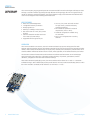
The LT2510 Frequency Hopping Spread Spectrum Transceiver Module from Laird Technologies is the latest in robust
and easy to use radio modules. Supporting both high data rates and long ranges, the LT2510 is a great fit for any
number of machine to-machine applications. The LT2510 features an easy to use serial UART with hardware flow
control for fast integration into an existing serial infrastructure.
KEY FEATURES
• Retries and acknowledgements
• Configurable network parameters
• Multiple generic I/O
• 280 kbps or 500kbps RF data stream
• Idle current draw of 12mA, sleep current
of 50uA
• Software selectable interface baud rates
from 1200 bps to 460.8 kbps
• Upgradable FW through serial port
• Low cost, low power and small size ideal
for high volume, portable and battery
powered applications
• All modules are qualified for Industrial
temperatures (-40°C to 85°C)
• Advanced configuration available using
AT commands
• Easy to use Configuration & Test Utility
software
OVERVIEW
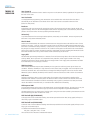
The LT2510 is available in two versions, one with 125mW conducted output power and approved for North
American and similar markets and one with 50mW conducted output power and approved for European and similar
markets. These modules are identical except for output power, transmit power consumption, and the number of RF
Channels available. Differences between the two versions, where applicable, will be denoted based on part number.
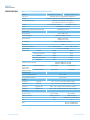
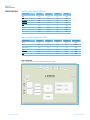
This document contains information about the hardware and software interface between a Laird Technologies
LT2510 transceiver and an OEM Host. Information includes the theory of operation, specifications, interface
definitions, configuration information and mechanical drawings.
Note: Unless mentioned specifically by name, the LT2510 modules will be referred to as “radio” or “transceiver”.
Individual naming is used to differentiate product specific features. The host (PC/Microcontroller/Any device to which
the LT2510 module is connected) will be referred to as “OEM Host” or “Host.”
2 www.lairdtech.com
Laird Technologies