1
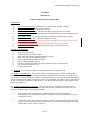
COMFLTFORCOMINST 4790.3 REV B
VOLUME IV
CHAPTER 22
SUBMARINE ANTENNA TESTING
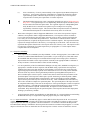
REFERENCES.
(a)
NAVSEA S9425-CG-STD-010 - Installation Standards for Submarines
22.1 PURPOSE. To provide Type Commander policy with respect to pressure testing submarine communication
antennas. This policy is not applicable to non-communication masts and cables. Amplifying information is
contained in reference (a).
22.2 BACKGROUND. Submarine antennas and associated cable connections between the antenna and electrical
hull fitting are sensitive to seawater intrusion. In the event that seawater enters an electrical hull fitting or radome
and is subsequently used for transmission, significant component damage may occur. Also, if the antenna floods
and sea water stays in the antenna until the next maintenance availability the antenna is usually a complete loss.
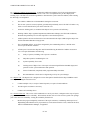
22.3 POLICY.
22.3.1 Hydrostatic Pressure Testing. Hydrostatic pressure testing of submarine antennas with cables attached prior
to initial installation is mandatory except for buoys and floating wires. This pre-installation test is intended solely to
verify the correctness of the final assembly and does not equal or replace the more elaborate acceptance testing
required for various individual manufactured components.
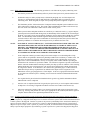
22.3.2 Fleet Maintenance. Maintenance actions conducted by Fleet Maintenance Activities or Ship's Force
regarding the watertight integrity test requirements between submarine antennas and their respective hull
connectors, shall be as follows:
a.
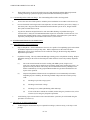
When the antenna or cable is disconnected or replaced shipboard, the Technical Work Document will
include the checks below in the assembly procedure to reconnect the cable to the base of the antenna
and/or electrical hull fitting:
(1)
Craftsman verification that surface finishes of O-ring seating surfaces are in accordance with
applicable specifications.
(2)
Craftsman verification that the O-ring is properly installed and in accordance with applicable
specifications.
b.
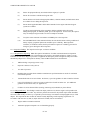
Prior to performing the deep dive certification after a maintenance action, passive/pre-energize testing
shall be performed in accordance with the system specific Technical Manuals or Maintenance Index
Pages/Maintenance Requirement Cards (MIP/MRC) to certify clear Radio Frequency and Control Lines
before power is applied or a transmission is attempted. This practice shall apply each time the antenna
system is used.
c.
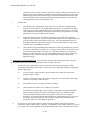
Upon completion of the maintenance action, a deep dive shall be performed by the ship to certify that
watertight integrity has been restored to the antenna system. After performing the deep dive,
passive/pre-energize testing shall be performed in accordance with the system specific Technical
Manuals or MIPs/MRCs to ensure the system is not grounded.
IV-22-1