1
Proceed with caution if any of these lithium ion watch-out situations are encountered.
• The voltage drops bellow 3.0 volts or rise above 4.20 volts
• The battery is or will be discharged above at 2C (includes short-circuiting).
• The battery is or will be charged above at 1C.
• The battery temperature falls below -20°C or rises above 60°C.
Basic Charging
Lithium batteries are not subject to any charge memory and will suffer no ill effects from
receiving fractional charges as long as the charging is done correctly. Lithium based
batteries need to be charged in a very specific manor. This means that a special charger
set on special settings is mandatory. Failure to correctly charge a lithium ion battery will
end catastrophically.
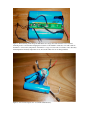
To charge the VAST standard battery (as seen in Figure 2, may be white or black) with a
Thunder Power Digital Balancer and Charger/Discharger:
1. Connect the positive and negative charger input leads to a stable 12 volt power
supply.
2. Connect the charger connector to the battery pack.
3. Hold down SEL MODE to enter and exit the charging mode menues. Press SEL
MODE to go on to the next category.
4. Select: LiPo, 95% or 100% Charge, PLUS CHARGE OFF, CUT OFF 3.00V,
TimeOut 10 MIN, EXTERNAL BALANCER, BEEPER ON or OFF, INPUT PWR
12.00V, SYSTEM TIMEOUT 5 Hour.
5. After exiting the charging mode menu and reentering the operational screen press the
ENT/STOP button to move between categories and select 3s and C=0.8A. Hold down
the ENT/STOP button to begin charging. If the charger detects something wrong it
will beep, refuse to charge, and display possible miss-settings. When the charger tries
to detect an external balancer hit INC to skip the process. The Charger will then go
into a brief initial charge before continuing on with the main charging process.
For more information see TP610C User’s Manual.
Advanced Charging
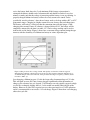
Safely charging a lithium ion battery is as simple as putting energy into it without
violating any of the watch out situations as specified earlier. If any kind of custom
charging is attempted the charging voltage must not exceed 4.2 volts and the charging
current must not exceed 1 C. This is known as constant voltage current limiting charging.
It is less stressful on a battery if a lower charging current is used. 0.5 C to 0.7 C is a
commonly recommended charging current. A charging procedure (3 V to 4.2 V) starts
with applying 4.2 volts to a cell at a current not to exceed a chosen safe level. Once the
battery reaches 4.2 volts the current will start to taper as more energy saturates into the
depths of the battery. The battery is fully charged when the current naturally slows to 0.1
C. If a lithium battery is below 3 volts a charging current of 0.1 C or less may be able to