1
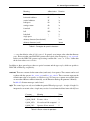
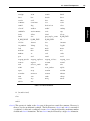
Operation
Meaning
HALCON operator
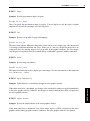
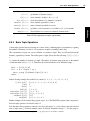
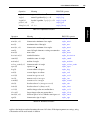
lsh(i1,i2)
left shift
tuple_lsh
rsh(i1,i2)
right shift
tuple_rsh
i1 band i2
bitwise and
tuple_band
i1 bxor i2
bitwise xor
tuple_bxor
i1 bor i2
bitwise or
tuple_bor
bnot i
bitwise complement
tuple_bnot
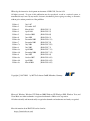
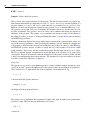
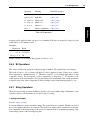
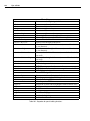
Table 8.9: Bit operations.
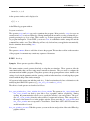
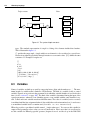
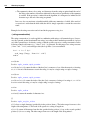
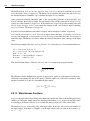
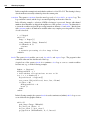
negation) can be applied to either integer or real numbers. If at least one operand is of type real, the
result will be a real number as well.
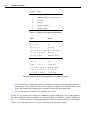
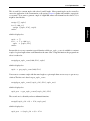
Examples:
Expression
4/3
4/3.0
(4/3) * 2.0
Result
1
1.3333333
2.0
Simple examples can be found in the program arithmetic.dev.
8.5.6
Bit Operations
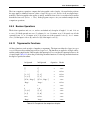
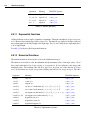
This section describes the operators for bit processing of numbers. The operands have to be integers.
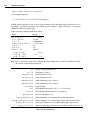
The result of lsh(i1,i2) is a bitwise left shift of i1 that is applied i2 times. If there is no overflow
this is equivalent to a multiplication by 2i2 . The result of rsh(i1,i2) is a bitwise right shift of i1 that
is applied i2 times. For non-negative i1 this is equivalent to a division by 2i2 . For negative i1 the
result depends on the used hardware. For lsh and rsh the result is undefined if the second operand has
a negative value or the value is larger than 32. More examples can be found in the program bit.dev.
8.5.7
String Operations
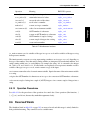
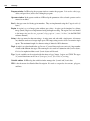
There are several string operations available to modify, select, and combine strings. Furthermore, some
operations allow to convert numbers (real and integer) to strings.
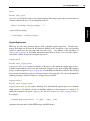
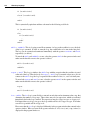
$ (string conversion)
See also: tuple_string
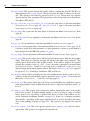
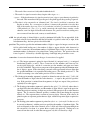
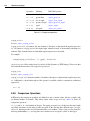
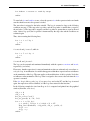
$ converts numbers to strings or modifies strings. The operation has two operands: The first one (left of
the $) is the number that has to be converted. The second one (right of the $) specifies the conversion.
It is comparable to the format string of the printf() function in the C programming language. This
format string consists of the following four parts
181
Language
8.5.6 Bit Operations