1
duce hot-spots in the hash table was not as significant since
so few entries stayed in the hash table (about 600–700 out
of 16384) at one time due to the flushing of ranges of PTEs.
Even with this little of the hash table in use we measured
85% — 95% hit rates in the hash table on TLB misses. To
increase the percentage of hash table use, we could have
decreased the size of the hash table and free RAM for use
by the system but in performing these benchmarks we decided to keep the hash table size fixed to make comparisons more meaningful. This choice makes the hash table
look inefficient with some optimizations but the net gain in
performance as measured by hit rate in the hash table and
wall-clock time shows it is in fact an advantage.
Another advantage of the idle task invalidating PTEs was
that TLB reload code was usually able to find an empty entry in the hash table during a reload. This reduced the number of evicts so the ratio of evicts to TLB reloads became
30% instead of the greater than 90% we were seeing before.
This reduced number of evicts also left the hash table with
more in-use PTEs so our usage of the hash table jumped to
1400–2200 from 600–700 entries, or to 15% from 5%. The
hit rate in the hash table on a TLB miss also increased to as
high as 98% from 85%.
Using lazy TLB flushes increased pipe throughput by
5 MB/s (from 71 MB/s) and reduced 8-process context
switch times from 20s to 17s. However, the system
continued to spend a great deal of time searching the hash
table because for certain operations, the OS was attempting to clear a range of virtual addresses from the TLB and
hash table. The OS must ensure that the new mappings are
the only mappings for those virtual addresses in the TLB
and hash table. The system call to change address space is
mmap and LmBench showed mmap() latency to be more
than 3 milliseconds. The kernel was clearing the range of
addresses by searching the hash table for each PTE in turn.
We fixed this problem by invalidating the whole memory
management context of any process needing to invalidate
more than a small set of pages. This effectively invalidates
all of the TLB entries of this process. This was a cheap operation with the mechanism we used since it just involved a
reset of the VSID whose amortized cost (later TLB reloads
vs. cost of flushing specific PTEs) is much lower. Once the
process received a new VSID and its old VSID was marked
as zombie, all the process’ PTEs in the TLB and hash table
were automatically inactive. Of course, there is a performance penalty here as we invalidate some translations that
could have remained valid, but using 20 pages as the cutoff
point mmap() latency dropped to 41 — an 80 times improvement. Pipe bandwidth increased noticeably and several latencies dropped as well. These changes come at no
cost to the TLB hit rate since no more or fewer TLB misses
occurred with the tunable parameter to flushing ranges of
PTEs. This suggests that the TLB entries being invalidated
along with target range of TLBs were not being used anyway - so there is no cost for losing them.
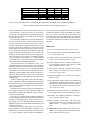
Table 2 shows the 603 doing software searches of the
hash table and a 604 doing hardware searches with the effect of lazy TLB flushes. Note that the 603 hash table
search is using software TLB miss handlers that emulate
the 604 hardware search. This table shows the gain from
avoiding expensive searches in the hash table when a simple resetting of the VSID’s will do.
8 Cache Misuse on Page-Tables
Caching page-tables can be a misuse of the hardware. The
typical case is that a program changes its working set,
which adds a particular page. That page is referenced and
its PTE is brought into the TLB from the page-tables and
during that TLB reload the PTE is put in the data cache.
On the 604 the PTE is also put into the hash table, which
creates another cache entry. TLB reloads from page-tables
are rare and caching those entries only pollutes the cache
with addresses that won’t be used for a long time.
Caching page tables makes sense only if we will make
repeated references to adjacent entries, but this behavior
does not occur nor is it common for page-table access patterns. For this to be common, we’d need to assume that
either the page accesses (and PTEs used to complete those
accesses) or cache accesses do not follow the principle of
locality. The idea behind a TLB is that it’s rare to change
working sets and the same is true for a cache.
This is especially important under Linux/PPC since the
hardware searched hash table (the PowerPC page-table) is
actually used as a cache for the two level page table tree
(similar to the SPARC and x86 tables). This makes it possible in the worst case for two separate tables to be searched
in order to load one PTE into the TLB. This translates into
16 (hash table search and miss) + 2 (two level page table
search) + 16 (finding a place to put the entry in the hash table) = 34 memory accesses in order to bring an entry into
the hash table. If each one of these accesses is to a cached
page there will be 18 new cache entries created (note that
the first and second 16 hash table addresses accessed are
the same so it is likely we will hit the cache on the second
set of accesses).
By caching the page-tables we cause the TLB to pollute
the cache with entries we’re not likely to use soon. On the
604 it’s possible to create two new cache entries that won’t
be used again due to accessing the hash table and the twolevel page tables for the same PTE. This conflict is nonproductive and causes many unnecessary cache misses. We
have not yet performed experiments to quantify the number
of cache misses caused by caching the page-tables but the
results of our work so far suggests this has a dramatic impact on performance.
9 Idle Task Page Clearing
Clearing pages in the idle task is not a new concept but
has not been popular due to its effect on the data cache.
For the same reason we did not use the PowerPC instruction that clears entire cache lines at a time when we implemented bzero() and similar functions. This problem
illustrates the effect the operating system has on perfor-