1
APPENDIX A: SELF-ADHERING PAVING STRIP MEMBRANE
GUIDE SPECIFICATION
DESCRIPTION
This work shall consist of furnishing and placing an asphalt-coated paving fabric reinforced
membrane over pavement cracks, joints and other pavement distress areas prior to placement
of a pavement overlay. The membrane shall be installed as indicated on the plans and contract
documents.
MATERIAL REQUIREMENTS
The pavement repair membrane shall be a nonwoven, needle-punched, polypropylene fabric
coated with rubberized asphalt adhesive on the bottom and top-coated with an asphalt tack
coat. A release sheet, which is removed just prior to placement, shall cover the adhesive. The
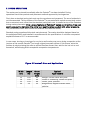
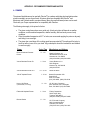
membrane shall meet the physical requirements specified in Table 1.
Table 1 Physical Requirements of Pavement Repair Membrane
P roperty
Test Method
Units
Strip tensile
ASTM D 8822
lb/in
50
Puncture resistance
ASTM E 154
lb
200
Permeance
ASTM E 96
perms
0.05 (max)
Method B
ASTM D 1463
N/A
No cracks in fabric
or rubberized asphalt
Pliability
Val ue 1
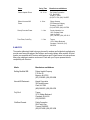
Notes
1 Minimum average roll values unless otherwise noted
2 Using 12 in/min test speed and 1" initial distance between grips
3 Using 180° bend on ¼" mandrel at -25°F
Materials shall be stored and handled in accordance with the manufacturer's
recommendations.
Incidental materials recommended by the manufacturer for proper membrane installation,
such as primer, tack coat, and mastic, shall be furnished and used in accordance with the
manufacturer's recommendations.
USE
Pavement repair membrane is used for repair of pavement cracks, joints, and other pavement
distress areas. It is applied in strips over cracks and joints in Portland cement or bituminous
concrete pavements. The membrane adheres to the existing surface and is then overlaid with a
bituminous concrete overlay using standard paving procedures.