1
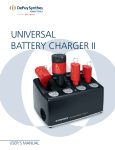
ReUSAbLe
STeRILIzATION
CONTAINeR
SySTeM.
Validated container system for the
DePuy Synthes Companies (Trauma & CMF)
instrument and implant sets.
USeR'S MANUAL
Table of Contents
INTRODUCTION
Product Overview
2
INSTRUCTIONS
Container Disassembly
3
Container Filter Components and Assembly
5
Container and Tray Assembly
9
ADDITIONAL INFORMATION
Container Cleaning
12
Container Sterilization
15
Container Aseptic Presentation
18
General Precautions
22
Preventative Maintenance Checklist
24
Warranty24
Return / Repair Policy
25
Indications26
Product Part Numbers
29
Reusable Sterilization Container System User's Manual 1
Product Overview
The DePuy Synthes Reusable Sterilization Container System
is an assortment of rigid, reusable containers that are
used to sterilize other medical devices and maintain the
sterility of these devices for up to 180 days. It is the
only container system that has been validated for the
DePuy Synthes Companies (Trauma & CMF) instrument
and implant sets. The container system is comprised of an
anodized aluminum rivet-less case assembly (perforated lid
with either perforated or solid bottom) with silicone gasket
assembled together using a stainless steel dual action
latching mechanism. The perforated lids and bases have
perforated retention plates that are intended to secure
SMS Polypropylene filters in place over the sterilant access
holes to allow air evacuation and steam sterilant
penetration during the sterilization cycle and to act
as a barrier to microorganisms during storage, handling
and transport.
The DePuy Synthes Reusable Sterilization Container System
also includes single use filters and tamper-evident arrows
with process indicators and data cards. The system makes
use of a stainless steel lifting platform to hold graphic
cases containing orthopaedic instruments and implants
within the container for sterile processing.
Retention Plate
Filter
Testing of assembled, loaded
containers up to a weight of 25 lb. (11.3 kg)
has demonstrated that the contents can be effectively
sterilized when the validated sterilization parameters
are followed*.
*Hospitals should refer to AAMI/AORN guidelines on weights and weight limit.
Please refer to the Indications section for specific information regarding the types of
devices and materials that are compatible with the sterilization container system.
2 Reusable Sterilization Container System User's Manual
Optional Protective Plate
Lid
Container Disassembly
All container components should undergo a complete decontamination process after
each use. In preparation for thorough cleaning, the container should be fully
disassembled and decontaminated either mechanically or manually. See Container
Cleaning for complete cleaning recommendations.
1. Open the lid
Supporting the upper latch with thumb, place fingers
under bottom latch plates on both ends of the container.
Gently pull upward and outward on bottom latch plates.
Simultaneously open both latches. This disengages the lid
from the bottom.
With the latch in the upright position, lift lid from
the bottom.
2. Remove lifting platform from the
container (if applicable)
Ensure lifting platform handles are angled toward the
center during removal to prevent binding of lifting
platform handle with container.
Reusable Sterilization Container System User's Manual 3
Container Disassembly
3. Remove Retention Plates
from container lid and bottom
(if applicable)
Apply downward pressure on the retention plate near the
lever and simultaneously rotate the cam lever away from
the indentation protruding from the side of the lid.
Discard the used filter - do not reuse.
Remove the optional protective plate from the lid,
if applicable.
4. Remove remaining single
use accessories
Inspect for tamper-evident arrow fragments that might be
remaining under the handles in the arrow space on both
sides of the container bottom. Discard fragments.
Remove data card from container.
Note: The data card may be retained as a record.
4 Reusable Sterilization Container System User's Manual
Container Filter Components
and assembly
All DePuy Synthes Sterilization Containers use the same filter (62.010.002) and are validated for pre-vacuum steam
sterilization only.
The optional protective plate is shipped with the lid of every new container. The protective plate is for use with the prevacuum steam sterilization modality. Validated lethality and shelf life are achieved independent of optional protective
plate use (i.e., use of this plate does not have an impact on shelf life). While the offset perforations of the lid and
retention plate provide additional protection to the filter material, the use of the optional protective plate helps prevent
puncture of the filter material from external objects.
1.
If the optional protective plate is used in the lid, place the
optional protective plate directly over the perforations
(sterilant access holes).
Note: The optional protective plates should be
properly aligned with the rectangular shaped
sterilant areas of the lid.
Caution: The optional protective plate has not been
validated for use in the container bottom.
Reusable Sterilization Container System User's Manual 5
Container Filter Components and Assembly
2.
Place a new filter on top of the optional protective plate
and over the entire filter ridge surrounding each sterilant
access hole area in the container lid or bottom.
Alternative step if optional protective plate is not
used: Place a new filter directly over the perforations
(sterilant access holes) and over the entire filter ridge
surrounding each sterilant access hole area in the
container lid or bottom.
Note: The filter should overlap the filter ridge
on all four sides and will be secured between
the filter retention plate and the lid or bottom
when assembled.
Cautions:
•
•
•
•
•
•
Make sure filter does not overlap itself or become
wrinkled or creased.
Filters are for single use only and must be discarded
after each process.
Do not use more than one filter per sterilant access
hole area.
Each sterilant access (set of perforated holes) area
requires one filter.
The filter must completely cover each plate area.
Filters other than part number 62.010.002 have not
been validated for use with the DePuy Synthes
Sterilization Container System.
6 Reusable Sterilization Container System User's Manual
Container Filter Components and Assembly
3.
Place the retention plate on top of the filter.
Use the two alignment tabs on the filter retention plate to
properly position it under the indentations.
Make sure the retention plate is firmly seated under the
indentation in the container lid or base.
Note: The filter retention plates are stamped
“BOTTOM” or “TOP” as a guide for
appropriate placement.
Reusable Sterilization Container System
User's Manual
1
Container Filter Components and Assembly
4.
Apply downward pressure to the plate near the lever and
rotate the retention plate lever toward the indentation
protruding from the side of the container.
Note: Make sure the lever is rotated completely to
the side of the container and the retention plate is
locked firmly in place.
Caution: The filter must be placed between the
optional protective plate (if used) and the
retention plate.
Lid with assembled filter components.
8 Reusable Sterilization Container System User's Manual
Container and tray Assembly
1.
Confirm that the lid (and bottom, if perforated) has the
appropriate filters and retention plates in place.
2.
If needed, select the appropriately sized lifting
platform and place instruments/implants set onto the
lifting platform.
Note: The use of lifting platform is required when
using a perforated bottom container to hold the
contents and avoid damaging the filter areas. It is
not required for solid bottom containers.
3.
Place instrument and/or implant set into the container.
Notes:
•
•
•
Instrument trays from no more than one (1) loaded
graphic case can be placed in the container.
The container should never be overloaded with medical
devices. Ensure devices are properly placed inside the
container so nothing is protruding over the top that
could interfere with closure of the lid.
If the lifting platform is used, ensure the lifting platform
handles are angled toward the center during placement
of set into the container.
4.
Place an internal processing indicator, or integrator, in the
set according to hospital protocols and policies. If the
data card is to be used, place it in the data card block
prior to putting the lid on the container.
5.
Properly seat the lid on container bottom.
Reusable Sterilization Container System User's Manual 9
Container and Tray Assembly
Lock the Container
1.
Interlock lid-latch component with base latch component
on both sides.
2.
Press down with smooth continuous pressure until an
audible snap is heard, confirming the latch is secured.
11 Reusable Sterilization Container System User's Manual
Container and Tray Assembly
Insert the Tamper-Evident Arrows
1.
Move the carrying handle to an upright position.
2.
Orient the arrow so that the chemical indicator dot is
facing outward.
3.
Insert one arrow (62.010.004) into the open channel
found under the right data block that holds the data card.
4.
Advance the arrow until both sets of tabs have completely
passed through the channel and are visible. When fully
inserted, the tail portion of the arrow should be flush with
the channel.
5.
Grasp the arrow end with the indicator dot and gently
pull back on the arrow to ensure that it is correctly placed
and secure.
6.
Repeat steps 3 through 5 for the other end of
the container.
Not Fully Inserted
When completed, the container should have two fully
inserted and secured tamper-evident arrows in place.
Fully Inserted
Reusable Sterilization Container System User's Manual 11
Container Cleaning
After each use, the containers and the lifting platforms should be washed with a
properly diluted, enzymatic / neutral pH detergent solution recommended for use on
anodized aluminum. A neutral pH is defined as 7. The post-dilution pH level should not
be below 7 or exceed 9.
Caution: A detergent with a highly acidic or highly alkaline pH could
permanently damage the anodized finish of the container. Alcohol is not
recommended for manual cleaning or wiping down. All cleaning agents should
be thoroughly rinsed off prior to any sterilization process to remove all residual
chemicals which could damage the protective anodized finish. Do not use
abrasive cleaners, abrasive cleaning pads, or metal brushes on container
surfaces. Use of these abrasive materials could potentially damage the protective
anodized finish of the container.
DePuy Synthes Instruments and Implants should be reprocessed according to the
instructions provided in the Processing Synthes Reusable Medical Device – Instruments,
Instrument Trays, and Graphic Cases (DJ1305) and the Processing Non-sterile Synthes
Implants (DJ1304) documents prior to being placed in a DePuy Synthes Container.
The container components may be processed in a mechanical washer or processed by
hand. Do not clean the anodized container or container components (bottom, lid,
retention plate, or optional protective plate) in an ultrasonic washer. Use of ultrasonic
washer could potentially damage the protective anodized finish of the container.
Pre-cleaning Instructions
It is recommended that containers be reprocessed as soon as is reasonably practical
following use. Containers should be transported via the institution’s established
transport procedure.
Initiate cleaning of device within 2 hours of use.
Excess gross soil should be removed as soon as possible after use by rinsing or wiping
the device.
All containers must be processed in the completely open and disassembled (i.e., takenapart) configuration. Disassembly should not require any mechanical tooling (i.e.,
screwdriver, pliers, etc.) unless otherwise indicated.
11 Reusable Sterilization Container System User's Manual
Container Cleaning
Cleaning – Manual Method
1. Disassemble device, if device is able to be disassembled prior to cleaning.
2. Rinse soiled device under running cold tap water for a minimum of two minutes.
Use a soft-bristled brush to assist in the removal of gross soil and debris.
3. Soak device in neutral pH enzymatic cleaner or detergent solution for a minimum of
ten minutes. Follow the enzymatic cleaner or detergent manufacturer’s instructions
for use for correct exposure time, temperature, water quality and concentration.
4. Rinse device with cold water for a minimum of two minutes. Use a syringe, pipette,
or water jets to flush lumens, channels and other hard to reach areas. Actuate joints,
handles and other moveable device features, if applicable, in order to rinse
thoroughly under running water.
5. Manually clean device for a minimum of five minutes in a freshly prepared neutral
pH enzymatic cleaner or detergent solution. Use a soft-bristled brush to remove soil
and debris. Actuate joints, handles and other movable device features to expose all
areas to the detergent solution, if applicable. Clean device under water to prevent
aerosolization of contaminates.
Note: Fresh solution is a newly-made, clean solution.
6. Rinse device thoroughly with deionized (DI) or purified (PURW) water for a minimum
of two minutes. Use a syringe, pipette or water jet to flush lumens and channels.
Actuate joints, handles and other moveable device features in order to rinse
thoroughly under running water, if applicable.
7. Visually inspect device. Repeat the manual cleaning procedure (steps 2-6) until no
visible soil remains on device.
8. Perform a final rinse on device using DI or PURW water.
9. Dry device using a clean, soft, lint-free cloth or clean compressed air.
Reusable Sterilization Container System User's Manual 11
Container Cleaning
Cleaning – Mechanical Method: Mechanical washer
1. Disassemble device, if device is able to be disassembled, prior to cleaning.
2. Rinse soiled device under running cold tap water for a minimum of one minute.
Remove gross soil using a bristled brush or soft lint-free cloth.
3. Manually clean device for a minimum of two minutes in a freshly prepared neutral
pH enzymatic or detergent solution. Follow the enzymatic cleaner or detergent
manufacturer’s instructions for use for correct dilution, temperature, water quality
and exposure time. Use a soft-bristled brush to remove soil and debris. Actuate
joints, handles and other moveable device features to expose all areas to detergent
solution. Clean device under water to prevent aerosolization of contaminants.
Note: Fresh solution is a newly-made, clean solution.
4. Rinse device using cold to lukewarm running tap water for a minimum of one
minute. Use a syringe, pipette or water jet to flush lumens and channels. Actuate
joints, handles and other moveable device features in order to rinse thoroughly
under running water.
5. Visually inspect device.
6. Mechanical Washer process (Pre-cleaning steps 2-5 should occur prior to this step.):
Cycle
Minimum Time (minutes)
Minimum Temperature/Water
Type Detergent
Pre-Wash
2
Cold tap water
N/A
Wash I
2
Cold to Warm tap water
Neutral enzymatic pH between 7 and 9
Wash II
5
Warm tap water (>40°C)
Detergent with pH between 7 and 9
Rinse
2
Warm DI or PURW (>40°C)
N/A
Dry
4090°C
N/A
7. Visually inspect device. Repeat steps 2 - 6 until no visible soil remains on device.
11 Reusable Sterilization Container System User's Manual
Container Sterilization
Recommended Sterilization Cycle Parameters
The following recommendations may include sterilization temperature/exposure
parameters and maximum loads different than those which your institution commonly
uses. Since individual sterilizers may perform differently, it is important to conduct
individual sterilizer testing of containerized instrument sets using biological and chemical
indicators to verify exposure times and to determine adequate sterilizing parameters in
your particular facility.
These recommendations represent specific validated settings, but are not inclusive of all
possible combinations of settings and variables which could produce acceptable results.
The recommendations below were generated to cover a worst case DePuy Synthes
Sterilization Container with typical load contents. The end user is ultimately responsible
for establishing and following protocols to ensure properly sterilized and dried sets.
Sterilizers vary in design and performance characteristics. It is strongly recommended
that the user verify the cycle parameters for the specific sterilizer prior to use. It is
important to verify the parameters in conjunction with the sterilizer, load contents and
any other processing accessories that may be used. Adjusted cycle times or dry times
may be required to properly sterilize and dry desired loads.
Specific Recommendations for Accessories
and Containers
Pre-vacuum Steam Sterilization Cycle for all Perforated and Solid
Bottom Containers
•
Exposure Temperature 270°F (132°C)
•
Preconditioning Pulses 3
•
Exposure Time 4 minutes
•
Minimum Dry Time Cycle with total weight of 25 lbs. (11.36 kg) 30 minutes*
*When applying dry times to DePuy Synthes instrument & implant sets and their accessories, dry times outside the standard
healthcare pre-vacuum parameters may be required. The current recommended dry times for DePuy Synthes sets can range
from a standard 20 minutes to an extended time of 60 minutes. The dry time is frequently influenced by the presence of
polymer based (plastic) materials; therefore, changes such as reduced weight, and/or elimination of silicone mats can reduce
necessary dry time. Dry times may be highly variable due to differences in environmental conditions, steam quality, device
materials, total mass, sterilizer performance and varying cool down time. The user should employ verifiable methods (e.g.
visual inspections) to confirm adequate drying.
Reusable Sterilization Container System User's Manual 11
Container Sterilization
Precautions
•
•
•
•
•
•
•
•
•
Do not obstruct the sterilant access holes. These holes allow the exchange of air and
penetration of sterilant into and out of the container. When these access holes are
blocked it can impede this exchange process. Under pre-vacuum steam, this blockage can
cause the container to collapse.
Stacking the containers during sterile processing is not permitted.
No more than one (1) fully loaded graphic case can be placed directly into a
DePuy Synthes Sterilization Container.
Stand-alone modules/racks or single devices must be placed, without stacking, on a lifting
platform to ensure optimal ventilation.
Do not use adhesive tape on the container. Removal of adhesive residue may result in
cosmetic damage to the container.
The use of basket liners may cause condensate to pool.
Sterilize container and contents using hospital protocol. Since sterilizers vary in design and
performance characteristics, it is strongly recommended that the user verify the cycle
parameters for the specific sterilizer and types of instruments being sterilized prior to use.
DePuy Synthes Sterilization Containers are only approved for pre-vacuum steam
sterilization. This information is located in the Sterility Assurance Instructions for Use (SA
IFUs) which can be accessed through the DePuy Synthes Companies internet site, at the
following address: http://www.synthes.com/cleaning-sterilization
Only the recommended filters, tamper-evident arrows, data cards, lifting platforms and
repair parts are validated for use with the DePuy Synthes Reusable Sterilization Container
System. Do not use unauthorized single use accessories or container components.
Warnings
Do not use filter materials in the presence of flammable anesthesia. A safety hazard
may occur.
Loading and Cooling
When fully assembled, the container is ready for sterile processing. DePuy Synthes
Container is only indicated for pre-vacuum steam sterilization.
•
•
The containers should be positioned flat on the cart and not placed on their sides or
upside down.
Do not place containers above wrapped items.
11 Reusable Sterilization Container System User's Manual
Container Sterilization
Cautions
•
•
•
Do not remove containers from the carrier until cool to touch or place warm
containers on cold tabletops. Proper cool down is necessary to prevent wet sets or
re-condensation from forming.
Eliminate drastic temperature differences by keeping the containers away from cool
ventilation ducts or cool drafts. Rapid cooling can cause condensation to form
resulting in wet sets.
Do not place processed containers into the sterile storage area until they reach
room temperature.
•
Make sure sterilant access holes (perforations) on the containers are not obstructed.
•
Always practice safe lifting and handling of heavy objects.
•
Minimum cool time: 60 minutes (may vary according to load contents).
Cart Loading Guidelines
Always place containers flat on shelves.
180-Day Event-Related Shelf-Life Study
DePuy Synthes test containers were sterilized using pre-vacuum steam sterilization. The
fully loaded containers were transferred to wire storage shelves and held for 180 days.
The containers were periodically rotated to simulate normal handling and to provide an
equal challenge to all units. After 180 days, the units were assessed for sterility. The
contents of all containers were sterile, indicating that sterility was maintained for the
indicated event-related shelf life duration.
Note: Do not stack more than four (4) containers high during storage.
Reusable Sterilization Container System User's Manual 11
Container Aseptic Presentation
The DePuy Synthes Reusable Sterilization Container System provides the operating room
personnel with an exterior tamper-evident arrow to help visually communicate that the
container has been subjected to a sterilization process and has not been tampered with
(opened) prior to its intentional opening at the point of use.
Chemical and/or biological indicators may be incorporated into the assembly process and
provide critical information to the end user to establish whether the internal contents are
safe to use. The indicator to be used is the decision of the hospital based on individual
hospital protocol and current guidelines.
Inspection should also be conducted at the point of use to ensure that the filter has
been inserted properly, that the retention plate is secure and there is no visible damage
to the gasket found in the lid and that contents are dry. If the filter is missing, the
retention plate is not secure, the gasket is visibly damaged, the arrow is missing or
broken, or the dot has not changed color the container should be considered
contaminated and not used.
Inspecting these external and internal devices is important prior to placing any contents
into the sterile field. The container itself is not to be placed into a sterile field because
the container exterior is not sterile.
In general, the contents are removed by carefully lifting them up and away from the
container bottom edge (lip) and placed into the sterile field.
11 Reusable Sterilization Container System User's Manual
Container Aseptic Presentation
Sterility Maintenance Guidelines
The contents of a container should not be considered sterile if any of the following
conditions are present:
•
A filter is missing from any of the perforated areas.
•
A retention plate is dislodged or not fully engaged.
•
A filter does not cover the raised edges (filter ridge) surrounding the perforated areas
on the lid or bottom.
•
A filter is wet.
•
A filter is damaged, torn, ripped, punctured, or creased (folded over onto itself).
•
More than one filter per filter retention area is used for processing or the filter material
has been folded forming more than one layer over the perforations.
•
A filter has been reused.
•
A tamper-evident arrow is missing or broken in either of the two data blocks.
•
The indicator dot is missing from the tamper-evident arrow at the time of opening.
•
The indicator dot does not indicate a noticeable color change.
•
•
•
•
•
There is no internal chemical indicator found in the basket when opened (if hospital
protocol dictates that one should be present).
The internal chemical indicator (if present, per hospital protocol) does not indicate the
item has been processed when used according to the manufacturer’s
recommendations for use.
The gasket is either damaged or separated from its retaining groove.
The bottom lip is damaged or dented causing a gap or break in the compression
indentation in the gasket.
There is residual water or condensation within the container at the point of use.
Reusable Sterilization Container System User's Manual 11
Container Aseptic Presentation
Preparing for Opening
Place the container on a level surface that facilitates aseptic opening.
External Inspection
1. Inspect the container per the Sterility Maintenance Guidelines
before opening.
2. Check for the appropriate color change of the chemical indicator
located on the tamper-evident arrow:
The indicator on the white arrow changes color in the half circle to a
dark gray or black. (As long as there is a noticeable color change from
white to dark, the steam indicator has reacted sufficiently to indicate the
container was processed.)
Not Processed
Processed
Filter color shown
through the
sterilant access
holes when the
optional protective
plate is not used.
Filter color shown
through a single
corner of sterilant
access area when
the optional
protective plate
is used.
Note: A chemical indicator that has changed color differentiates a
processed container from an unprocessed one. Chemical indicators
are not an indication of sterility.
3. Check for the physical integrity of both tamper-evident arrows.
4. Grasp the arrow on the chemical indicator dot end and gently pull.
If the arrow slips out of the channel, consider the contents of the
container not sterile.
Inspect Filter Placement and Integrity
Inspect to ensure filters are in place.
•
•
The filter color will show through the sterilant access holes
(perforations) on the lid of the container and container bottom
(if a perforated container bottom is used).
If the optional protective plate was used in assembly of the lid,
the filter color will show through a single corner of the sterilant
access area.
Inspect the Data Card
Check for expiration date. Do not use if beyond expiration date.
22 Reusable Sterilization Container System User's Manual
Container Aseptic Presentation
Opening the Container (Non-scrubbed personnel)
1. Supporting the upper latch with thumb.
2. Place fingers under bottom latch on both ends of the container.
3. Gently pull upward and outward on bottom latch.
Simultaneously open both latches or open one side at a time. This
disengages the lid from the bottom and breaks the tamper-evident arrow
to enable opening of the container.
The lid handles will move to the full upright position.
Removing the Lid (Non-scrubbed personnel)
1. Place fingers into the opening on each of the lid handles.
Lift lid vertically up and off the container bottom. After removing,
inspect the container lid.
2. Inspect gasket to ensure there is no damage or separation from
the retaining groove.
3. Inspect gasket to make sure the compression indentation is
uniform around the gasket perimeter.
4. Inspect the filter(s) and retention plate(s) in the lid for
correct placement.
5. Inspect the filter for any visible tears or punctures.
Removing the Contents (Scrubbed Personnel)
1. Check the internal chemical indicator (CI) for acceptable results
(if present, per hospital protocol).
2. Remove the contents from the container.
3. Securely grasp the handles, making sure the sterile gown and
gloves do not touch the outside of the container, the container
edge (lip) or table.
4. Lift the contents in a straight upward direction.
N
OTE: If the lifting platform is used, ensure the lifting
platform handles are angled toward the center during
removal to prevent binding of lifting platform handles
with container.
5. Discard filters and tamper-evident arrows.
Reusable Sterilization Container System User's Manual 22
Additional Information
General Precautions
Inspect, thoroughly clean, and rinse all reusable components (container, lifting platforms) before placing
into service. Improperly preparing the DePuy Synthes Sterilization Containers may adversely affect the
protective anodized finish.
The sterilization container should be routinely inspected for damage which could result in the product not
functioning as intended, such as not closing properly or failing to maintain closure. Routine inspection of
the gasket and lid will alert you to potential repair or replacement needs. Whenever you have questions
about the proper functionality of the DePuy Synthes Sterilization Container System you should contact
your local sales representative.
The disposable filters, tamper-evident arrows with process indicator and data cards are for single use
only. DO NOT REUSE.
Filter
Use only the filters available from the DePuy Synthes Companies that are designed for use with the
DePuy Synthes Sterilization Container System. The use of other filters may compromise the
sterilization process.
The 62.010.002 filter is required for use with the DePuy Synthes sterilization containers. One filter sheet,
or thickness, should be used underneath each retention plate per process. Using more than one thickness
or reusing the filter has not been validated for efficacy.
Data Card
The purpose of the data card is to record processing information such as load, date processed and expiry
date, according to your facility’s protocols. The data cards are inserted from the top into the data blocks
located on the left side of each bottom container latch for easy visual access during storage and
transport.
Note: Insert data card prior to attaching the lid to allow proper content identification. Always
use a data card to record processing information. Do not reuse data cards.
Liners
The use of absorbent or non-absorbent liners has not been validated in DePuy Synthes reusable rigid
sterilization containers. DePuy Synthes Reusable Sterilization Containers have been validated for efficacy
and dryness without the use of any liners, indicating that the use of liners is not necessary to achieve a
dry set when processing according to our sterilization parameter recommendations.
22 Reusable Sterilization Container System User's Manual
Additional Information
Lifting Platforms
Select the appropriate lifting platform based on the size of the container. The extended lifting platform
is for use with the extended containers. The full size lifting platform is for use with the full size
containers.
Caution: Use of a lifting platform is required when using a perforated bottom container, standalone module/racks, or single devices.
Weight
A validated total weight of 25 lbs. (11.36 kg) has been demonstrated for pre-vacuum steam using the
most challenging DePuy Synthes Container from a sterilant penetration perspective.
Whenever possible, break up the overall density of the contents to achieve better drying results.
It may be necessary to adjust your set assembly practices to comply with current weight
recommendations and guidelines. This adjustment may require you to break up overweight sets and
reconfigure them into multiple container sets.
Consult with the device manufacturer to ensure the devices you are processing are compatible with the
chosen sterilization process.
Limits of Reuse
The sterilization container should be evaluated prior to each use to determine if there are any defects
which could compromise performance. The parameters for evaluating the device components are
presented below. If defects are observed, the use of the container should be discontinued.
Routine Inspection
•
•
•
•
•
•
Inspect the container parts during cleaning and assembly. Do not use damaged or defective
parts; replace damaged parts or send them for repair.
The container lid should demonstrate a noticeable bounce upon opening due to the downward
compression created by the interlocking handles when closing. An absence of a noticeable bounce
may indicate the need for gasket replacement or additional latch inspection.
Inspect the edges of the container lid and bottom to ensure there are no sharp burrs or dents that
may affect the gasket seal or proper lid closure.
Inspect the gasket to ensure that it is free of cracks and tears, and that it is properly seated in its
retaining groove.
Inspect gasket for visible compression indentation formed by the upper lip of the container bottom.
The compression indentation should be uniform and continuous around the entire gasket length.
Routinely inspect retention plates to ensure proper locking mechanism function.
Reusable Sterilization Container System User's Manual 22
Additional Information
Preventative Maintenance Checklist
The following should be routinely checked for proper container performance. A DePuy Synthes
Container is not in good working order and should not be used if the following is observed in any of
the areas indicated:
Lid
•
Latch is bent.
•
Latch cannot swing up and down freely.
•
Latch spring is bent or protruding.
•
Latch bracket is separated from lid.
•
Gasket contains cuts or holes or is shredding.
•
The seams of the gasket are separating.
•
Gasket is not properly seated in retaining groove.
•
Gasket exhibits visible degradation or color change.
•
Dents, which could affect the gasket’s sealing capabilities.
Bottom
•
Latch is loose or separating from container.
•
Handle sleeve is cracked or torn.
•
Handle cannot swing up and down freely.
•
Dents on upper lip of container, which comes in contact with the gasket.
Retention Plates
•
Distorted shape.
•
Bent lever.
•
Lever does not secure plate properly under indent.
•
Inadequate spring or compression.
Warranty
We guarantee every surgical device bearing the DePuy Synthes Companies brand name to be free of
functional defects in workmanship and materials when used normally for its intended purpose. Any
DePuy Synthes Companies device proving to be defective will be replaced or repaired at no charge.
22 Reusable Sterilization Container System User's Manual
Additional Information
Gaskets are warranted by the DePuy Synthes Companies for three (3) years from date of sale to be free of
functional defects in both materials and workmanship.
Repairs or modifications performed by unauthorized personnel may void all product warranties and could
affect performance and efficacy of device.
Return / Repair Policy
Contact your local sales representative or call DePuy Synthes Companies customer service at
800-523-0322.
Prior to returning any items for repair, authorization by the DePuy Synthes Companies is required. Pack
containers securely to avoid damage during shipment. When shipping multiple containers in one carton,
avoid metal-to-metal contact. Determination of credit amount or warranty repair/replacement will be
made at the DePuy Synthes Companies facility.
IMPORTANT: All devices being returned for maintenance, repair, etc. must be cleaned and
sterilized per instructions in this user’s manual prior to shipment.
Product Return for Repair Information
•
•
•
•
•
•
•
•
•
Parts that are faulty due to defects in material or workmanship will be repaired or replaced at
no charge.
Parts that have been misused or mishandled are not covered under warranty.
Authorization is required before returning any item for repair or warranty replacement. Please contact
your local sales representative or call DePuy Synthes Companies customer service at 800-523-0322 for a
Return Goods Authorization number.
Used or processed items may not be returned for credit.
Clean and sterilize used components per instructions in this user’s manual before returning for repair or
replacement. Questionable items will be returned to sender.
Wrap lifting platforms in protective foam before placing in the container to avoid internal shipping
damage. Avoid metal-to-metal contact by securing retention plates and separating containers with
cardboard dividers or similar protection.
Lock the lid to the container bottom for shipment.
Place container in plastic bag. Use protective packaging such as packing paper or foam to cushion
the bottom of the box. Gaps around containers should be protected with packing to avoid
internal movement.
Do not use foam peanuts, newspaper or inflatable air packs.
If you are in need of proper shipping material, contact your local sales representative or call
DePuy Synthes Companies customer service at 800-523-0322.
Reusable Sterilization Container System User's Manual 22
Indications
The DePuy Synthes Reusable Sterilization Container System is a device intended to be
used to enclose other medical devices to be sterilized by a healthcare provider. It allows
sterilization of the enclosed medical devices and maintains sterility of the devices until
used for a maximum of 180 days.
DePuy Synthes Containers are suitable for dynamic air removal (pre-vacuum) steam
sterilization when used according to the instructions for use.
Reusable lifting platforms are intended to hold enclosed medical devices above the filter
areas of a perforated bottom container during sterilization and storage of the container.
Data cards are used to record information regarding a specific sterilization process load.
Filter media allows ingress and egress of sterilant while providing a microbial barrier.
Tamper-evident arrows provide a visual indication that the container system has not been
inadvertently opened prior to use. Each arrow contains a modality-specific (pre-vacuum
steam) external process indicator that serves as a visual indication that the system has
been exposed to a specific sterilization cycle parameter. Data cards, filters, and tamperevident arrows are single use only.
Sterilization Parameters and Devices Recommended for Use with System
Sterilization Parameters for the DePuy Synthes Reusable Sterilization Container
Applicable to both solid bottom and perforated bottom containers with lifting platforms
Sterilization Method
Cycle Parameters
Total System Weight
Dynamic Air Removal
(Pre-Vacuum) Steam
Exposure Temperature: 270°F
(132°C)
Pre-Conditioning Pulses: 3
Exposure Time: 4 Minutes
Dry Time Cycle: 30 Minutes
Minimum Cool Time: 60 minutes
(may vary according to load
contents)
25 lbs.
(Container plus contents)
Types of Medical Devices and
Materials Validated for Use with
DePuy Synthes Container
Orthopaedic Medical Devices including
Lumen (Cannulated) Devices;
Devices or Device Configurations with
conjoined surfaces which meet, touch or
unite; Mated Surfaces.
Materials: Intrinsically stable metals.
Composites, thermoplastics and
thermosetting polymers with constant use
temperatures above 135°C.
Stacking Not Permitted
Examples of device types with conjoined or mated surfaces include forceps, clamps, bending pliers, and cable or plate cutters. Lumen devices include cannulated drill bits,
guides, screwdrivers and cannulated screws; Dead end lumen (Ø2.1mm x 330mm); Open end lumens (Ø0.9mm x 278mm) (Ø1.1mm x 285mm), (Ø1.35mm x 278mm),
(Ø3.65mm x 465mm), (Ø4.5mm x 438mm)
Examples of intrinsically stable metals include stainless steel, titanium (CP and alloys) and aluminum. Examples of thermoplastic polymers are PEEK, PEKK, PEI (Ultem™),
Acetal (Delrin®), Radel® (PPSU), Nylon, PTFE, Polypropylene, ABS (Acrylonitrile Butadiene Styrene) and POM (Polyoxymethylene).
Examples of thermosetting polymers are Phenolic and Silicone.
Examples of composites include carbon fiber reinforced epoxy (CFRE).
22 Reusable Sterilization Container System User's Manual
Indications
DePuy Synthes Reusable Sterilization Container and Accessory Configurations Supported by Validation Data
Modality
Dynamic Air Removal (Pre-Vacuum) Steam
Type of Container
Contents / Configuration
Validation Details
Perforated
Bottom Container
and Solid Bottom
Container
Lifting Platform
Yes
Dead end lumen: Ø2.1mm x 330mm Yes
Open end lumens: Ø0.9mm x 278mm
Yes
Open end lumens: Ø1.1mm x 285mm Yes
Open end lumens: Ø1.35mm x 278mm
Yes
Open end lumens: Ø3.65mm x 465mm Yes
Open end lumens: Ø4.5mm x 438mm
Yes
Mated Surfaces
Yes
Materials: Intrinsically stable metals. Composites, thermoplastics and thermosetting polymers with
constant use temperatures above 135°C.
Yes
Filter62.010.002
Data Card
62.010.005
Tamper-Evident Arrow
62.010.004
Maximum Total Weight (Container plus Contents)
25 lbs.
Stacking
Not permitted
Reusable Sterilization Container System User's Manual 22
Indications
DePuy Synthes Reusable Sterilization Container Compatibility, Contents, Accessories and
Maximum Allowable Weight
Compatible
Graphic Case
Footprint
Graphic Case
Dimensions
(L x W x H), in.
Half length,
1 high
10.5 x 9.8 x 2.0
2/3 length,
1 high
13.9 x 9.8 x 2.0
Full length,
1 high
20.7 x 9.8 x 2.0
Half length,
2 high
10.5 x 9.8 x 3.4
2/3 length,
2 high
13.9 x 9.8 x 3.4
Full length,
2 high
20.7 x 9.8 x 3.4
Half length,
3 high
10.5 x 9.8 x 4.9
2/3 length,
3 high
13.9 x 9.8 x 4.9
Container
Lid
Full-One Level,
Perforated
(62.006.001)
or
Solid Base
(62.016.001)
Full Size
Full-Two Level,
Perforated
(62.006.002)
or
Solid Base
(62.016.002)
Full Size
Full-Three Level,
Perforated
(62.006.003)
Or
Solid Base
(62.016.003)
Full Size
Full length,
3 high
20.7 x 9.8 x 4.9
Extended-Four
Level, Perforated
(62.009.004)
Or
Solid Base
(62.019.004)
Extended Half length,
4 high
10.5 x 9.8 x 6.3
2/3 length,
4 high
13.9 x 9.8 x 6.3
Full length,
4 high
20.7 x 9.8 x 6.3
Extended-Five
Level, Perforated
(62.009.005)
Or
Solid Base
(62.019.005)
Extended Half length,
5 high
10.5 x 9.8 x 7.8
2/3 length,
5 high
13 .9 x 9.8 x 7.8
Full length,
5 high
20.7 x 9.8 x 7.8
Contents
Required
Accessories
Max. Weight
(loaded)
Materials: Intrinsically stable metals.
Composites, thermoplastics and
thermosetting polymers with constant use
temperatures above 135°C.
Devices: Graphic Cases, Orthopedic Surgical
Instruments, Implants
Device Design Features: Mated Surfaces;
Dead end lumen (Ø2.1mm x 330mm); Open
end lumens (Ø0.9mm x 278mm ) (Ø1.1mm
x 285mm), (Ø1.35mm x 278mm),
(Ø3.65mm x 465mm), (Ø4.5mm x 438mm)
2 Filters (Solid Base) 25 lb.
4 Filters (Perf. Base) (11.3 kg)
Lifting Platform
(Perf. Base)
2 Tamper-Evident
Arrows
Materials: Intrinsically stable metals.
Composites, thermoplastics and
thermosetting polymers with constant use
temperatures above 135°C.
Devices: Graphic Cases, Orthopedic Surgical
Instruments, Implants
Device Design Features: Mated Surfaces;
Dead end lumen (Ø2.1mm x 330mm); Open
end lumens (Ø0.9mm x 278mm ) (Ø1.1mm
x 285mm), (Ø1.35mm x 278mm),
(Ø3.65mm x 465mm), (Ø4.5mm x 438mm)
2 Filters (Solid Base) 25 lb.
4 Filters (Perf. Base) (11.3 kg)
Lifting Platform
(Perf. Base)
2 Tamper-Evident
Arrows
Materials: Intrinsically stable metals.
Composites, thermoplastics and
thermosetting polymers with constant use
temperatures above 135°C.
Devices: Graphic Cases, Orthopedic Surgical
Instruments, Implants
Device Design Features: Mated Surfaces;
Dead end lumen (Ø2.1mm x 330mm); Open
end lumens (Ø0.9mm x 278mm ) (Ø1.1mm
x 285mm), (Ø1.35mm x 278mm),
(Ø3.65mm x 465mm), (Ø4.5mm x 438mm)
2 Filters (Solid Base) 25 lb.
4 Filters (Perf. Base) (11.3 kg)
Lifting Platform
(Perf. Base)
2 Tamper-Evident
Arrows
Materials: Intrinsically stable metals.
Composites, thermoplastics and
thermosetting polymers with constant use
temperatures above 135°C.
Devices: Graphic Cases, Orthopedic Surgical
Instruments, Implants
Device Design Features: Mated Surfaces;
Dead end lumen (Ø2.1mm x 330mm); Open
end lumens (Ø0.9mm x 278mm ) (Ø1.1mm
x 285mm), (Ø1.35mm x 278mm),
(Ø3.65mm x 465mm), (Ø4.5mm x 438mm)
2 Filters (Solid Base) 25 lb.
4 Filters (Perf. Base) (11.3 kg)
Lifting Platform
(Perf. Base)
2 Tamper-Evident
Arrows
Materials: Intrinsically stable metals.
Composites, thermoplastics and
thermosetting polymers with constant use
temperatures above135°C.
Devices: Graphic Cases, Orthopedic Surgical
Instruments, ImplantsDevice Design
Features: Mated Surfaces; Dead end lumen
(Ø2.1mm x 330mm); Open end lumens
(Ø0.9mm x 278mm ) (Ø1.1mm x 285mm),
(Ø1.35mm x 278mm), (Ø3.65mm x
465mm), (Ø4.5mm x 438mm)
2 Filters (Solid Base) 25 lb.
4 Filters (Perf. Base) (11.3 kg)
Lifting Platform
(Perf. Base)
2 Tamper-Evident
Arrows
22 Reusable Sterilization Container System User's Manual
Product Part numbers
DePuy Synthes Reusable Sterilization Container Descriptions and Dimensions
Volume to Vent
Part Number
Part DescriptionRatio (in3/in2)
WeightOuter DimensionsInner Dimensions
(lbs.)
(L x W x H), in.
(L x W x H), in.
Perforated Bottom Containers
62.006.001
Full-One Level, Perforated Base
26
8.5
23.1 x 12.4 x 4.5
21.0 x 11.4 x 4.2
62.006.002
Full-Two Level, Perforated Base
31
8.8
23.1 x 12.4 x 5.3
21.0 x 11.4 x 5.1
62.006.003
Full-Three Level, Perforated Base
42
9.4
23.1 x 12.4 x 7.0
21.0 x 11.4 x 6.8
62.009.004
Extended-Four Level, Perforated Base
56
9.7
25.2 x 12.4 x 8.5
23.0 x 11.4 x 8.4
62.009.005
Extended-Five Level, Perforated Base
63
10.3
25.2 x 12.4 x 9.5
23.0 x 11.4 x 9.4
Solid Bottom Containers
62.016.001
Full-One Level, Solid Base
52
7.8
23.1 x 12.4 x 4.5
21.0 x 11.4 x 4.2
62.016.002
Full-Two Level, Solid Base
62
7.9
23.1 x 12.4 x 5.3
21.0 x 11.4 x 5.1
62.016.003
Full-Three Level, Solid Base
83
8.5
23.1 x 12.4 x 7.0
21.0 x 11.4 x 6.8
62.019.004
Extended-Four Level, Solid Base
112
9.1
25.2 x 12.4 x 8.5
23.0 x 11.4 x 8.4
62.019.005
Extended-Five Level, Solid Base
126
10.0
25.2 x 12.4 x 9.5
23.0 x 11.4 x 9.4
Lifting Platforms
62.006.010
Lifting Platform for Full Container
Not Applicable
2.6
20.5 x 10.6 x 1.3
Not Applicable
62.009.010
Lifting Platform for Extended Container Not Applicable
2.9
22.5 x 10.6 x 1.3
Not Applicable
Additional Items in DePuy Synthes Reusable Sterilization Container System
Part Number
Part Description
Consumables
62.010.002
Filters (1,000 pcs)
62.010.004
Tamper-Evident Arrows (1,000 pcs)
62.010.005
Data Cards (500 pcs)
Replacement Parts
Lids
62.006.020
Lid for Full Sterilization Container
62.009.021
Lid for Extended Sterilization Container
Bases
62.006.031
Perforated Base for Full-One Level Container
62.006.032
Perforated Base for Full-Two Level Container
62.006.033
Perforated Base for Full-Three Level Container
62.009.034
Perforated Base for Extended-Four Level Container
62.009.035
Perforated Base for Extended-Five Level Container
62.016.031
Solid Base for Full-One Level Container
62.016.032
Solid Base for Full-Two Level Container
62.016.033
Solid Base for Full-Three Level Container
62.019.034
Solid Base for Extended-Four Level Container
62.019.035
Solid Base for Extended-Five Level Container
Filter Retention Plates
62.010.001
Optional Protective Plate
62.010.003
Filter Retention Plate, Top
62.010.006
Filter Retention Plate, Bottom
Reusable Sterilization Container System User's Manual 22
WARNING: In the USA, this product has labeling limitations. See package insert for complete information.
CAUTION: Some devices listed in this brochure may not have been licensed in accordance with Canadian law and may not be for sale in Canada.
Please contact your sales consultant for items approved in Canada.
Manufactured by
(United States):
Legal manufacturer
(Canada):
Synthes USA Products, LLC
1302 Wrights Lane East
West Chester, PA 19380
Telephone: (610) 719-5000
To order: (800) 523-0322
Fax: (610) 251-9056
Synthes (Canada) Ltd.
2566 Meadowpine Boulevard
Mississauga, Ontario L5N 6P9
Telephone: (905) 567-0440
To order: (800) 668-1119
Fax: (905) 567-3185
www.depuysynthes.com
©DePuy Synthes 2015. All rights reserved. DSUS/TRM/1214/0449 1/15 JC