1
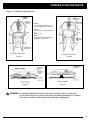
loading the trailer
SECURING THE CARGO
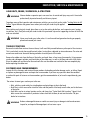
Since the trailer “ride” can be bumpy and rough, you must secure your cargo so that it does not shift while the
trailer is being towed.
WARNING Shifting cargo can result in loss of control of the trailer, and can lead to death or serious
injury. Tie down all loads with proper sized fasteners, ropes, straps, etc.
DISTRIBUTING THE CARGO (OPEN TRAILER)
Couple the trailer to the tow vehicle before loading. This is essential for the bumper pull trailer because the tongue
of a bumper pull trailer can rise during loading, before the cargo is properly distributed. To measure the tongue
weight, you will have to uncouple the trailer after it is loaded.
Do not transport people, containers of hazardous substances, cans or containers of flammable substances, such as
gasoline, kerosene, paint, etc. However, fuel in the tank of an off-road vehicle, or a car or motorcycle, etc. may be
carried on your open trailer.
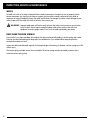
WARNING Do not transport flammable, explosive, poisonous or other dangerous materials in your trailer.
Exceptions: Fuel in the tanks of vehicles that are being towed, fuel stored in proper containers
used in trailer living quarters for cooking, and fuel stored in the tank of an on-board generator.
Preparing the Trailer for Loading
Before loading cargo onto the trailer:
• Inspect the deck of the trailer for corrosion or damage
• Inspect the hold down openings and/or “D”-rings. Hold down openings must be sturdy with no visible
cracks or kinks. D-rings must be tight to the deck and must not be bent.
If the deck or any required hold-down is damaged, do not load the cargo. Bring the trailer to your dealer or a
competent repair service before using it to carry cargo.
WARNING Damaged or loose “D”-rings can break, allowing cargo to become loose inside the trailer.
Loose cargo can shift the center of gravity, and result in loss of control of the trailer. Inspect
“D”-rings, and test them for looseness before loading cargo. Do not use a damaged or loose
“D”-ring to secure cargo.
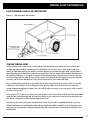
Loading a Rigid-deck Trailer
Open trailers have either a rigid-deck or a pivoting deck, depending on the exact model. This subsection describes
loading a rigid-deck trailer.
Before loading a rigid-deck trailer, couple the trailer to the tow vehicle and make sure the rigid-deck is level. Do
not load or unload the trailer when the deck is not level.
Make sure the top of the ramp (or ramps) is secure to the trailer, and the bottom is resting on firm ground.
Pockets may be provided to hold the ramp to the frame of the trailer.
54