1
Introduction
Until the mid-1970s most of the information about the mechanical, morphological and pharmacological properties of vascular smooth muscle were only obtainable from studies on relatively large vessels. At that time rat-tail arteries were the smallest vessels to be investigated in
detail due to limitations in the available in vitro techniques. For example, studies measuring
the contraction force were routinely performed with only one of the mounting wires secured.
Futhermore, relatively large wires (100-200 μm) were used, which precluded the use of small
vessels. In addition, the vessel segment had to be directly manipulated with dissecting instruments, causing mechanical trauma. Investigations of smaller vessels, therefore, were
limited to in vivo perfusion experiments and histological examination.
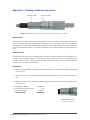
In 1976 Professor M. J. Mulvany and Professor W. Halpern described, for the first time, a new
technique that made it possible to investigate highly isometric responses from vessels with
internal diameters as small as 100 μm. The mounting procedure was refined in 2 ways: 1)
both ends of each mounting wire were secured under tension without any direct manipulation of the vessel, and 2) segments of small vessels could not be atraumatically mounted as
ring preparations in a myograph for recording of highly isometric force measurements.
During the late 1970s, some improvements were made to the myograph, and in 1981, a new
dual myograph that allowed simultaneous testing of two vessels was introduced. In parallel,
the technique became widely acknowledged, resulting in a growing interest in the myograph
systems. In 1986, the growing demand resulted in the foundation of the private company, J.
P. Trading, with the purpose of making the myograph systems commercially available worldwide. At the same time, J. P. Trading initiated a comprehensive improvement programme for
the existing myograph systems as well as a development programme of new myograph systems in close co-operation with Professor M. J. Mulvany and The University of Aarhus.
During the late 1980s and through the 1990s, several improvements were applied to the
myograph systems, such as a new mechanical design, a more robust transducer, and a new
electronic system. New systems also were introduced, such as the automatic dual myograph
510A, the multi myograph 610M and the confocal myograph 120CW. In 2000, J. P. Trading
changed its company structure and became known as DMT.
Today, DMT is one of the world’s leading designers and manufacturers of wire myographs,
pressure myographs, culture myographs and organ/tissue baths. Driven by our global customer base, our singular goal is to develop and manufacture first-class research equipment
within the fields of physiology and pharmacology.
Introduction