1
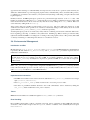
• Communication of generic Python objects
You have to use all-lowercase methods (of the Comm class), like send(), recv(), bcast(). Note that
isend() is available, but irecv() is not.
Collective calls like scatter(), gather(), allgather(), alltoall() expect/return a sequence
of Comm.size elements at the root or all process. They return a single value, a list of Comm.size
elements, or None.
Global reduction operations reduce() and allreduce() are naively implemented, the reduction is
actually done at the designated root process or all processes.
• Communication of buffer-provider objects
You have to use method names starting with an upper-case letter (of the Comm class), like Send(),
Recv(), Bcast().
In general, buffer arguments to these calls must be explicitly specified by using a 2/3-list/tuple like [data,
MPI.DOUBLE], or [data, count, MPI.DOUBLE] (the former one uses the byte-size of data and
the extent of the MPI datatype to define the count).
Automatic MPI datatype discovery for NumPy arrays and PEP-3118 buffers is supported, but limited to
basic C types (all C/C99-native signed/unsigned integral types and single/double precision real/complex
floating types) and availability of matching datatypes in the underlying MPI implementation. In this case,
the buffer-provider object can be passed directly as a buffer argument, the count and MPI datatype will be
inferred.
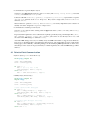
4.1 Point-to-Point Communication
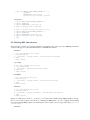
• Python objects (pickle under the hood):
from mpi4py import MPI
comm = MPI.COMM_WORLD
rank = comm.Get_rank()
if rank == 0:
data = {’a’: 7, ’b’: 3.14}
comm.send(data, dest=1, tag=11)
elif rank == 1:
data = comm.recv(source=0, tag=11)
• NumPy arrays (the fast way!):
from mpi4py import MPI
import numpy
comm = MPI.COMM_WORLD
rank = comm.Get_rank()
# pass explicit MPI datatypes
if rank == 0:
data = numpy.arange(1000, dtype=’i’)
comm.Send([data, MPI.INT], dest=1, tag=77)
elif rank == 1:
data = numpy.empty(1000, dtype=’i’)
comm.Recv([data, MPI.INT], source=0, tag=77)
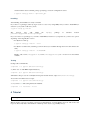
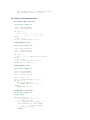
# automatic MPI datatype discovery
if rank == 0:
data = numpy.arange(100, dtype=numpy.float64)
comm.Send(data, dest=1, tag=13)
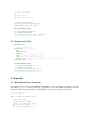
elif rank == 1: