1
18
RX7i CPUs
GFK-2438A
Subject
Description
Client Channels TCP Resource
Management
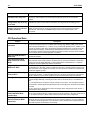
The OS Network stack hangs on to the TCP resources associated with a connection
for a period of time after the connection is closed. This time period applies to the
initiator of the close, which is almost always the client side. This time is referred to as
the “TCP Linger Period”. Once the TCP Linger Period expires (60 seconds in the
current OS implementation), the TCP resources are released. Application developers
using client channels need to be aware of this behavior when designing their logic. A
finite number of TCP resources are allocated to client channels, and if channel
connections are brought up and down so fast that these resources are depleted, then
the application may have to wait until a TCP resource frees up in order to establish
another client channel (a COMMREQ Status of 0xA890 is returned if no TCP
resources are currently available; application should wait and try again).
SRTP Client Channels provides features that help the user preserve TCP
connections. These include a period time where one can establish an SRTP Channel
and specify the channel to run at a given interval, or run as fast a possible. One can
also specify a number of iterations, or allow the channel to run forever. Additionally,
SRTP Channels allows channel re-tasking of an active channel to the same remote
device, where the parameters of an active channel, such as changing the channel
command type (Read/Write), number of repetitions, time periods, local memory
address, remote memory address, etc. can be changed. SRTP Channels also allows
channel re-tasking of an active channel to a different remote device (changing the
remote device’s IP address, etc.). However, re-tasking to a different remote device
will neither conserve TCP connections, nor save on the time it takes to create a
channel.
Idle Modbus/TCP connection
between a Series 90 and a
PACSystems may be prematurely
terminated
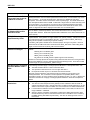
An idle Modbus/TCP connection between a Series 90 and a PACSystems may be
prematurely terminated. There is an incompatibility between the TCP "Keep-Alive"
timer values on the PACSystems Ethernet Interfaces and Series 90 Ethernet
Interfaces. The issue is that the default value of the keep-alive timer for the Series 90
modules is set to a much higher value than for the PACSystems.
To keep TCP connections open between a Series 90 Ethernet Interface and a
PACSystems Ethernet Interface, the Series 90 Interface Advanced User Parameter
wkal_time should be set to the value 750 to match that of the PACSystems. With this
change, TCP connections remain open indefinitely. Note that this same issue occurs
for SRTP Client Channels that have infrequent traffic and can be resolved by using
the same technique.
An attempt to open 17 or more
Modbus server connections may
appear successful
If more than the maximum 16 supported Modbus Server Connections are attempted,
the TCP connection may succeed, but no data may be subsequently transferred.