1
Abstract
The Service Oriented Architecture (SOA), a bleeding-edge architectural paradigm,
facilitates software development by providing modular design, scalability, robustness, loosely
coupled application integration, and software reuse. With the XML, SOAP, WSDL, and UDDI
open standards, the Service Oriented Architecture (SOA) allows interoperability between widely
disparate applications running on different platforms and implemented in different languages.
The Department of Agriculture has a legacy Crop Profitability Simulator (CPS) which is
an Excel spreadsheet that allows farmers in Kansas and surrounding states to assess market risks
by viewing income, cost, and profit, based on the Kansas Farm Management guides. Due to the
limitations of Excel, the CPS software has various shortcomings with regards to robustness,
scalability, interoperability, usability, and reuse.
This thesis examines the shortcomings of the legacy system and improves upon the CPS
Software to build an architectural infrastructure by using SOA realizing with de-facto standard
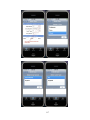
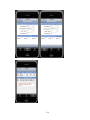
web services. To demonstrate the benefits of SOA, we developed two CPS Clients (CPS Web
application and CPS iPhone application), implemented in different languages and deployed on
different platforms. The CPS Web application developed using C# language on Microsoft’s
.NET platform deployed on Windows and the CPS iPhone application developed using ObjectivC language on Apple’s Coacoa platform running the iPhone OS. Both CPS clients communicate
with a central relational database, MS SQL Server 2008 via web services, using the same server
components (Business Logic Layer Component and Data Access Layer Component) to ensure
the highest level of modularity, maintainability, and software reuse.