1
2 OR-Parallelism
Many programming tasks can be naturally split into two or more independent
subtasks. If these subtasks can be executed in parallel on different processors,
much greater speeds can be achieved. Parallel hardware is becoming cheaper
and more widely available, but programming these machines can be much
more difficult than programming sequential machines. Using conventional,
imperative languages may involve the programmer in a great deal of low-level
detail such as communication, load balancing etc. This difficulty in exploiting
the hardware is sometimes called the programming bottleneck . ECLi PSe avoids
this bottleneck. It exploits parallel hardware in an almost transparent way, with
the system taking most of the low-level decisions. However, there are still
certain programming decisions to be made regarding parallelism, and this
tutorial gives some practical hints on how to make these decisions. In the
future even greater transparency will be achieved as analysis and
transformation tools are developed.
2.1
How to use it
First, we must tell ECLiPSe how many processors to allocate for the program.
One way to do this is to specify the number of workers when parallel
ECLi PSe is called. For example
peclipse -w 3
calls parallel ECLi PSe with 3 workers. If no number of workers is specified,
ECLi PSe will simply run sequentially with the default of 1 worker. Other ways
of changing the number of workers are described in [1, 2].
For the purpose of this tutorial we shall assume that a worker and a
processor are the same thing, though there is a subtle difference: it is possible
to specify a greater number of workers than there are processors, in which case
ECLi PSe will simulate extra processors. Simulated parallelism is useful for some
search algorithms, as it causes the program to search in a more “breadth-first”
way. However, it does add an overhead and uses more memory, so it should
only be used when necessary.
Note:
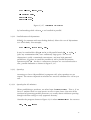
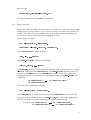
As a simple example, here is part of a program:
p(X) :- p1(X).
p(X) :- p2(X).
4