1
How do ground source
heat pumps work?
The earth absorbs and stores heat from the sun year after year,
providing us with a constant source of naturally renewed energy.
Just a few feet under the ground, there is a fairly constant average
temperature of 4°C to 12°C. This trapped energy represents a vast
reserve of low grade heat waiting to be tapped.
The ground source heat pump gathers heat from the solar energy
stored underground, either using collectors buried at a shallow
depth, or from boreholes which are drilled deeper underground.
The heat is transferred from the ground to the heat pump using a
mixture of water and an environmentally-friendly anti-freeze solution. It circulates through the closed loop, absorbing thermal energy
from the earth and carrying it to the heat pump.
The refrigerant circulates in the heat pump and thus the heat from
the ground is retained and converted into high-grade heat to be
released into your home via an underfloor heating system, water
based radiators and into your hot water tank.
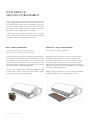
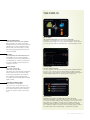
1. Using a hose filled with liquid, known as a collector, you can bring up solar energy stored
deep down in the rock, at the bottom of the
lake or a metre or so beneath your lawn. The
liquid in the collector circulates and is heated up by the stored solar heat down in the
ground or in the lake.
40 °C
2. When the liquid passes up into the heat pump,
it meets another closed system. This contains
a refrigerant that can turn into gas at a very
low temperature.
50 °C
4
3
100 °C
Condenser
Kondensor
Expansion
Valve
Expansionsventil
Compressor
Kompressor
Evaporator
Förångare
-3 °C
2
4. Meanwhile, the refrigerant reverts to liquid
form, ready to turn into gas once more and to
collect new heat energy.
-2 °C
0 °C
1
Heat
source
Värmekälla
Heating
water
Värmebärare
Refrigerant
Köldmedium
Brine
Köldbärare
NIBE GROUND SOURCE 8
3. Under high pressure, a compressor considerably increases the temperature of the refrigerant. Then, using a condenser, the heat is
transferred to the water-based heating system
in the house.
LEK