1
FOUR kinds of
ground source energy
The term “ground source” covers four different heat sources: rock,
surface soil, ground water and lake. The one that suits your location
best is determined by factors such as the building’s energy needs,
your current heating system and the kind of terrain your house
stands upon. Your local NIBE installer will be able to offer advice
about which one is most appropriate for your home.
In all four cases, the heat pump concentrates the stored energy
from one of these sources in such a way as to provide the hot water
for radiators, underfloor heating, baths and showers.
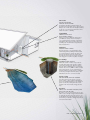
Rock - using a ground probe
Surface soil - using a surface collector
Ideal for refurbishment or adaptation
from a fossil fuel based heating system.
Cost-effective energy collection.
In the lower subsoil of the so-called “near-surface geothermal layer”
lies a heat source with an almost constant temperature that can be
utilised all year round. The heat pump collects stored solar energy
from a collector in a hole drilled into the rock. The depth of the hole
can vary between 90 – 200 metres, depending on the size of heat
pump selected and on local building regulations.
During the summer, solar heat is stored in the soil. This is either
directly absorbed as insulation or as heat from rain and the air
from the near-surface layer of the soil. The heat pump collects this
stored solar energy from a buried collector. That is, a hose filled
with anti-freeze, and buried at a depth of about 80 – 100 cm, the
length of the hose varies between 250 and 400 metres, depending
on the size of heat pump selected.
This type of system can be used for all possible building types, large
or small, public or private. It requires little space and the ground
probe can be drilled in the smallest of gardens.
NIBE GROUND SOURCE 6
Using this energy for heating is a cost effective method. The highest
yield can be obtained from soil with a high water content.